
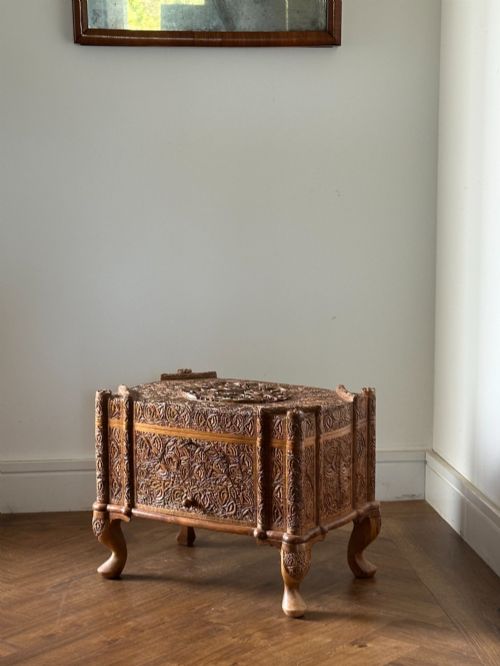
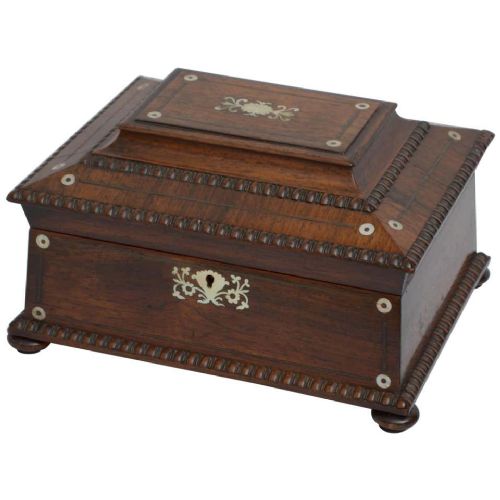
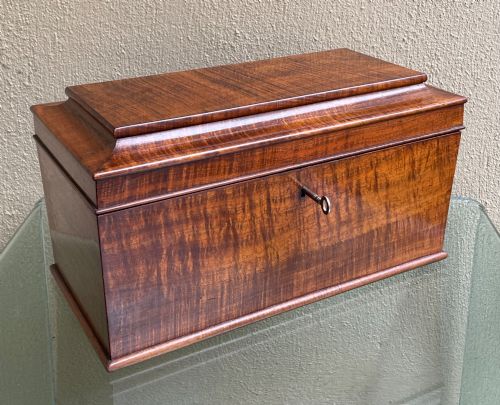
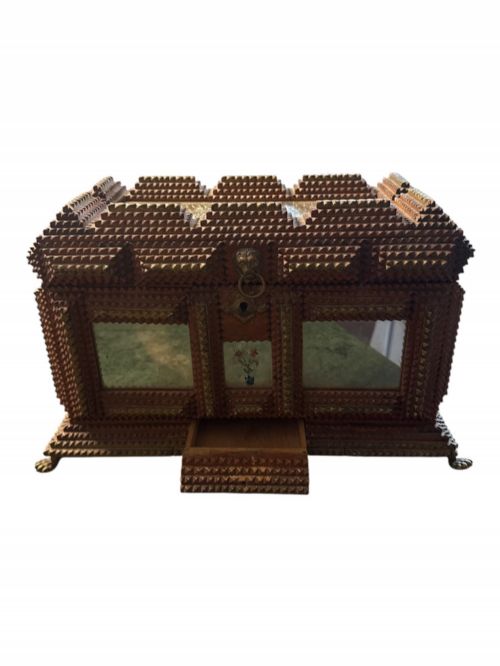
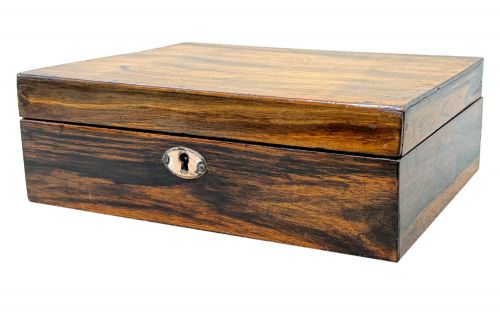


Carved Wood Keepsake Box
A carved wood keepsake box holds personal treasures, shaped by centuries of woodwork traditions from British workshops to Anglo-Indian ateliers.
Carved Wood Keepsake Box
When you search for a carved wood keepsake box, you encounter containers built to safeguard small valuables, letters and jewellery across multiple centuries. The selection ranges from robust 17th-century oak table chests to elaborate Victorian workboxes and later 19th-century souvenirs.
You are most likely to meet pieces from the Victorian era alongside 19th-century examples in woods such as walnut, rosewood and coromandel. Forms vary widely from sarcophagus shapes and book-like caskets to domed Black Forest lidded boxes.
Origins stretch from English and Welsh makers to continental European workshops in Italy and France, alongside colonial productions from India and the Middle East. Each object serves to store personal items while displaying the decorative skills of its maker.
How they were made
Constructed from hardwoods like walnut, oak, mahogany and ebony, these boxes often incorporate exotic timbers such as coromandel, olive wood and sandalwood. Workshops applied techniques including chip carving, floral marquetry and mosaic inlay to decorate the exterior surfaces.
Many examples feature contrasting materials set into the wood, utilising mother-of-pearl, brass mounts and porcupine quill work to create intricate patterns. Interior compartments frequently use velvet linings and fitted trays to organise jewellery and small keepsakes.
The listings show materials ranging from native British oak and walnut to exotic coromandel, olive wood and porcupine quill.
What varies in quality
The standard of a carved wood keepsake box depends on the crispness of the hand-carving and the precision of any inlaid mosaic or marquetry work. Elaborate piercing and deep relief carving require high levels of technical skill from the artisan.
The choice of timber and the preservation of internal velvet linings and original brass hardware distinguish finer production from simpler regional items. Well-executed construction ensures the lid aligns correctly with the body over centuries of opening and closing.
The Carved Wood Keepsake Box Glossary
- Sarcophagus
- A box shape featuring a steep sloped lid rising to a flat top, popular for Regency and Victorian jewellery caskets.
- Marquetry
- The art of applying small pieces of veneer to a structure to form decorative patterns, seen on floral 17th-century boxes.
- Tunbridge Ware
- A type of woodwork utilising tiny coloured wood prisms assembled to create mosaic pictures, originating in Kent.
- Tramp Art
- Folk art created by self-taught makers using chip-carving techniques on salvaged wood packaging, often forming layered geometric patterns.
- Coromandel
- A dense, heavy tropical Asian timber with dark brown colouring and striking black streaks, used for luxury 19th-century workboxes.
Carved Wood Keepsake Box: Frequently Asked Questions
What were carved wood keepsake boxes used for originally?
These containers served to store precious personal items such as letters, rings, brooches and lace.
Larger versions functioned as workboxes for sewing equipment or tea caddies for dry leaves, keeping valuable commodities secure under lock and key.
How do I care for an antique wooden box?
Keep wooden boxes away from direct sunlight and rapid changes in temperature to prevent the timber from warping or splitting.
An occasional application of appropriate wax helps nourish the surface polish without building up excessive residue on the carved details.
How can I tell the period of a wooden box?
Dating relies on observing the combination of timber types, construction methods, hinge styles and decorative motifs.
For instance, 17th-century examples often feature heavy oak construction with chip carving, while Victorian boxes frequently utilise exotic veneers and velvet interiors.
What is Anglo-Indian woodwork?
Anglo-Indian pieces are items manufactured in India during the colonial period, frequently using fragrant sandalwood or ebony.
Local artisans combined traditional deep relief carving with European box forms tailored for export to British buyers.