
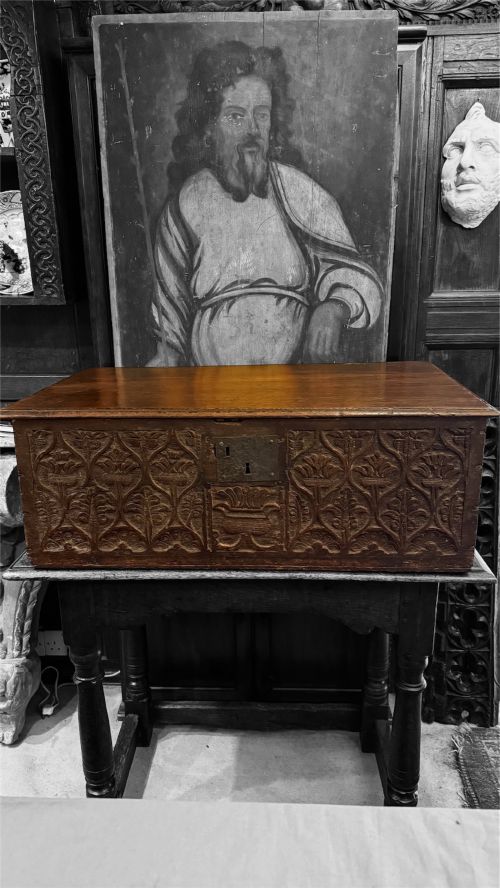


English Wooden Casket
An English wooden casket is a sturdy receptacle for valuables and keepsakes, offering tactile pleasure and historical craftsmanship for the discerning interior.
English Wooden Casket
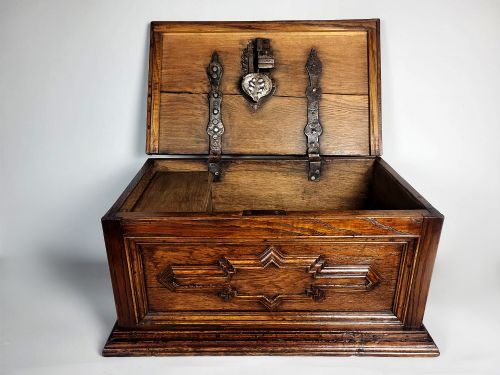
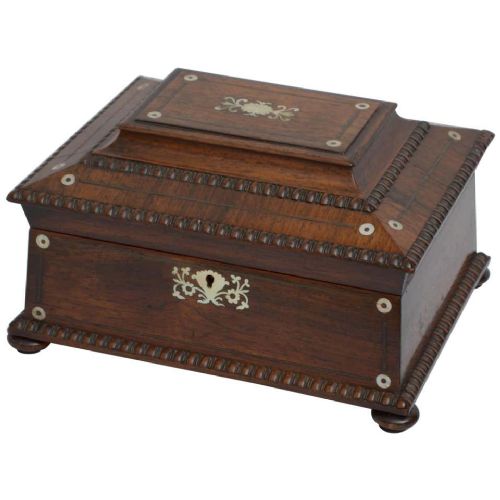
When searching for an English wooden casket, buyers encounter an array of utilitarian and decorative containers spanning the seventeenth century through to the early twentieth century. The selection ranges from robust seventeenth-century oak document and Bible boxes to refined Regency rosewood writing desks and Victorian Tunbridge Ware trinket boxes.
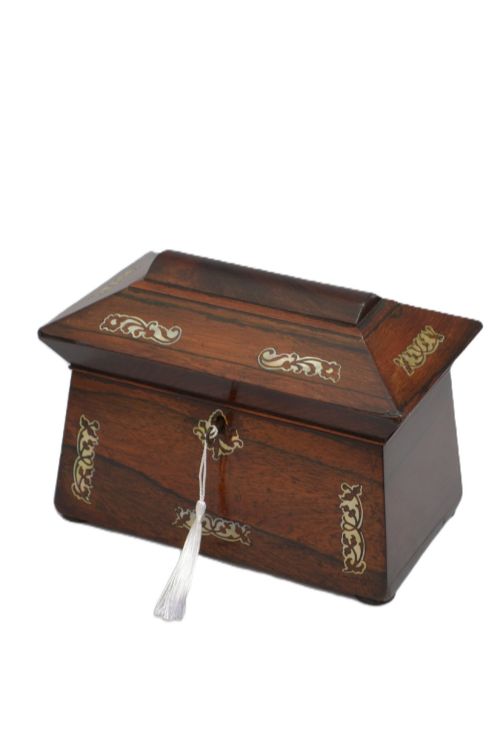
Forms vary according to their original domestic purpose, including tea caddies, cellarets, stationery boxes, sewing baskets, and glove boxes. Oak and walnut dominate the earlier eras, while exotic veneers such as coromandel and rosewood characterise the nineteenth-century examples.
Materials and construction
Cabinet makers utilised native timbers such as oak and boxwood alongside imported woods including rosewood, walnut, and coromandel. Surfaces were frequently embellished with intricate marquetry, mother-of-pearl, brass inlays, and specialised decorative techniques like Tunbridge Ware mosaic work and penwork.
Hardware played a fundamental role in construction, featuring complex steel locks, brass handles, and silver mounts. Joinery techniques ensured structural integrity, allowing these containers to endure through centuries of daily domestic use.
Current listings feature items from the seventeenth, eighteenth, and nineteenth centuries, spanning oak, rosewood, walnut, and boxwood.
Quality factors
The degree of refinement in surface decoration and veneer selection largely distinguishes superior examples from simpler utilitarian containers. Master craftsmanship is evident in the precision of the marquetry, the complexity of the inlaid brass or wood work, and the integration of specialised finishes such as lacquer and hand-painted porcelain.
The survival of original elements, including complex steel locks and interior fittings, contributes significantly to a piece's standing. Finer examples retain their original hinges, keys, and compartmentalised linings without substantial modern intervention.
Edmund Nye·Trussell Brighton·Charles Heathcote Tatham
The English Wooden Casket Glossary
- Tunbridge Ware
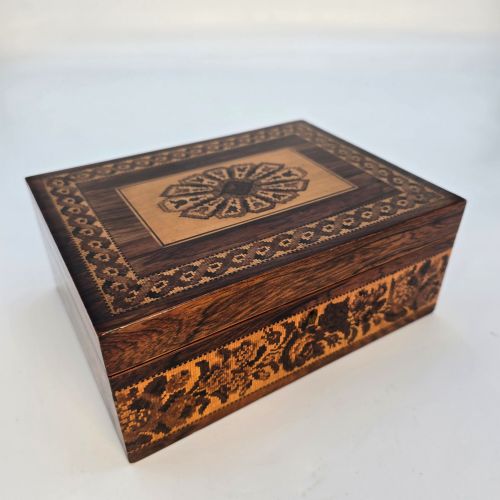
- A form of wooden mosaic decoration produced in Kent, featuring tiny blocks of various coloured woods assembled to form pictorial or geometric motifs. This intricate technique reached its height during the Victorian period.
- Cellaret
- A lockable container designed for holding bottles of wine or spirits. These sturdy receptacles are frequently fashioned from oak or mahogany and sit upon the floor or on dedicated stands.
- Marquetry
- The art of applying pieces of veneer to a structure to form decorative patterns and pictures. Makers utilised contrasting woods to achieve depth and pictorial detail on lids and panels.
- Tea Caddy
- A small box or chest designed to store loose tea leaves securely. Because tea was historically an expensive commodity, these containers were often fitted with locks and internal mixing bowls.
- Penwork
- A surface decoration technique utilising ink applied directly to wood to create delicate line drawings, often imitating more costly marquetry or inlay. It appears frequently on Regency sewing and games boxes.
English Wooden Casket: Frequently Asked Questions
What is an English wooden casket?
An English wooden casket is a secure container fashioned from timbers such as oak, walnut, rosewood, and coromandel, designed for storing valuables, documents, and personal items. These pieces range from seventeenth-century oak Bible boxes to nineteenth-century rosewood stationery desks.
They reflect the domestic habits and decorative tastes of past eras, often incorporating compartments, mirrors, and textile linings. Each piece serves as both a practical storage solution and an example of period cabinet making.
How do I identify Tunbridge Ware?
Tunbridge Ware is identified by its distinctive mosaic surface decoration, constructed from thousands of tiny, precisely cut blocks of naturally coloured woods. These geometric or pictorial motifs usually depict butterflies, flowers, or historic buildings.
The technique was practiced extensively in Kent, particularly during the Victorian era, and adorns small items such as trinket boxes, stamp cases, and needlework caskets.
How do I care for antique wood?
Antique wooden boxes require stable environmental conditions away from direct heat sources and strong sunlight, which can dry out and warp the timber. Maintaining a consistent indoor humidity prevents veneers and delicate inlays from lifting.
Surfaces benefit from occasional dusting with a soft, dry cloth and minimal application of appropriate conservation wax. Harsh chemical cleaners and polishes should be avoided to preserve the original patina and finish.