

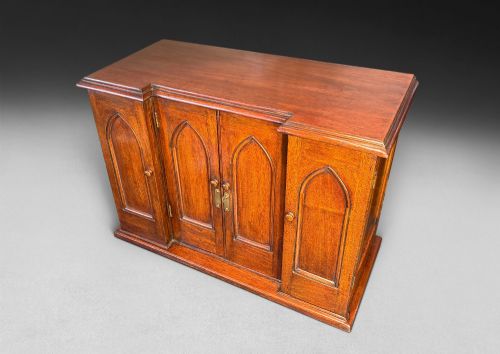
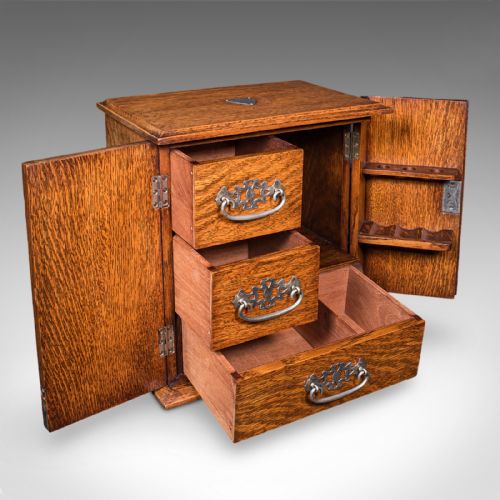
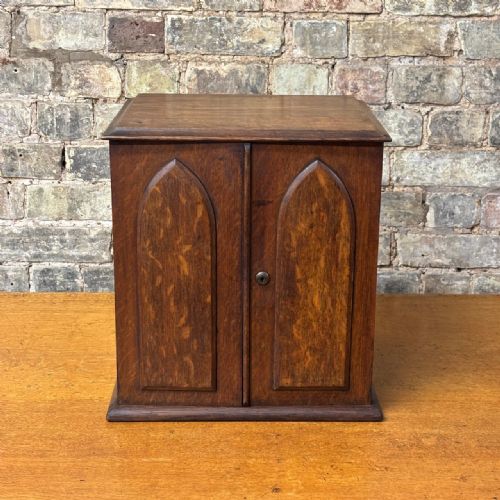


Carved Oak Tabletop Cabinet
These carved oak tabletop cabinet examples offer compact storage for specialists, bringing substantial timber presence and period detail directly to your desk or sideboard.
Carved Oak Tabletop Cabinet
A carved oak tabletop cabinet provides small-scale storage and display, appearing across periods from the eighteenth century through to the interwar decades. These pieces take the form of miniature court cupboards, smokers' cases, collectors' chests, and watchmakers' units designed to sit securely on a table or counter.
The construction typically utilises solid timber to form compact enclosures fitted with panel doors, drawers, and sometimes glass or brass mounts. You will frequently encounter nineteenth century Gothic revival examples alongside Edwardian and 1930s commercial variants.
Makers adapted larger architectural and furniture forms down to miniature proportions, creating functional containers that suited specific trades and domestic hobbies. Their portable nature allowed owners to keep valuable collections, smoking paraphernalia, or specialised tools close at hand.
Materials and construction
Makers relied principally upon oak as the foundational timber, shaping it with hand and machine tools to create sturdy panel doors, sides, and drawers. Metal fittings such as brass hinges, locks, and handles were added to secure the contents and provide mechanical contrast to the warm timber grain.
Surface decoration frequently involved carved relief work, displaying Gothic panels, geometric patterns, or turned elements like barley twists. Glazing was integrated into specific display and tabletop cabinet designs to protect delicate objects while maintaining visibility.
Carved Oak Tabletop Cabinet Retail Price Guide 2026
Typical asking prices for carved oak tabletop cabinet among the pieces listed under this phrase on Sellingantiques today, from the lower quarter to the upper quarter. They describe what is for sale here now, not the wider market.
Listings span periods from the eighteenth century through to the 1930s, featuring oak timber alongside glass, brass, and fabric elements.
Distinctions in quality
The refinement of the carved ornament distinguishes finer pieces from utilitarian boxes, with crisp relief work indicating superior cabinetmaking skill. The integration of specialised internal fittings, such as fitted drawers in watchmakers' cabinets or velvet linings in collectors' cases, marks out higher execution.
Materials and hardware selection also set individual pieces apart, where heavy brass mounts and selected quarter-sawn oak figure prominently in superior examples. Consistency in the timber seasoning and joinery ensures the miniature structure remains stable across centuries of use.
Manoah Rhodes & Sons Ltd
The Carved Oak Tabletop Cabinet Glossary
- Court cupboard
- A low sideboard or cabinet used for displaying plate, featuring recessed upper sections supported by carved pillars. Miniature versions replicate this architectural domestic furniture on a tabletop scale.
- Barley twist
- A turning technique resembling a twisted rope, commonly used on furniture legs and upright framing members. This decorative motif appears on French and British cupboards.
- Gothic Revival
- An architectural and decorative style drawing inspiration from medieval forms, featuring pointed arches, tracery, and heavy relief carving. This style frequently shapes nineteenth century oak cabinets.
- Watchmaker's cabinet
- A specialised multi-drawer chest utilised by horologists for sorting small components, watch parts, and delicate tools. These functional workshop units are constructed in oak.
- Smoker's cabinet
- A small, lockable household container designed to house pipes, tobacco, and matches, often featuring internal racks and small drawers. Edwardian examples often bear this specific domestic purpose.
Carved Oak Tabletop Cabinet: Frequently Asked Questions
What were these small cabinets used for?
These miniature pieces served specialised domestic and professional storage needs, holding items ranging from smoking pipes and apothecary supplies to watch parts and natural history specimens.
Their compact footprints allowed doctors, watchmakers, and collectors to keep valuable or delicate items organised and secure upon a desk or tabletop.
How do I date a carved oak tabletop cabinet?
Dating relies on observing structural characteristics, hardware styles, and decorative motifs such as Gothic panels or barley twist turnings.
Comparing the timber preparation, lock mechanisms, and overall joinery against known periods like the Edwardian era or the nineteenth century helps establish the chronology.
Where should I place a tabletop cabinet?
These cabinets suit placement on sturdy sideboards, desks, or large tables where their compact weight and dimensions can be properly supported.
Keeping them away from direct heat sources and strong sunlight protects the oak timber and any internal fabric linings from drying out or fading.
Are all these cabinets English?
While many listed items originate from British workshops, the selection also includes continental pieces such as French armoires and barley twist cupboards.
Regional differences in carving styles, timber selection, and hardware help distinguish British craftsmanship from continental European production.