
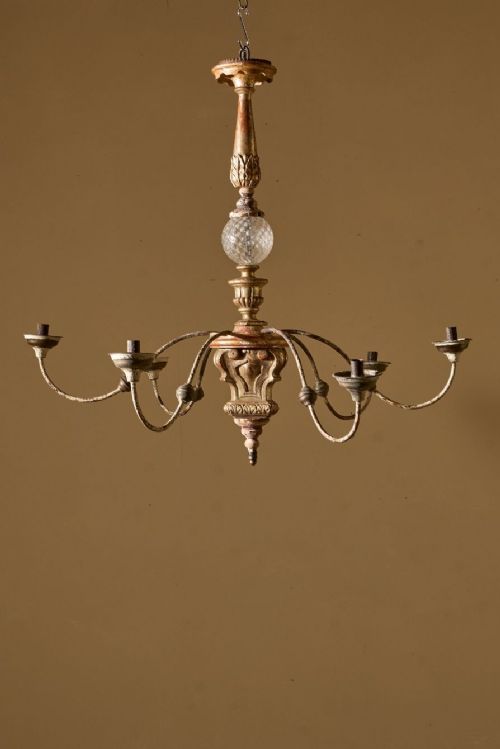
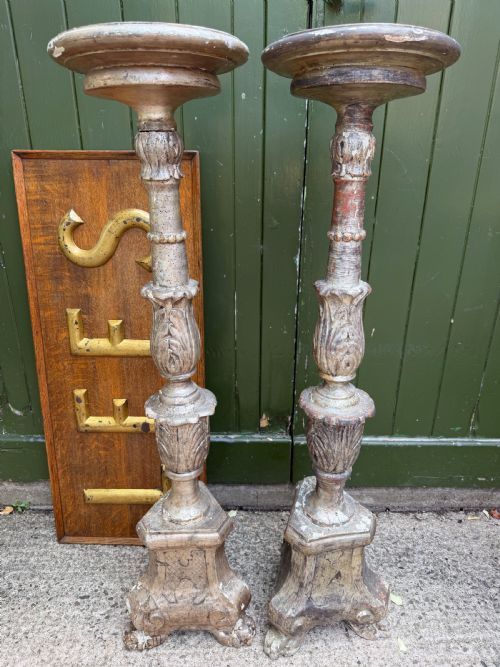
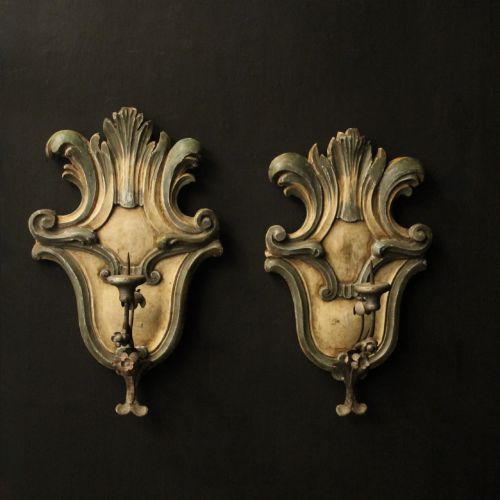
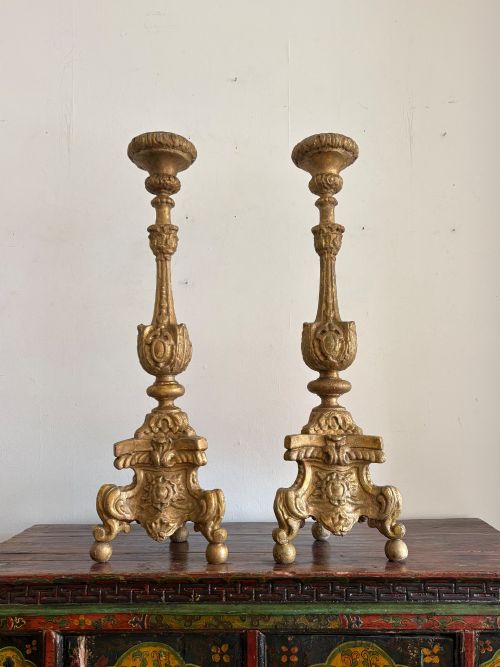


Carved Wood Prickets
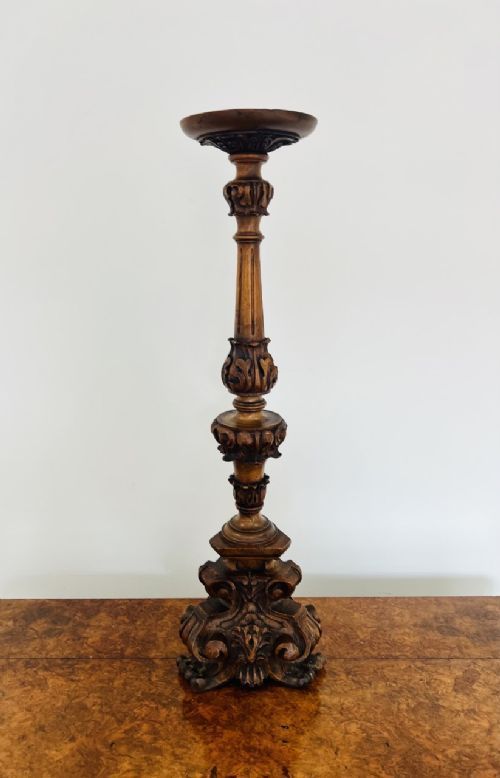
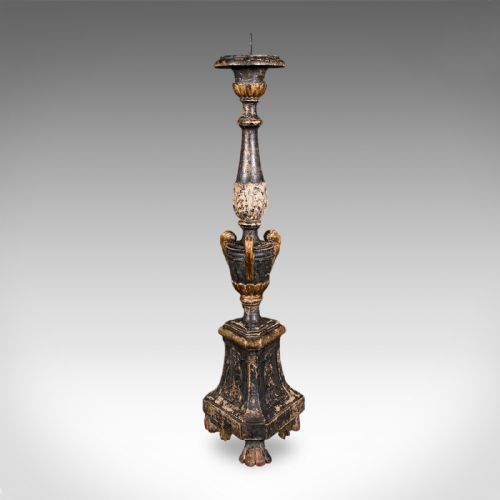
Carved wood prickets are ritual altar-sticks and heavy candle-holders designed with an upright spike to secure a large wax candle.
Carved Wood Prickets
When searching for carved wood prickets, buyers encounter ceremonial ecclesiastical pieces, altar-sticks, and heavy candle-holders designed to impale thick candles on a central metal spike. These items appear across centuries, notably from the seventeenth, eighteenth, and nineteenth centuries, originating predominantly from Italian workshops adhering to Baroque and Florentine traditions, alongside English and French examples.
Forms encompass simple turned treen sticks, carved angel figures, acolyte candlesticks, and elaborate baroque columns. Many nineteenth-century and later pieces show subsequent conversion into electric lamps or standard lamps while retaining their historic carved wooden bases.
How carved wood prickets were made
Artisans carved solid timber bases from regional woods including oak, walnut, pine, and fruitwood, shaping acanthus scrolls, fluted columns, and figural elements by hand. Structural integrity relied on traditional joinery to support the considerable height and weight of altar furnishings.
Surfaces were frequently finished with a preparation layer of gesso before receiving applications of gold leaf, silver leaf, or pigmented mecca varnish to simulate solid precious metal. Ebonising and polychrome paint also occur on specific English and Continental variants to create contrasting decorative effects.
Many an austere church torchere spent its twilight years moonlighting as an exuberant standard lamp beside a Victorian sofa.
What varies in quality
The depth, crispness, and anatomical precision of the hand-carving separate standard turned items from exceptional sculptural works, such as figural angel supports or high-relief Baroque scrollwork. Sculptural vigour directly reflects the skill of the original carver.
The application and survival of original surface finishes dictate desirability, distinguishing pieces with intact, aged gold leaf and silvering from those with later repainting. Patina built up over centuries of handling and wax accumulation adds visual depth to superior examples.
The Carved Wood Prickets Glossary
- Pricket
- A sharp metal spike projecting upwards from the centre of a candle-holder to secure the base of a candle. This form predates socket-style candle cups.
- Giltwood
- Timber that has been coated with a thin layer of gold leaf over a gesso ground. It provides a reflective, opulent surface suitable for ceremonial furnishings.
- Gesso
- A plaster-like mixture applied to wood surfaces to create a smooth base for gilding or painting. It allows carvers to achieve sharp decorative details.
- Mecca
- A translucent golden varnish applied over silver leaf or tin foil to imitate the rich warmth of gold leaf at a lower production cost.
Carved Wood Prickets: Frequently Asked Questions
What is a pricket candlestick?
A pricket candlestick is a lighting device featuring an upright metal spike instead of a socket. Candles are pushed directly onto this spike to hold them upright during burning.
Historically associated with churches and altars, these pieces provided steady illumination for large wax tapers used in religious ceremonies.
How do I date a carved wood pricket?
Dating relies on examining the timber species, tool marks, joinery techniques, and stylistic traits such as Baroque scrolling or Neoclassical symmetry. Seventeenth and eighteenth-century examples typically display hand-hewn construction and period-specific decorative carving.
Later nineteenth-century pieces often incorporate revival styling or adaptations for modern wiring. Comparing the wear patterns on the wooden base and spike helps confirm age.
Were these originally used in homes?
Most early pricket sticks originated in churches, chapels, and monastic settings as altar candlesticks or large torchere stands. Wealthy households also utilised grand ecclesiastical-style lighting for domestic halls and reception rooms.
Over subsequent centuries, many found their way into secular interiors as decorative objects or functional lamp bases.
Can I convert an antique pricket back to candlelight?
Many pieces that underwent conversion into electric table lamps or standard lamps can be reverted if the original pricket spike remains intact. Professional rewiring is often executed without damaging the historic wooden structure.
Consulting a specialist ensures that any modifications made for electrical components preserve the structural integrity of the antique base.