
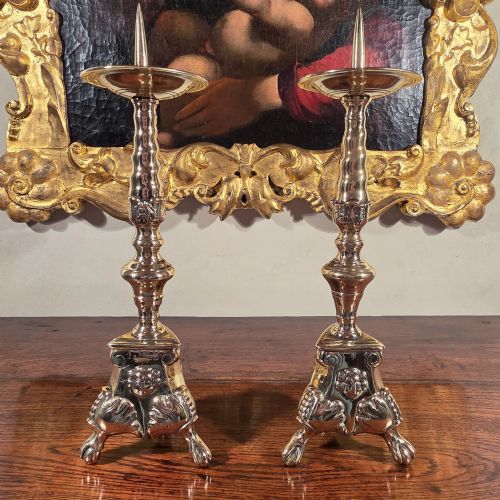


18th Century Altar Candlesticks
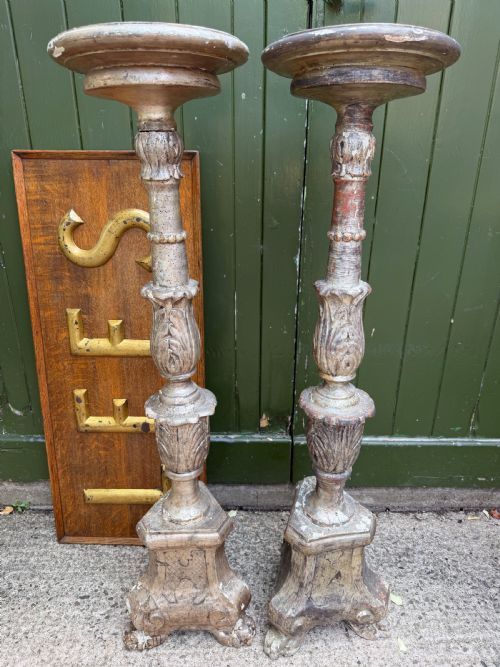
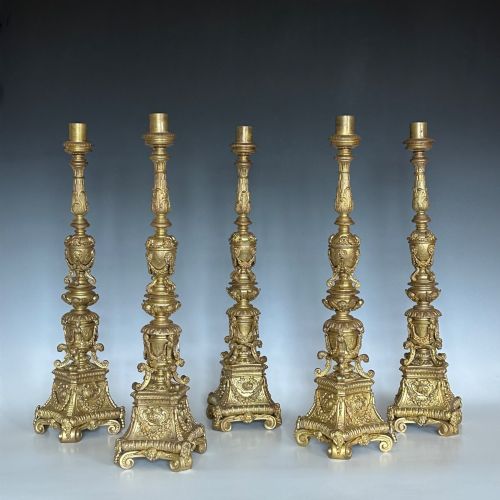
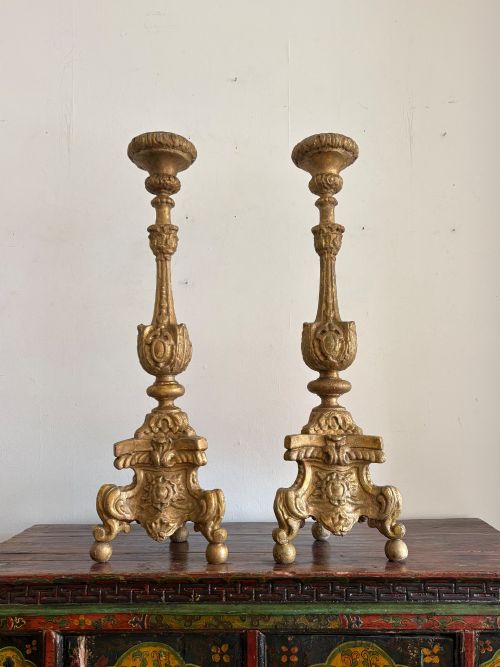
These 18th century altar candlesticks bring monumental carved presence to a room, standing as commanding works of devotional art.
18th Century Altar Candlesticks
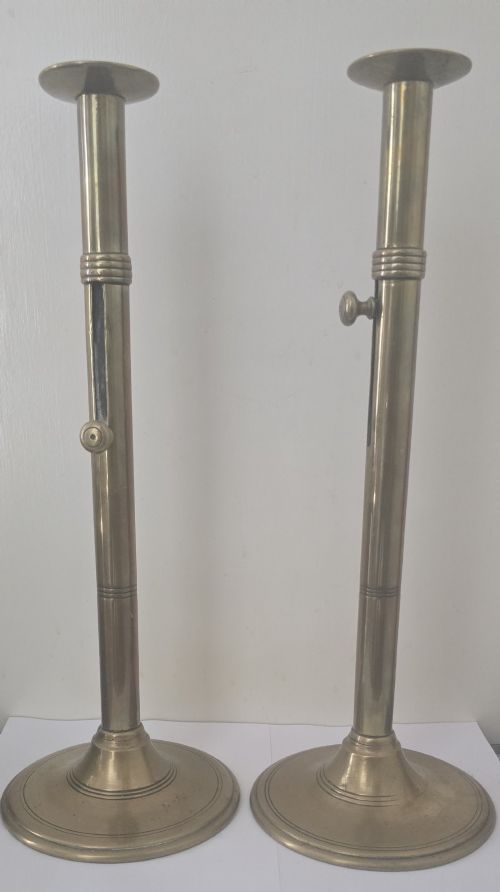
When buyers search for 18th century altar candlesticks, they seek ecclesiastical lighting that carries the dramatic weight of Baroque and Neoclassical design. These substantial wooden and metal pieces originated in European churches, where their towering height commanded attention during liturgical services.
The versions most frequently met on this page are Italian and Spanish examples executed in carved wood, often covered in giltwood, gesso, or silver leaf. Alongside standard socket candlesticks, collectors regularly find pricket sticks fitted with a central spike designed to hold large wax candles.
Many survivors from this era now function as table lamps or torcheres, having been adapted for domestic interiors while retaining their grand architectural proportions. Their regional styles span Italian Baroque, Venetian, and Georgian aesthetics, demonstrating the varied decorative vocabulary of the period.
How they were made
Carved wood forms the structural core for the majority of these pieces, providing a stable yet workable base for elaborate ornamentation. Artisans shaped timber into volumetric profiles before applying layers of gesso to smooth the surface for subsequent gilding.
Giltwood, silver leaf, and gold leaf were meticulously applied to create rich reflective surfaces that caught flickering candlelight within dim ecclesiastical interiors. Alternatively, workers cast brass and gilt bronze to achieve sharper geometric detailing and heavier metallic substance.
Some tall altar pieces spent centuries holding heavy wax before retiring to illuminate twentieth-century drawing rooms as converted lamps.
What varies in quality
The distinction between ordinary and exceptional examples rests upon the depth and vigour of the woodcarving. Superior pieces display sculptural confidence in their acanthus leaves, scrollwork, and fluted shafts, whereas lesser items rely on repetitive surface decoration.
Quality also hinges on the integrity of the original surface finishes, such as aged giltwood and silver leaf. Pieces that retain their historic gilding without excessive modern intervention command greater appreciation from purists.
The 18th Century Altar Candlesticks Glossary
- Giltwood
- Wood that has been coated with gold leaf or gold dust over a prepared gesso ground. This finish provides a warm, reflective metallic sheen.
- Pricket
- A sharp metal spike atop a candlestick designed to impale and secure a large candle. They are frequently found on traditional church altar sticks.
- Torchere
- A tall stand or candlestick designed to elevate a light source above eye level. They often feature robust turned or carved wooden shafts.
- Gesso
- A plaster mixture applied to wood to create a smooth surface for gilding or painting. It allows carvers to achieve crisp detail before metal leaf is laid.
- Mecca
- A warm transparent golden lacquer applied over silver leaf to imitate the appearance of gold. It creates a distinctive aged tone on wooden candlesticks.
18th Century Altar Candlesticks: Frequently Asked Questions
What is a pricket candlestick?
A pricket candlestick uses a vertical metal spike rather than a traditional socket to hold the candle in place. This design was standard for large ecclesiastical tapers used in churches.
Such pieces require candles with a pre-drilled base or a soft underside to mount securely onto the spike.
How were these candlesticks used originally?
These candlesticks stood upon church altars to provide illumination and ceremonial grandeur during religious services. Their imposing height ensured they remained visible to congregations seated far down the nave.
Over time, many of these liturgical items transitioned into secular domestic settings as decorative focal points.
Can I use these as table lamps?
Many 18th century altar candlesticks have been converted to electricity for domestic lighting while preserving their antique bases. These conversions allow modern interiors to benefit from their architectural height and sculptural presence.
Buyers often select them to flank sideboards, console tables, or large fireplaces.
How do I identify Italian Baroque examples?
Italian Baroque examples typically display exuberant carving, including twisting columns, bold acanthus scrolls, and cherubic motifs. Their proportions are deliberately grand to convey drama and movement.
Finish-wise, they lean heavily towards rich giltwood and gesso surfaces that amplify candlelight.