


Antique Italian Candlesticks
Antique italian candlesticks bring centuries of continental craftsmanship into a room, spanning grand altar pieces and diminutive chamber sticks.
Antique Italian Candlesticks
When a buyer searches for antique italian candlesticks, they encounter a diverse range of lighting objects spanning several centuries of European design. These pieces include altar sticks, torcheres, multi-branch candelabras, and chamber sticks originating from notable centres such as Venice, Genoa, and Florence.
The selection ranges from towering ecclesiastical altar candlesticks designed for grand spaces to smaller domestic table lamps and chamber sticks intended for intimate illumination. Stylistically, the inventory draws heavily upon Italian Baroque, Neoclassical, and Rococo traditions, reflecting the changing tastes of patrons across the eighteenth and nineteenth centuries.
Buyers frequently meet pieces that have transitioned through time, with several historical candle holders subsequently converted to electrical table or standard lamps during the twentieth century. Alongside traditional tall wooden and metal designs, works in Murano glass and carved pinewood appear regularly within the current selection.
How they were made
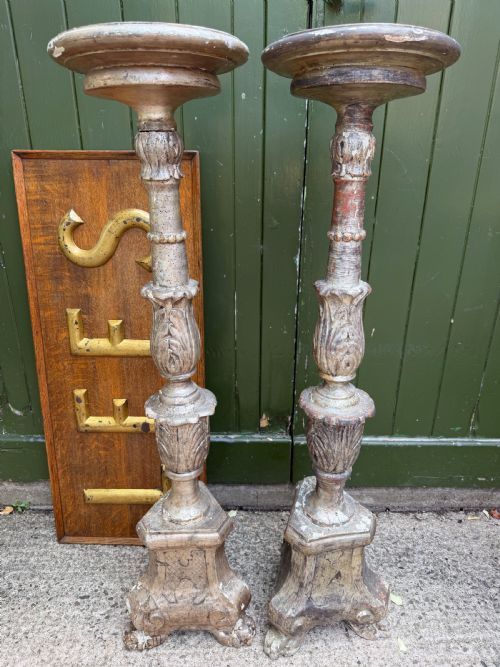
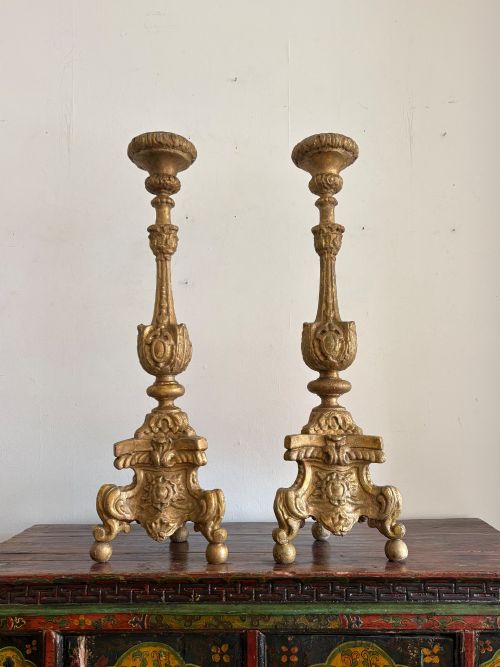
Artisans employed traditional woodworking and carving techniques, utilising pine, gesso, and applied gold or silver leaf to build opulent altar-type candle-holders and standard lamps. Gilding and silvering were frequently layered over carved wooden surfaces, sometimes complemented by polychrome finishes or mecca varnish to achieve a rich metallic lustre.
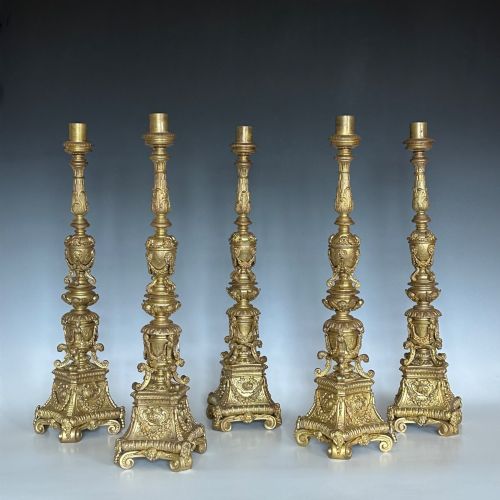
Metalworking formed a major part of production, resulting in cast brass, bronze, and ormolu candlesticks as well as intricate multi-arm candelabras. Foundries shaped these metallic components through detailed casting and chasing, occasionally incorporating marble bases or decorative micro-mosaic and cloisonne elements.
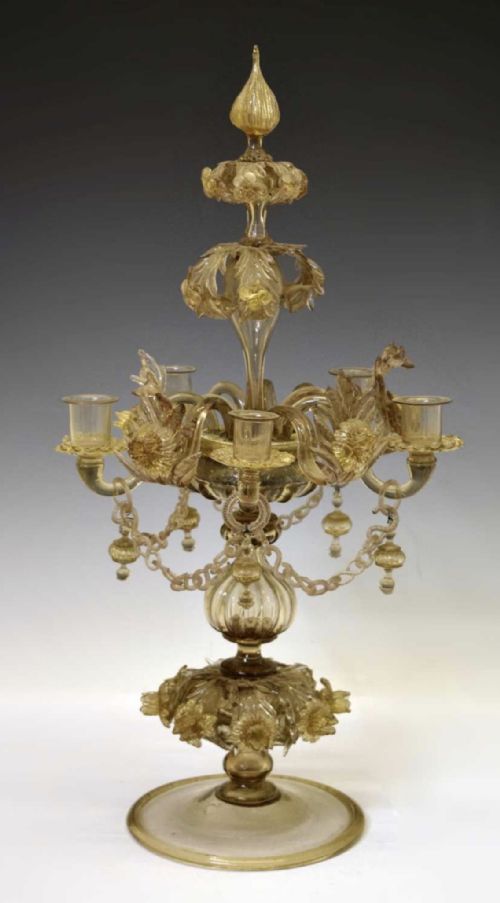
Glassmaking traditions, particularly associated with Venetian production, contributed delicate creations in red, green, and vaseline glass, alongside Murano multi-branch candelabras. These glass pieces demonstrate specialised blowing and forming techniques unique to Italian workshops of the period.
Listings feature antique italian candlesticks spanning the eighteenth, nineteenth, and early twentieth centuries, constructed from carved wood, giltwood, bronze, and Murano glass.
What varies in quality
The standard of carving and surface decoration dictates the visual impact of wooden and gilt pieces, separating finely detailed hand-carved acanthus and figural work from simpler mouldings. The integrity of the original giltwood or silver leaf finish, alongside the depth of the underlying gesso, determines how well the surface ages and reflects light.
Proportion and scale distinguish monumental ecclesiastical torcheres and altar candlesticks from domestic table versions, with larger architectural pieces demanding superior structural joinery to support their height. The weight and casting quality of bronze, brass, and ormolu components similarly indicate the level of craftsmanship invested in metal examples.
Subsequent conversions for electricity alter the physical structure of historic candle holders, and the discretion with which wiring is integrated affects the preservation of the original form. Pieces retaining their untouched pricket spikes or original sockets demonstrate greater historical continuity than heavily adapted items.
Salviati
The Antique Italian Candlesticks Glossary
- Pricket stick
- A type of candlestick featuring a central metal spike or pin designed to secure a candle, commonly found on historic altar pieces.
- Torchere
- A tall ornamental stand or candlestick originally intended to hold a torch or light source in large rooms or ecclesiastical settings.
- Giltwood
- Wood that has been coated with a thin layer of gold leaf or gold paint over a prepared gesso ground, creating a rich metallic appearance.
- Mecca
- A transparent golden varnish applied over silver leaf or tin to simulate the appearance of gold at a lower production cost.
- Grand tour
- A cultural journey undertaken by wealthy young Europeans in the eighteenth and nineteenth centuries, bringing home decorative souvenirs including Italian bronze figures and micro-mosaics.
Antique Italian Candlesticks: Frequently Asked Questions
How do I date an antique candlestick?
Dating antique lighting relies on examining the stylistic cues, such as the exuberant curves of Baroque design or the restrained symmetry of Neoclassical periods. Material composition, tool marks from hand-carving, and the ageing of gilt or silver leaf provide further chronological clues.
Makers' marks are uncommon on these continental pieces, so comparison with established period typologies remains the most reliable method for determining age.
Were these candlesticks converted to lamps?
Many historic candlesticks and pricket sticks underwent conversion to electrical table lamps during the twentieth century to suit modern domestic requirements. This process often involved running a wire through the centre or adapting the top socket while retaining the historic base.
Collectors weigh the convenience of a functional lamp against the historical purity of an unconverted candle holder when selecting pieces for a room.
How should I clean giltwood?
Giltwood surfaces require gentle maintenance to protect the delicate layers of gold leaf and underlying gesso from accidental damage or abrasion. Dusting should be performed with a very soft, dry brush without applying liquid cleaners or chemical solvents.
Professional conservation is recommended for pieces showing significant flaking or loss of leaf to stabilise the fragile historical materials.