
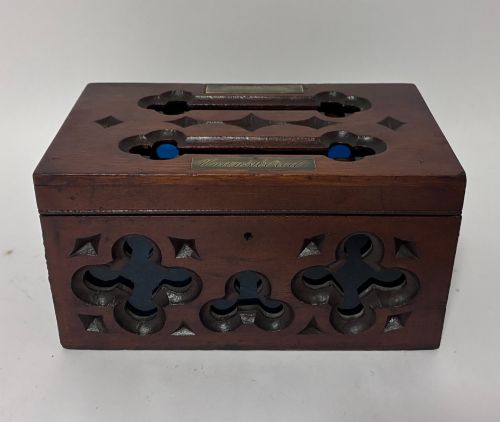
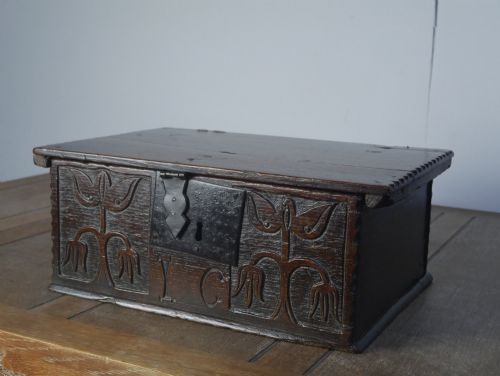


Carved Wood Desk Box
A carved wood desk box is a practical container for correspondence and small writing implements, combining utility with decorative hand-carving.
Carved Wood Desk Box
A carved wood desk box serves to organise letters, stationery, and small accessories upon a writing surface or table. Collectors encounter forms ranging from simple lidded boxes and table cabinets to dedicated writing slopes and desk tidies.
The selection spans centuries of regional craftsmanship, featuring early English oak specimens from the seventeenth century alongside Victorian and later nineteenth-century examples. Exotic hardwoods such as mahogany, ebony, walnut, and rosewood appear alongside native oak, softwood, and lime.
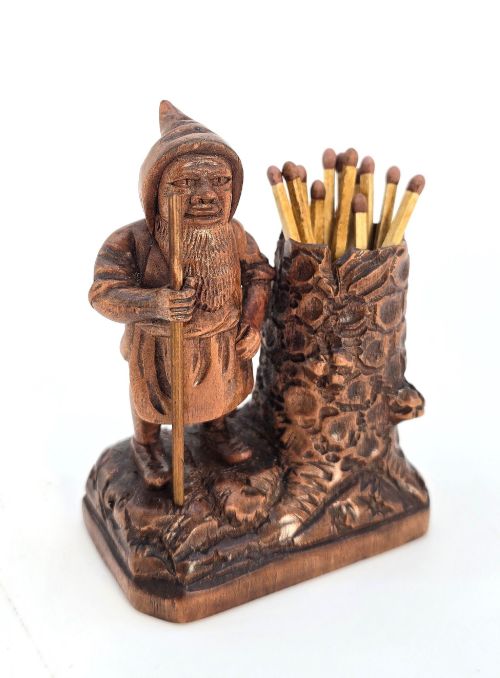
Geographic diversity is marked by distinctive carving traditions, including Anglo-Indian, Sri-Lankan, and Swiss Black Forest works. These pieces utilise traditional joinery and surface ornament to transform everyday storage into decorative desk furniture.
Factors Defining Quality
Depth and crispness of the hand-carving dictate the visual success of the piece, separating competent regional work from master execution. Timber selection matters profoundly, with figured veneers, dense tropical hardwoods, and well-chosen quarter-sawn oak commanding attention.
Internal arrangement and hardware integrity influence desirability. Original brass locks, working keys, fitted stationery dividers, and intact bone or ivory inlay retain the functional authenticity expected by collectors.
The selection includes regional items spanning the seventeenth century through the Victorian era and into the 1930s.
Waring & Gillow
The Carved Wood Desk Box Glossary
- Writing Slope
- A portable desk featuring a sloping lid designed to hold paper and provide an angled surface for handwriting. Inside, compartments house inkwells, pens, and stamps.
- Chip Carving
- A method of removing small chips of wood from a flat surface to create geometric patterns. This technique appears frequently on regional folk art boxes.
- Black Forest
- A style of wood carving originating from central Europe, particularly associated with realistic animal figures and foliage. Dogs and forest motifs dominate this tradition.
- Anglo-Indian
- Descriptive of furniture and decorative objects made in India during the British colonial period, often combining local timber with intricate ivory or bone inlay. Ebony and sandalwood feature heavily.
- Dovetail
- A joinery technique formed by interlocking wedge-shaped fingers, used to connect the corners of wooden boxes securely. High-density joints indicate careful workshop production.
Carved Wood Desk Box: Frequently Asked Questions
What is a carved wood desk box used for?
These boxes function primarily to store letters, pens, wax seals, and other writing accessories on a desk or table.
Historically, they kept private correspondence secure and organised before the widespread use of fitted study furniture.
What distinguishes Black Forest desk boxes?
Black Forest pieces are characterised by deeply carved naturalistic motifs, frequently incorporating animals such as dogs or terrestrial fauna.
Originating in nineteenth-century Switzerland and Germany, the carving style is bold, highly textured, and sculptural.
Are Anglo-Indian boxes different from European ones?
Anglo-Indian and Ceylonese boxes utilise dense exotic woods like ebony and incorporate intricate bone, horn, or ivory inlay work.
These pieces reflect colonial trade routes and distinct regional carving techniques not typically found in English country workshops.