
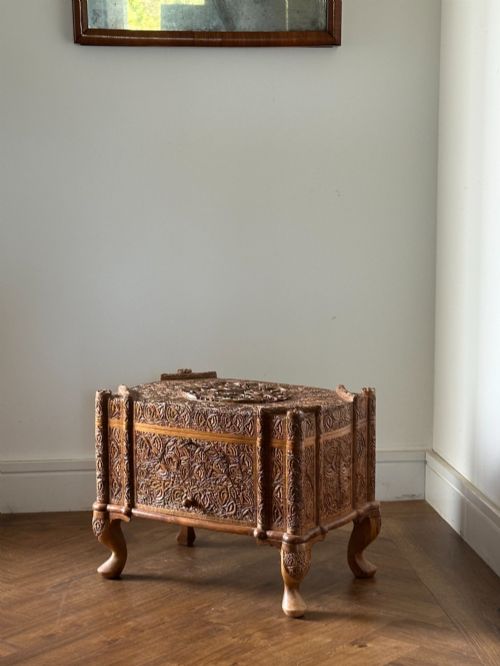


Anglo Indian Wooden Casket
An anglo indian wooden casket brings intricate colonial craftsmanship and rich exotic timbers directly to a desk or dressing table.
Anglo Indian Wooden Casket
The pieces available here most frequently date from the nineteenth century, alongside examples from the early twentieth century up to nineteen thirty, reflecting diverse regional origins such as South India and Burma.
Forms range from sarcophagus-shaped jewellery caskets and porcupine quill boxes to campaign boxes bearing regimental arms and larger dowry chest cabinets.
How they were made
Maker-artisans utilised a variety of dense and aromatic timbers, including sandalwood, teak, rosewood, coromandel, ebony, and general hardwoods.
Surfaces frequently display elaborate relief carving, paired with contrasting inlay work using bone or porcupine quill.
Many examples incorporate functional mounts and decorative hardware fashioned from brass.
What varies in quality
The standard of a piece rests upon the depth, sharpness, and intricacy of the hand carving across the timber surface.
Material selection dictates the upper tier of the range, where solid ebony, coromandel, or richly grained sandalwood replace simpler general hardwoods.
The integration of delicate bone inlay work and well-preserved brass fittings distinguishes superior examples from plainer utility items.
The Anglo Indian Wooden Casket Glossary
- Sarcophagus-shaped
- A container profile featuring a domed or sloping lid resting on a rectangular base, reminiscent of classical stone coffins. This form appeared frequently in nineteenth-century luxury jewellery boxes.
- Porcupine quill box
- A decorative container decorated externally with the quills of a porcupine arranged in geometric patterns, often combined with ebony framing. These items originate primarily from colonial workshops in nineteenth-century South Asia.
- Campaign box
- A portable container built for military officers on the move, frequently fitted with recessed brass handles and reinforced corners. Such boxes occasionally display British army regimental arms.
- Coromandel
- A heavy, highly figured tropical hardwood displaying dark brown and near-black streaks against a pale yellow or fawn background. Cabinetmakers prized this material for high-end nineteenth-century workboxes.
- Trinket box
- A small lidded container designed for storing rings, brooches, and other personal ornaments. These domestic accessories often feature intricate surface carving and fitted interior compartments.
Anglo Indian Wooden Casket: Frequently Asked Questions
What is an anglo indian wooden casket?
An anglo indian wooden casket is a decorative or utility container made in South Asia during the British colonial period, combining traditional local woodworking techniques with European furniture forms.
These items range from small jewellery and trinket boxes to larger stationery boxes and dowry chests, constructed from timbers such as sandalwood, teak, and ebony.
How were these caskets used historically?
Historically, these boxes served practical roles in colonial households and military campaigns for storing correspondence, personal documents, jewellery, and small valuables.
Larger specimens functioned as workboxes for sewing or as portable receptacles for officers on the move, while dowry chests held valuable household goods.
How do I tell nineteenth-century pieces apart?
Nineteenth-century pieces often display dense tropical hardwoods like solid ebony or coromandel, alongside deep hand-carved relief work and intricate bone or quill inlay.
Pieces from the early twentieth century, such as those dated around nineteen twenty or nineteen thirty, tend to feature different regional motifs and varied construction methods.
How should I care for a wooden casket?
These wooden containers require stable indoor humidity levels away from direct heat sources to prevent the timber from drying out or warping.
Gentle dusting with a dry cloth preserves the carved surface details and protects delicate bone or quill inlays without damaging the aged finish.