

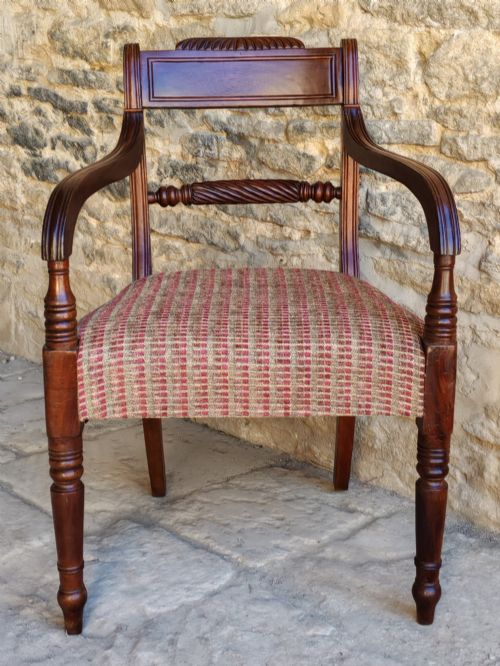
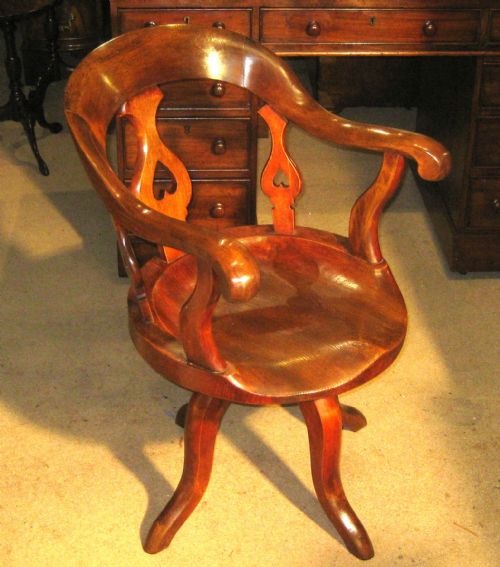
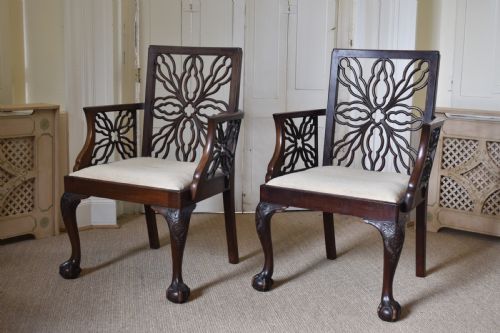
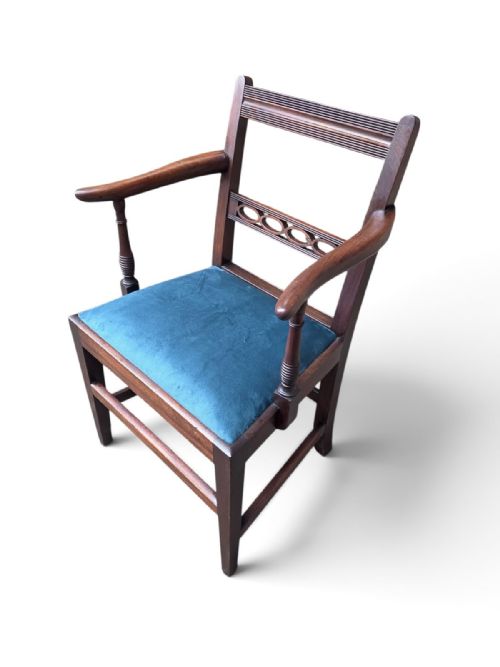
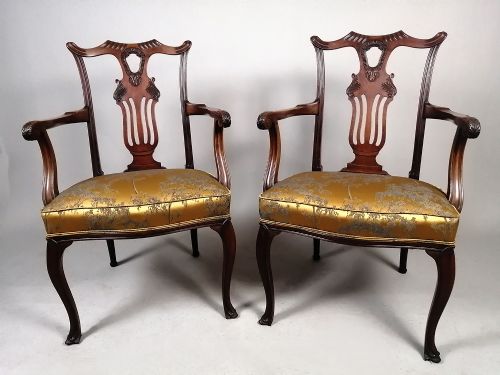
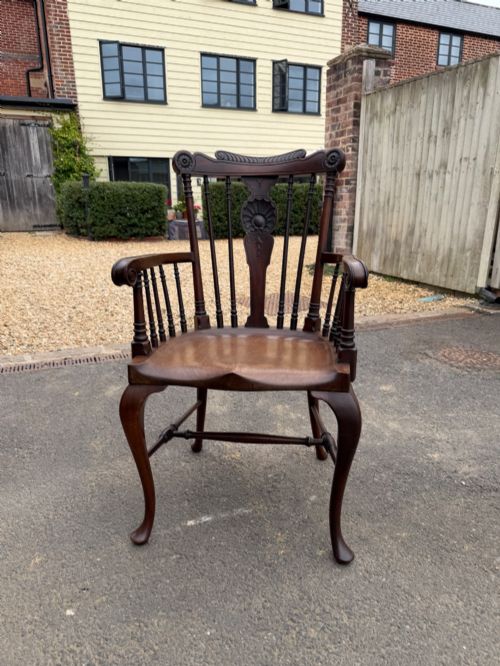
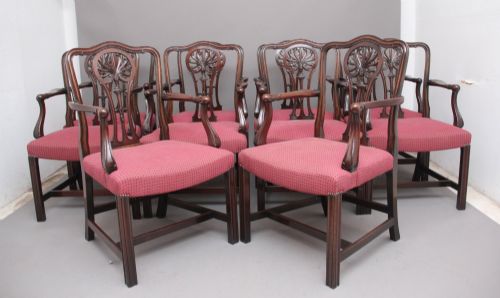
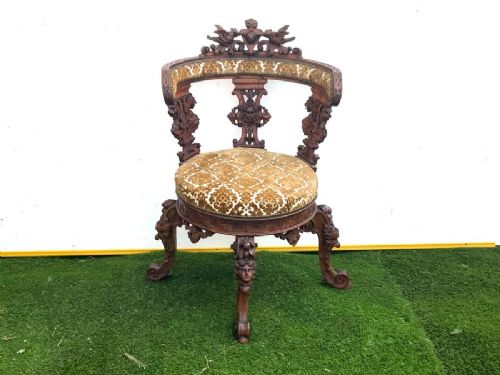
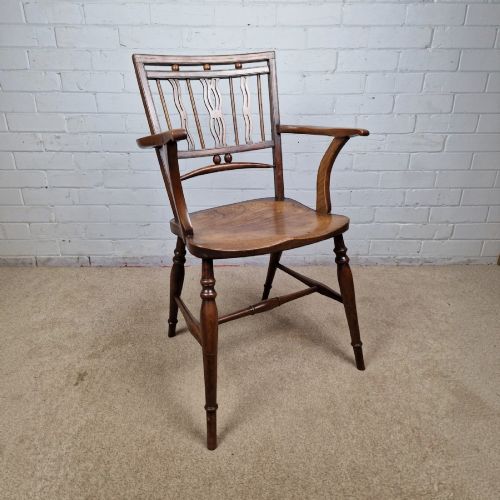
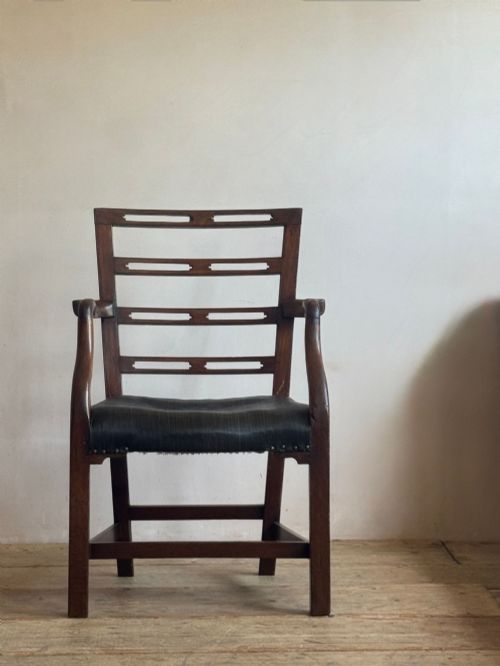
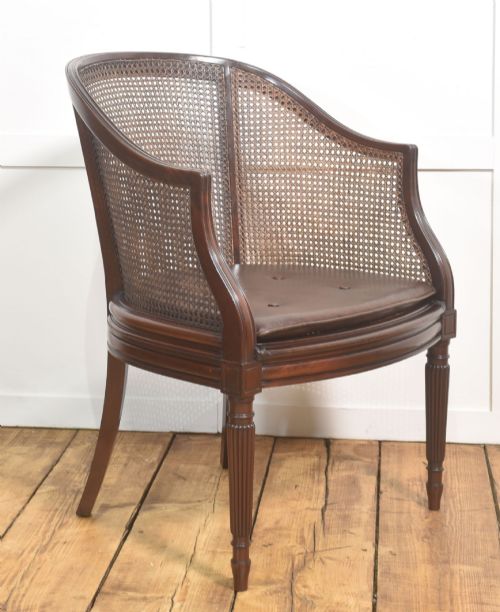
Carved Wood Desk Armchairs
These carved wood desk armchairs bring substance to a study, combining period craft with practical seating for daily work.
Carved Wood Desk Armchairs
Carved wood desk armchairs span several centuries of British and continental design, with mahogany and walnut forming the backbone of the selection. Buyers seeking carved wood desk armchairs will encounter pieces ranging from formal Georgian library seats to robust Victorian captain's chairs and revolving swivel office models.
Origins stretch across the eighteenth, nineteenth and early twentieth centuries, capturing shifts in seating comfort from rigid formal frames to ergonomic revolving office chairs. These seats combine structural timber frames with various drop-in or upholstered seat pads.
Materials and Construction
Cabinetmakers utilised solid mahogany, walnut and yew for primary frames, relying on dense hardwoods to support intricate hand-carved details along the splats and arms. Secondary timbers like elm and ash provide resilient bracing for country windsor and captain's chair variants.
Joinery techniques combined traditional mortise and tenon joints with steam-bent wooden components for curved armrests and hoop backs. Metal mechanisms appear in later nineteenth-century revolving iterations, anchoring central wooden spindles to brass castor feet.
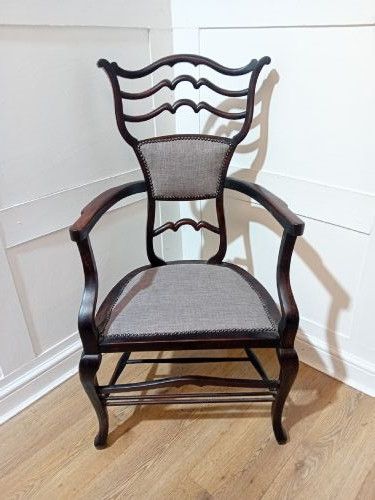
Upholstery methods varied from simple drop-in velvet and leather pads to complex sprung seats covered in durable fabrics and brass nail trim.
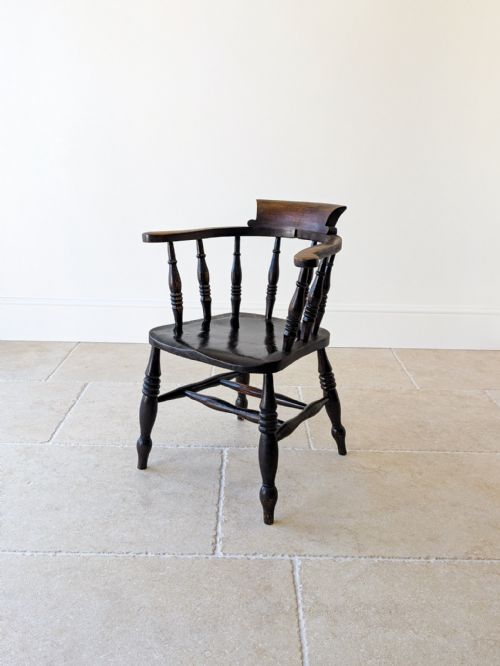
Several captain's chairs in the collection feature extra-wide armrests designed to accommodate nineteenth-century gentlemen wearing thick wool tailcoats.
Measures of Quality
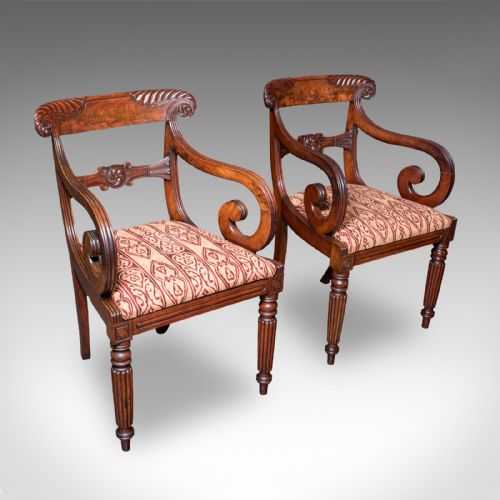
The crispness of the hand-carving defines the upper tier of these chairs, distinguishing deeply chiselled ribbon backs and scroll arms from shallow, mechanised copies. Timber selection also dictates grade, with dense, deeply figured mahogany and well-grained walnut commanding greater presence than plain secondary woods.
Structural integrity rests on the tightness of original joints and the preservation of timber patination built through centuries of use. Altered frames, replaced swivel mechanisms or mismatched replacement parts diminish the coherence of a period piece.
Alfred Allen of Birmingham
The Carved Wood Desk Armchairs Glossary
- Carver
- An armchair, often designed to match a set of dining or desk side chairs, featuring widened arm supports. These pieces provide extra width for formal attire or comfortable writing.
- Captain's Chair
- A low-backed wooden armchair with a continuous curved rail supported by numerous spindles. They were historically favored in offices and ships for compact stability.
- Splat
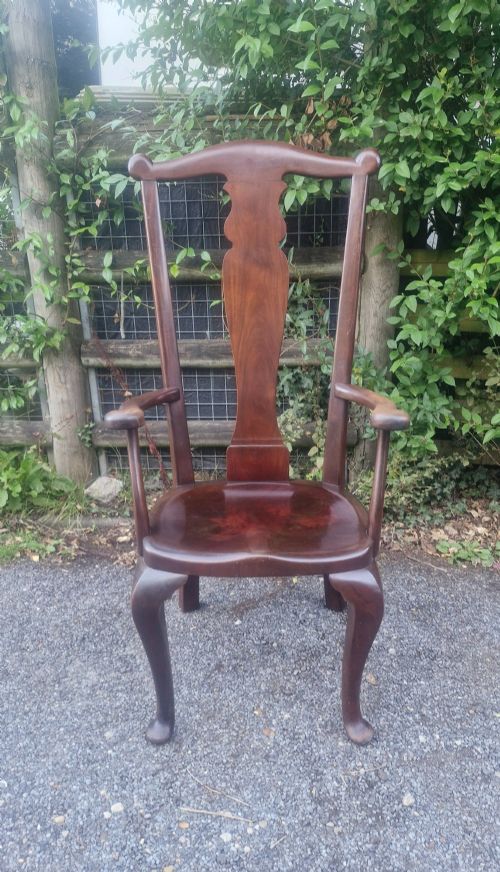
- The vertical central strip of wood in a chair back, connecting the seat to the top rail. Master carvers frequently pierced and sculpted these elements with geometric or botanical motifs.
- Revolving Desk Chair
- A swivel seat mounted on a central spindle, often raised on a cruciform base with castors. This form emerged to let office workers pivot between ledger desks.
- Drop-In Seat
- A removable wooden frame upholstered separately and dropped into the seat rebate of the chair frame. This construction allowed easy reupholstering without dismantling the main joinery.
Carved Wood Desk Armchairs: Frequently Asked Questions
What makes a desk armchair different from a standard dining chair?
Desk armchairs feature lower profiles, wider elbow rests and sometimes swivel mechanisms designed for prolonged seated tasks rather than dining.
Many incorporate sturdy wooden armrests that support the arms while writing or reading heavy ledgers.
Are revolving desk chairs authentic to the nineteenth century?
Yes, mechanical swivel chairs gained popularity during the Victorian era as office spaces expanded and administrative work intensified.
These pieces typically combine solid mahogany frames with iron or brass underframes to permit smooth rotation.
How do I identify a Chippendale revival chair from an original?
Original eighteenth-century pieces exhibit hand-cut joinery, mature timber shrinkage and period tool marks hidden beneath the frame.
Revival pieces from later periods often show uniform machine tooling and standardised dimensions typical of nineteenth or twentieth-century workshops.
Can these antique chairs handle daily use at a modern desk?
Most solid wood frames possess robust construction that easily withstands modern daily sitting once joints are secured by a professional.
Upholstered pads and leather seats can also be maintained or refreshed without altering the historic wooden framework.