

Carved Open Armchairs
These carved open armchairs bring formal period seating into modern rooms, offering sculpted timber frames and upholstered comfort from the nineteenth and early twentieth centuries.
What carved open armchairs are
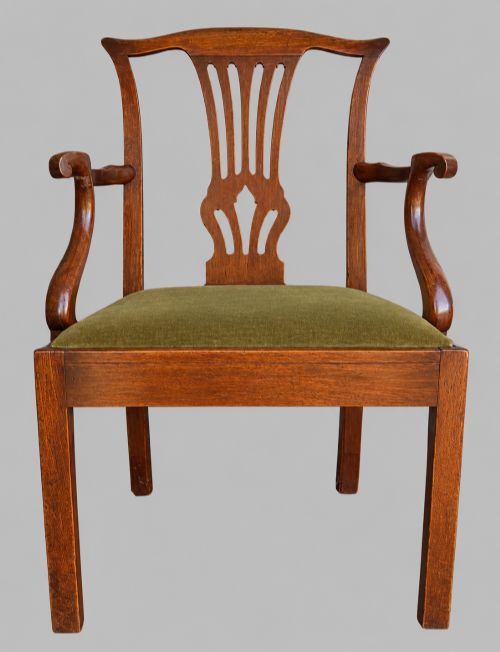
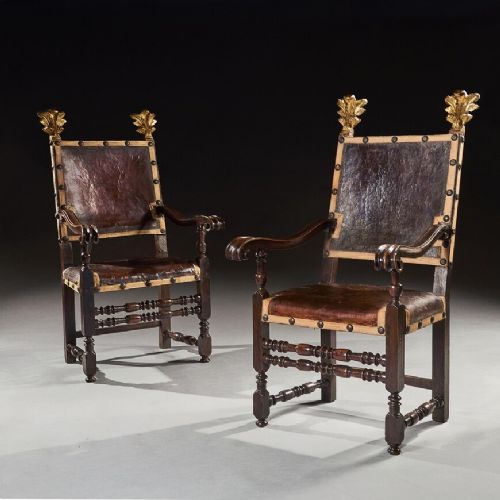
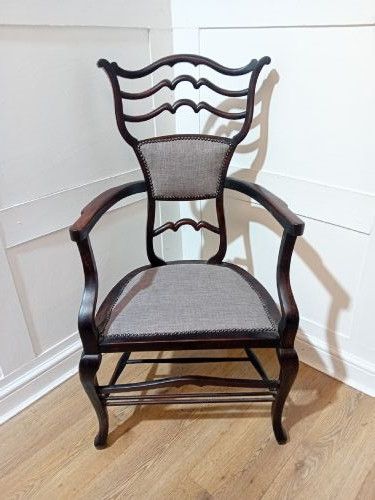
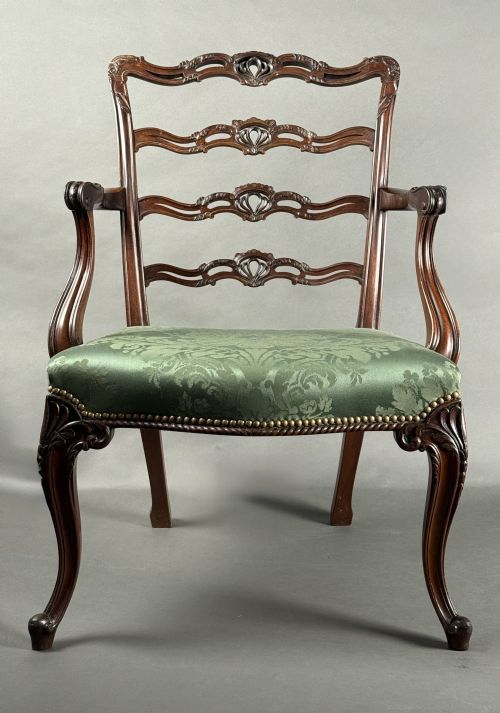
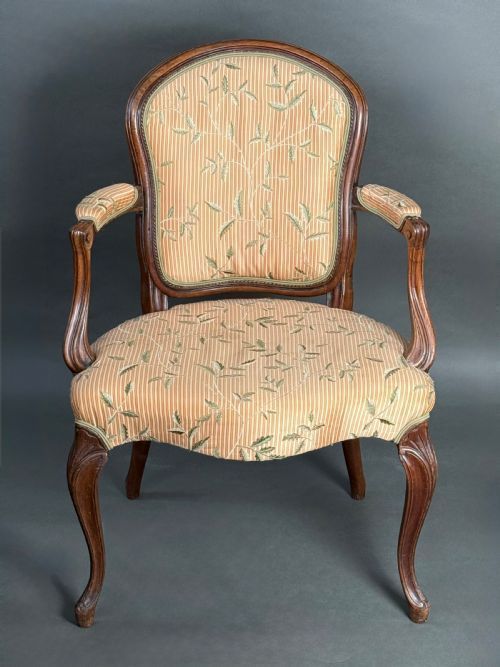
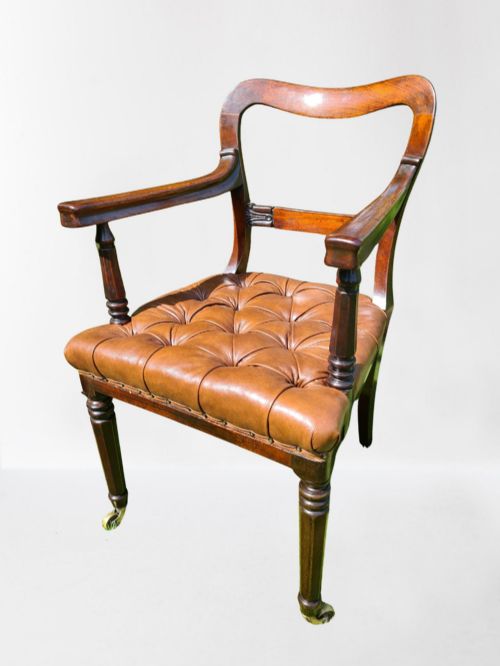
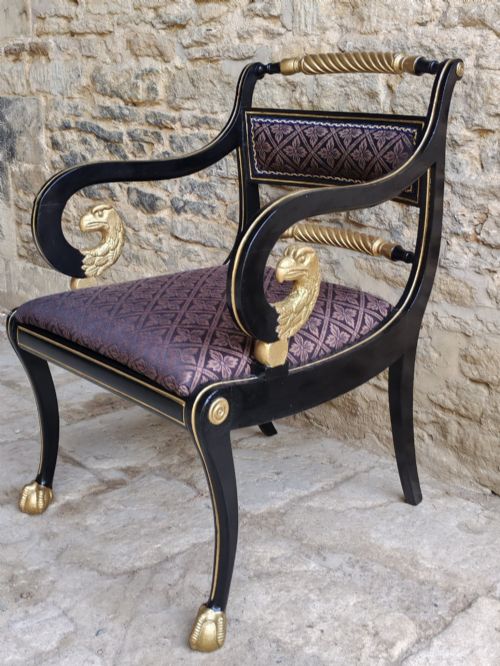
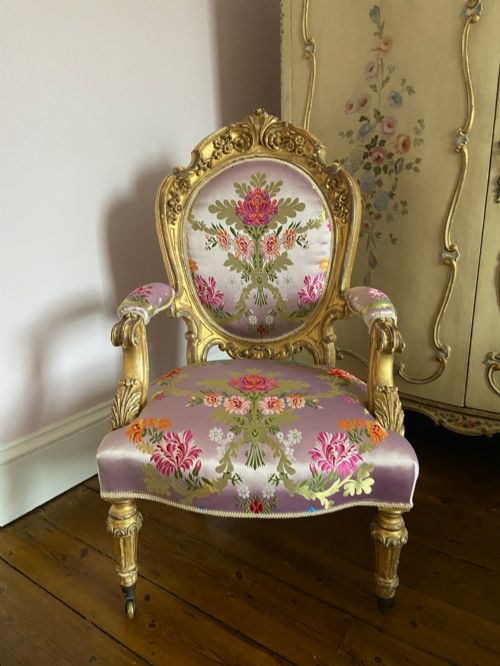
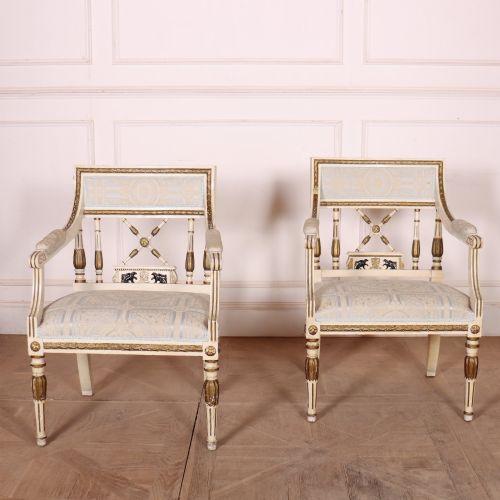
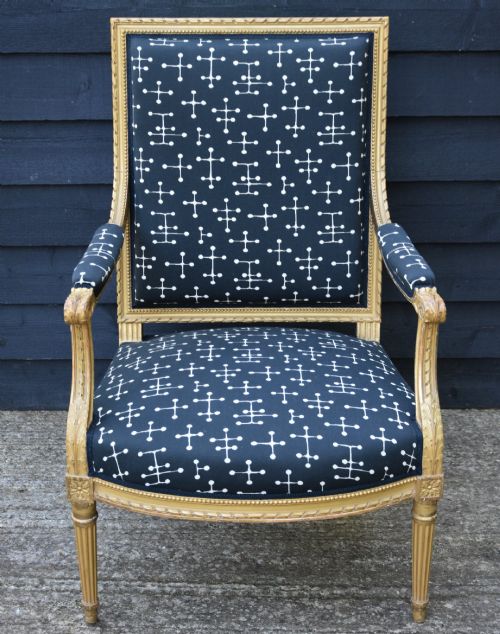
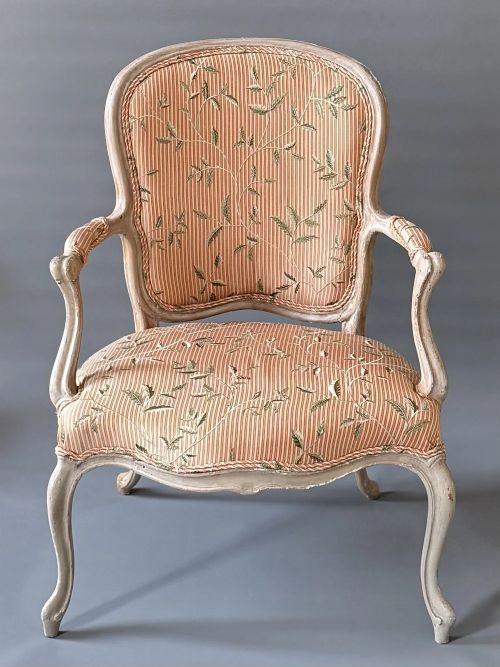
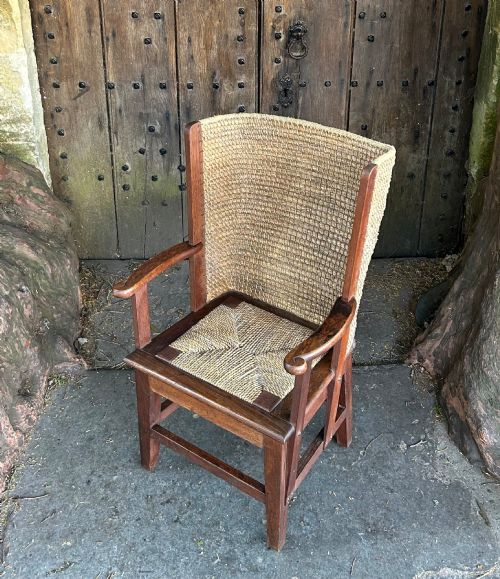
Carved open armchairs are timber seating furniture featuring exposed wooden arms, distinct from fully upholstered armchairs by their open sides and structural framing. The selection here spans the nineteenth century through to the nineteen-twenties, incorporating Victorian, Edwardian, and Continental periods.
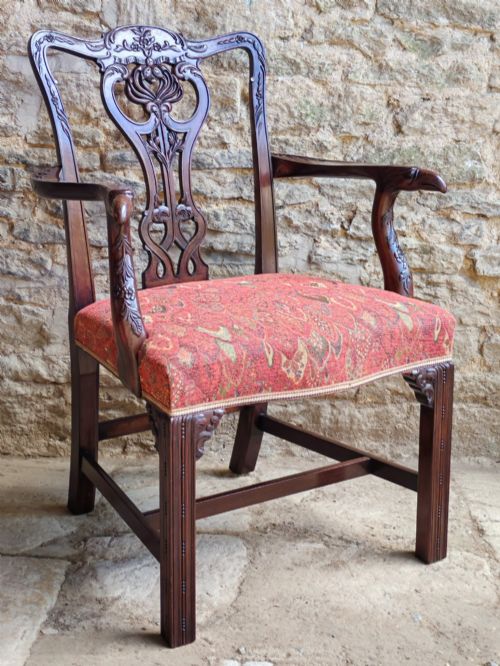
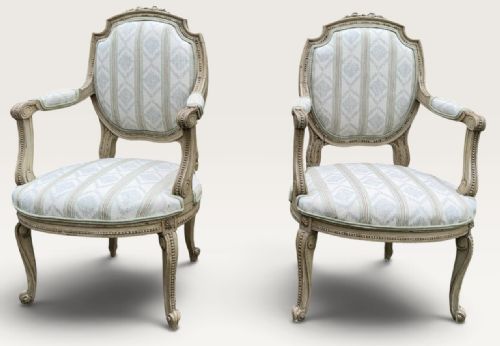
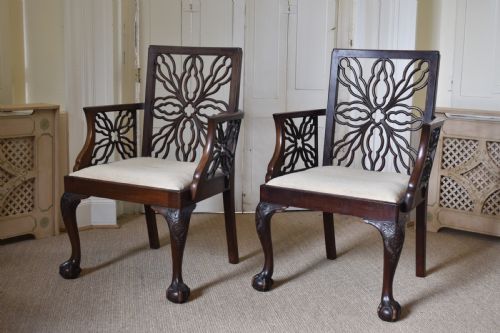
The dominant forms include matched pairs and single seats, with French fauteuils and library chairs featuring prominently alongside English interpretations. Styles range from revival designs drawing on Louis XV, Chippendale, and Hepplewhite traditions to Italianate and Baroque expressions.
How they were made
Makers shaped these frames from solid hardwoods, primarily walnut, mahogany, and oak, alongside giltwood treatments on select Continental examples. Hand-carved details define the crest rails, arms, and cabriole or straight legs, demonstrating traditional joinery and cabinet-making techniques.
Upholstery methods involve traditional stuffing applied over supportive webbing, finished with textiles such as damask, linen, tapestry, and leather secured with brass studs.
Retail Price Guide 2026
Typical UK retail prices for carved open armchairs, calculated from the Sellingantiques database of over a million retail prices indexed since 2003. This retail price guide relies exclusively on Sellingantiques data; no external sources or auction records are used, so the figures do not describe the wider market.
The listings here encompass pieces in walnut, mahogany, and oak, spanning Victorian, Edwardian, and nineteenth-century periods.
What varies in quality
Quality in these seating pieces rests upon the crispness and depth of the timber carving, where manually sculpted detail surpasses mechanical shaping. The choice and density of the primary wood, whether rich mahogany or figured walnut, dictate the structural integrity and visual weight of the frame.
The standard of upholstery materials, from heavy damask to traditional leather with studwork, alongside the preservation of original or sympathetic fabric treatments, separates standard production from exceptional examples.
The Carved Open Armchairs Glossary
- Fauteuil
- An open-arm armchair with a wooden frame, originating in France and typically featuring upholstered seat and back pads.
- Damask
- A reversible figured fabric traditionally utilised for upholstery, woven with intricate patterns that catch the light.
- Cabriole leg
- A furniture leg featuring a double curve, stepping outwards at the knee and tapering inward to a foot.
- Giltwood
- Timber coated with a thin layer of gold leaf or gilt powder, frequently seen on Continental revival seating.
Frequently Asked Questions
Where were carved open armchairs placed?
These chairs served primarily in formal libraries, reception rooms, and grand halls as both decorative seating and functional furniture. Their open sides allowed generous skirts and garments to fit comfortably.
Pairs frequently flanked fireplaces, desks, or doorways in nineteenth-century interiors, providing balanced symmetry to a room arrangement.
How do I identify French fauteuils?
French fauteuils are distinguished by their exposed carved wooden frames, open sides, and upholstered backrests. They often display curved lines and floral motifs derived from Louis revival styles.
Walnut and giltwood are common framing materials, frequently paired with traditional tapestry or damask upholstery.
What is the difference between Victorian and Edwardian armchairs?
Victorian examples in this selection often feature heavier oak or mahogany timbers with deep relief carving and leather or heavy fabric upholstery. They reflect the ornate revival tastes of the nineteenth century.
Later pieces from the early nineteen-hundreds lean towards lighter walnut frames, desk chair configurations, and refined proportions drawing on earlier cabinet-making traditions.
How should I live with antique armchairs?
These seating pieces integrate well into contemporary spaces as occasional chairs in living rooms or studies. Positioning them away from direct sunlight protects delicate textiles like damask and tapestry from fading.
Regular dusting of the carved wooden frames with a dry cloth maintains the timber finish without requiring modern chemical polishes.