
Pair High Back Armchairs
Pair high back armchairs command a room with stature, offering deep seating and elevated support that anchor a formal interior.
Pair High Back Armchairs
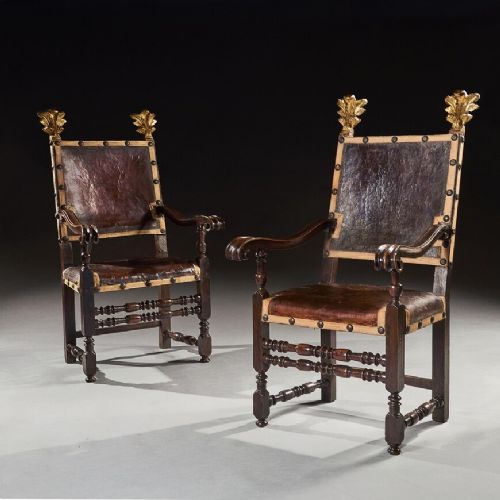
Pair high back armchairs encompass substantial seating designed with elevated vertical frames, originating across the eighteenth, nineteenth, and twentieth centuries. These pieces appear in revival styles such as Jacobean, Gothic, and Queen Anne, alongside French and Continental forms.
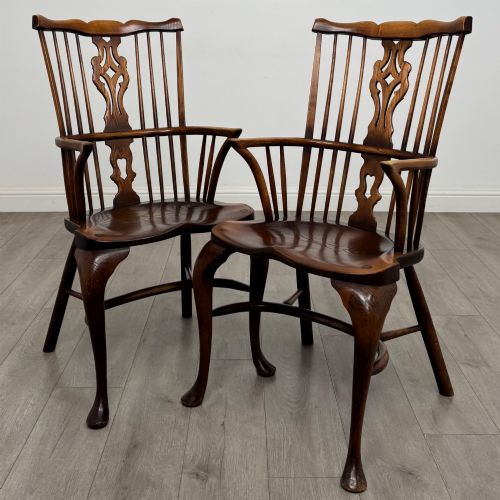
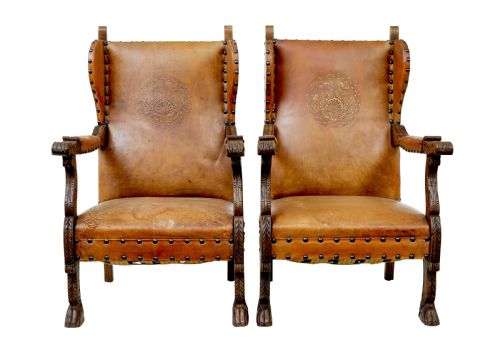
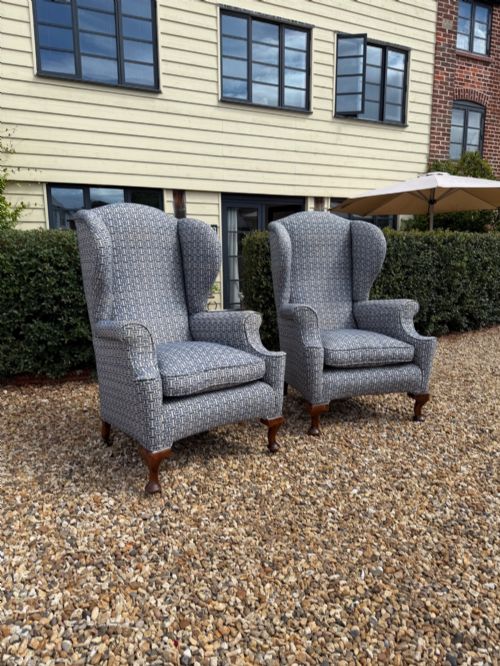
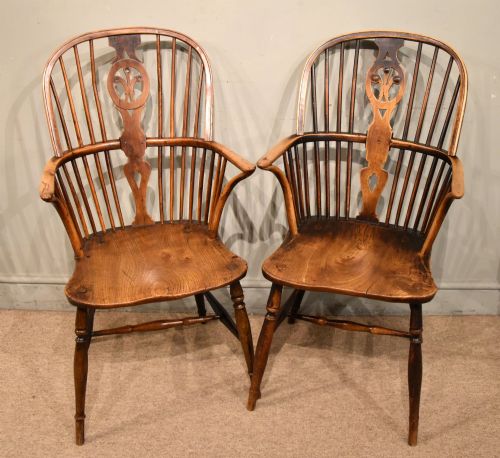
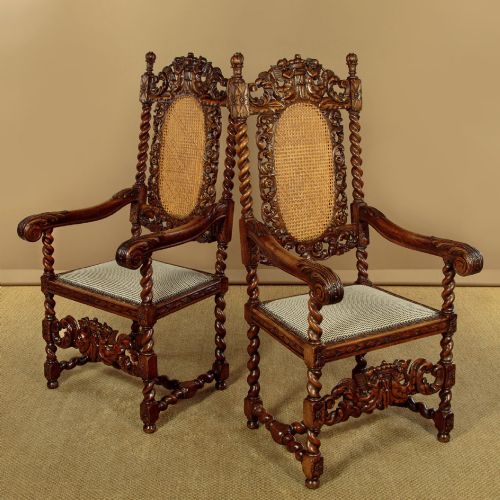
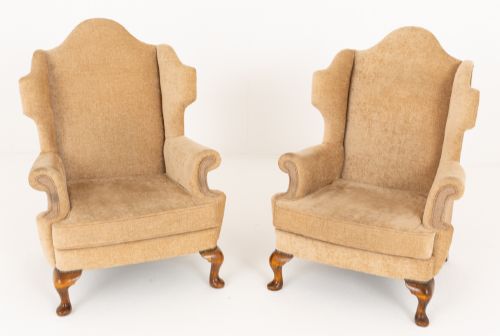
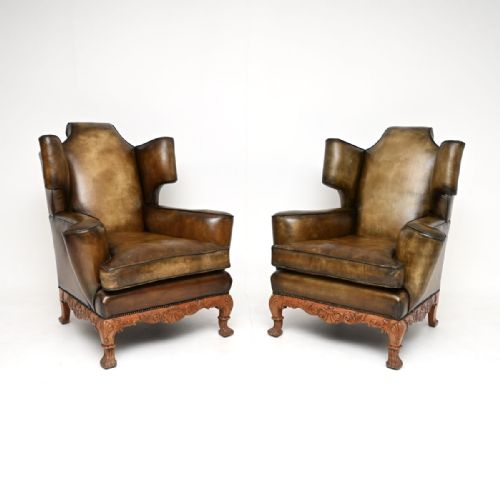
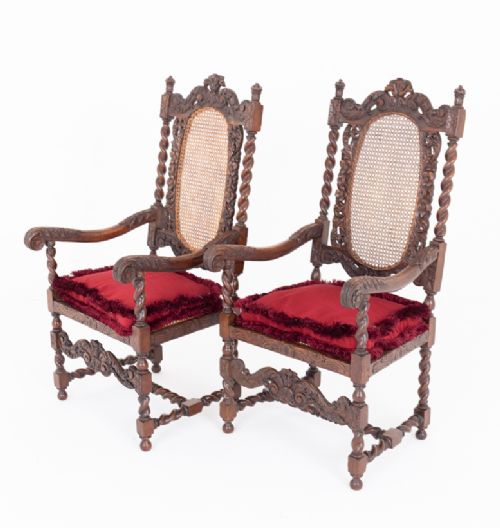
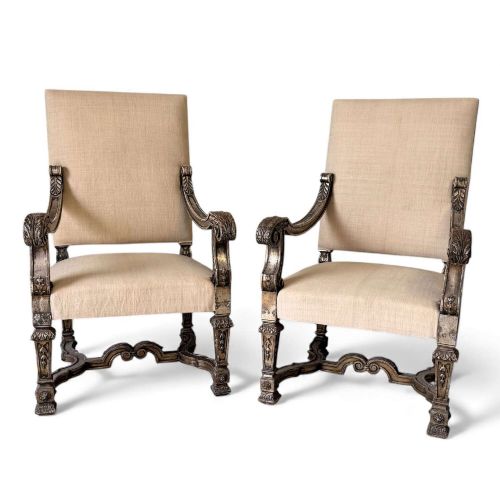
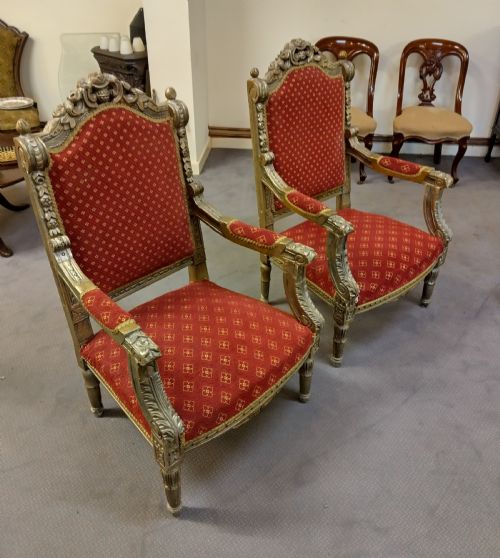
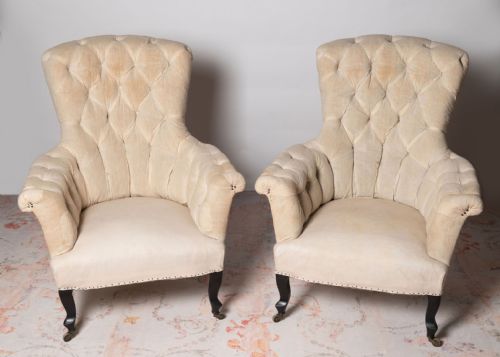
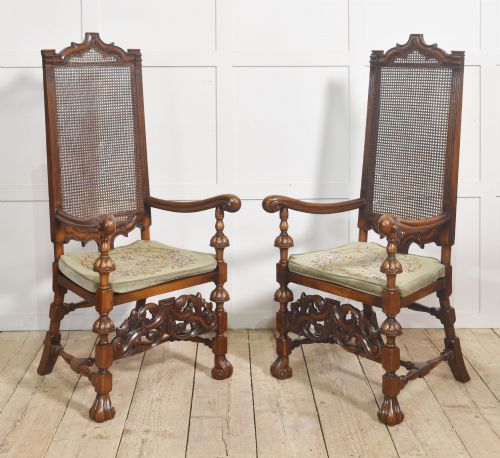
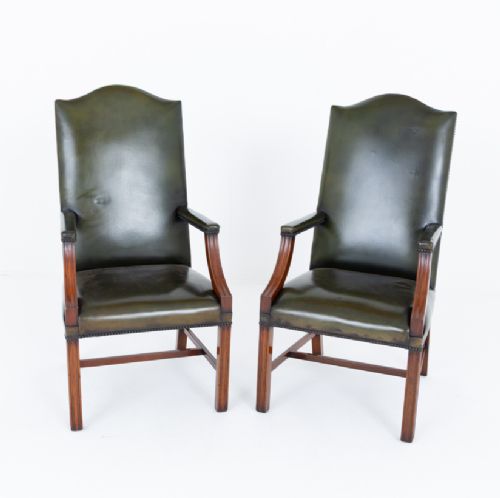
The selection on this page ranges from heavy carved oak throne chairs to upholstered wingbacks in leather and tapestry. Buyers encounter walnut and hardwood frames with buttoned upholstery, high hoop backs, and carved scroll arms.
Originating as ceremonial, library, or drawing room seating, these pairs provide matched symmetry for firesides and formal reception spaces. They draw upon historical models from seventeenth-century Baroque to Edwardian interpretations.
What Varies in Quality
The distinction between tiers rests upon the depth and crispness of wood carving, from flat machine-cut mouldings to deeply undercut naturalistic foliage and figural work. Timber selection dictates structural integrity, with dense figured walnut and quarter-sawn oak representing higher craftsmanship.
Proportion and stance separate standard production from superior examples, particularly in the sweep of high backs and the balance of cabriole or scroll legs. The integrity of the frame joints and the quality of period-appropriate upholstery materials determine long-term durability.
Pair High Back Armchairs Retail Price Guide 2026
Typical asking prices for pair high back armchairs among the pieces listed under this phrase on Sellingantiques today, from the lower quarter to the upper quarter. They describe what is for sale here now, not the wider market.
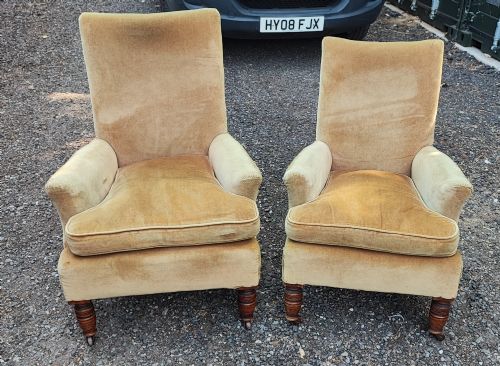
Listings feature oak, walnut, and elm frames alongside leather, tapestry, and silk upholstery across multiple revival styles.
William Morris·Robert Mouseman Thompson·A.W.N. Pugin
The Pair High Back Armchairs Glossary
- Wingback
- An armchair with side panels designed to shield the sitter from drafts and retain fireplace heat. These projecting cheeks form an integral part of the high upholstered back.
- Baroque
- A flamboyant style characterised by exuberant ornamentation, curving lines, and theatrical scale. This aesthetic frequently manifests in heavy parcel-gilt and carved walnut frames.
- Windsor
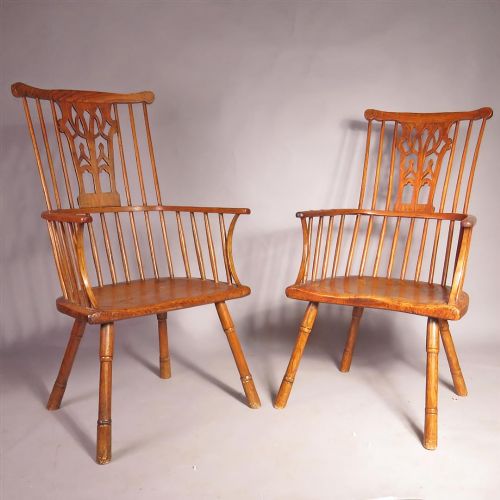
- A traditional chair construction featuring a solid wooden seat into which legs and spindles are directly wedged. High back versions include comb backs and hoop backs in elm, yew, or beech.
- Fauteuil
- An open-arm armchair originating in France, featuring exposed wooden framing and upholstered arm pads. Walnut and gilt finishes typify these formal seating forms.
- Giltwood
- Timber coated with a thin layer of gold leaf or gilt finish applied over a prepared gesso ground. This treatment creates a brilliant reflective surface on formal throne and salon chairs.
Pair High Back Armchairs: Frequently Asked Questions
Where should I place pair high back armchairs?
These tall seats demand generous floor space and work well flanking a substantial fireplace or anchoring opposite sides of a large formal reception room. Their vertical presence also suits high-ceilinged libraries and grand hallways.
Because of their substantial height, avoid placing them against low walls where they might dwarf surrounding furniture. Positioning them symmetrically creates a natural focal point for conversation areas.
How do I distinguish between revival periods?
Review the joinery methods and the specific stylistic vocabulary employed on the wooden frame, noting whether the carvings reflect seventeenth-century strapwork or eighteenth-century cabriole curves. Oak pieces with heavy geometric panels typically point to Jacobean or Gothic revivals, while walnut frames with smooth scrollwork often indicate later Baroque interpretations.
Examination of the timber underneath and the wear patterns on the feet often clarifies whether a piece dates to the original historic era or a later nineteenth-century revival workshop.
Are these chairs suitable for daily seating?
Many of these pieces were built for formal display or reading rather than lounging, meaning the upright posture and firm padding reflect historical comfort standards. Leather wingbacks and upholstered library chairs generally offer a more supportive sit than rigid carved wooden throne chairs.
Consider the seat depth and back angle relative to your height before committing to daily use in a primary living space. Modern placement often benefits from pairing them with complementary footstools.
How should I care for leather and wood finishes?
Maintain timber frames by dusting regularly with a dry cloth and applying occasional quality wax to nourish the grain of oak and walnut. Keep leather upholstery supple with specialist balms to prevent cracking on buttoned areas and high-wear points.
Position these chairs away from direct sunlight and heat sources, which cause wood to split and leather or silk fabrics to fade.