
Antique Walnut Carvers
Antique walnut carvers are timber seating pieces built for the head of the table or a study desk, offering substantial arms and period character.
Antique Walnut Carvers
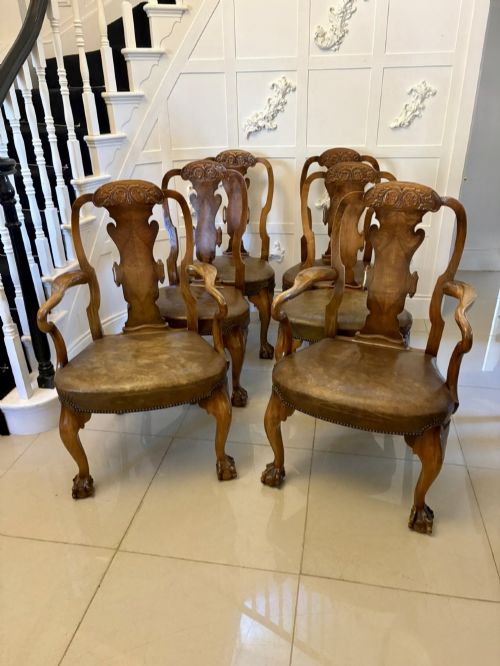
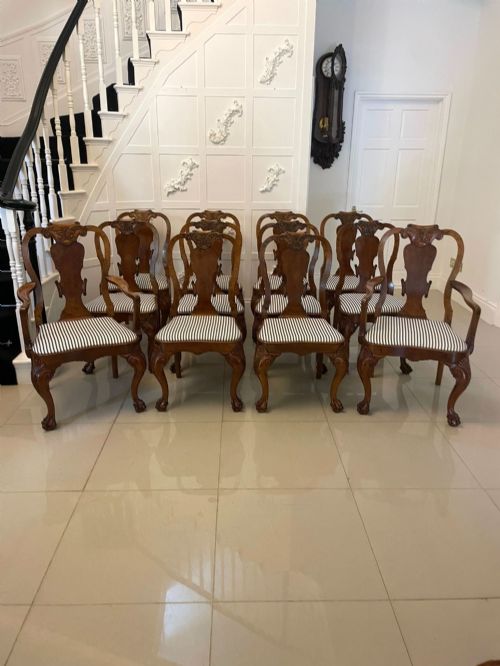
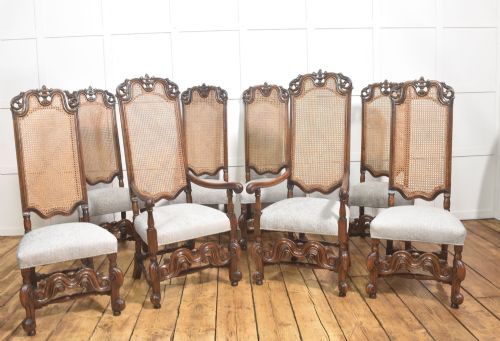
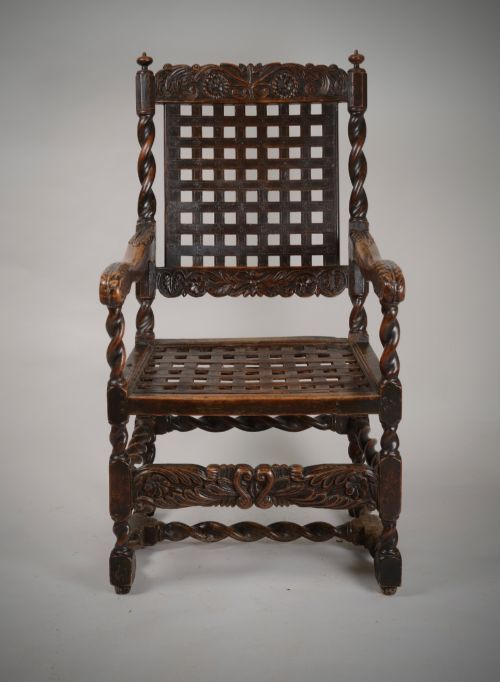
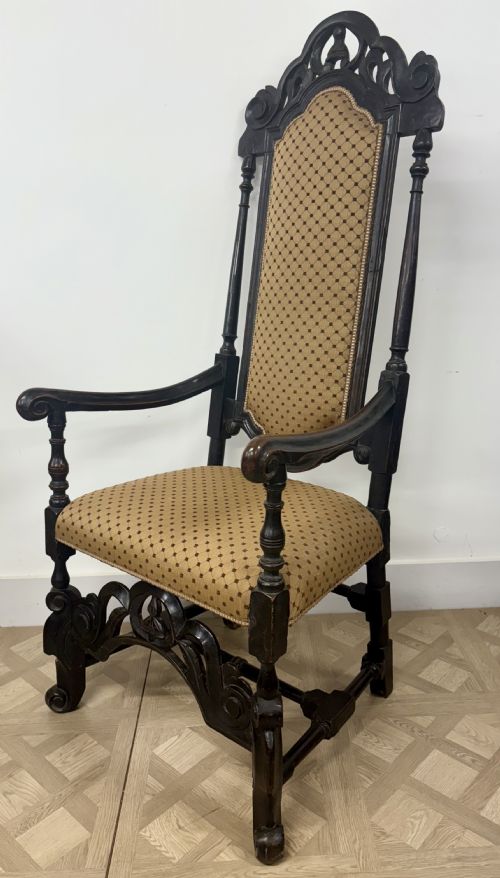
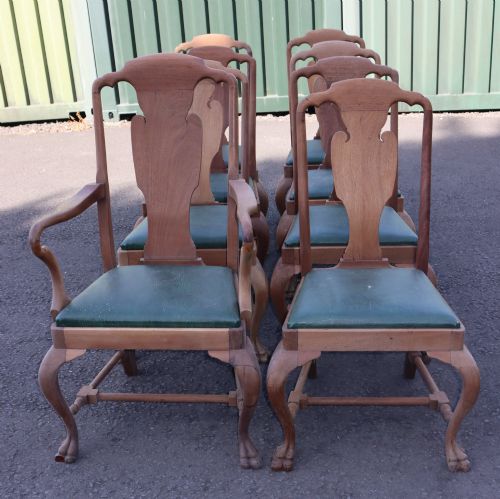
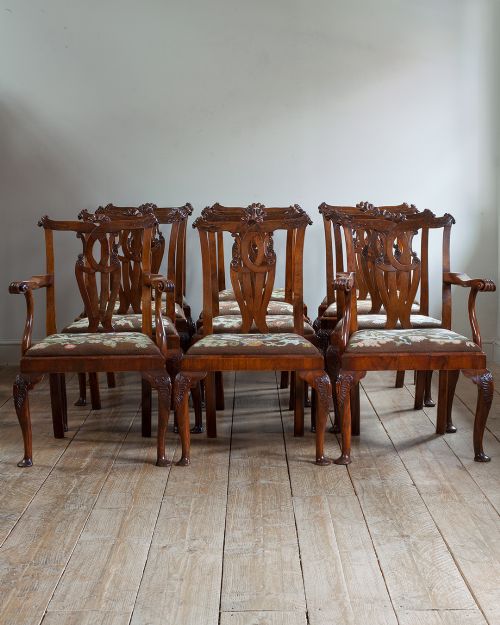
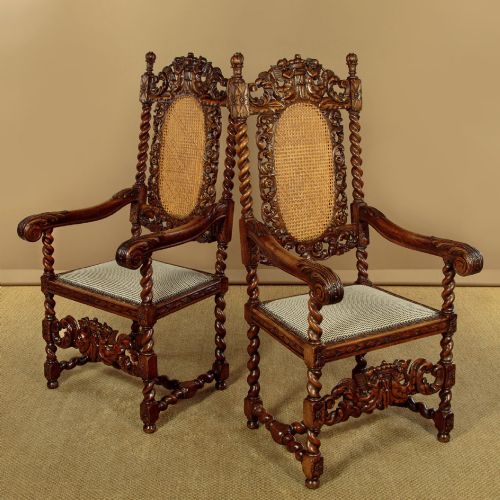
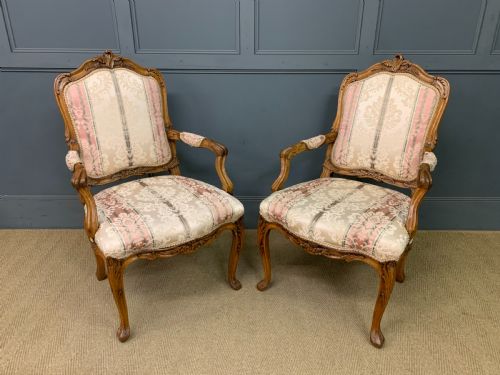
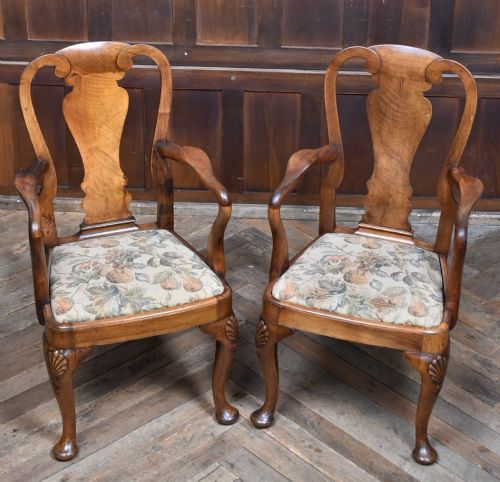
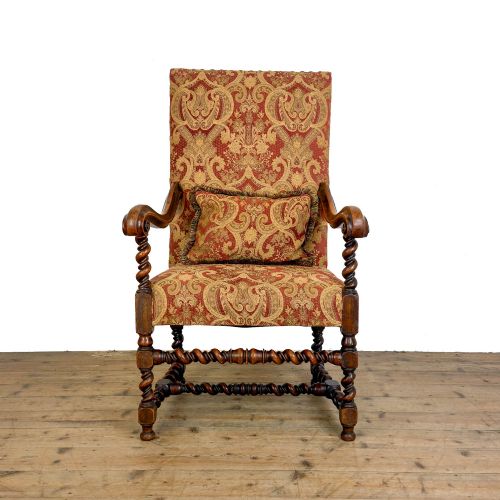
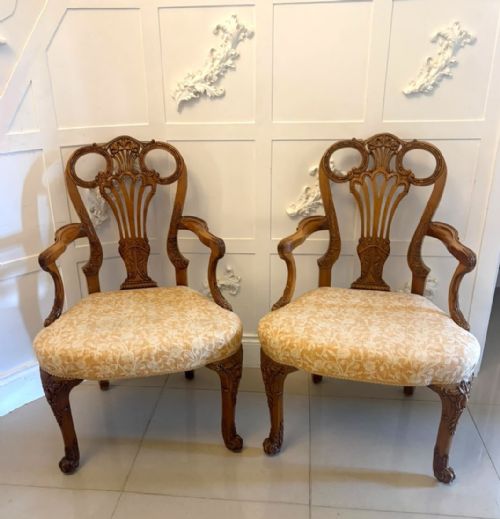
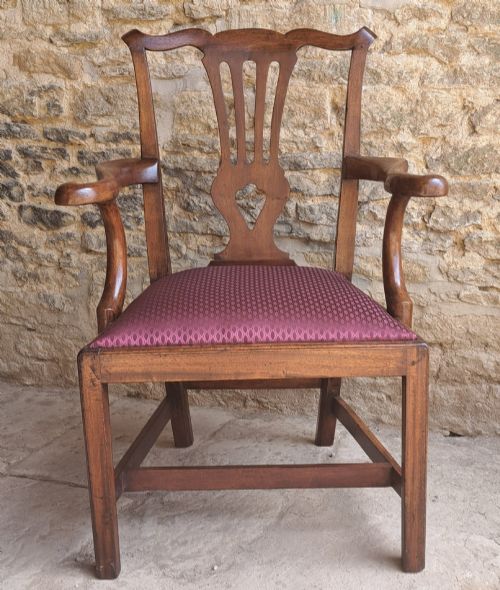
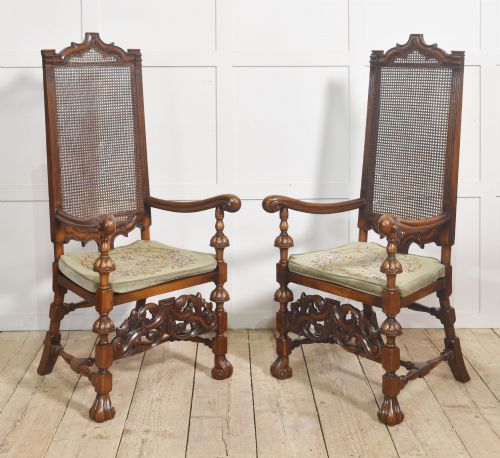
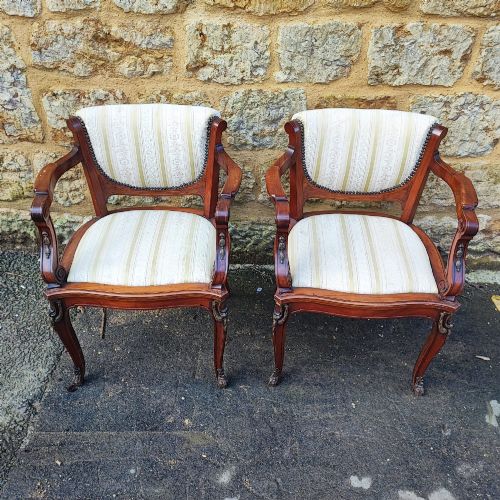
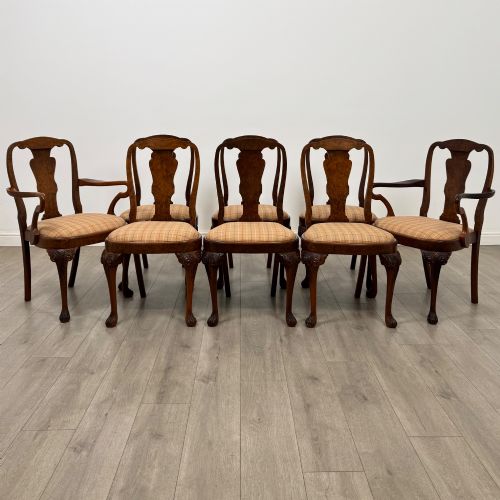
When you search for antique walnut carvers, you encounter single armchairs, pairs of desk chairs, and larger dining sets that include elbow chairs alongside side chairs. The pieces span centuries, running from seventeenth-century high-back and cane examples through eighteenth-century George II and Italian Rococo forms, up to Victorian, Edwardian, and Art Deco interpretations.
Most examples you meet on this page belong to the nineteenth and twentieth centuries, particularly Victorian and Edwardian revivals of Queen Anne, Carolean, and William & Mary styles. You also find French, Dutch, and Italian imports, alongside Scottish and English regional pieces, demonstrating the widespread use of walnut in formal seating across Europe.
How they were made
Cabinet makers constructed these chairs using solid walnut and burr walnut veneers, often shaped into high backs, scrolled arms, and cabriole legs. Frame timber is frequently paired with secondary woods for internal bracing and seat rails.
Seating portions rely on traditional upholstery methods utilising fabric, leather, velvet, and textile coverings, whilst other variants incorporate cane panels. Brass hardware and decorative carving complete the structural and ornamental details.
The listings span from seventeenth-century walnut chairs to twentieth-century Art Deco and Edwardian interpretations.
What varies in quality
The distinction between ordinary and exceptional examples rests upon the crispness of the hand-carving and the choice of timber figure, such as highly figured burr walnut. Finer sets display harmonious grain matching across multiple chairs and deeply sculpted splats or head rails.
Proportion and structural integrity also divide the range, as pieces retaining their original framing without excessive timber replacement hold greater integrity. Refined turning on legs and stretchers further elevates the standing of an armchair.
Lamb of Manchester·Epstein·J. & T. Scott, Edinburgh
The Antique Walnut Carvers Glossary
- Carver
- An armchair designed with open elbows, traditionally placed at the head of a dining table to match a set of single chairs.
- Burr walnut
- A prized timber harvested from tree growths that produces intricate, swirling grain patterns highly sought after in cabinet making.
- Cabriole leg
- A furniture leg featuring a double curve, typically arching outward at the knee and tapering inward to a pad or claw foot.
- Splat
- The vertical central strip of wood in the back of a chair, often shaped, carved, or pierced for decoration.
- Caning
- A seating or backrest panel woven from split rattan cane, common in seventeenth-century and revival period chairs.
Antique Walnut Carvers: Frequently Asked Questions
What are antique walnut carvers?
These are sturdy wooden armchairs designed for dining tables, libraries, or parlours, distinguished by their open arms and walnut construction. They usually accompanied matching sets of single chairs for the heads of the table.
Craftsmen built them across multiple centuries, resulting in varied silhouettes ranging from high-backed seventeenth-century styles to curved Art Deco forms.
How do I date an antique walnut carver?
Dating relies on examining the structural joinery, wood types, and stylistic revival cues such as cabriole legs, splat shapes, and carving motifs. Seventeenth-century pieces often show high cane backs, while eighteenth-century examples favour simpler proportions and walnut veneers.
Later Victorian and Edwardian pieces frequently revive earlier periods like Queen Anne or William & Mary, combining historic shapes with nineteenth-century manufacturing methods.
Are walnut carvers comfortable to use?
Many examples provide upright seating support suited to formal dining or desk work rather than deep lounging. Their upholstered pads or cane backs offer firm support depending on the period and padding style.
Some twentieth-century Art Deco and Edwardian variants introduce broader proportions and softer squabs designed for relaxed daily seating.
How do I care for walnut furniture?
Protect the timber by keeping chairs away from direct heat sources and strong sunlight, which can dry out walnut and fade the polish. Regular dusting with a dry cloth helps maintain the finish without building up residue.
Upholstered sections benefit from gentle brushing or specialist fabric cleaning, whilst cane panels require occasional light moisture to prevent brittleness.