
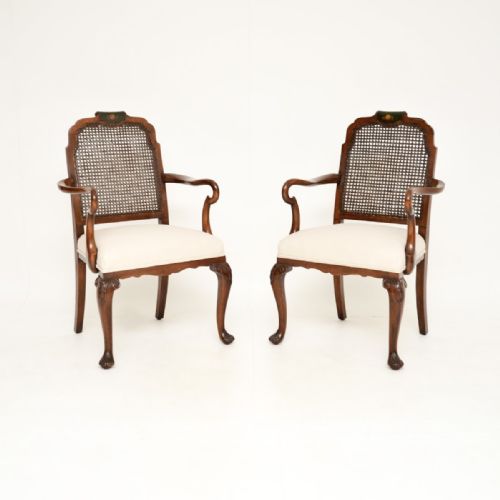

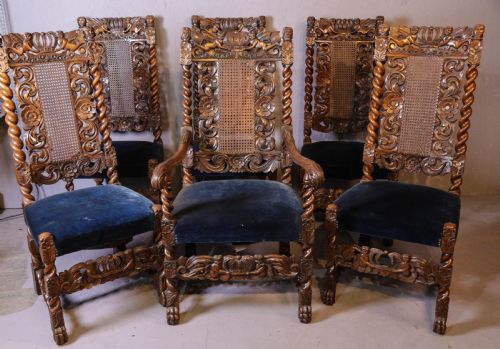


Walnut Cane Armchair
A walnut cane armchair brings rich timber frames and woven seating together, offering tactile structure and historical presence to a room.
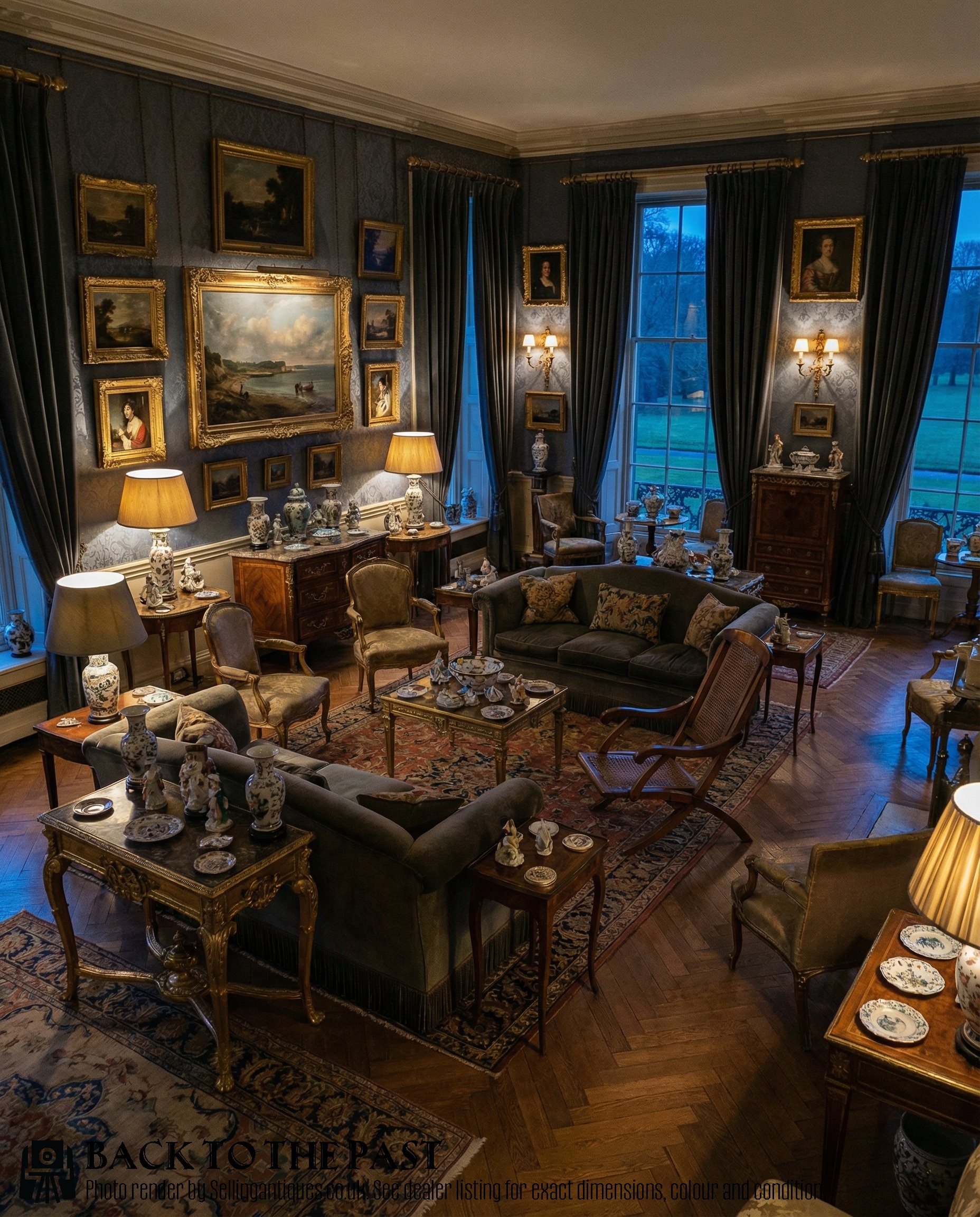
Walnut Cane Armchair
A walnut cane armchair spans centuries of seating design, appearing in forms ranging from high-backed dining chairs to low library bergères and folding steamer chairs. Buyers searching for a walnut cane armchair encounter pieces built across the seventeenth, eighteenth, nineteenth, and twentieth centuries, reflecting changing domestic habits over long periods.
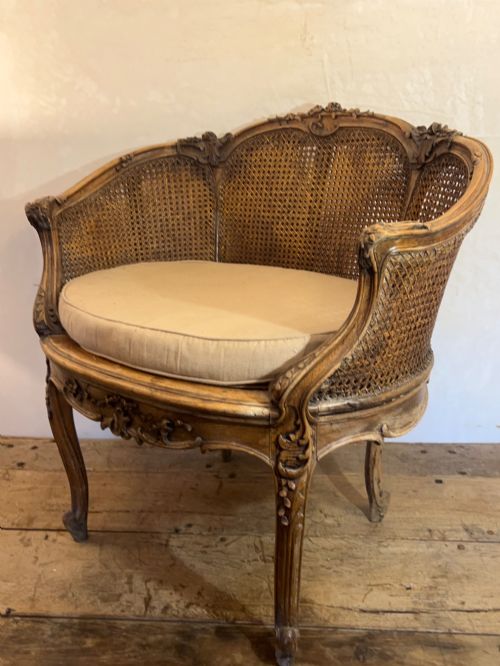
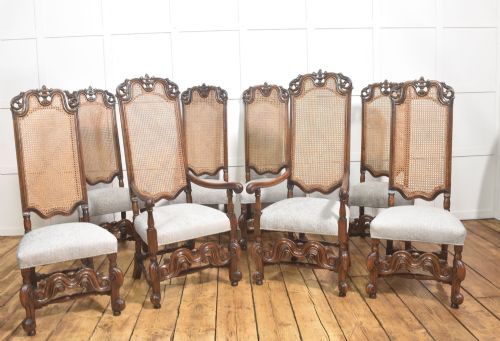
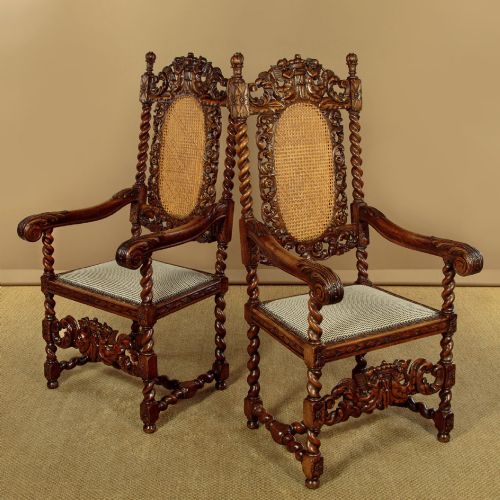
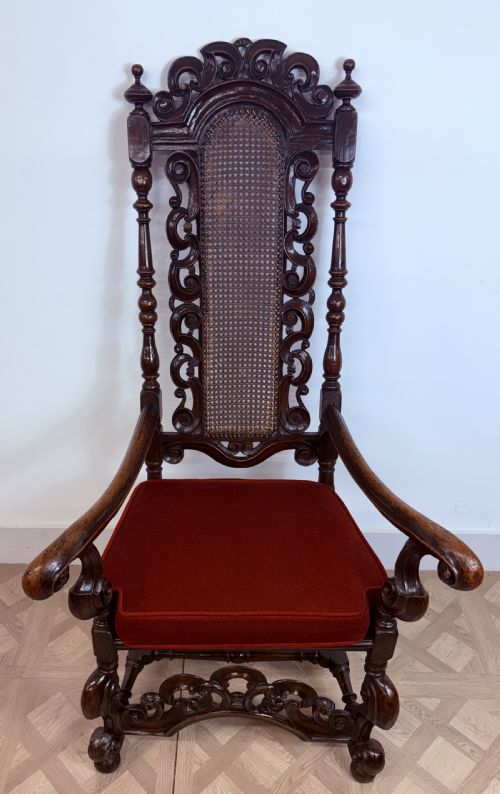
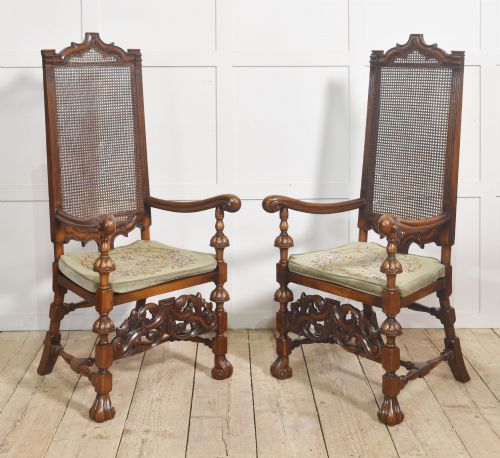
The most common examples on this page date from the nineteenth and early twentieth centuries, frequently drawing on earlier Carolean, Louis XV, or William and Mary styles. These revival pieces blend structural walnut frames with woven cane panels on seats and backs, sometimes accompanied by upholstered cushions or fabric sections.
Materials and construction
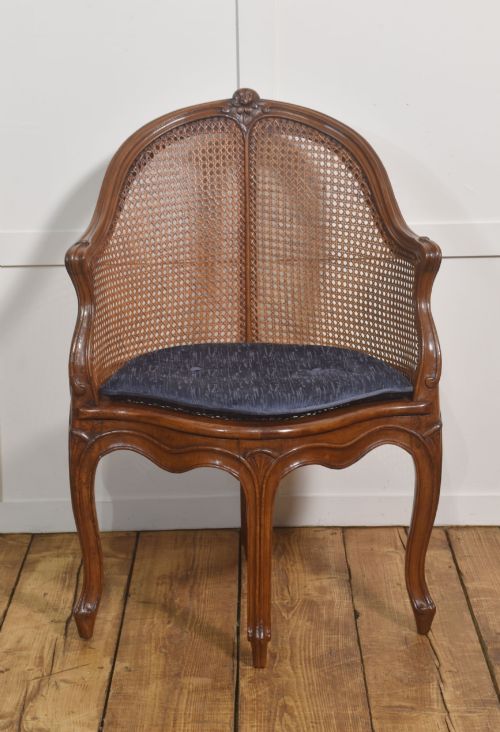
Makers built these frames using solid walnut, selected for its grain and strength, sometimes shaping the timber into heavily carved scrolls or smooth cabriole profiles. Lacquered and painted finishes also appear, altering the appearance of the natural wood surface according to period taste.
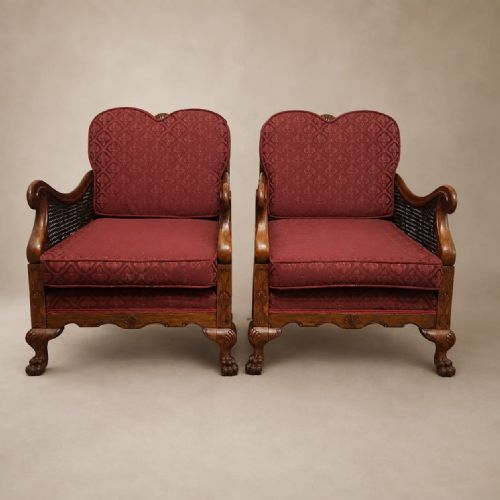
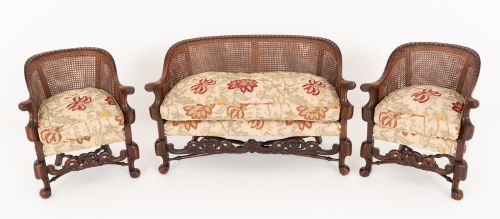
Cane, rattan cane, and woven cane form the characteristic backrests and seats, providing flexible support through open or split cane patterns. Upholstery fabric, velvet, and textile cushions frequently supplement the woven panels, adding softness to bergère chairs and library seating.
Distinctions in quality
The standard of carving defines the distinction between simpler vernacular seating and ambitious revival or period pieces, with crisp relief work on the walnut frame marking superior execution. The depth and complexity of the wooden scrollwork or floral motifs reveal the hand of the maker.
The tightness and uniformity of the cane weave determine the integrity of the seating surface, where even tension across the panels supports daily use. Original frames retaining their structural rigidity distinguish well-preserved examples from those requiring extensive intervention.
The Walnut Cane Armchair Glossary
- Bergère
- An enclosed upholstered armchair with a wooden frame, often featuring cane sides and back panels. This form emerged in France and remained popular through various revival periods.
- Carolean
- A seventeenth-century English style associated with the reign of Charles II, characterised by rich walnut framing, high backs, and elaborate scroll carving. Revival pieces borrow these motifs freely.
- Cane
- Material woven from the outer bark of rattan palms, used to create flexible and breathable panels for chair seats and backs. Split cane offers a finer texture.
- Cabriole
- A curved leg form that swells outward at the knee and tapers inward at the foot, commonly found on eighteenth-century designs and later revival seating.
- Steamer chair
- A folding wooden lounge chair designed for travel or deck use, frequently incorporating cane or slatted panels for adjustable relaxation.
Walnut Cane Armchair: Frequently Asked Questions
How do I care for cane seats?
Keep cane panels clean with a damp cloth and prevent the material from drying out by applying occasional moisture to maintain flexibility.
Avoid placing these chairs near direct heat sources or in overly dry rooms, which can cause the woven rattan to snap under tension.
Can I use these chairs daily?
Most sturdy nineteenth and twentieth-century examples handle regular seating well, provided the cane and wooden frame remain structurally sound and properly tensioned.
Seventeenth-century or delicate antique pieces require greater care and suit lighter use or display within a room.
What is a bergère chair?
A bergère is a type of armchair featuring enclosed upholstered sides and back panels, often combined with a cane support and a loose seat cushion.
These chairs offer a deep, comfortable seat and appear in both antique French styles and later English revival forms.
How do I spot a revival piece?
Revival chairs from the nineteenth and twentieth centuries adopt historical seventeenth or eighteenth-century motifs such as heavy Carolean carving or Louis XV curves.
Examine the timber condition, tool marks, and construction joints to distinguish these later interpretations from genuine early period furniture.