


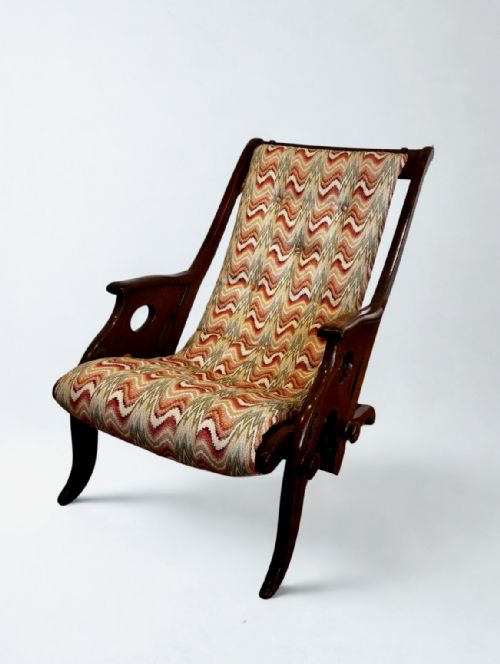


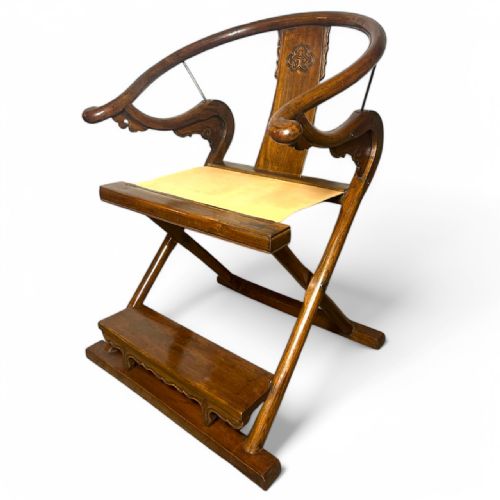


Antique Folding Armchair
An antique folding armchair offers clever engineering alongside portable comfort, making it a versatile choice for any room.
Antique Folding Armchair
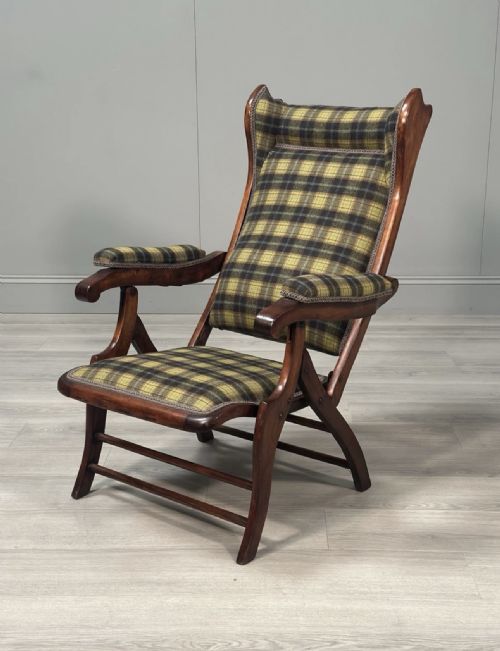
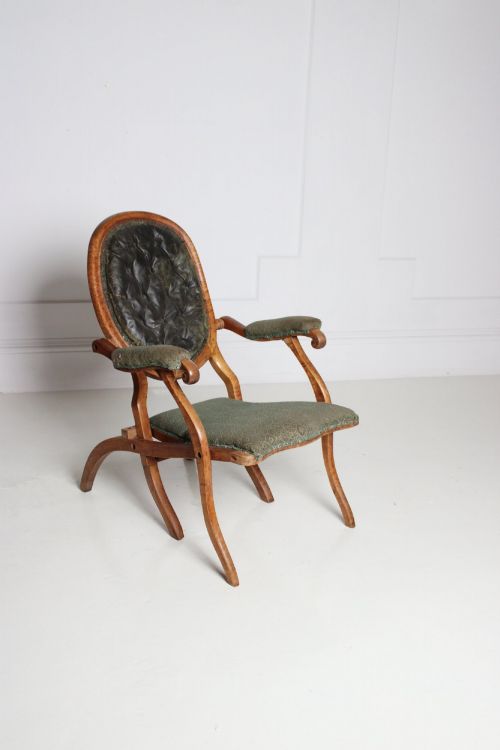
When you search for an antique folding armchair, you encounter a surprisingly diverse selection of portable seating spanning the Regency, Victorian, and Edwardian periods. These chairs combine mechanical ingenuity with fine cabinetry, designed originally for campaign use, libraries, or leisurely lounging on deck and terrace.
The versions most frequently met on this page include nineteenth-century campaign models, French steamer deck chairs, and metamorphic library armchairs that convert into steps. Materials range from solid walnut and mahogany to exotic hardwoods, often fitted with cane, leather, or brass details.
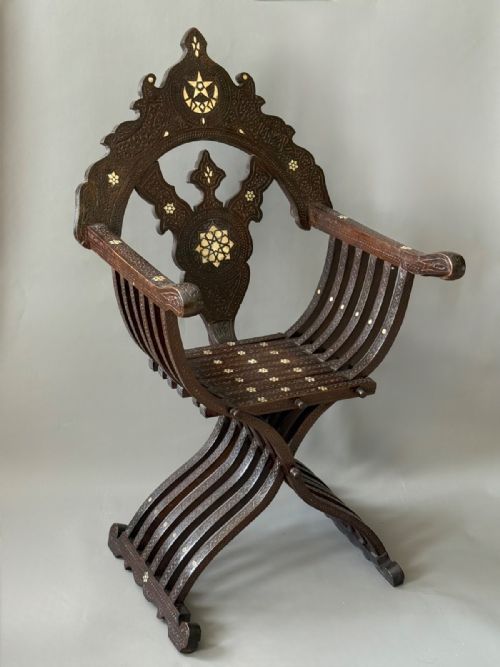
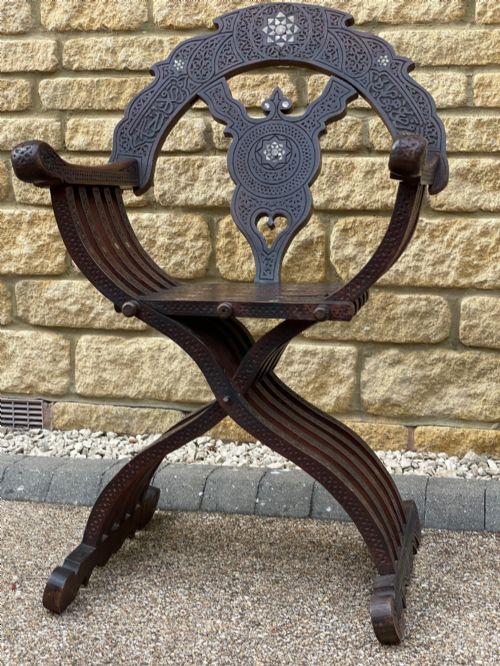
Makers drew on global influences, producing Syrian mother-of-pearl inlaid designs, Chinese horseshoe-back throne chairs, and Spanish hip-joint chairs alongside British campaign furniture. Each piece reflects the nineteenth-century obsession with practicality without sacrificing stylistic elegance.
Materials and construction methods
Timbers such as mahogany, walnut, rosewood, and oak provide the structural strength needed for folding frames, while birds-eye maple and exotic hardwoods add decorative visual weight. Artisans utilised brass hinges, pins, and folding pivots to ensure smooth mechanical movement.
Cane, leather, and bergere woven panels form flexible seats and backs that fold flat alongside the wooden scissor frames. Bone buttons, pierced carved crest rails, and mother-of-pearl inlay finish the decorative surfaces of more elaborate examples.
Some nineteenth-century travellers clearly insisted on comfort, carrying folding armchairs featuring bone button decorations and mother-of-pearl inlay straight into the wilderness.
Distinctions in quality and execution
The refinement of the folding mechanism marks the difference between standard utilitarian travel pieces and high-end salon or library models. Smooth articulation without excessive looseness at the pivot points shows superior original joinery.
Carved detailing, such as Black Forest work, bone button decorations, and intricate inlay, separates basic frames from exceptional examples. The selection of finely grained timbers like solid rosewood or birds-eye maple further elevates a piece.
J. Herbert McNair·Morgan and Sanders·Richard Hicks Bridgens
The Antique Folding Armchair Glossary
- Campaign chair
- A portable folding chair designed for military officers or travellers during the eighteenth and nineteenth centuries. These pieces break down or fold flat for easy transport.
- Metamorphic chair
- A dual-purpose piece of furniture that transforms from an armchair into library steps. Regency examples in mahogany demonstrate this clever dual function.
- Savonarola chair
- An X-frame folding chair originating in the Italian Renaissance, constructed from multiple curved wooden slats. Nineteenth-century interpretations often feature intricate carving or inlay.
- Steamer deck chair
- An adjustable lounging chair designed for ocean liners and verandas. They typically feature folding wooden frames with extended foot rests.
- Bergere
- An upholstered armchair with an enclosed wooden frame where the sides and back often incorporate cane work. Victorian folding variants combine this aesthetic with portability.
- Hip-joint chair
- A chair constructed using intersecting wooden joints reminiscent of anatomy. Spanish nineteenth-century examples employ this distinctive interlocking assembly.
Antique Folding Armchair: Frequently Asked Questions
How do I fold an antique campaign chair?
Most campaign chairs rely on pivoting X-frames or brass-hinged scissor actions that allow the sides to draw together gently. Lifting the seat slightly often releases the locking pins that hold the frame rigid.
Take care not to force stiff wooden joints where old humidity has locked the pivot pins. Applying a little gentle lateral movement helps guide the folding action without straining the original brass or timber.
Were these chairs actually used outdoors?
Many folding armchairs, particularly steamer deck chairs and campaign models, served officers, travellers, and holidaymakers in campaign tents or on ship decks. Their portability made them ideal for temporary outdoor living.
Finer versions inlaid with mother-of-pearl or carved in walnut remained strictly indoors for salons and libraries. Checking the timber finish and upholstery materials usually reveals whether a piece spent its life inside or out.
What is a metamorphic library armchair?
A metamorphic library armchair is a dual-purpose piece that converts from a comfortable seat into a set of library steps. This clever design saved space in grand homes where reaching high bookshelves was a daily task.
Regency and Georgian craftsmen engineered pivoting backs and seats that lock securely into position whether used for sitting or climbing. They represent some of the most sophisticated mechanical furniture of their era.
How do I tell a Victorian folding chair from a Regency one?
Regency folding and metamorphic chairs typically feature clean classical lines, often executed in rich mahogany with subtle brass mounts. Their proportions reflect neoclassical design principles popular in the early nineteenth century.
Victorian pieces introduce greater variety, including heavily carved Gothic revival details, bamboo-turned frames, or intricate Syrian inlay. The later nineteenth century also brought patent folding mechanisms and broader use of walnut and cane.