



Adjustable Reclining Reading Chair
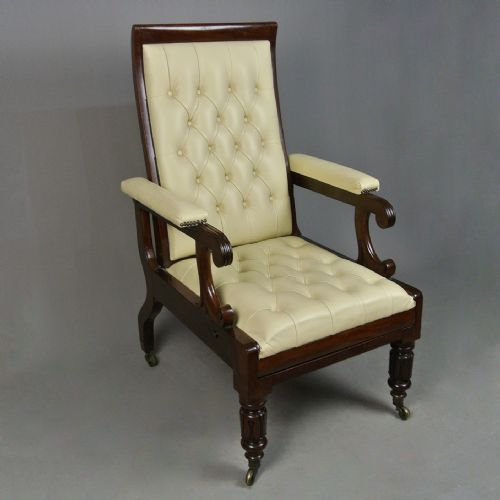
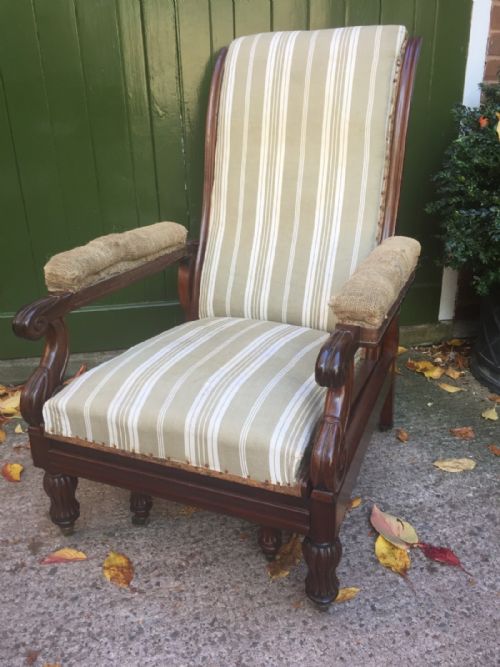
An adjustable reclining reading chair is a seat designed for comfort and ease, combining mechanical movement with sturdy timber frames.
Adjustable Reclining Reading Chair
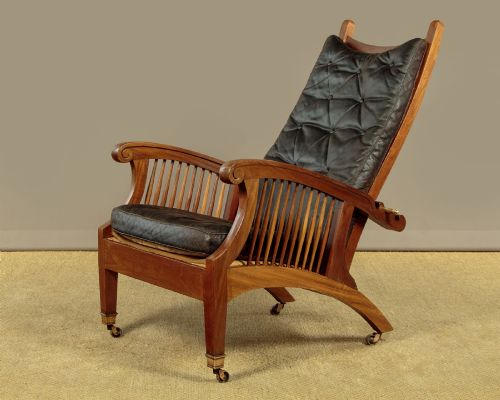
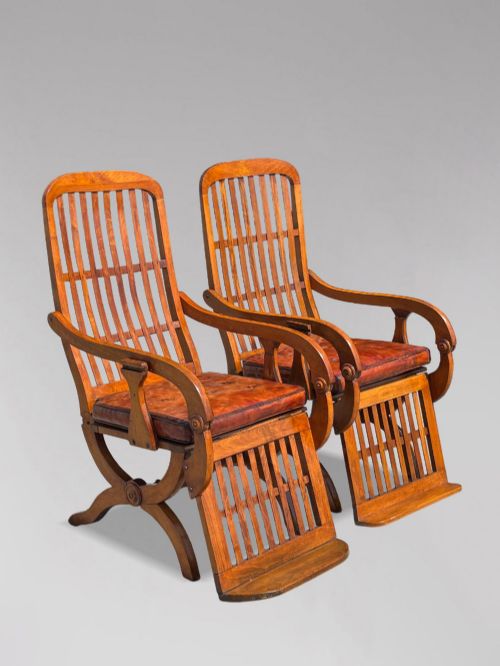
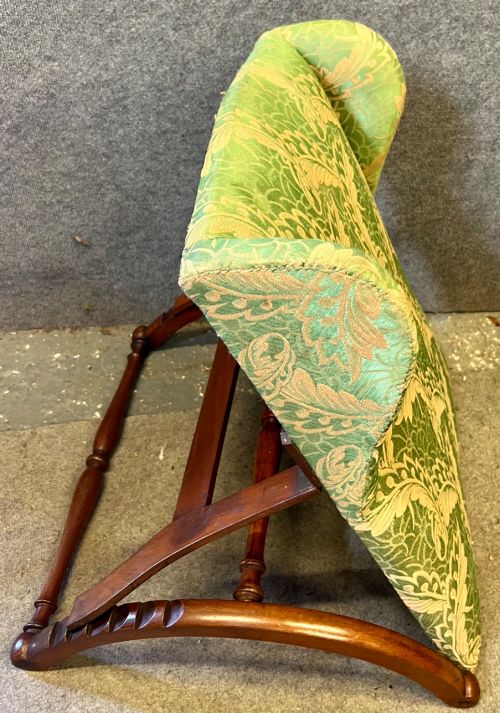
An adjustable reclining reading chair provides flexible support through moving backs and integrated footstools, designed for long hours of reading or relaxation. The versions found here span the nineteenth century up to the early twentieth century, taking forms such as library armchairs, campaign chairs, and steamer armchairs.
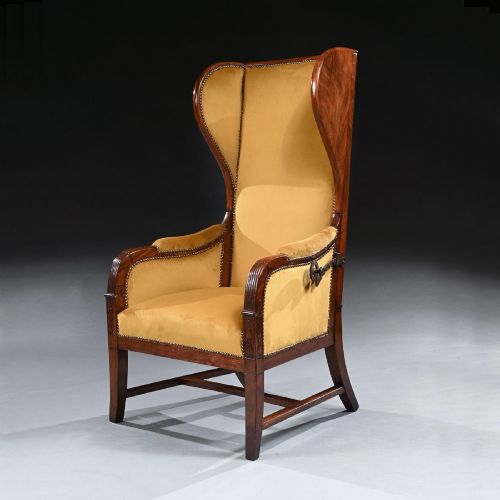
Makers drew on established styles including Regency, William IV, Victorian, French Empire, and Arts and Crafts. Buyers encounter both timber-framed models upholstered in leather or fabric and campaign pieces designed for travel.
The mechanism allows the occupant to shift the angle of the backrest or seat, sometimes incorporating patent designs associated with makers like Robert Daws or Foot and Sons. These seating forms demonstrate the evolution of domestic comfort and mechanical ingenuity during the nineteenth and early twentieth centuries.
How they were made
The construction of an adjustable reclining reading chair relies on heavy timbers such as mahogany, oak, walnut, teak, and ebonised wood to form a rigid structural skeleton. Brass components frequently appear in the hinges, castors, and adjustment mechanisms that allow the chair to alter its posture.
Upholstery materials include leather, fabric, hessian, and canvas, providing the padded surface necessary for prolonged seating. Joinery techniques and internal metal ratchets or hinges enable the backrest and footrest to move and lock securely into position.
Listings feature mahogany, oak, walnut, teak, and iron, reflecting the timber choices of nineteenth and early twentieth-century workshops.
What varies in quality
Quality in an adjustable reclining reading chair rests upon the complexity and durability of its mechanical adjustment system, where patent designs often indicate superior engineering. The choice of primary timber, such as solid mahogany or figured walnut, alongside the retention of original brass fittings, distinguishes high-grade examples.
The execution of the upholstery work and the survival of secondary elements, such as matching footstools or original castors, determine the overall integrity of the piece. Chairs retaining their original leather or period fabric demonstrate greater historical completeness than those with modern replacements.
Robert Daws·Heals Of London·Foot and Sons
The Adjustable Reclining Reading Chair Glossary
- Campaign chair
- A portable piece of furniture designed for military officers or travel, often featuring folding or dismantling frames with brass mounts. These pieces combine lightweight construction with robust timbers to withstand transport.
- Steamer armchair
- A lounging chair with a ladderback frame and an extended seat or footrest, traditionally used on ocean liners and verandas. They frequently incorporate adjustable backrests for outdoor or casual relaxation.
- Ratchet mechanism
- A mechanical device using a tooth wheel and pivoting pawl to lock moving parts, such as a chair back, at various fixed angles. This hardware allows the user to alter the seating posture securely.
- Library armchair
- A heavy, upholstered seat built for reading rooms and studies, prioritising lumbar support and deep padding. They often appear in mahogany or leather with generous armrests.
- Ebonised wood
- Timber treated with a dark stain or finish to imitate ebony, popular in nineteenth-century decorative arts. This treatment provides a uniform black surface that highlights carved details and brass fittings.
Adjustable Reclining Reading Chair: Frequently Asked Questions
How do I operate the reclining mechanism?
Most chairs utilise a mechanical ratchet system or pivoting backrest controlled by manual adjustment of the arms or rear stays. Users tilt the back to the desired angle, allowing the internal catches to lock the frame into position.
Some patent designs incorporate handles or sliding supports that release the backrest when lifted or shifted. Care must be taken with antique mechanisms to guide the movement smoothly without forcing the brass or iron joints.
Are these chairs suitable for daily use?
These seating pieces were built using solid timbers and robust upholstery materials, making them durable enough for regular domestic seating. The mechanical parts require gentle handling to preserve their historical integrity.
Placing the chair away from direct heat sources helps protect the wood and leather from drying out. Routine maintenance of the castors and hinges ensures the moving parts continue to function correctly.
How do I identify a Regency period model?
Regency examples typically feature dense mahogany timbers, classical proportions, and restrained decorative carving influenced by ancient Greek and Roman designs. They may incorporate early patent reclining mechanisms associated with makers from that era.
The presence of brass castors, reeded legs, and solid wood frames without excessive ornamentation points toward this early nineteenth-century timeframe. Comparing the joinery and hardware with dated examples confirms the period.
What is a campaign adjustable chair?
A campaign adjustable chair is a portable seating form originally constructed for military officers on the move, featuring robust construction and collapsible elements. They often include brass hinges, straps, and folding frames designed for ease of packing.
These chairs combine the comfort of a domestic recliner with the durability required for travel. Their distinctive hardware and modular construction separate them from standard stationary library chairs.