





British Military Furniture
British military furniture combines rugged portability with fine craftsmanship, offering officers durable campaign chests and folding chairs designed for active service.
British Military Furniture
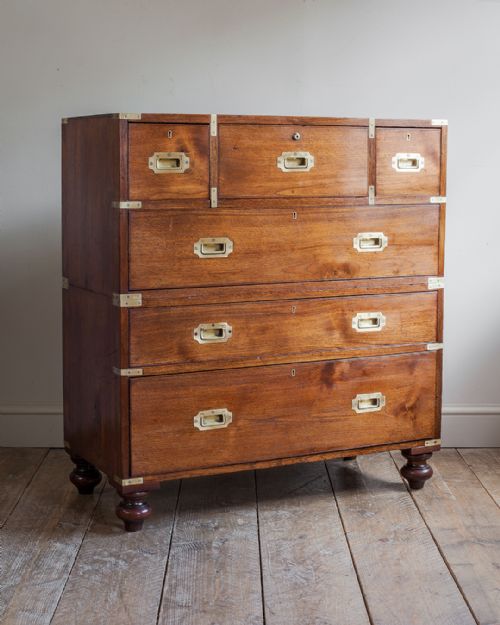
These pieces comprise functional items engineered for transport during the 19th Century, particularly Victorian and Georgian campaigns. Buyers searching for british military furniture will frequently encounter two-part chests of drawers constructed for easy dismantling.
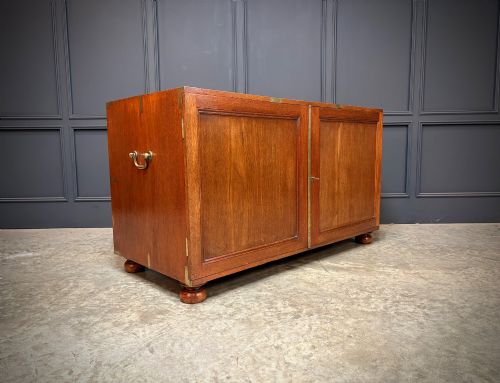
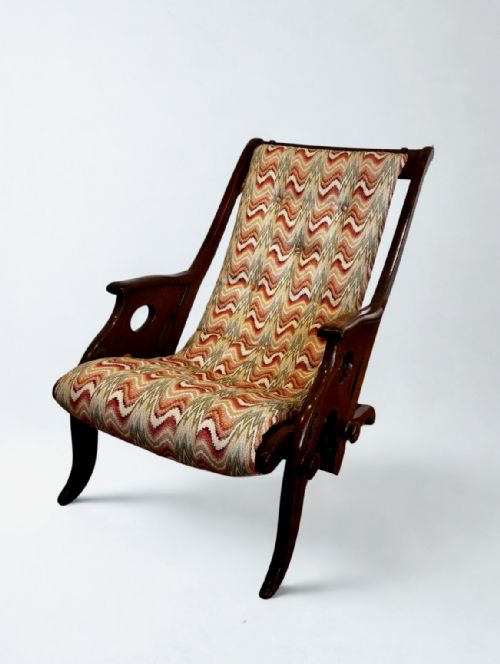
The selection ranges from mahogany and teak campaign chests to folding armchairs, side cabinets, and occasional items like pole straps with hooks. Most examples date from the Victorian era, utilising dense timbers fitted with flush brass handles and corner brackets.
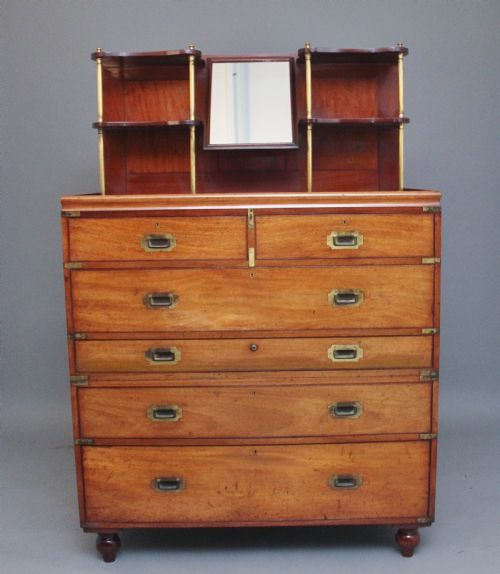
Secretaire chests appear alongside side cabinets and folding colonial seating, reflecting the diverse domestic needs of officers on the move. Each form prioritises structural resilience and modular design to withstand long journeys across empire territories.
Materials and construction
Construction relies heavily on durable tropical hardwoods such as teak, mahogany, padauk, and rosewood, selected for their resistance to warping in changing climates. Cabinet makers built these items in modular sections to facilitate packing into protective canvas or leather covers.
Brass mountings, including flush-fitting pull handles, corner braces, and binding, reinforce vulnerable edges while preventing snagging during transit. Recessed hardware ensures smooth outer surfaces, and cast iron carrying handles frequently aid heavy lifting.
Some items served double duty as writing desks and washing stands, proving that Victorian officers insisted on proper stationary drawers while conquering distant territories.
Assessing quality and build
Quality rests on the density of the primary timber and the precision of the brass work inset into the carcass. Superior pieces feature well-fitted two-part joints, original recessed hardware, and structurally sound internal drawer dividers.
Condition varies according to the survival of original patination, such as polished leather writing surfaces in secretaire drawers and functional locking mechanisms. The integration of secondary woods and the neatness of dovetail joints further distinguish standard field utility from finer officer commissions.
J. Herbert McNair·Army and Navy
The British Military Furniture Glossary
- Campaign chest
- A modular chest of drawers built in two separate sections designed for transport on military expeditions. These chests feature recessed brass handles and corner brackets to prevent damage during transit.
- Secretaire chest
- A chest of drawers incorporating a fitted writing drawer with a drop-front fall. Internal small drawers and pigeonholes provide an impromptu desk space for officers in the field.
- Flush brass
- Recessed metal hardware fitted level with the wooden surface of a piece. This prevents snagging and allows items to pack tightly against one another.
- Two-part chest
- A cabinet constructed as upper and lower independent modules stacked together. This division reduces the weight and bulk of individual loads for pack animals or wagons.
- Padauk wood
- A dense, reddish-brown timber utilised in colonial cabinet making. Its stability and rich grain made it popular for overseas military commissions.
British Military Furniture: Frequently Asked Questions
What is british military furniture?
These items are portable furnishings designed and built for use by officers and officials during military campaigns, primarily in the 19th Century. They feature clever engineering to facilitate easy packing, transport, and reassembly in temporary quarters.
Key forms include two-part chests of drawers, folding chairs, and secretaire cabinets constructed from durable timbers like teak and mahogany. Flush brass fittings protect the corners and allow pieces to sit flush against one another during transit.
How do you date british military furniture?
Dating relies on timber choices, brass hardware styles, and construction techniques typical of the Georgian and Victorian periods. Most items seen here originate from the 19th Century, with specific dates indicated by stylistic markers and secondary materials.
Examining the internal drawer construction and locking mechanisms helps narrow the production window. Marked pieces or specific brass stamps can occasionally link items directly to military outfitters or regiments.
How were campaign chests transported?
Chests were deliberately built in separate upper and lower modules, often fitted with iron or brass carrying handles on the sides. This modular approach allowed handlers to secure them easily onto pack animals, wagons, or ships.
Flush handles and corner brackets ensured that ropes and canvas straps did not catch on protruding hardware. Once stationary, the sections stacked together to form a stable storage unit.
How do I style campaign furniture at home?
Campaign pieces offer a strong architectural silhouette that suits both traditional studies and contemporary living spaces. Their compact proportions and durable timber surfaces make them practical for everyday storage and display.
Pairing a teak or mahogany chest with neutral walls highlights the warm grain of the wood and the polished brass mounts. Folding armchairs and side cabinets introduce functional history without overwhelming a room.