


Bergere Lounge Seat
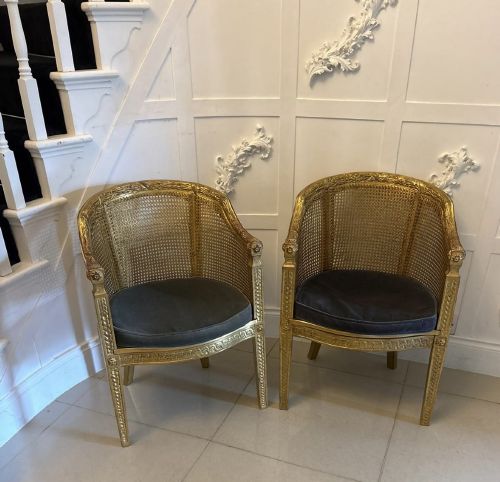
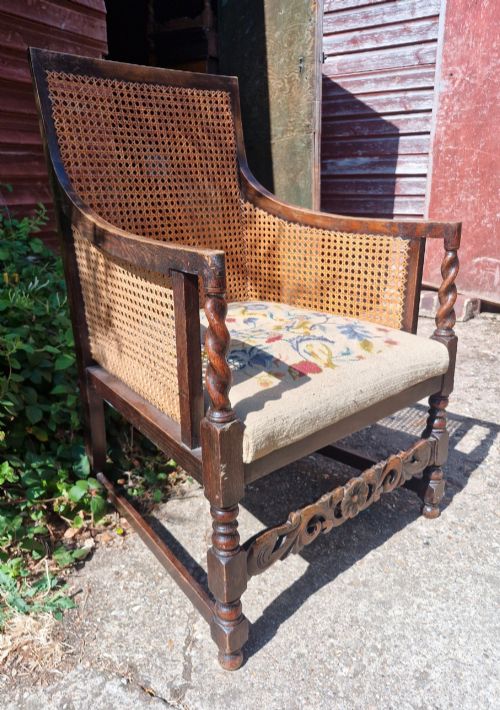
A bergere lounge seat brings deep-seated French comfort to a room, defined by its enclosed wooden frame and woven cane panels.
Bergere Lounge Seat
A bergere lounge seat is an upholstered armchair with enclosed sides, offering a substantial yet airy silhouette that suits both formal drawing rooms and relaxed sitting spaces. When exploring this selection, buyers encounter pieces stretching from the Victorian era through the early twentieth century, reflecting various revival movements.
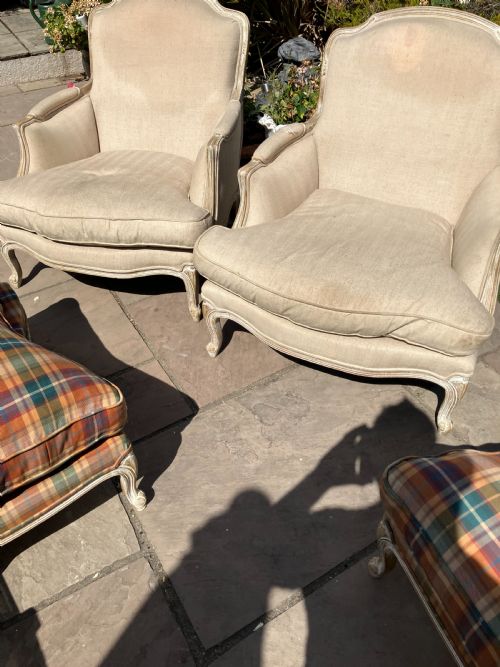
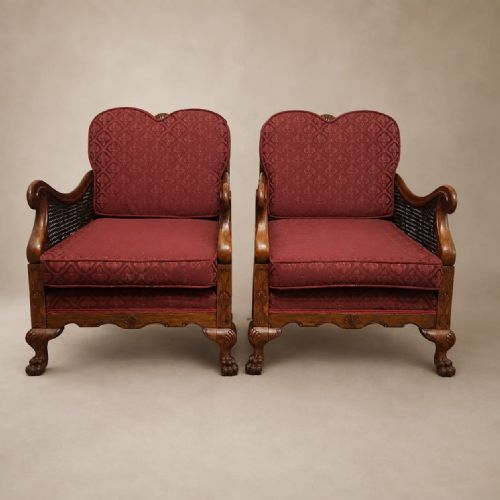
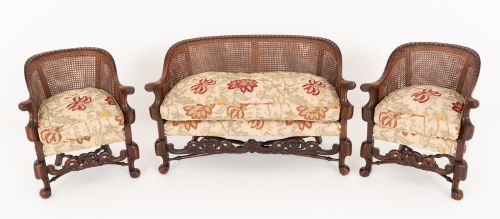
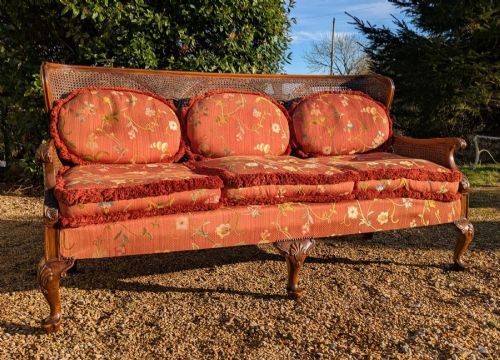
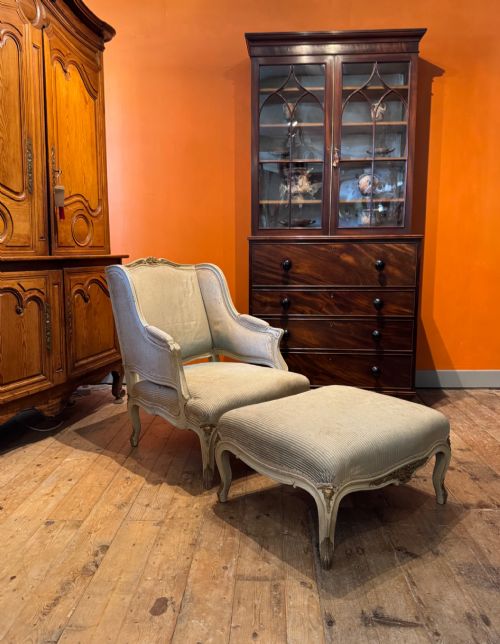
The inventory demonstrates a strong leaning towards French taste, with Louis XV and Louis XVI styles appearing frequently alongside heavier revival forms like the Carolean and Jacobean. Frames take several shapes beyond the standard armchair, including sofas, window seats, chaise longues, and complete salon suites.
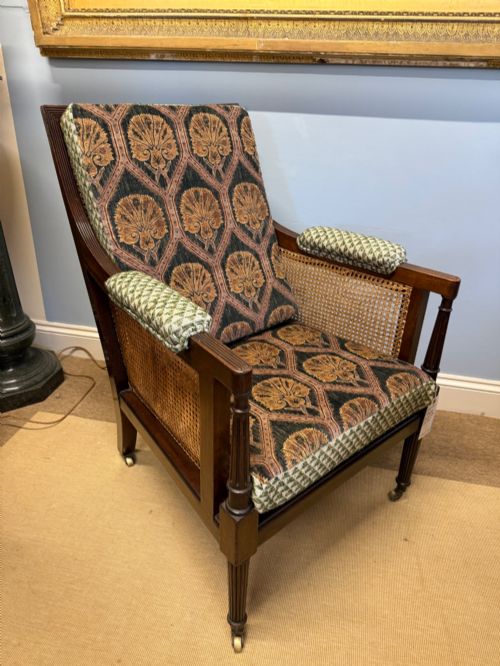
Origins span both French and English workshops, utilising timber frames that range from carved giltwood to warm mahogany and walnut. These seats often arrive paired with loose cushions in velvet, fabric, or leather, bridging decorative elegance with practical comfort.
Materials and construction
Frames are constructed from sturdy hardwoods such as mahogany, walnut, oak, and beech, which are frequently carved, painted, or gilded to echo earlier historic periods. Cabinetmakers shaped these timbers to create the characteristic curved arm supports and enveloping backs essential to the form.
Cane work forms the defining structural and decorative element on the back and sides, woven intricately through drilled frame channels to provide resilient support. Upholstered cushions, filled traditionally with feathers or horsehair, rest within the wooden base to complete the seat.
Materials recorded across the inventory include split cane, painted wood, giltwood, velvet, and leather, demonstrating diverse aesthetic traditions.
Factors determining quality
Quality rests significantly on the crispness and depth of the timber carving, where hand-tooled details on walnut or giltwood frames surpass simpler machined moulding. The intricacy and tightness of the cane work also dictate the standard of the piece, requiring expert tension across every woven square.
Proportion and structural integrity separate standard workshop output from exceptional examples, particularly in how the curved armrests integrate with the broader frame. Retaining original surfaces, whether period paint, gilt, or aged polish, elevates the architectural honesty of the chair.
The Bergere Lounge Seat Glossary
- Bergere
- An enclosed upholstered armchair with wooden or cane-paneled sides. This French seating form prioritises a lower, wider seat for comfortable lounging.
- Cane
- Woven rattan material used for chair backs and sides. It offers a light, flexible panel that relieves the visual weight of heavy timber frames.
- Giltwood
- Timber coated with a thin layer of gold leaf or gesso. This finish adds bright reflective qualities to formal French-style frames.
- Duchesse brisée
- A two or three-part chaise longue comprising an armchair and a matching footstool or second chair. It creates an extended platform for reclining.
- Carolean style
- British furniture style of the late seventeenth century featuring ornate carvings, scrolls, and turned stretchers. Revival pieces borrow these lavish motifs.
Bergere Lounge Seat: Frequently Asked Questions
How do I clean cane panels?
Dust cane panels gently with a soft brush or vacuum on a low setting to remove debris trapped within the weave. Avoid soaking the material, as excess moisture can weaken the natural fibres over time.
Occasionally wipe the cane with a damp cloth containing mild soap, ensuring it dries completely to maintain tension and flexibility in the weave.
Can I reupholster a bergere?
Upholstery on these seats can be updated using traditional methods that respect the underlying wooden frame and webbing. Choose fabrics that complement the age and style of the woodwork, such as heavy velvets or traditional patterned textiles.
Consult a specialist upholsterer who understands how to secure cushions properly within the recessed wooden base without damaging the surrounding frame.
Where should I place a window seat?
Position a bergere window seat beneath natural light where the timber frame and cane panels remain visible from multiple angles. Ensure the depth of the seat matches the proportions of the window recess and surrounding furniture.
Keep such seating away from direct sunlight and radiators to prevent the wood from drying out and the cane panels from becoming brittle.
Are these chairs comfortable for daily use?
These seats are designed for relaxed lounging, offering deep proportions and supportive enclosed backs. The addition of feather or down-filled cushions enhances daily comfort.
While robustly built from hardwoods, they benefit from mindful sitting to preserve the tension of the woven cane sides and antique frames.