

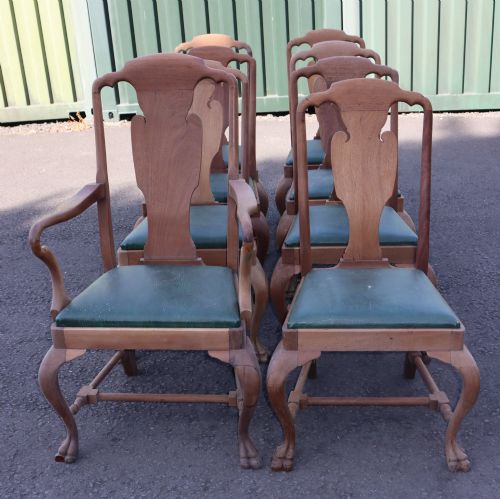
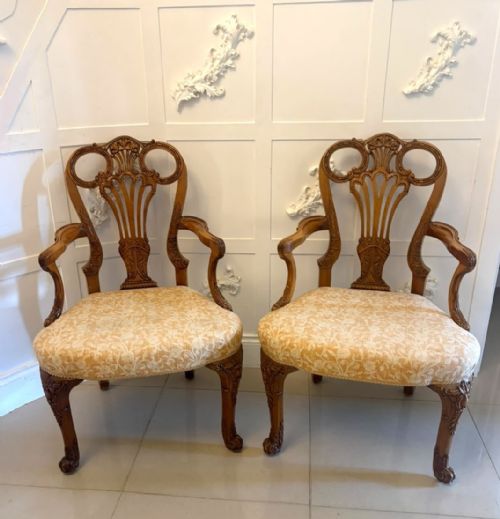
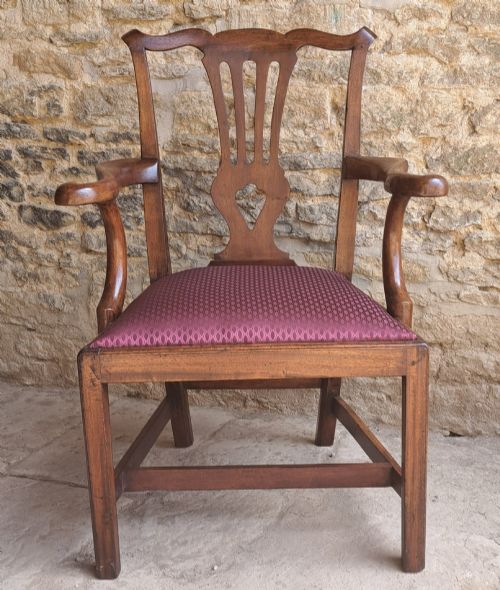
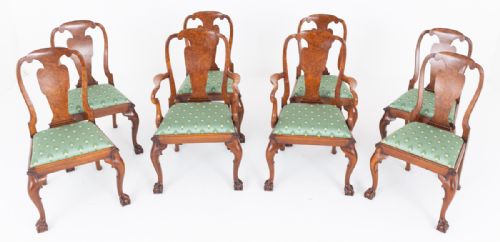


Georgian Style Walnut Carvers
Georgian style walnut carvers bring warmth and period character to a dining table or study, offering sturdy armchairs shaped in rich timbers.
Georgian Style Walnut Carvers
When you search for georgian style walnut carvers, you encounter seating designed for the head of a table or independent use in a study. The offerings range from sets of dining chairs featuring carvers to individual armchairs and desk chairs.
Most examples on this page date from revival periods around nineteen hundred to nineteen thirty, alongside genuine eighteenth century pieces and Victorian interpretations. Forms vary from high back armchairs to George II style and Queen Anne style models.
How they were made
Cabinetmakers constructed these frames using solid walnut and burr walnut, selecting the timber for its distinctive grain pattern and deep colour. Skilled carving brings definition to arms, legs, and back splats.
Upholstery forms an essential part of the construction, utilising fabric, leather, textiles, and tapestry. Craftsmen secured these coverings over padding to provide support for daily use.
Georgian Style Walnut Carvers Retail Price Guide 2026
Typical asking prices for georgian style walnut carvers among the pieces listed under this phrase on Sellingantiques today, from the lower quarter to the upper quarter. They describe what is for sale here now, not the wider market.
The listings span from the eighteenth century through Victorian times up to nineteen thirty, showing enduring popularity for walnut and burr walnut timbers.
What varies in quality
The standard of carving defines the character of each piece, distinguishing sharp, deep relief work from softer, mechanical finishing. Timber selection also matters, with burr walnut adding visual depth compared to plain grain.
Proportion and structural integrity separate simpler workshop output from finer productions. Chairs that retain balanced proportions and tight joinery command greater attention from buyers.
Spillman & Co
The Georgian Style Walnut Carvers Glossary
- Carver
- An armchair designed with open sides to accommodate formal clothing, typically placed at the head of a dining table. These match the single chairs in a larger dining set.
- George II Style
- A design aesthetic reflecting the architecture and furniture of the mid eighteenth century. It incorporates bold curves and substantial proportions.
- Queen Anne Style
- A decorative movement characterised by cabriole legs and pad feet, avoiding heavy carving in favour of smooth, flowing lines.
- Burr Walnut
- Timber taken from a tree growth that produces intricate, swirling grain patterns. Cabinetmakers prize this wood for decorative veneering.
Georgian Style Walnut Carvers: Frequently Asked Questions
What is a carver chair?
A carver is an armchair designed to match a set of dining chairs, usually placed at the head and foot of the table. These provide extra support with armrests while echoing the style of the smaller chairs.
Historically, they allowed the host and hostess to sit comfortably during long meals. Today, they also function as standalone desk chairs or accent seating.
How do I tell revival pieces from original eighteenth century chairs?
Revival pieces from the nineteenth and twentieth centuries often show construction methods and tool marks characteristic of later mechanised workshops. Original eighteenth century examples display hand cut joinery and timber age consistent with the period.
Examining the underside and joints reveals how the frame was put together. Period revival chairs still offer traditional craftsmanship but lack the age of genuine Georgian examples.
Are these chairs suitable for daily use?
Most of these walnut armchairs are robust enough for everyday seating when placed around a dining table or at a desk. Their sturdy wooden frames and upholstered seats were built for practical service.
Care should be taken with antique upholstery and delicate tapestry surfaces. Regular maintenance of the timber keeps the walnut finish protected.
What is the difference between Queen Anne and George II styles?
Queen Anne style chairs typically feature smooth cabriole legs and pad feet with restrained decoration. The focus rests on the curving silhouette of the back and legs.
George II style chairs introduce bolder carving, often featuring shell motifs on the knees and broader proportions. These designs reflect a transition toward more ornate decoration.