
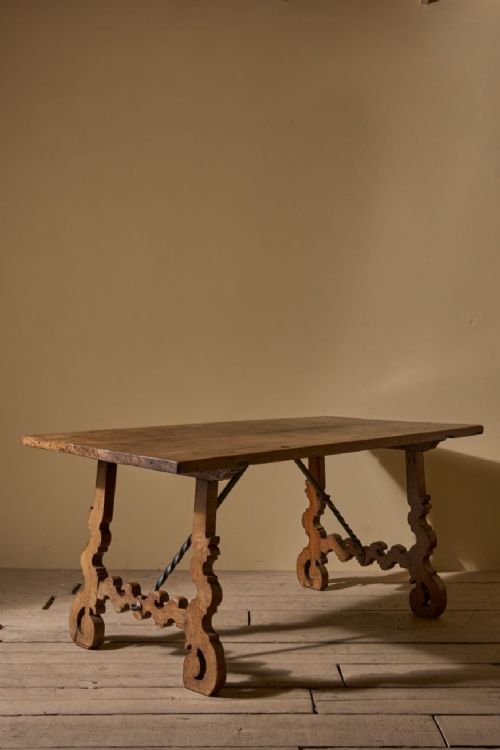
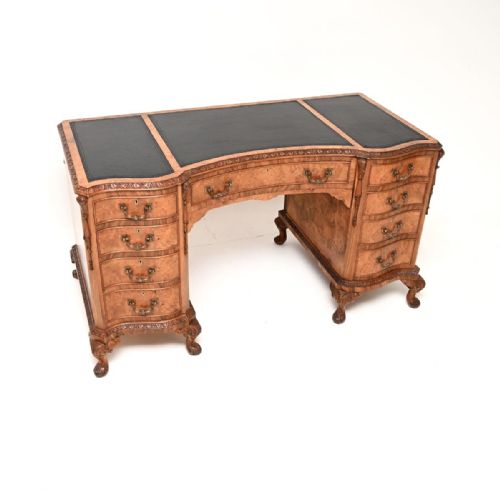
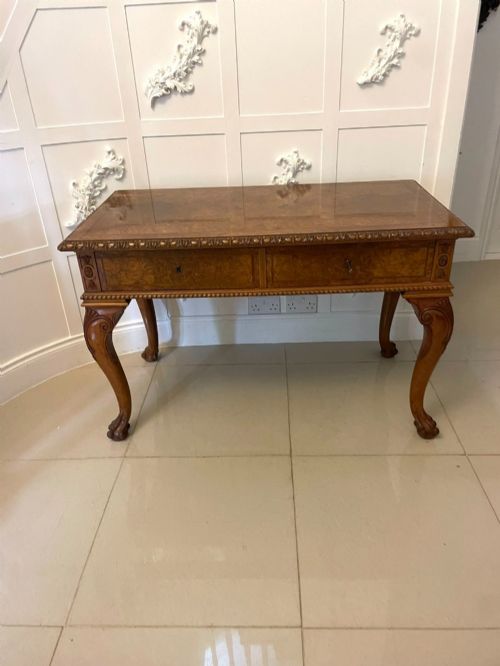

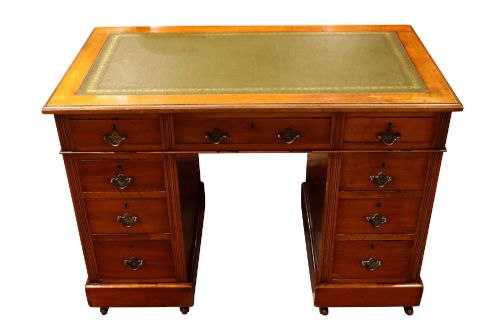
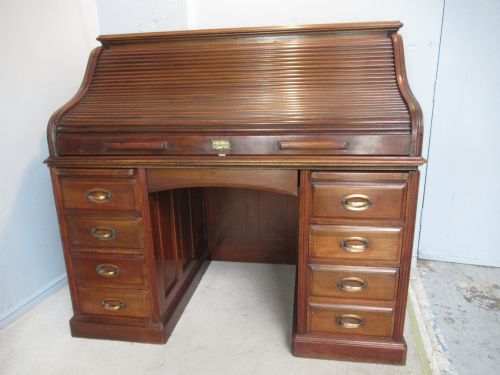
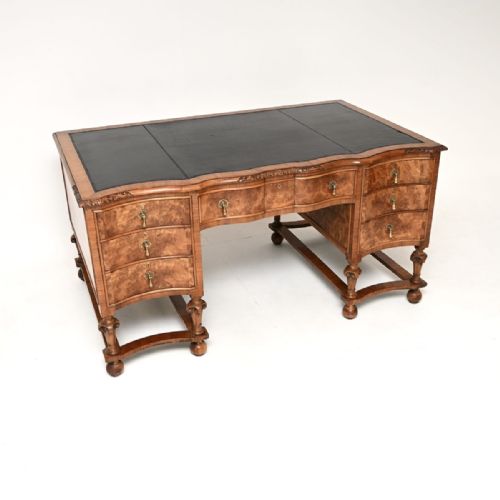
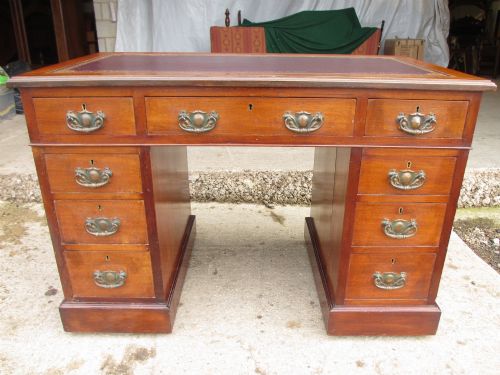
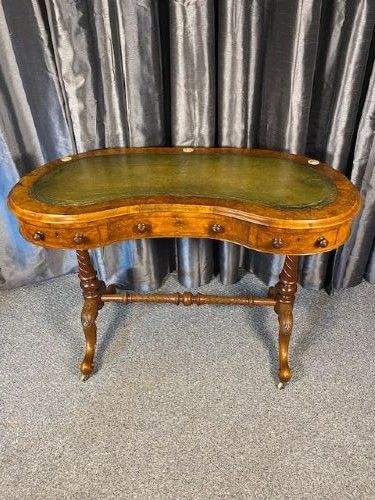
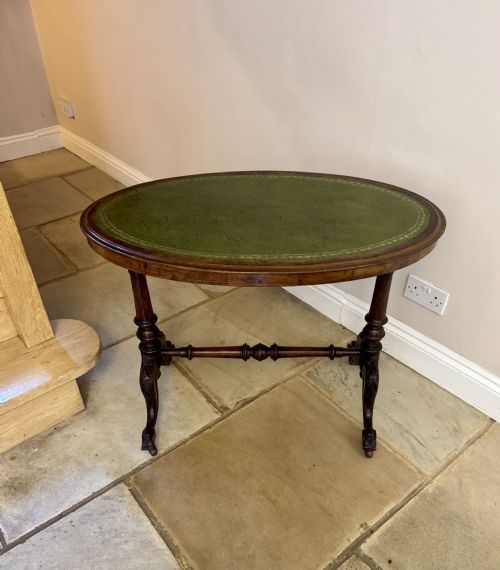
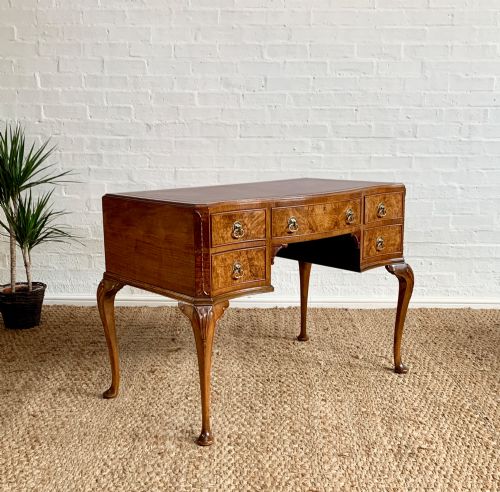
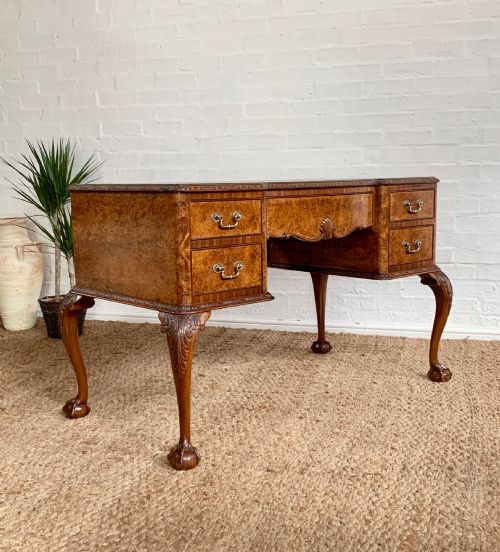
Carved Walnut Writing Table
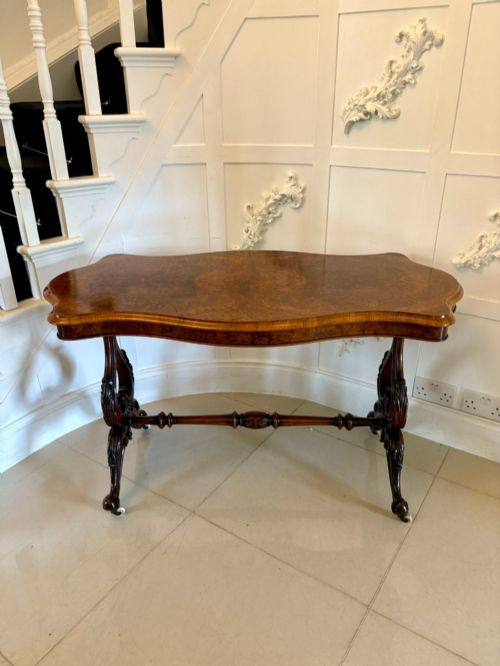
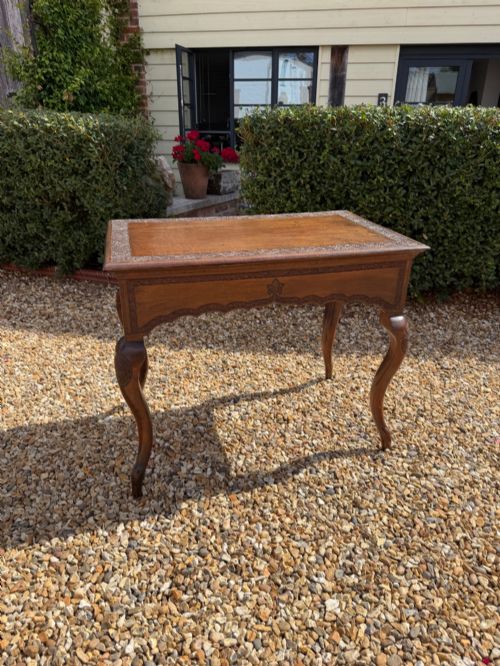
A carved walnut writing table brings rich timber grain and period craftsmanship directly to a home study.
Carved Walnut Writing Table
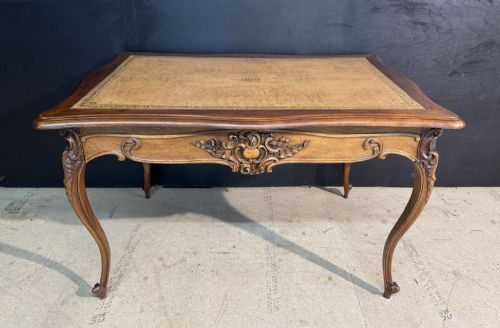
The selections available here heavily reflect Victorian and Edwardian manufacturing, alongside revival styles such as Queen Anne and French Rococo. Many examples incorporate leather writing surfaces, often tooled with gold, while others present purely timber tops supported by turned, fluted, or carved legs.

Materials and construction
Makers utilised solid walnut and burr walnut veneers applied over secondary timbers like oak, selecting the burr sections for highly figured, swirling grain patterns on primary surfaces. Leather served as the traditional insert for writing surfaces, bordered by blind tooling or gilt decoration.
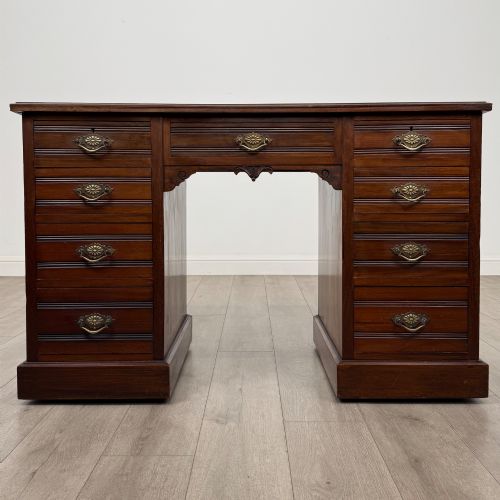
Structural embellishments frequently involved brass hardware, such as handles and escutcheons, alongside ormolu mounts on high-status examples. Carving was executed by hand directly into the solid timber components, shaping capitals, legs, and aprons with foliate or scroll motifs.
Carved Walnut Writing Table Retail Price Guide 2026
Typical asking prices for carved walnut writing table among the pieces listed under this phrase on Sellingantiques today, from the lower quarter to the upper quarter. They describe what is for sale here now, not the wider market.
Materials paired with walnut across these entries include ceramic, brass, oak, and ormolu.
Assessing quality
Quality in a walnut writing table rests upon the selection of the timber veneers and the crispness of the hand carving. Pieces featuring highly figured burr walnut across large uninterrupted surfaces demonstrate superior material selection by the maker.
Construction methods and secondary woods also dictate the tier of the piece. Workshops utilising solid oak internal drawer linings and robust dovetailing outlast those employing lesser secondary woods, while maker signatures from prominent cabinetmakers elevate historical standing.
Maple and Co·Wylie and Lochhead Glasgow·Edwards and Roberts·Gill and Reigate
The Carved Walnut Writing Table Glossary
- Burr walnut
- A veneer sliced from the knot or burl of a walnut tree, prized for its intricate, swirling grain patterns. It creates a highly decorative surface on drawer fronts and table tops.
- Partners desk
- A large pedestal desk designed with drawers and cupboards on both sides, allowing two people to sit and work opposite each other. These typically feature extensive leather writing surfaces.
- Ormolu
- Gilded bronze mounts applied to furniture for decorative effect, common on French Rococo and high-status Victorian pieces. This material provides metallic contrast to the dark walnut timber.
- Kneehole desk
- A compact pedestal desk featuring a central recess for the legs, flanked by columns of drawers. This form became popular during the eighteenth century and continued through later revival periods.
- Pedestal desk
- A heavy desk comprising two separate pedestals of drawers supporting a single top. They frequently incorporate inset tooled leather writing panels.
Carved Walnut Writing Table: Frequently Asked Questions
How do I care for the leather top?
Clean the leather surface using a slightly damp cloth, avoiding harsh chemical cleaners that strip the original dye. Apply a neutral leather wax occasionally to maintain suppleness and prevent cracking.
Keep the desk away from direct sunlight and heat sources to prevent the leather from drying out and shrinking away from its wooden border.
Can these desks be dismantled for transport?
Many pedestal desks separate into three main components: the two side pedestals and the top surface. This modular construction allowed nineteenth-century makers to maneuver heavy furniture through narrow staircases.
Smaller writing tables and library tables generally do not dismantle, requiring careful measurement of doorways and hallways before delivery.
How do I distinguish Victorian walnut from Edwardian walnut?
Victorian walnut furniture from the mid to late nineteenth century often displays heavier proportions, darker finishes, and robust ormolu or carved decoration. The wood grain is frequently deep and rich.
Edwardian pieces from around nineteen hundred tend to be lighter in scale, reflecting revived eighteenth-century aesthetic movements with cleaner lines and more restrained ornamentation.