
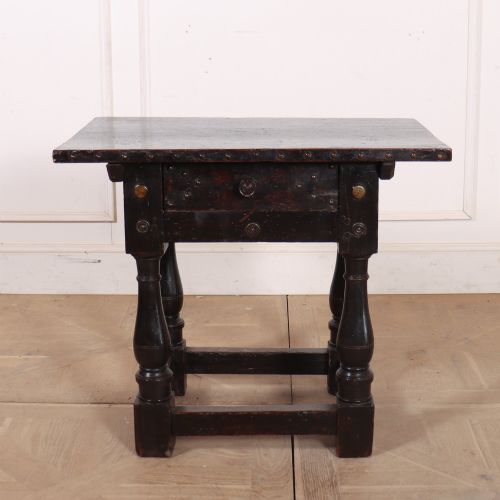
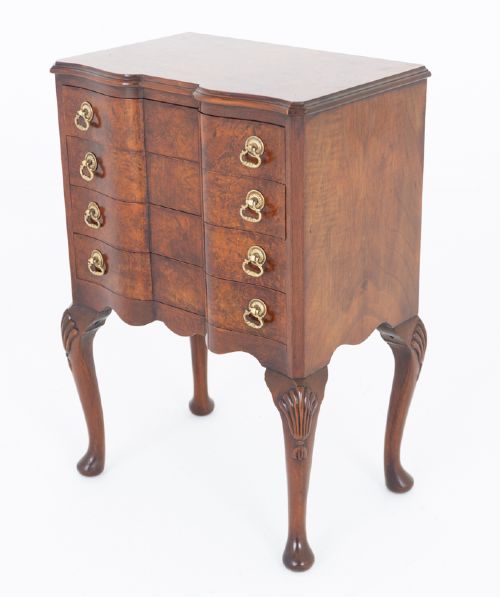
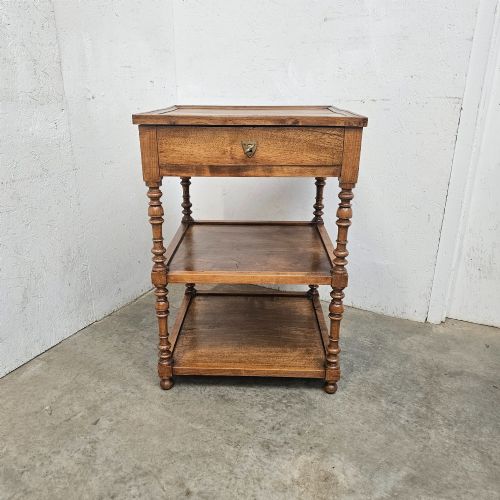
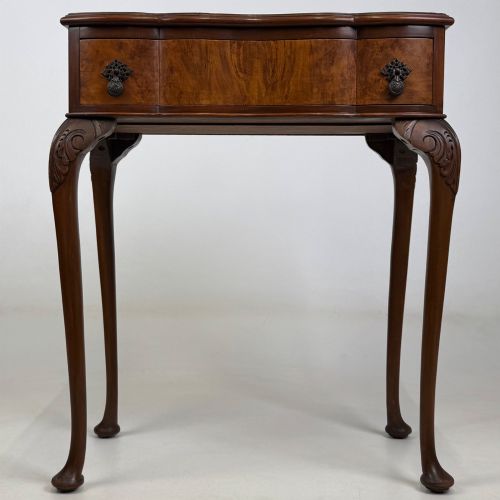

Carved Walnut Nightstands
Carved walnut nightstands bring French provincial elegance and solid nineteenth century craftsmanship directly to the bedside.
What carved walnut nightstands are
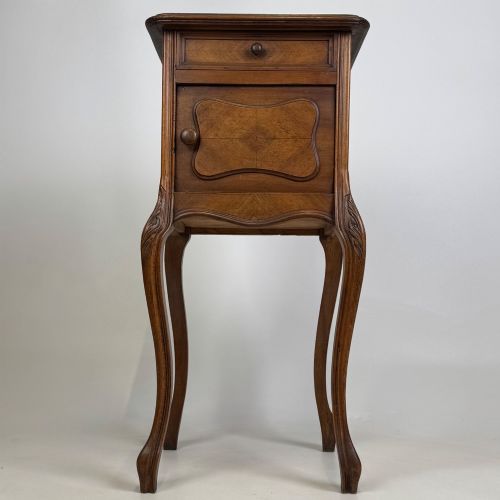
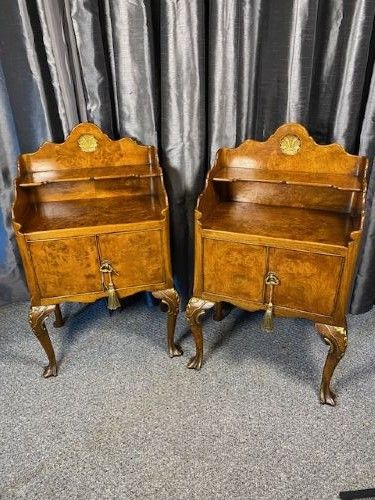
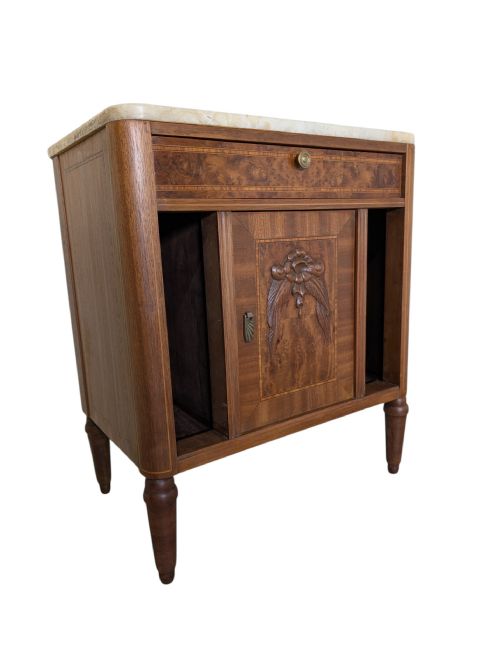
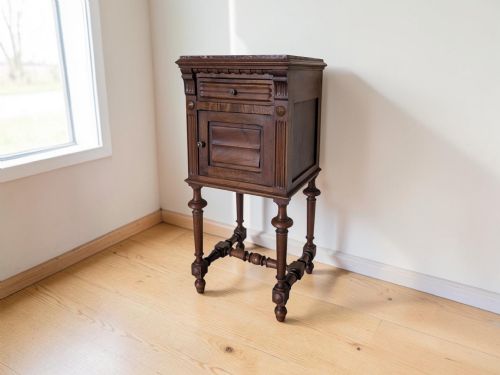
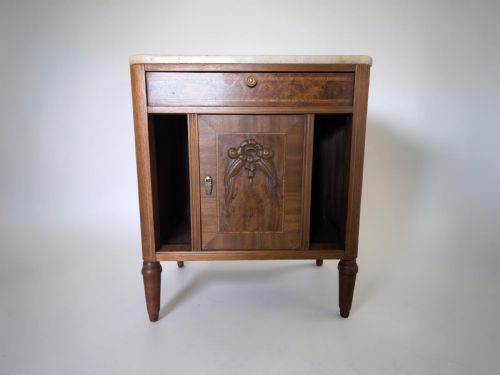
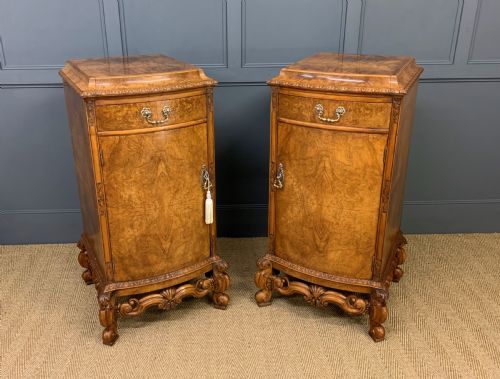
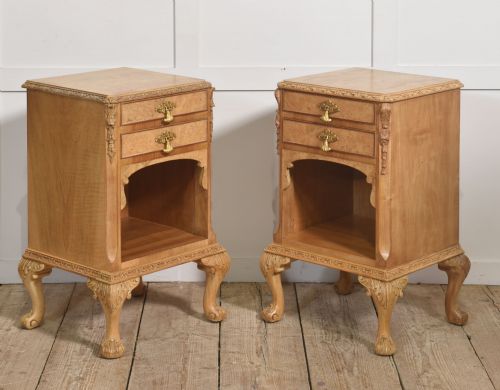
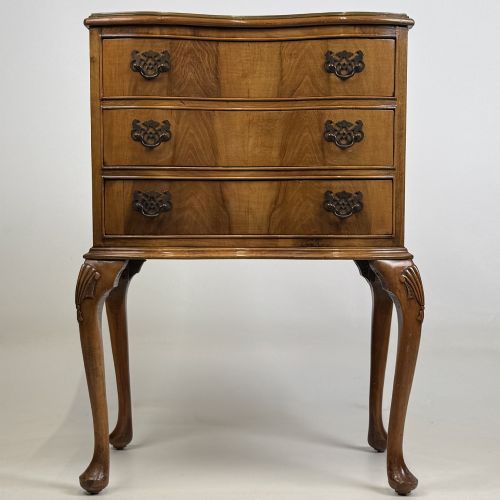
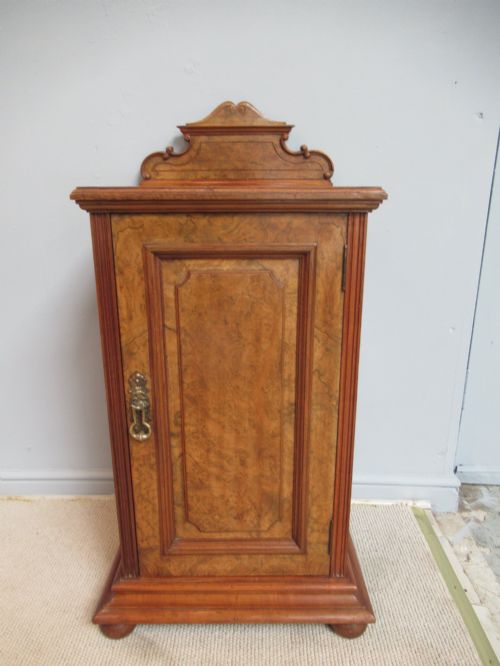
Carved walnut nightstands encompass nineteenth century French bedside cabinets, Louis XIV revival pieces, and Queen Anne style walnut chests. Buyers looking for carved walnut nightstands find sturdy bedside tables and enclosed cabinets fashioned from rich dark timbers.
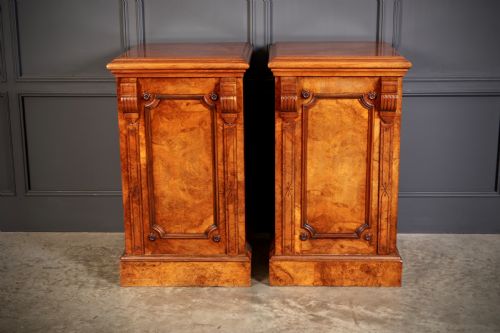
The versions most commonly met on this page are matched pairs dating from the late nineteenth century up to nineteen twenty. These pieces typically combine carved walnut frames with fitted marble tops and brass details.
Originating predominantly from French workshops, these bedside cabinets serve practical storage alongside decorative period character. Their forms range from freestanding lamp chests of drawers to compact bedside cupboards.
How they were made
Cabinet makers utilised solid walnut and burr walnut veneers over robust structural timbers, shaping panels with deep hand carving. Surfaces often received a polished finish to highlight the natural grain patterns of the wood.
Heavy Belgian Sainte Anne marble slabs or lighter marble inserts were fitted to the tops to provide durable, water resistant service. Brass handles, mounts, and hinges were secured to complete the functional hardware of the cabinets.
Retail Price Guide 2026
Typical UK retail prices for carved walnut nightstands, calculated from the Sellingantiques database of over a million retail prices indexed since 2003. This retail price guide relies exclusively on Sellingantiques data; no external sources or auction records are used, so the figures do not describe the wider market.
Listings feature walnut, burr walnut, marble, and brass across nineteenth century and early twentieth century periods.
What varies in quality
The refinement of the hand carving separates standard production from superior pieces, with crisp floral and scroll motifs indicating skilled joinery. Timber selection also dictates overall grade, where highly figured burr walnut commands greater visual depth.
The quality of the fitted marble top, particularly the thickness and figuring of the stone, marks the upper tier of the range. Original brass hardware and the tightness of the drawer joints further distinguish finer examples.
The Carved Walnut Nightstands Glossary
- Walnut
- A hard, dense timber prized for its rich brown colour and intricate grain patterns. It forms the primary structural and decorative material for these cabinets.
- Burr walnut
- A specialised wood veneer taken from the growth excrescence on a walnut tree. It produces highly swirling, decorative patterns across furniture surfaces.
- Sainte Anne marble
- A distinctive dark grey and white fossiliferous limestone quarried in Belgium. It is frequently used as a durable, decorative surface top.
- Queen Anne style
- A traditional furniture design aesthetic characterised by graceful proportions and understated elegance. Pieces in this style often display subtle woodwork details.
Frequently Asked Questions
How were these nightstands used historically?
Historically, these cabinets sat beside the bed to store chamber pots, water jugs, books, and personal items behind closed doors or within drawers. The stone tops provided a protective, easy to clean surface for candles and lanterns.
Over time, their practical role shifted toward supporting electric lamps and holding contemporary bedside essentials while retaining their enclosed storage.
How do I care for marble top bedside cabinets?
Protect the marble surface from acidic liquids like citrus juice or vinegar, which can etch the polished stone. Wipe spills promptly with a damp cloth and mild soap.
Feed the walnut timber occasionally with appropriate furniture wax to maintain the moisture and sheen of the wood without building up heavy residue.
How do I distinguish French styles from Queen Anne style?
French nineteenth century and revival styles often display heavier carved scrollwork, prominent marble tops, and more ornate brass mounts. They lean toward dramatic continental proportions.
Queen Anne style examples focus on softer lines and more restrained woodworking details, reflecting earlier English design influences adapted by later makers.