

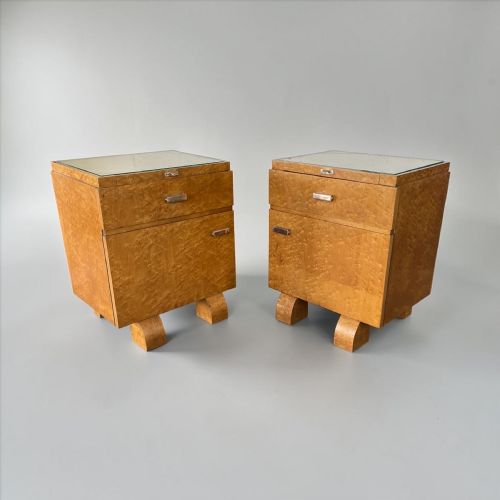
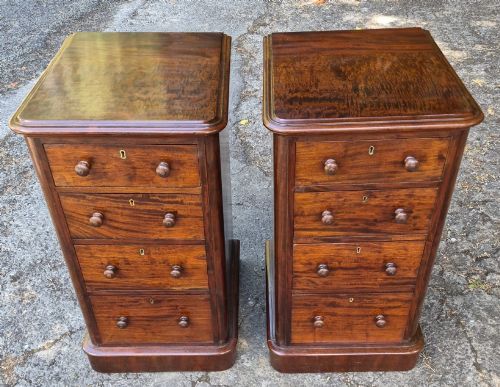
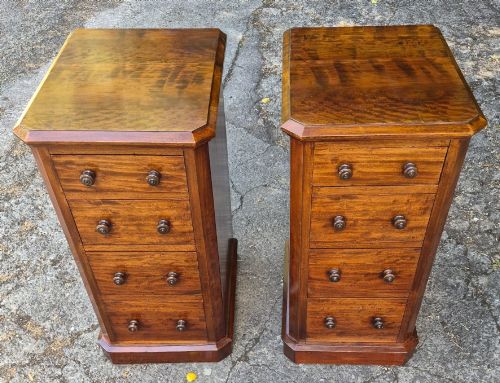
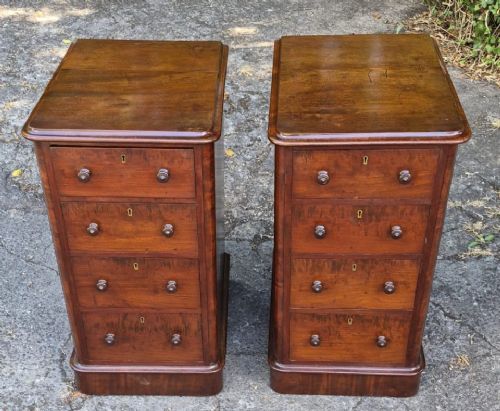
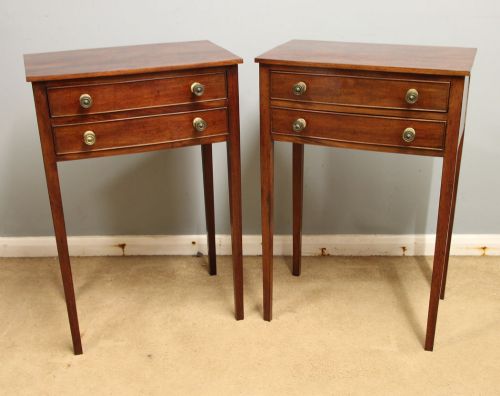
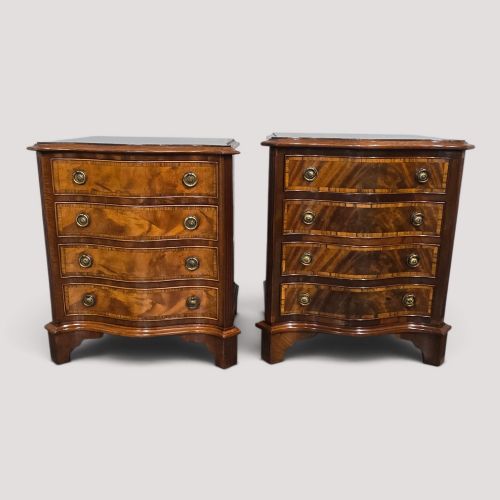
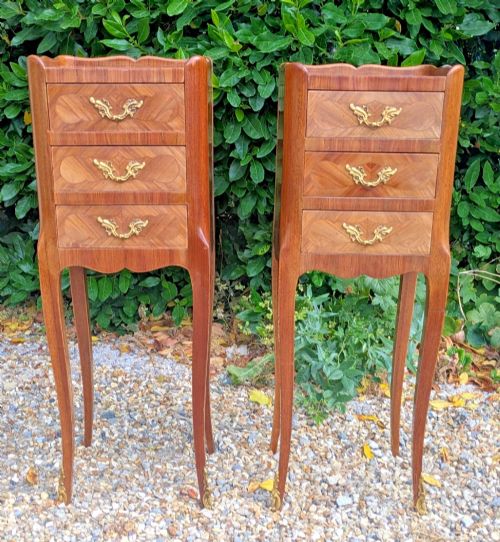
Pair of Bedside Drawers
When you search for a pair of bedside drawers, you find matching sets of small storage chests designed to flank a bed.
Pair of Bedside Drawers
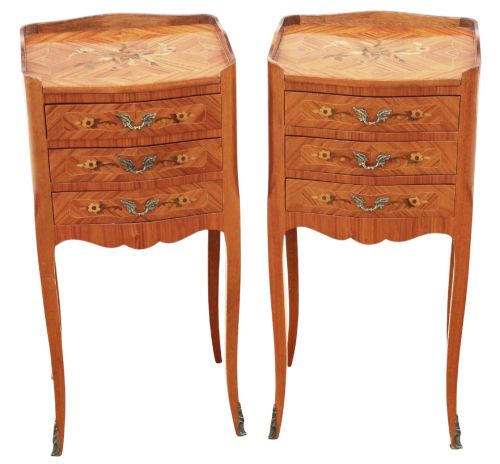
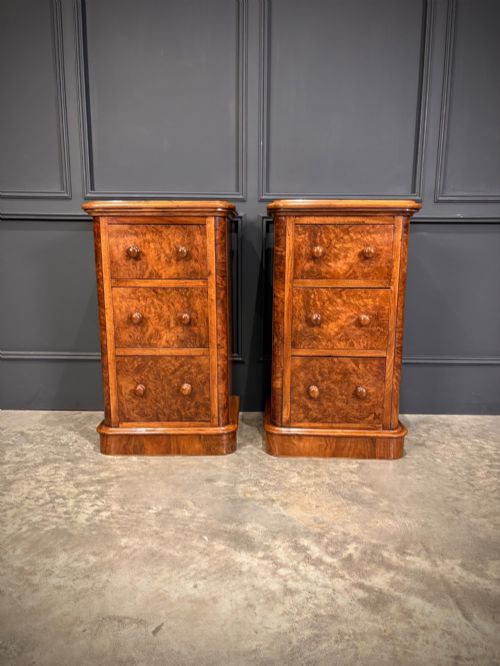
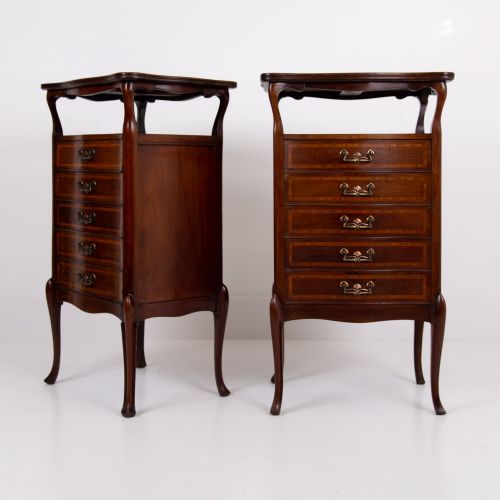
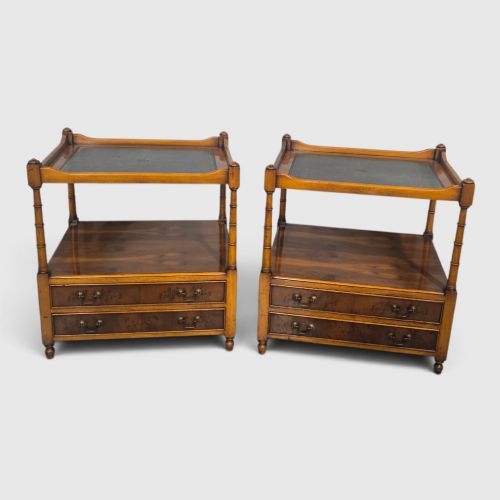
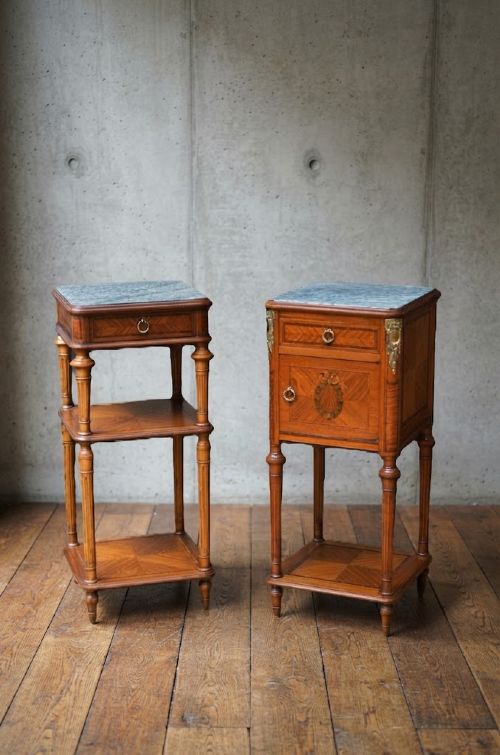
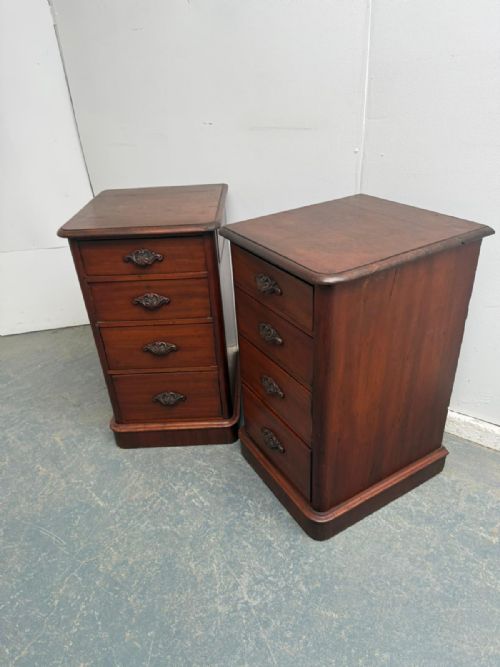
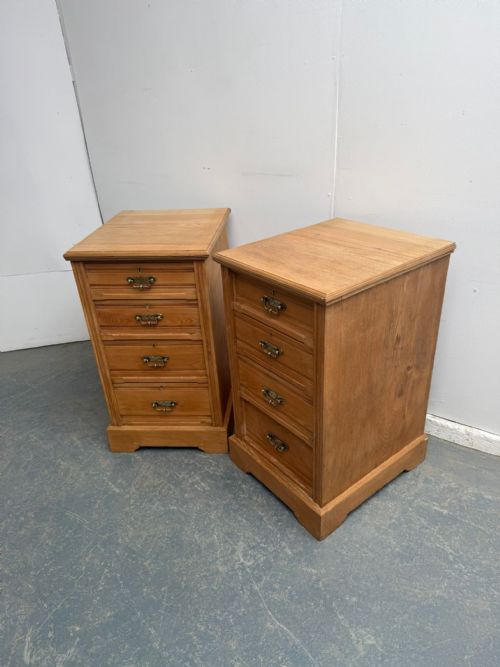
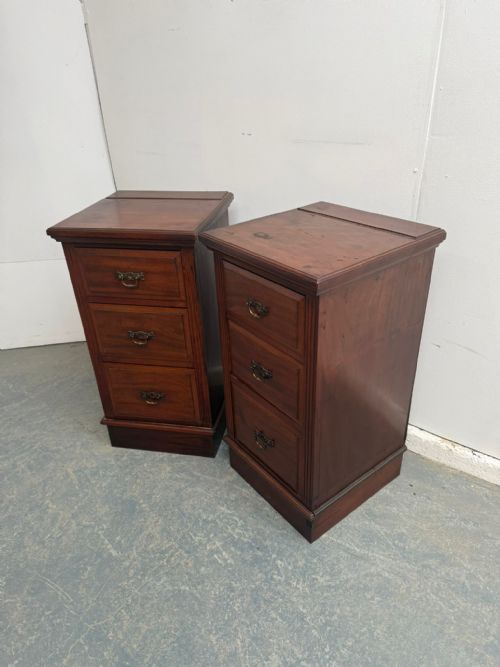
A pair of bedside drawers brings matching storage to both sides of a bed, taking forms such as bedside chests, small commodes, and lamp tables. The selection ranges from robust Victorian mahogany designs to decorative French pieces featuring marquetry and marble tops.
Makers produced these functional items across multiple periods, including the Victorian era, the Edwardian period, and the 1930s. Buyers encounter traditional English mahogany chests alongside continental styles influenced by Louis XV and Art Deco aesthetics.
How they were made
Cabinet makers utilised dense hardwoods like mahogany, walnut, and oak for the primary carcases, often applying veneers of burr walnut, kingwood, or satinwood to visible surfaces. Marquetry inlay added complex geometric or floral patterns to French and English tables alike.
Many examples incorporate fitted marble tops for durability, alongside brass handles, drawer pulls, and occasionally ormolu mounts. Joinery techniques varied from straightforward drawer construction to serpentine fronts and side-locking mechanisms.
Some French side lockers come equipped with secret side locks to keep midnight secrets safe from prying eyes.
What varies in quality
The standard of timber selection largely dictates value, with figured grains like burr walnut and matched mahogany veneers commanding attention. Superior pieces display crisp carving, precise marquetry, and harmonious proportions between the two matching items.
The integrity of the construction, from smooth drawer movement to original hardware such as brass handles and marble slabs, separates standard utility items from finer decorative examples.
Warings Liverpool
The Pair of Bedside Drawers Glossary
- Marquetry
- Decorative veneer work arranged in pictorial or geometric patterns on the surface of furniture. It is often seen on French tables of the early twentieth century.
- Bombe
- A bulging, outward-curving chest or cabinet shape typical of continental styles. This swelling profile requires expert veneer shaping.
- Commode
- A low chest of drawers or cabinet originally designed for bedroom use. Many continental bedside pieces take this form.
- Serpentine
- A front edge shaped with a concave centre flanked by convex curves. This undulating line adds movement to mahogany lamp chests.
- Nightstand
- A small table or cabinet placed beside a bed for lamps and personal items. The term is frequently used interchangeably with bedside chest.
Pair of Bedside Drawers: Frequently Asked Questions
What periods do these bedside drawers come from?
The listings span the Victorian era, the Edwardian period, and the twentieth century up to the 1930s. You will find nineteenth-century English mahogany alongside Art Deco and French revival pieces from the interwar years.
Victorian pieces lean towards sturdy mahogany and burr walnut, while later decades introduce bleached oak, geometric marquetry, and stylistic revivals.
Are matching pairs difficult to find?
Matching pairs are intentionally gathered as sets to flank a bed symmetrically. Many historical pieces were originally built as pairs or assembled later by matching height, timber, and proportion.
Checking the grain pattern and hardware helps confirm whether two individual cabinets belong together as a unified set.
What materials are commonly used?
Solid mahogany, oak, and walnut form the structural carcases of most English pieces. Decorative surfaces often feature exotic veneers such as kingwood, satinwood, and burr walnut.
Continental examples frequently incorporate inset marble tops and brass or ormolu mounts to protect the wooden surfaces and add decoration.
How do English and French styles differ?
English bedside drawers typically rely on the natural grain of mahogany or oak with minimal ornamentation, following Georgian and Victorian traditions. They prioritise straightforward drawer storage and solid timber construction.
French variations lean into decorative flair through marquetry inlay, bombe shaping, curved cabriole legs, and marble tops designed for visual impact.