


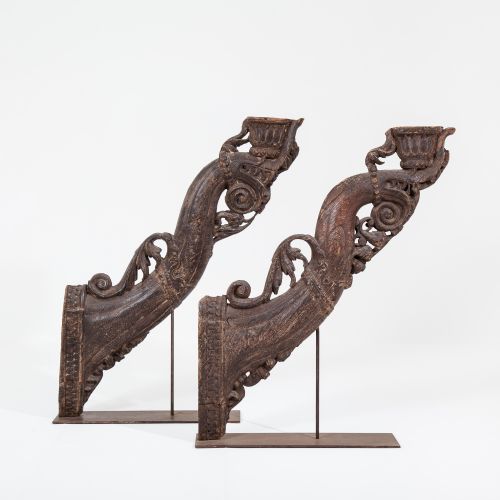

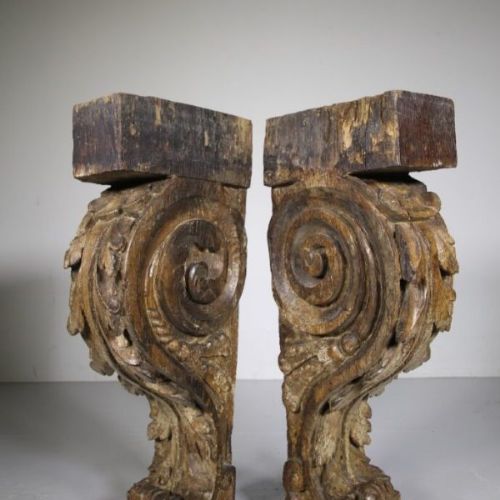


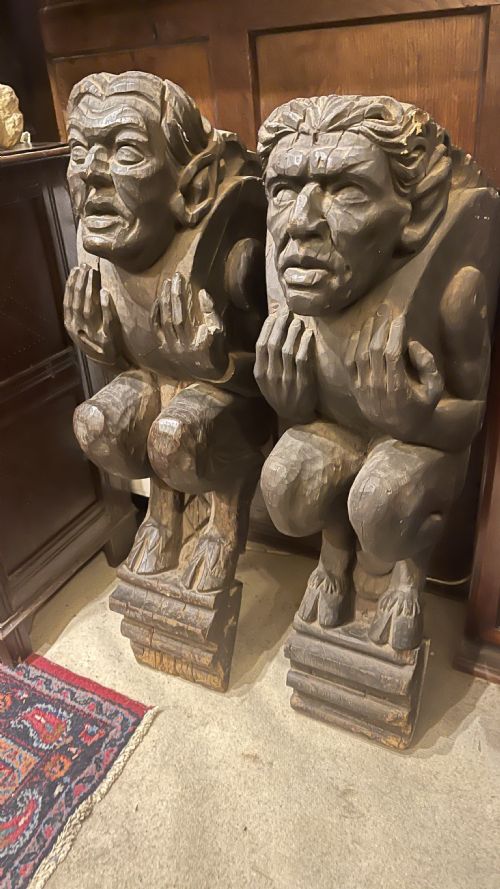


Carved Timber Brackets
Carved timber brackets are robust architectural supports and decorative wall shelf elements selected to bring sculptural weight and historical texture to an interior.
Carved Timber Brackets
When you search for carved timber brackets, you encounter heavy architectural elements, wall sconces, and figural corbels spanning several centuries. The selection draws primarily from seventeenth-century oak pieces through to nineteenth-century pine and walnut examples.
Many items originate as structural supports from buildings, while others serve specific decorative functions as wall brackets or architectural carvings. These sturdy supports display distinct period characteristics, ranging from Flemish Renaissance figures to Georgian oak corbels.
You frequently discover pairs designed for mounting shelves or supporting structural loads. The inventory also includes specialised items like seventeenth-century figurative wall brackets and sixteenth-century building brackets.
What varies in quality
The integrity of the original timber and the retention of early surface finishes dictate the piece's integrity. Solid construction using dense woods like seventeenth-century oak provides structural longevity alongside sculptural merit.
Listings span multiple centuries from the sixteenth century through the Victorian era, utilising oak, pine, walnut, brass, and iron.
Connell of London
The Carved Timber Brackets Glossary
- Corbel
- A structural member projecting from a wall to carry a weight, typically designed with scrolled or carved profiles. These load-bearing supports often terminate in volutes or figural carvings.
- Caryatid
- A sculpted female figure serving as an architectural support taking the place of a column or pilaster. They appear frequently on seventeenth-century Flemish and Continental carvings.
- Gesso
- A plaster-based mixture spread over wood before applying gilding or paint to create a smooth surface. It provides the foundation for silver leaf and metallic finishes found on later decorative brackets.
- Volute
- A spiral, scroll-like ornament that forms the principal feature of the classical Ionic capital. This motif appears repeatedly on architectural brackets and classical scrolls.
Carved Timber Brackets: Frequently Asked Questions
How do I hang a heavy wooden bracket?
Heavy architectural brackets require substantial fixings screwed directly into wall studs or masonry anchors to support their considerable weight safely. Ensure the mounting point corresponds with the load-bearing capacity of the timber.
Many antique brackets feature original rear mounting holes or iron brackets that dictate the appropriate hardware. Consult a professional installer if the piece lacks modern hanging brackets.
Can these brackets support a shelf?
Most solid timber brackets possess the structural strength required to hold a wooden display shelf when correctly installed. Pairs of seventeenth or eighteenth-century corbels distribute weight effectively across a wall surface.
Consider the projection depth and the density of the wood, such as oak or walnut, when planning a shelf assembly. Lighter pine or decorative plaster-gilded pieces suit decorative display rather than heavy book storage.
How do I clean antique carved timber?
Remove surface dust gently using a soft, dry brush to protect delicate carved details and historic patination. Avoid harsh chemical cleaners or excess moisture that could damage aged wood or lift gesso layers.
Wax polishing suits untreated oak and walnut surfaces to maintain their lustre over time. Gilded or silvered pieces require specialist care to preserve the metallic leaf.
How do I date a carved wooden bracket?
Dating relies upon stylistic markers, tool marks left by the carver, and the type of timber used in construction. Seventeenth-century pieces often display dense oak and distinct hand-cut joinery compared to later Victorian items.
Examine the back and underside for signs of historic fixings, wear patterns, and the natural oxidation of the wood. Comparing the carving style to documented architectural ornament helps narrow down the period.