



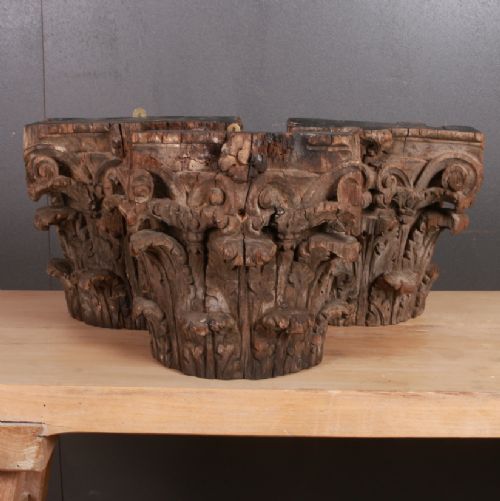
Carved Wooden Capitals
These carved wooden capitals are architectural fragments and repurposed elements that bring historic form and tactile weight to modern interiors.
Carved Wooden Capitals
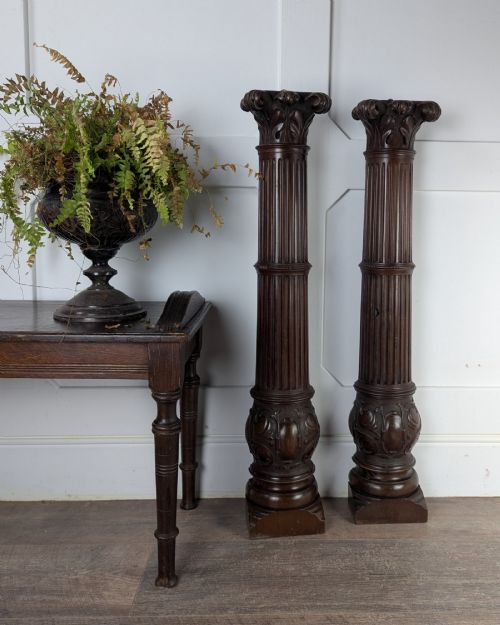
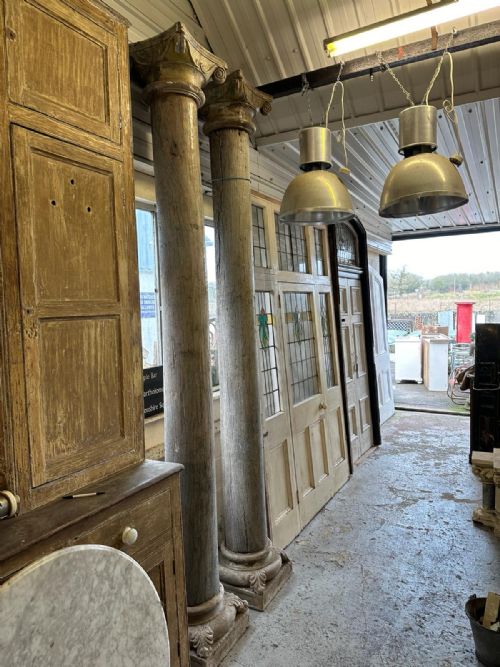
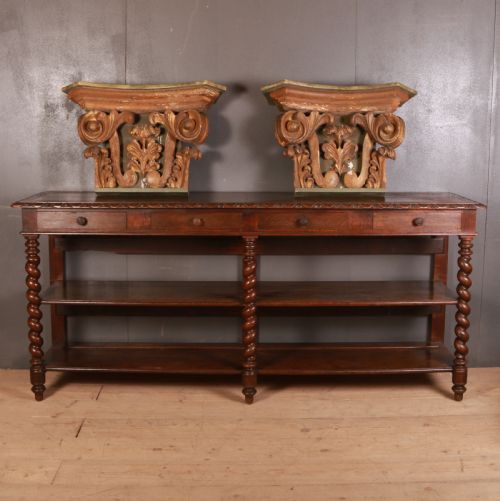
When you search for carved wooden capitals, you encounter architectural elements sourced from buildings spanning the seventeenth century through to nineteen hundred. These pieces range from monumental eighteenth-century wall brackets and classical fluted columns to refined pairs fashioned in the Corinthian style.
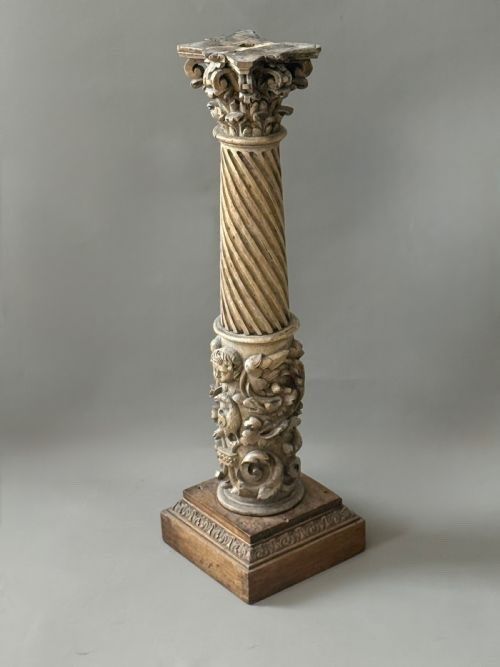
The selection on this page frequently includes matched pairs of columns, pedestals, and pillar sections adapted as lamp bases or wall mounts. Originating from diverse European and continental workshops, they reflect enduring classical design traditions executed in durable timbers.
Buyers most commonly meet Victorian and nineteenth-century interpretations alongside earlier eighteenth-century examples. Whether rendered with elaborate Continental Baroque flourishes or strict Neoclassical proportions, each object retains the distinct hand of its maker.
How they were made
Artisans fashioned these items from dense hardwoods such as oak, mahogany, chestnut, and general carved timber, often applying gesso and paint surfaces to refine the detailing. Working primarily with hand chisels and gouges, carvers achieved deep relief work, spiral twists, and intricate acanthus leaf motifs.
Structural components frequently combine carved wood elements with stone bases, particularly in larger column assemblies intended to bear substantial weight. Joinery methods varied according to the period, utilising pegged mortise and tenon construction or solid turned shafts designed for architectural support.
Styles recorded across the inventory range from Continental Baroque and Georgian to Victorian and strict Neoclassical Revival.
What varies in quality
The distinction between standard utility work and superior output lies in the sharpness and depth of the chisel cuts. Master carvers achieved crisp undercut details in foliage and volutes that catch the light, whereas lesser pieces display softer, more rounded contours lacking clear definition.
Proportion and symmetry set apart the finest pairs, particularly in architectural columns where balance dictates visual impact. Uniformity in timber selection and the preservation of original gesso and paint surfaces further elevate the standing of a piece.
The Carved Wooden Capitals Glossary
- Capital
- The uppermost member of a column, serving as a decorative crown above the shaft. In these listings, they frequently appear in Corinthian and Ionic orders.
- Corinthian
- A classical order of architecture characterised by slender columns and ornate capitals decorated with acanthus leaves and scrolling volutes. It represents the most decorative of the traditional Greek and Roman orders.
- Herm
- A carved bust or figure surmounting a square pillar, originating in ancient Greece as boundary markers. Nineteenth-century examples often use this form for decorative architectural support.
- Volute
- A spiral scroll ornament characteristic of the Ionic capital. Carvers executed these curves by hand to draw the eye toward the corners of the capital.
Carved Wooden Capitals: Frequently Asked Questions
How were these capitals used?
Originally, these capitals sat atop load-bearing columns or decorative pilasters within grand interiors, supporting entablatures and framing doorways. Their primary function was structural grace, distributing weight while displaying sculptural mastery.
Today, they are collected as standalone decorative art objects, mounted on walls as brackets, or repurposed as lamp bases and pedestals. Their architectural origins lend gravitas to contemporary living spaces.
How do I live with carved wooden capitals?
Displaying these pieces requires minimal intervention, allowing their age and material to command attention on a mantelpiece, console, or mounted directly to a wall. Pairing them with contemporary furnishings highlights the contrast between clean modern lines and historic carved detail.
They require stable indoor humidity away from direct heat sources to preserve the integrity of the timber and any historic gesso or paint surfaces. Dusting with a soft, dry cloth is sufficient for ongoing maintenance.
How can I tell different periods apart?
Distinguishing periods relies on observing the timber species, tool marks, and stylistic shifts from Baroque excess to Neoclassical restraint. Seventeenth and eighteenth-century pieces often display heavier timbers and deep, vigorous hand-carving.
Nineteenth-century revivals frequently lean toward precise archaeological accuracy, reflecting Victorian interpretations of Greek and Roman classical forms. Examining the surface preparation and wear patterns provides further clues to a piece's age.