
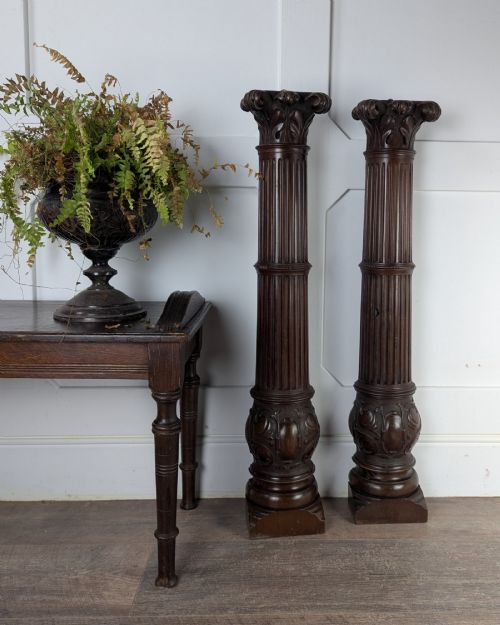


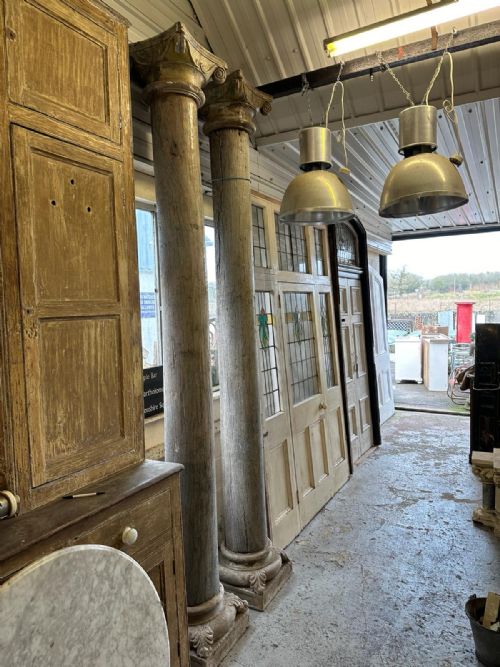
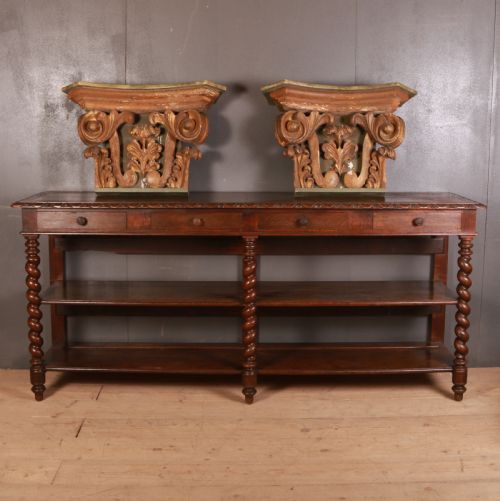


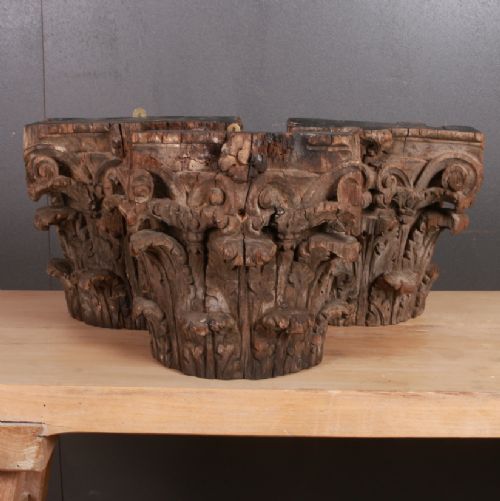
Classical Carved Capitals
Classical carved capitals are architectural elements that bring timeless proportion and texture into modern interiors.
Classical Carved Capitals
When you search for classical carved capitals, you are looking at architectural elements salvaged from buildings or designed as freestanding display pieces. These items serve as pedestals, plinths, or decorative wall supports.
The pieces on this page span from the mid-eighteenth century through the Edwardian period, encompassing both limestone and various timber forms. You will frequently encounter pairs of carved mahogany, oak, stone, and gilt bronze elements representing neoclassical and baroque revivals.
Most items reflect classical orders such as Corinthian and Ionic, appearing either as standalone capitals, paired half columns, or complete columns and pedestals. Their primary function today is to elevate sculpture, urns, or plants within a room.
Materials and construction
Craftsmen shaped these capitals from dense hardwoods like mahogany, oak, chestnut, and hardwood, alongside natural limestone and stone. Timber examples rely on deep hand chiselling to define the acanthus leaves and volutes, while stone versions are hand carved from block material.
Surface finishes range from bare polished wood and warm gilt to natural stone textures. Joinery on columnar supports often integrates turned sections with applied carved capitals and bases.
Current listings feature carved wood, limestone, mahogany, and gilt bronze spanning from seventeen-fifty to nineteen-hundred.
Assessing quality
Quality in these pieces rests entirely on the crispness and depth of the hand carving. Superior capitals display undercut acanthus leaves and precisely formed volutes that demonstrate confident draughtsmanship from the carver.
The choice of material also dictates the character of the piece, with dense hardwoods and well-weathered limestone holding sharper architectural details than softer woods or generic cast substitutes.
The Classical Carved Capitals Glossary
- Capital
- The uppermost member of a column, serving as a decorative transition between the shaft and the load. It is usually carved with foliage or scrolls.
- Corinthian
- A classical order of architecture distinguished by slender fluted columns and elaborately carved capitals decorated with acanthus leaves and scrolls.
- Ionic
- A classical order recognised by the prominent spiral scrolls, known as volutes, on its capital.
- Neoclassical
- A style spanning the eighteenth and nineteenth centuries that draws inspiration from the classical art and architecture of ancient Greece and Rome.
- Pedestal
- An architectural support or base for a column, statue, or urn. Many pieces in this category function as pedestals or plinths.
Classical Carved Capitals: Frequently Asked Questions
What is a classical carved capital used for today?
These pieces function primarily as decorative architectural accents, structural salvage, or robust supports for displaying sculpture and plants.
Collectors often place stone or wooden capitals on tabletops or mount them on walls as standalone ornaments.
How do I identify the period of a capital?
Dating relies on the wood species, tool marks, and stylistic revival cues visible in the carving technique.
Eighteenth-century examples often display deep, organic hand-chiselling in hardwoods like chestnut or oak, whereas later nineteenth-century pieces frequently adopt precise neoclassical revival forms.
How do I care for wooden and stone capitals?
Wooden capitals require occasional treatment with suitable wax to nourish the grain and protect the carved details.
Stone and limestone pieces need only gentle dusting with a dry cloth to preserve their natural surface texture.