





Baroque Carved Brackets
Baroque carved brackets are architectural supports and decorative wall mounts designed to hold lights or sculpture, bringing theatrical depth and rich historic form into a room.
Baroque Carved Brackets
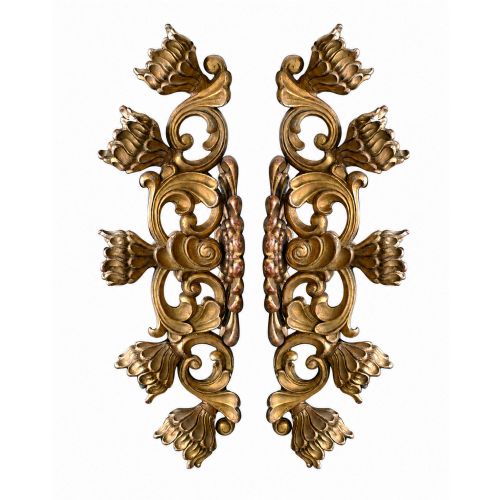
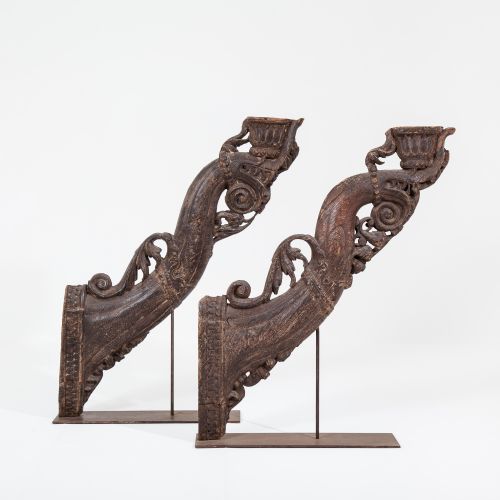
Baroque carved brackets encompass a range of wall-mounted supports, sconces, and figural carvings spanning the seventeenth century through to the early twentieth century. These pieces serve both structural and decorative roles, often taking the form of wall brackets, corbels, and console tables that project outwards from a vertical surface.
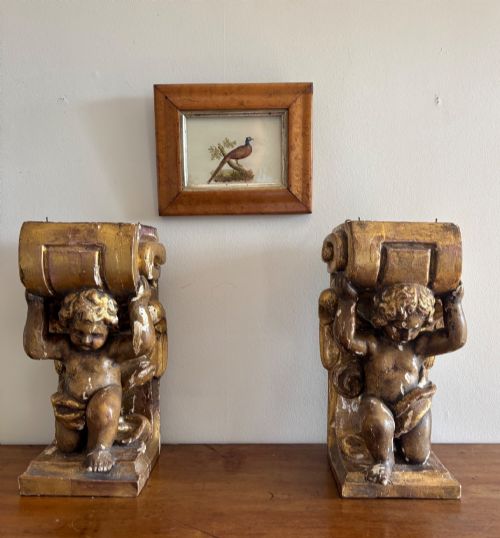
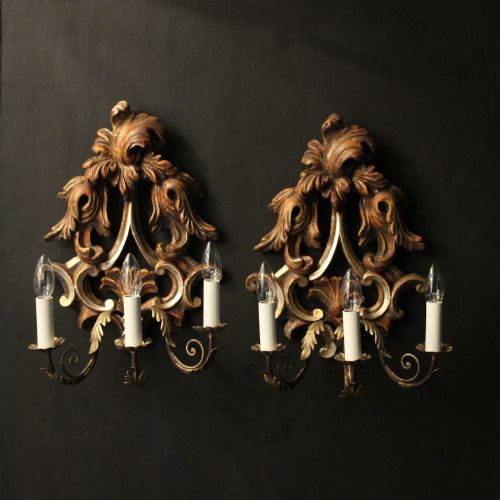
The selection on this page leans heavily towards pairs of wall lights and giltwood brackets from Italy and France, alongside earlier seventeenth-century oak and walnut carvings. Buyers encounter items ranging from simple wooden corbels to elaborate gilded wall sconces featuring cherubs, caryatids, and eagle motifs.
The origins stretch across Continental workshops, including Florentine and Flemish examples, reflecting revivals such as Louis XIV style and Baroque Revival alongside pieces from the seventeenth, eighteenth, and nineteenth centuries.
How they were made
Makers shaped these pieces primarily from carved wood, utilising timbers such as oak, walnut, limewood, and unspecified carved wood. Artisans applied hand-carving techniques to achieve deep undercut foliage, scrolling acanthus, and fully realised figural sculptures of figures and cherubs.
Surface finish defines much of the physical evidence, with craftsmen applying gesso beneath layers of gold leaf, silver leaf, giltwood, and polychrome paint. Iron and metal elements also appear where structural brackets or candle arms required additional support.
Materials recorded across the inventory include carved wood, giltwood, gesso, gold leaf, silver leaf, iron, and polychrome painted finishes.
What varies in quality
The distinction between standard and superior pieces rests entirely upon the crispness of the hand-carving and the depth of the sculptural relief. Master carvers achieved a fluid, organic movement in wood that lesser hands missed, rendering facial expressions and drapery with notable anatomical precision.
The application of the finish dictates the visual success of the piece, where genuine gold leaf or silver leaf applied over smooth gesso creates a warm, layered luminescence. Inferior examples show flat, mechanical gilding or clumsy polychrome paint layers that obscure the underlying wood.
The Baroque Carved Brackets Glossary
- Giltwood
- Wood that has been coated with gold leaf or gold paint. This finish was widely applied to enhance the theatricality of Baroque architectural furnishings.
- Caryatid
- A sculpted female figure serving as an architectural support taking the place of a column or pillar. These appear frequently in seventeenth-century figural carvings.
- Corbel
- A structural piece of stone, wood, or metal jutting from a wall to carry a weight. Wooden variants often display heavy scrollwork or figurative motifs.
- Gesso
- A plaster mixture used as a smooth base for paint or gold leaf on wood. It allows carvers to achieve a refined surface before gilding.
- Sconce
- A wall-mounted light fixture holding candles or electric bulbs. Many examples on this page incorporate multiple branches extending from a carved backplate.
Baroque Carved Brackets: Frequently Asked Questions
How were baroque carved brackets used historically?
These pieces functioned primarily as ornamental wall supports for architectural weight, or as decorative brackets designed to display sculptures and urns.
Many variants also incorporated candle arms, serving as wall lights that reflected candlelight off gilded surfaces to illuminate grand interiors.
How do I hang a heavy wooden wall bracket safely?
Due to the substantial weight of dense timbers like oak and walnut, plus applied gesso and gold leaf, secure fixing into structural wall studs or masonry is essential.
Professional installation using appropriate concealed steel brackets ensures the piece bears the outward load without damaging the antique timber.
What is the difference between seventeenth-century and revival pieces?
Seventeenth-century pieces carry the authentic tool marks, natural timber ageing, and specific construction methods of the period in which they were originally carved.
Revival pieces, produced during the nineteenth and early twentieth centuries, consciously emulated these earlier Baroque styles while utilising contemporary workshop practices of the time.
How should I clean giltwood and painted brackets?
Giltwood surfaces are exceptionally delicate and susceptible to damage from moisture and modern cleaning agents. Dusting gently with a dry, soft brush is the only recommended maintenance to preserve the underlying gold leaf.