


Oak Wall Corbels
Oak wall corbels are heavy architectural supports carved from timber, prized by collectors for bringing centuries of historic craftsmanship and structure directly onto a modern wall.
Oak Wall Corbels
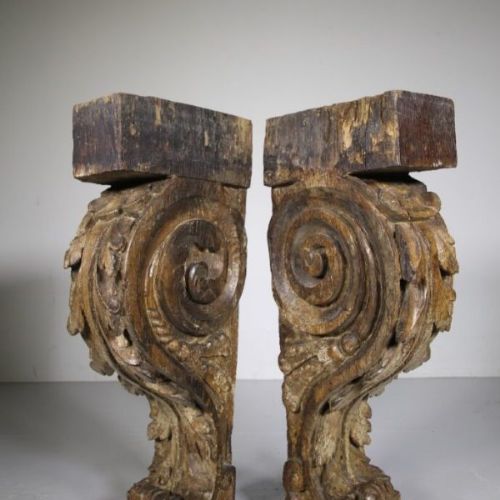
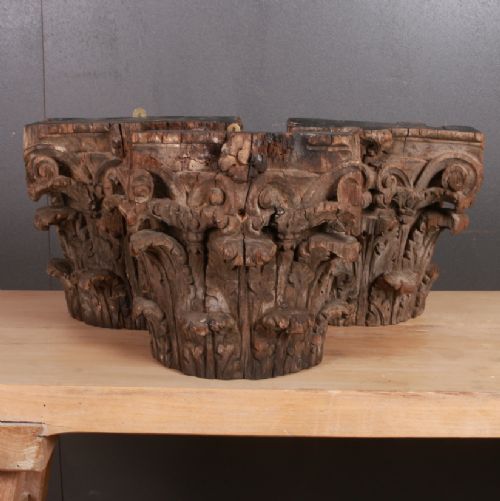
Oak wall corbels span several centuries of architectural salvage, ranging from sixteenth-century medieval fragments to seventeenth-century Jacobean and continental examples. These structural supports often take the form of wall brackets, carved capitals, and figurative sculptures designed to project from masonry.
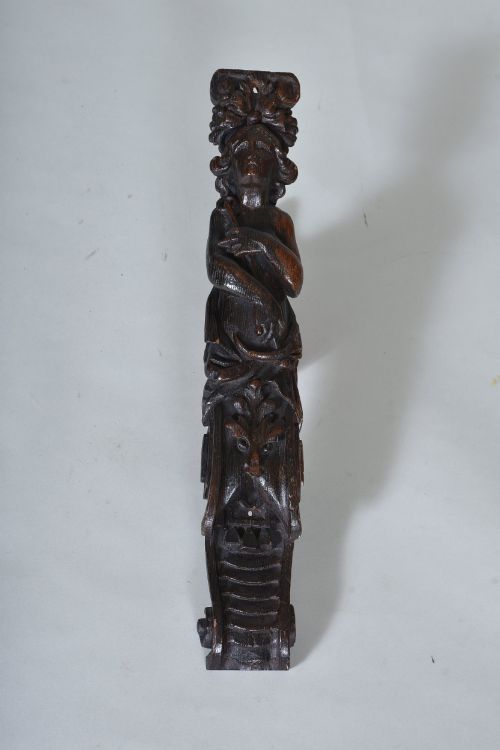
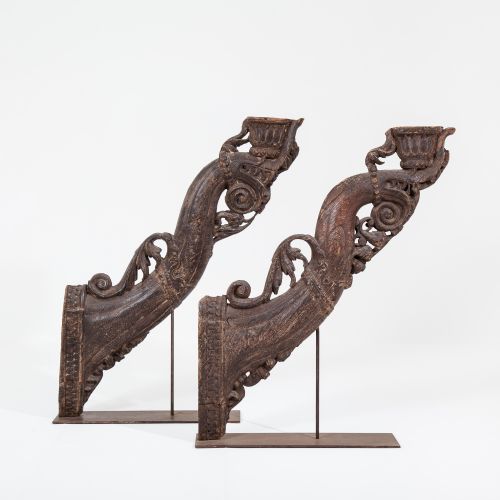
The pieces appearing on this page include pairs of large eighteenth-century brackets alongside solitary carvings of angels and medieval men. Makers utilised robust timber to create both utilitarian architectural elements and purely decorative wall sculptures.
Geographic origins vary across the inventory, with continental European workshops sitting alongside British pieces. Buyers encounter styles stretching from ecclesiastical gothic to rococo revival within the surviving selections.
How they were made
Craftsmen carved these structural supports entirely by hand from solid timber, predominantly selecting oak and dark oak for its durability and dense grain. Artisans employed gouges and chisels directly onto the wood to achieve deep relief work and sculptural depth.
Surface treatments in the evidence include traces of gold leaf applied to accentuate specific carved details. Iron fixings or integrated wooden joints served to anchor the massive brackets securely into historic stone or timber walls.
Listings span multiple centuries, uniting sixteenth-century medieval fragments with seventeenth-century continental work and later nineteenth-century revival pieces.
What varies in quality
Quality rests primarily on the depth and sophistication of the hand carving, where spirited figurative work like angels or human faces commands greater attention than repetitive geometric moulding. The crispness of the remaining detail reveals the original carver's mastery over the dense timber.
The survival of original surfaces and patination dictates the visual weight of each piece, distinguishing raw architectural salvage from items retaining historic gilding or rich dark oxidation. Scale also plays a part, as matched pairs demand higher regard than single fragments.
The Oak Wall Corbels Glossary
- Corbel
- A structural piece of stone, wood, or metal jutting from a wall to carry a superincumbent weight. These wooden variants functioned as interior brackets supporting beams, shelves, or vaulting.
- Architectural salvage
- Building elements rescued from structures slated for demolition or alteration. These fragments are repurposed today purely for interior decoration and display.
- Jacobean
- The style of English architecture and decorative arts prevalent during the reign of James I. Pieces from this period exhibit robust proportions and strapwork motifs.
- Capital
- The uppermost member of a column or pilaster, often heavily carved with foliage or figures. In wall brackets, this form adapts to support horizontal loads directly beneath a ceiling.
- Ecclesiastical Gothic
- A medieval design language characterised by pointed arches and religious iconography. Items bearing this style originate from churches, abbeys, or related religious institutions.
Oak Wall Corbels: Frequently Asked Questions
What did oak wall corbels support originally?
These heavy wooden brackets anchored into stone or timber walls to carry structural loads like ceiling beams, projecting lintels, or heavy cornices in historic buildings.
Over time, many of these supports were salvaged from demolished churches, castles, and manor houses before entering the collector market.
How do I mount a heavy wooden corbel safely?
Mounting requires locating solid masonry or heavy internal studs behind the plaster, as historic oak components carry considerable weight on their own.
Professional installers typically utilise concealed steel brackets or heavy-duty threaded rods anchored deep into the rear of the timber to ensure stability.
How can I tell a seventeenth-century corbel from a later copy?
Early pieces display tool marks left by hand chisels, irregular grain patterns, and heavy oxidation built up across centuries of exposure to interior atmospheres.
Later revival pieces often show uniform machine finishing and lack the organic shrinkage cracks characteristic of truly ancient timber.
Where should I place these in a modern interior?
Collectors often mount them beneath floating bookshelves, above doorways as decorative lintels, or simply display them as standalone sculptures on plain walls.
Their substantial projection and deep relief carving make them natural focal points in hallways or living spaces.