

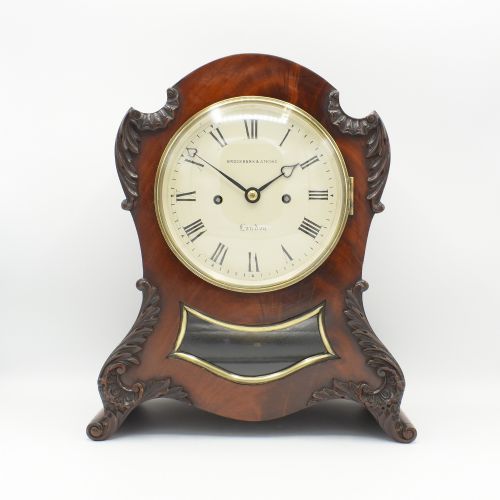
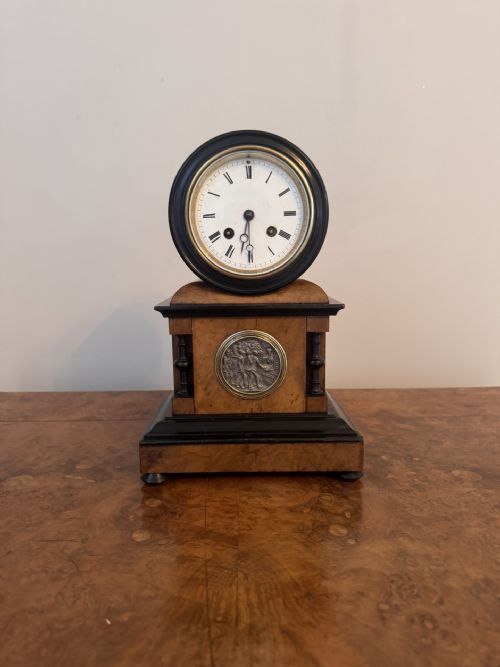
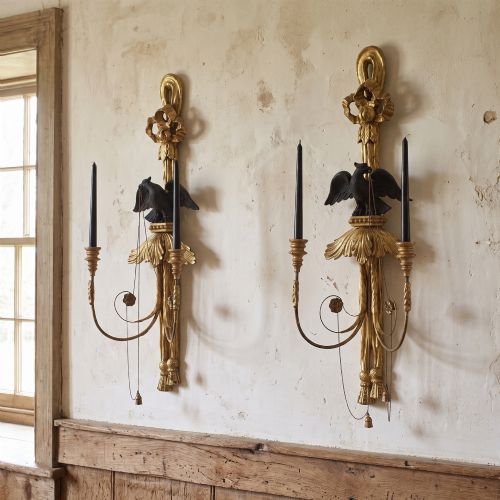
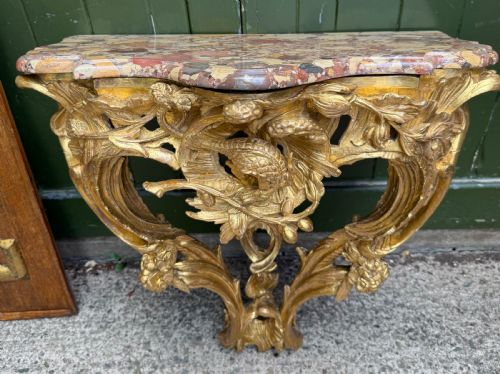
Carved Wood Brackets
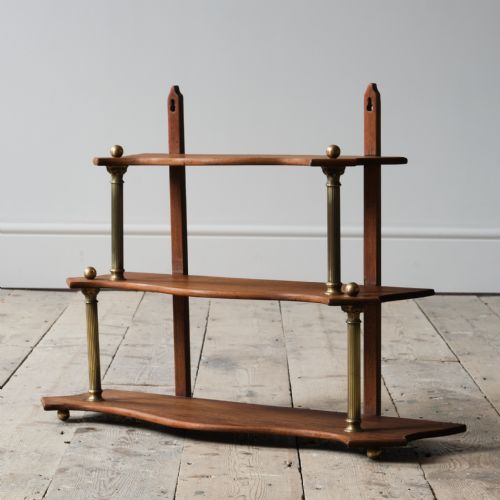
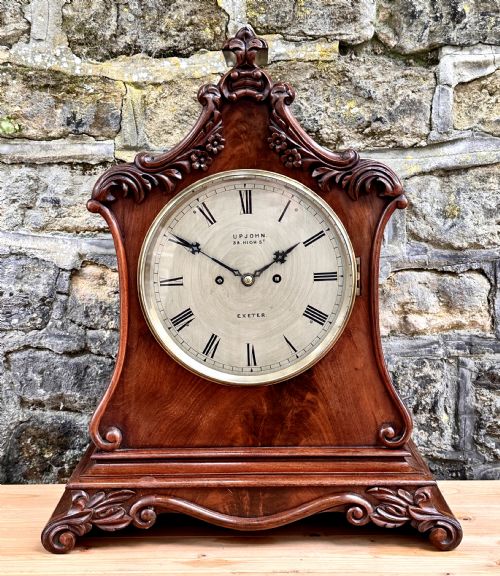
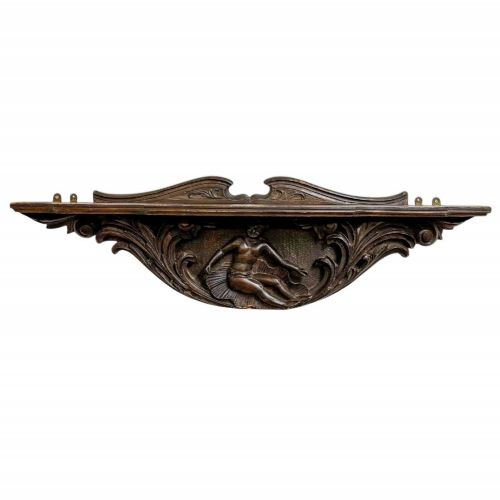
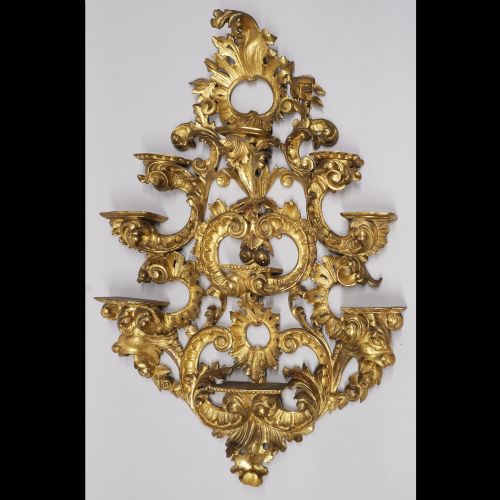
These carved wood brackets bring architectural presence to a room, offering display surfaces carved in mahogany, oak, and giltwood.
Carved Wood Brackets
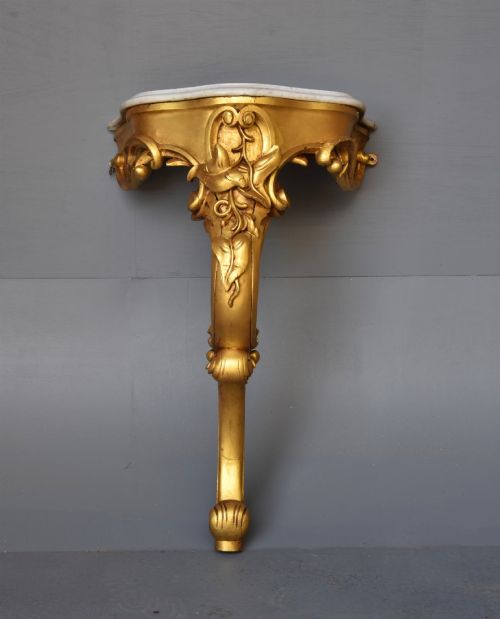
Carved wood brackets serve as architectural supports and decorative wall shelves, emerging in forms from simple Victorian mahogany ledges to ornate Italian Florentine giltwood displays. When searching for carved wood brackets, collectors encounter functional corbels, architectural salvage, and ornamental ledges designed to hold small objects or light fittings.
The pieces on this page span the eighteenth, nineteenth, and early twentieth centuries, with Victorian and later interpretations appearing most frequently. These items often originate from British and continental workshops, utilising dense timbers or lighter woods finished with gesso and gold leaf.
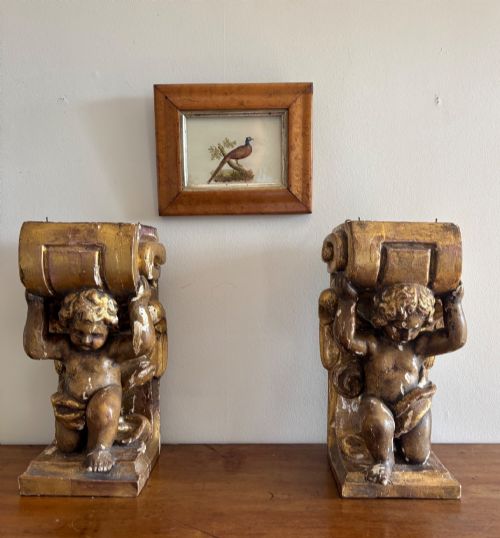
Many examples survive as matched pairs, originally intended to flank mirrors, doorways, or fireplaces in formal rooms. Single brackets also appear, representing fragments of larger architectural schemes or dedicated wall-mounted display furniture.
How they were made
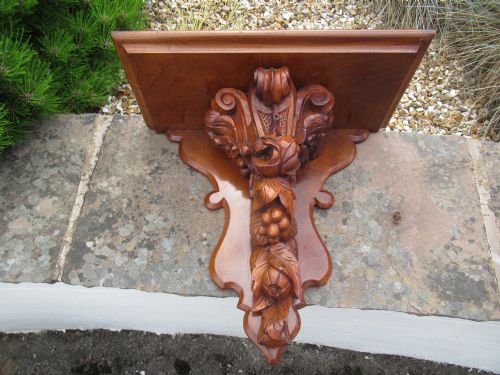
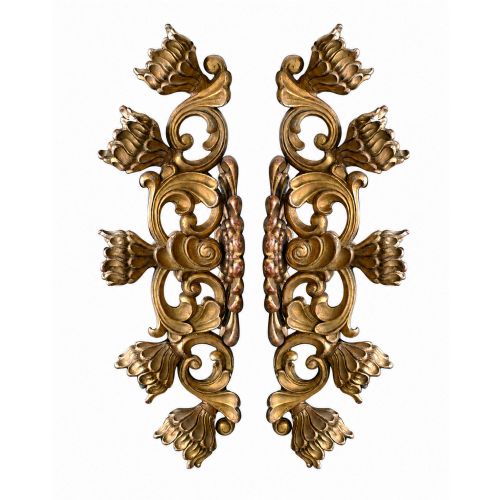
Craftsmen shaped these items from foundational timbers such as mahogany, oak, and walnut, employing hand-carving chisels to create deep relief foliage, figures, or scrollwork. Dense hardwoods provided structural integrity for weight-bearing corbels, while softer woods served as stable bases for intricate carving.
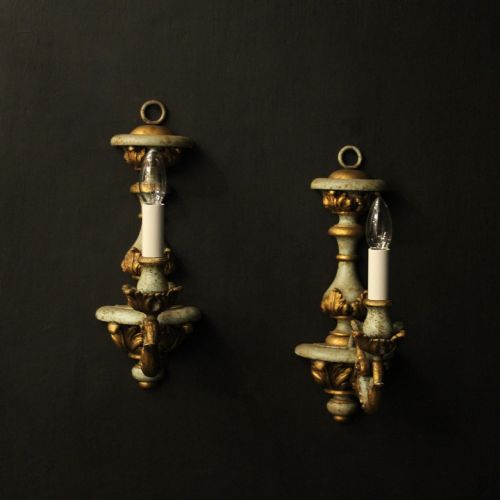
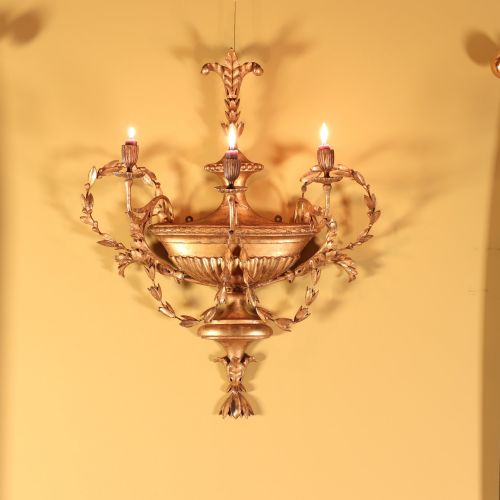
Surface ornamentation often involved the application of gesso over timber, which was subsequently gilded with gold leaf or painted in polychrome schemes. Italian and British makers utilised these layered techniques to achieve rich light-reflecting finishes on wall lights and display brackets.
Listings feature eighteenth-century architectural brackets alongside nineteenth-century Victorian mahogany shelves and early twentieth-century Italian giltwood pieces.
What varies in quality
The distinction between ordinary and exceptional pieces lies in the crispness of the hand-carving and the depth of the relief work. Superior examples exhibit undercut foliage and precisely rendered details that demonstrate the carver's total command over the grain.
Surface preservation dictates the standing of a bracket, particularly where original gilding, gesso layers, or patinated timber remain intact beneath centuries of light wear. Later regilding or heavy cleaning can obscure the sharpness of the original tool marks, altering the visual weight of the piece.
George Wadham·Brockbanks & Atkins·Mappin & Webb·Sir John Bennett
The Carved Wood Brackets Glossary
- Corbel
- A structural projection from a wall designed to support a weight above it, frequently rendered in carved wood as a decorative architectural element.
- Giltwood
- Timber that has been coated with fine gold leaf or powder over a prepared gesso ground, typical of decorative wall brackets and sconces.
- Gesso
- A plaster mixture applied to wood surfaces as a smooth base for gilding and paint, allowing for sharp moulded or carved enrichment.
- Polychrome
- Decorated in multiple colours, often found on continental wood carvings and wall light fittings from the nineteenth and early twentieth centuries.
- Architectural salvage
- Building elements rescued from older structures, including carved wooden brackets, pediments, and corbels.
Carved Wood Brackets: Frequently Asked Questions
What were carved wood brackets used for?
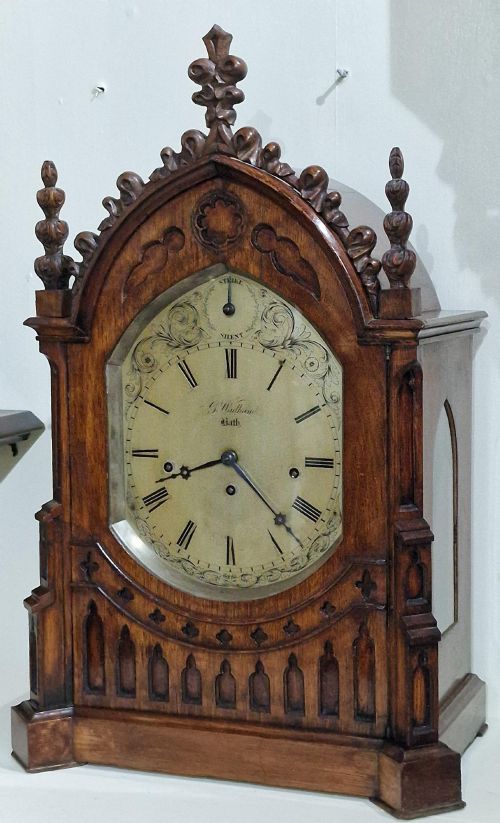
These items functioned primarily as architectural shelf supports, ornamental ledges for displaying small sculptures or clocks, and mounts for wall lighting. Wealthy households utilised matched pairs to frame doorways, mirrors, or large paintings.
Over time, their roles shifted between purely structural load-bearing corbels and purely decorative display brackets meant to catch the light in formal reception rooms.
How do I hang a wall bracket securely?
Due to the dense timbers and projecting weight of antique brackets, secure wall fixings are essential. Most retain original rear mounting points or structural screw holes that indicate how they engaged with the wall.
Modern wall plugs matched to the specific masonry or studwork ensure the piece safely supports its own weight and any display items placed upon the shelf.
How can I tell Italian brackets from British ones?
Continental pieces, particularly those from Florence and broader Italian workshops, frequently employ heavy giltwood, gesso, and elaborate Rococo or Baroque revival scrollwork. British examples more often feature exposed mahogany, walnut, or oak with restrained carving.
Regional timber choices and finishing techniques provide clear indicators of a piece's geographic origin during the eighteenth and nineteenth centuries.
Are pairs harder to find than single brackets?
Matched pairs of carved wood brackets are considerably scarcer than single examples because many sets were separated during alterations to historic interiors or lost over centuries. Surviving pairs command distinct interest from collectors seeking symmetry for interior displays.
Single brackets often represent surviving remnants of larger architectural schemes or dismantled overdoor pediments.