



Gilded Cherub Sconces
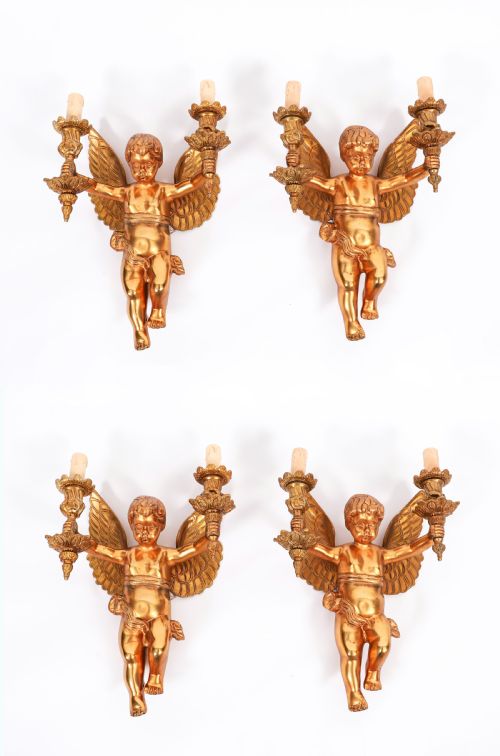
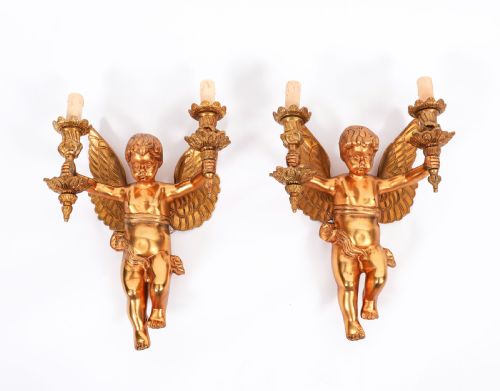
Gilded cherub sconces bring exuberant Rococo and Baroque styling to interior walls through carved wood, gilt, and ormolu.
Gilded Cherub Sconces
When you search for gilded cherub sconces, you look at wall lights, brackets, and mirrors designed to hold candles or illuminate rooms. These decorative fixtures appear across the nineteenth and early twentieth centuries in Italian, French, and English workshops.
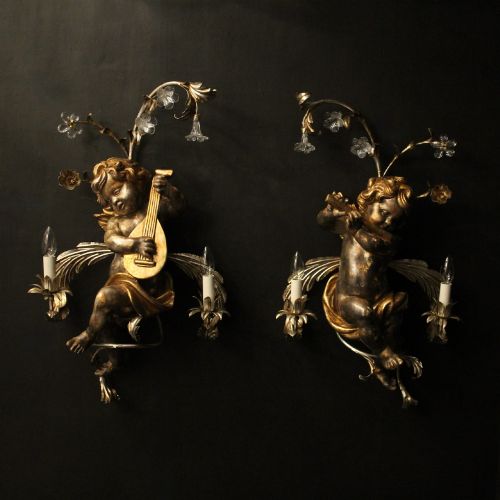
The version you most frequently meet on this page is the pair of wall lights or twin-arm wall sconces. These pieces draw heavily on Rococo Revival, Baroque Revival, and Louis XIV styles, featuring carved putti alongside branches and brackets.
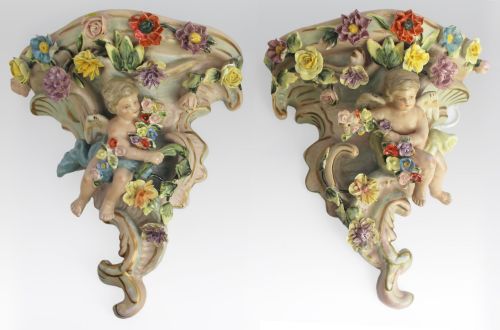
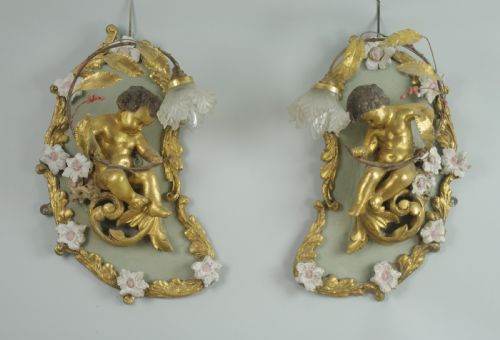
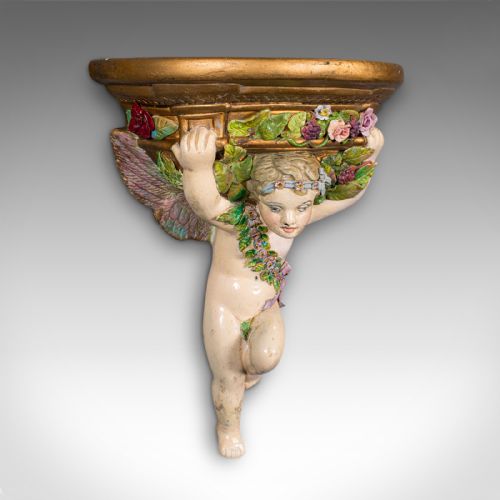
Makers fashioned these wall fixtures as functional art, combining carved wood, gesso, and porcelain. They turn up as single brackets, mirrored sconces, and sets of four, reflecting diverse European decorative tastes from eighteen-eighty to nineteen-thirty.
How they were made
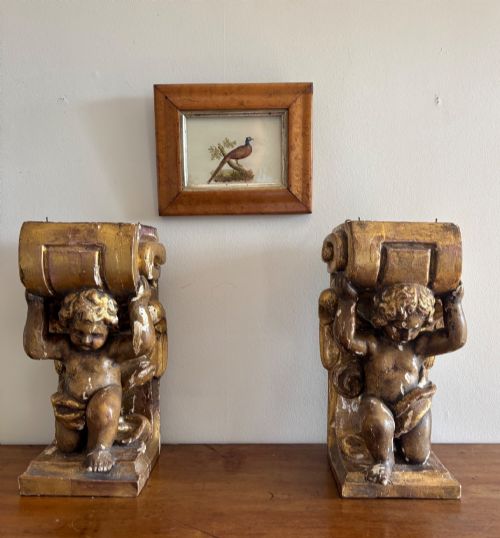
Artisans built these pieces using carved wood, gesso, and cast metals including ormolu and gilded bronze. Carvers shaped the wooden frames and putti figures by hand before applying layers of gold leaf or gilt surface treatments.
Many examples incorporate glass elements such as lustre drops or Murano components alongside porcelain figures and plaster mounts. Metal branches were cast in sections and secured to the wooden or composite backplates to support the light fittings.
Several cherubs hold candle branches with expressions that suggest they take the business of illumination quite seriously indeed.
What varies in quality
The application of the gilt surface determines the richness of the finish, with genuine gold leaf and fire-gilded bronze ageing differently than painted or heavily restored gesso. Original matching branches and integrated glass elements elevate the integrity of a pair.
The Gilded Cherub Sconces Glossary
- Giltwood
- Wood that has been coated with gold leaf or a gold-coloured finish. This material forms the primary structure for many decorative wall brackets and frames.
- Ormolu
- Finely chased gilt bronze used for decorative mounts and hardware. Makers utilised this alloy to create durable, ornate branches on wall lights.
- Putto
- A plump, naked male child figure frequently depicted in classical and Renaissance art. These figures serve as the central cherubic motif on these sconces.
- Corbel
- A structural bracket projecting from a wall to support a weight. In lighting terms, these often double as decorative display ledges.
- Lustre
- Cut glass pendants hung from lighting fixtures to catch and refract light. They appear on twentieth-century examples alongside cherub figures.
Gilded Cherub Sconces: Frequently Asked Questions
How were gilded cherub sconces used?
These fixtures were mounted on drawing room and salon walls to provide ambient illumination by candlelight. Their reflective gilt surfaces helped bounce candle flame light around the room.
Beyond simple lighting, they functioned as decorative art objects that displayed status and taste. Many were paired with matching wall mirrors to enhance the sense of space and light.
Are these sconces electrified?
Many surviving examples have been adapted for electricity during the twentieth century to suit modern homes. Some retain their original candle sockets or have been converted back for display purposes.
Buyers should examine the wiring details in the individual descriptions to determine the current functional state of the fittings. Professional rewiring is often recommended for older metal and wooden fixtures.
How do I tell Italian pieces from French ones?
Italian pieces often feature bolder, high-relief carving with rich polychrome or deep gilt finishes typical of the Baroque tradition. They frequently incorporate local materials like Murano glass elements.
French examples lean towards refined Rococo Revival and Neoclassical symmetry, utilising finely chased ormolu and cast bronze. Cabinetmakers in Paris focused on delicate facial expressions and restrained structural proportions.
Can I hang these on modern drywall?
Due to the dense materials like carved wood, bronze, and gesso, many of these sconces carry considerable weight. Proper wall anchors and direct fixing into studs are necessary for secure installation.
Consulting a professional installer ensures the weight of twin-arm lights or mirror brackets is safely supported. Lighter plaster or porcelain variants still require sturdy fixings to prevent accidental damage.