




French Chateau Wall Sconces
French chateau wall sconces bring a grand domestic scale and gilded warmth to an interior, shaped largely by early twentieth-century interpretations of classical styles.
French Chateau Wall Sconces
French chateau wall sconces encompass decorative lighting fixtures designed for interior walls, drawing on historical forms associated with stately homes. These pieces emerge predominantly from the nineteenth and early twentieth centuries, spanning periods from the eighteenth century up to nineteen-thirty.
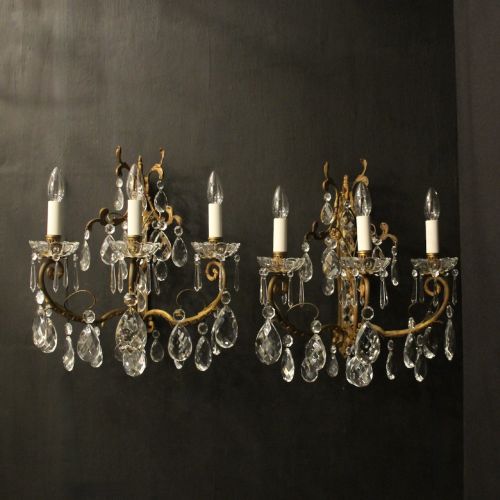
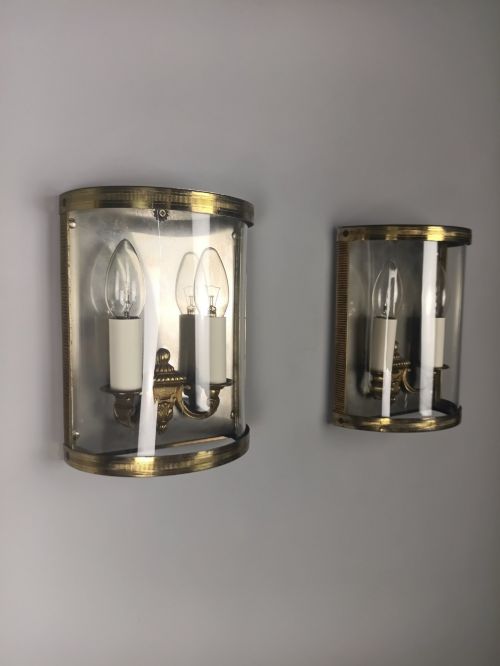
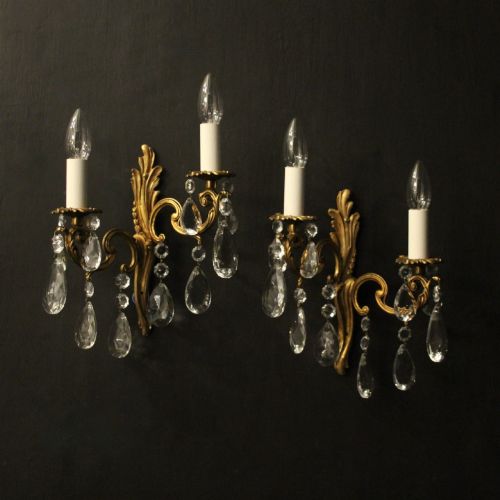
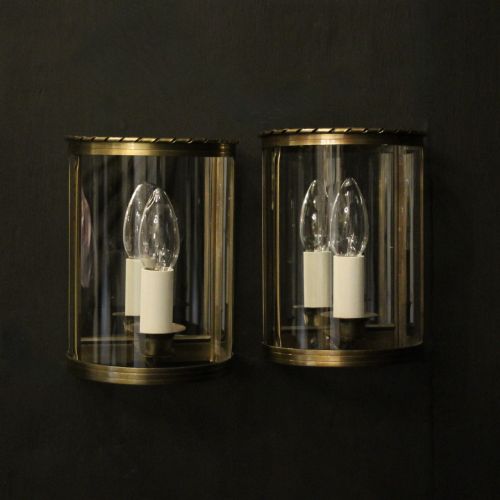
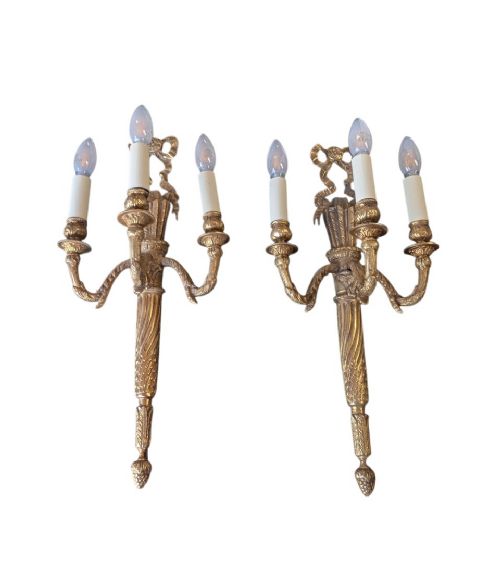
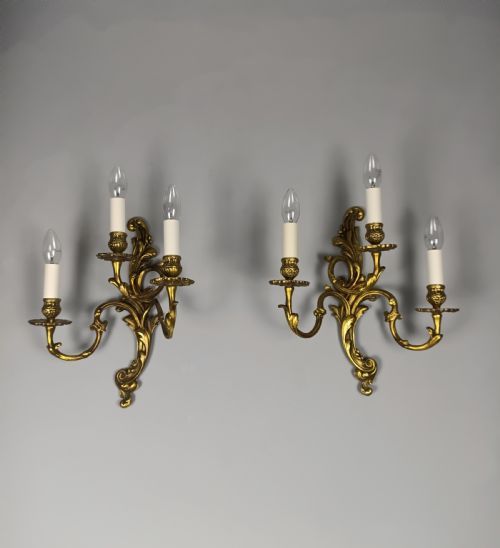
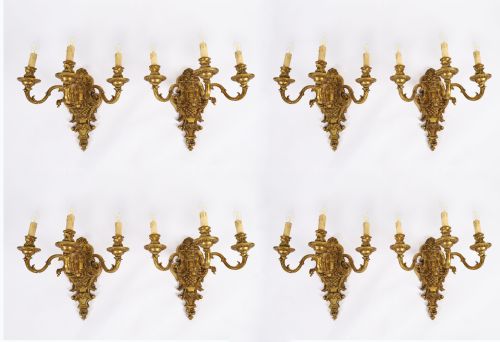
Buyers will most frequently encounter pairs of wall lights featuring multiple arms, candle brackets, or convex half-lantern designs. The prevailing styles lean heavily into French Rococo, Louis XVI Neoclassical, and ornate revival aesthetics.
Object types extend beyond simple candle holders to include mirrored girondoles, architectural brackets, and wrought iron appliques. These fixtures range from single-light brass lanterns to grand sets of gilt bronze ormolu branches.

How they were made
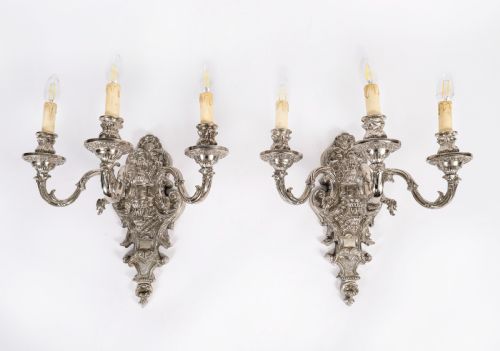
Construction relies heavily on cast and chased metals, utilising brass, gilt bronze, ormolu, and silver plating to build robust armatures. Many pieces incorporate carved wooden elements such as giltwood and gesso, alongside painted or lacquered toleware.
Reflective qualities are introduced through the integration of cut crystal drops, mirror backs, and glass panels within half-lantern frames. Metal components are frequently gilded, faded, or left with patinated surfaces to achieve a rich decorative finish.
French Chateau Wall Sconces Retail Price Guide 2026
Typical asking prices for french chateau wall sconces among the pieces listed under this phrase on Sellingantiques today, from the lower quarter to the upper quarter. They describe what is for sale here now, not the wider market.
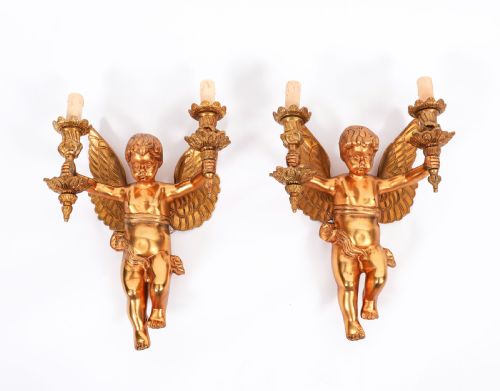
Some antique wall lights include carved cherubs keeping watch over the candles.
What varies in quality
The standard of chasing and casting defines the crispness of detail in gilt bronze and ormolu mounts, separating finely worked foliage and cherub motifs from softer, less distinct production. Heavier cast brass and bronze foundations provide a greater structural integrity compared to lighter, pressed metal alternatives.
The integration of materials dictates overall visual weight, with genuine cut crystal elements and hand-carved giltwood frames commanding a different presence than simpler brass or painted toleware constructions. Completeness of matched pairs and original surface patination also set apart exceptional examples.
Maison Baguès
The French Chateau Wall Sconces Glossary
- Ormolu
- Gilded bronze, where a gold-mercury amalgam is applied to a bronze base and heated to leave a rich metallic finish. This technique was widely employed in high-status French decorative arts.
- Girondole
- A wall mirror featuring attached candle branches or sconces designed to reflect and multiply candlelight. These fixtures combine illumination with reflective glass.
- Toleware
- Enamelled or painted sheet metal items, often decorated with floral motifs. It provides a colourful, durable alternative to cast bronze.
- Applique
- A wall-mounted light fitting or sconce designed to hold candles or electric bulbs. The term is frequently used interchangeably with wall lights.
- Louis XVI
- A neoclassical style characterised by symmetry, straight lines, and classical architectural motifs such as urns and ribbons. It emerged during the eighteenth century and saw frequent revivals.
French Chateau Wall Sconces: Frequently Asked Questions
How were wall sconces originally lit?
These fixtures were designed to hold wax or tallow candles, positioned against walls or mirrors to maximise illumination within a room.
Reflective surfaces such as crystal drops and mirrored backplates helped bounce the flickering candlelight across the interior space.
Are these sconces wired for electricity?
Many surviving examples have been adapted for modern electrical wiring while retaining their historic appearance. Some listings note whether the fixtures are ready to install or require professional rewiring.
Buyers should inspect the technical specifications of individual pieces to determine their current electrical status.
How do I identify Louis XVI style?
Louis XVI style pieces display straight geometric lines, symmetry, and classical motifs derived from antiquity. They contrast with the asymmetrical curves of earlier Rococo designs.
Common decorative elements include ribbons, urns, acanthus leaves, and fluted columns.