

Three Arm Wall Lights
Three arm wall lights bring purposeful illumination and decorative presence to a room, drawing the eye with balanced metalwork and branching candle arms.
Three Arm Wall Lights
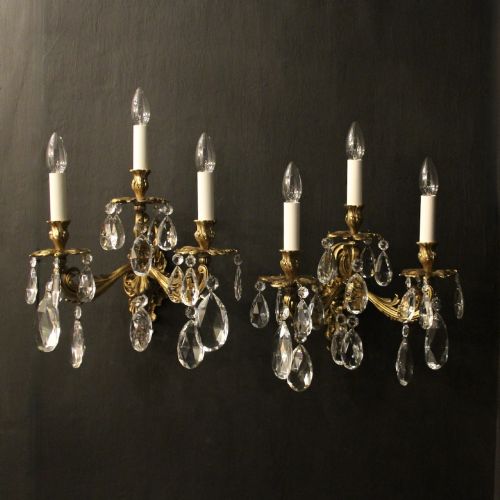
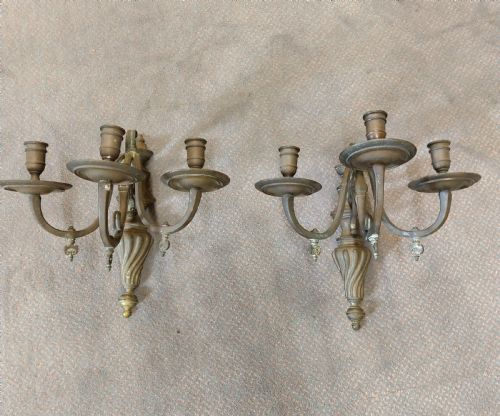
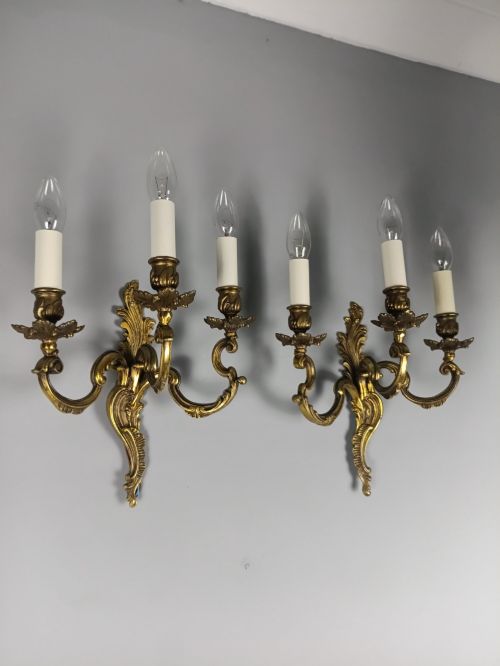
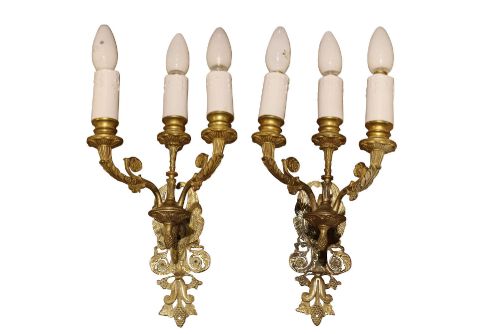
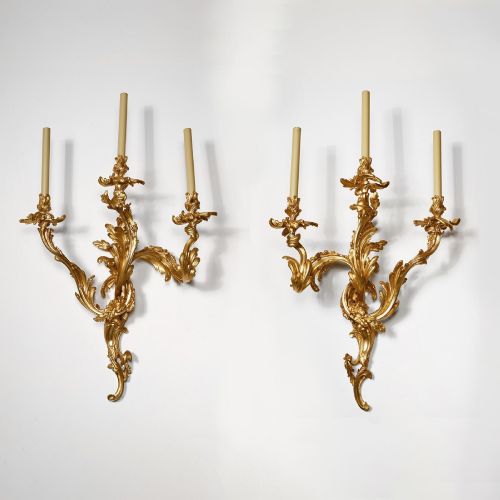
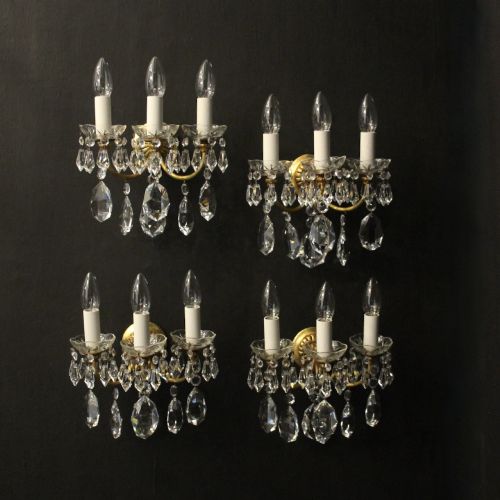
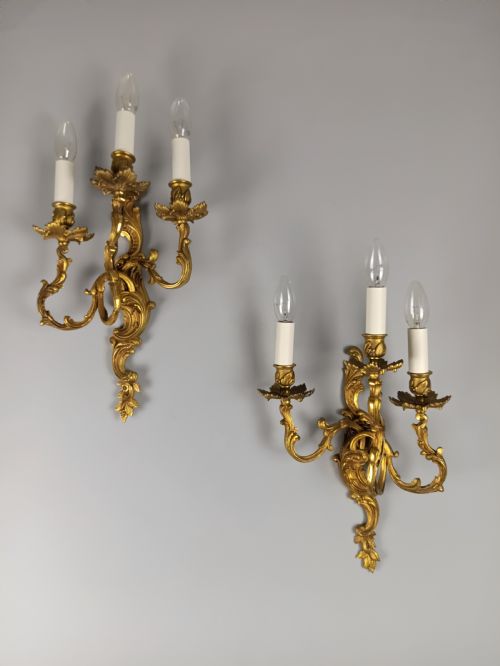
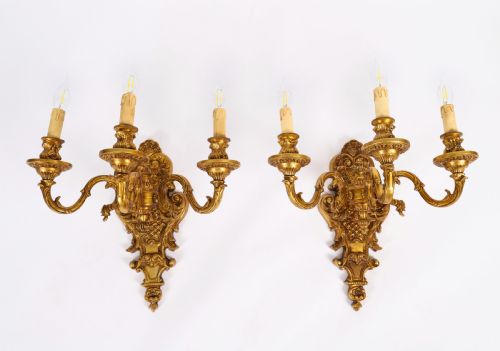
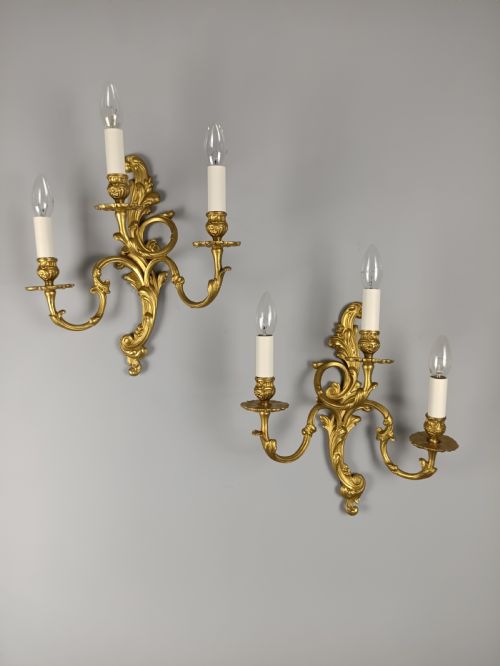
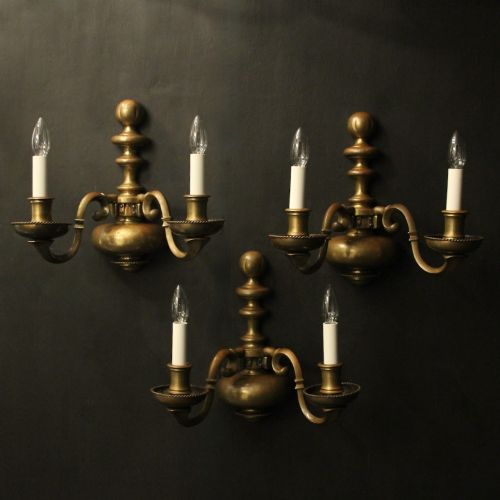
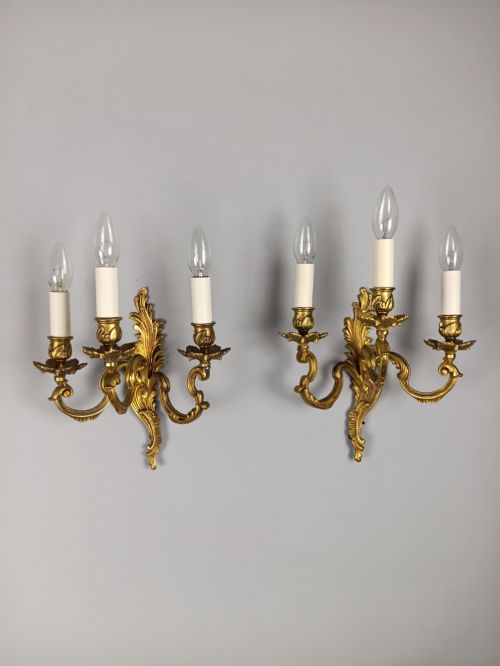
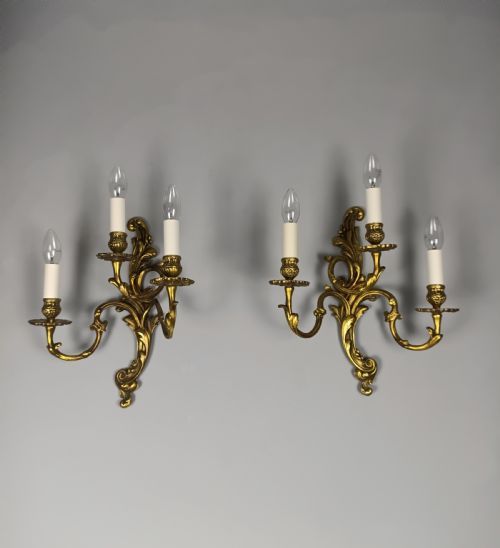
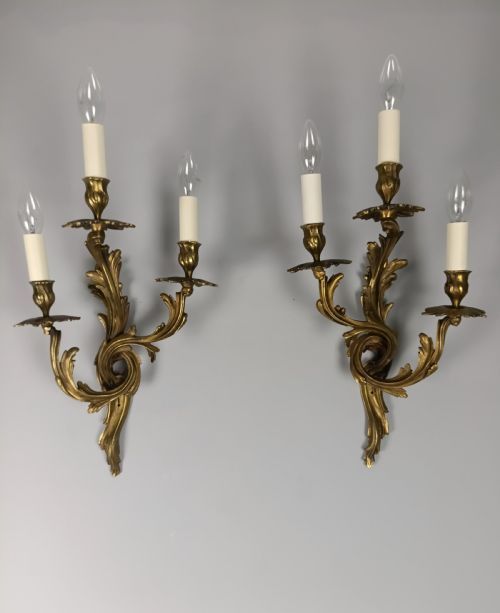
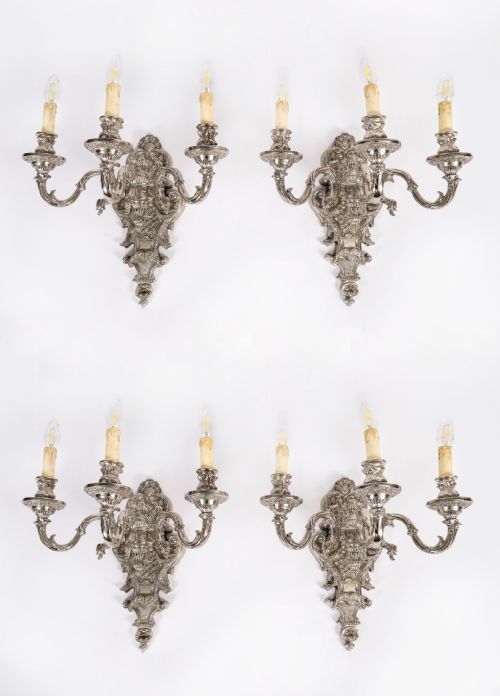
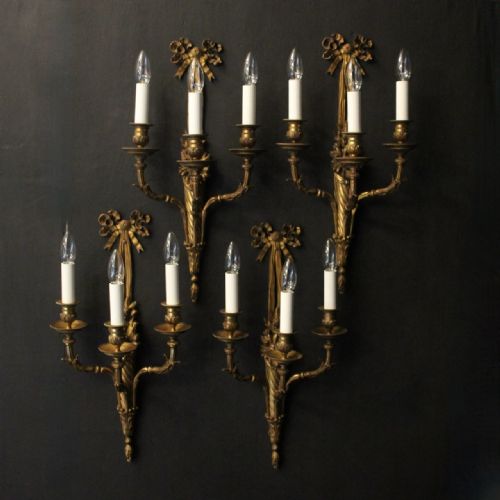
When you search for three arm wall lights, you encounter wall-mounted lighting fixtures designed with three distinct candle branches or lamp holders. These fixtures project outward to cast light across a wall surface, serving as both functional illumination and architectural ornamentation.
The selections available span multiple periods from the eighteenth century through the twentieth century, with a strong representation of nineteenth-century Victorian and early twentieth-century French production. You frequently find pairs and matching sets featuring three arms executed in brass, bronze, and giltwood.
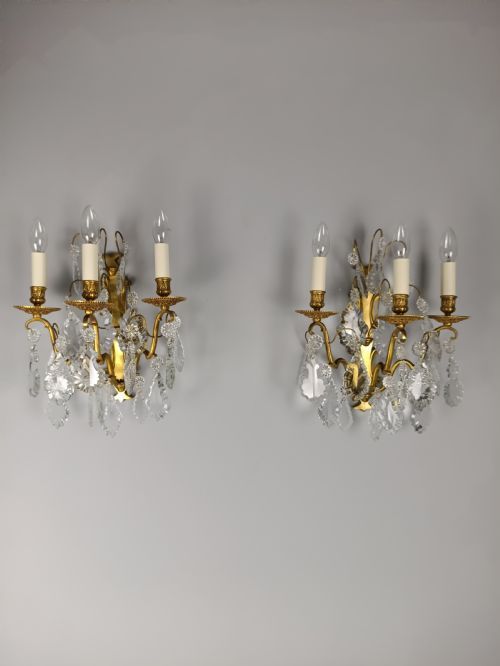
Stylistic variations range from ornate French Rococo and Baroque designs adorned with crystal drops to restrained English traditional models and carved Florentine giltwood. These pieces primarily originate from French workshops, English makers, and Italian studios.
How they were made
Maker workshops utilised casting techniques for bronze, brass, and ormolu mounts, often chasing the metal surfaces by hand to sharpen floral and scroll motifs. Gilded finishes were applied using gold leaf or mercury gilding to achieve lasting brilliance on the bronze and brass foundations.
Carved wooden examples, particularly from Florentine and English traditions, relied on skilled hand-carving in timber before receiving layers of gesso and gold leaf. Glass and crystal elements, including pendants and drip pans, were hand-blown or cut to catch and refract the light from the three branches.
Three Arm Wall Lights Retail Price Guide 2026
Typical asking prices for three arm wall lights among the pieces listed under this phrase on Sellingantiques today, from the lower quarter to the upper quarter. They describe what is for sale here now, not the wider market.
Listings feature items from the eighteenth, nineteenth, and early twentieth centuries, constructed in brass, bronze, crystal, and carved wood.
What varies in quality
The crispness of the metal casting and the depth of the hand-chasing separate standard production from superior examples. Fine pieces retain sharp leaf details, well-defined scrollwork, and clean junction points where the three arms meet the backplate.
The quality of the gilding or surface finish dictates longevity and visual impact, with thick gold leaf or heavy fire-gilt bronze enduring far better than thin, flat platings. Additionally, the integration of original crystal drops and the structural rigidity of the branching arms indicate superior workshop construction.
The Three Arm Wall Lights Glossary
- Ormolu
- Finely chopped and chased gilt bronze mounted on furniture or lighting fixtures. This technique creates a rich, matte gold surface finish.
- Sconce
- A wall-mounted lighting fixture designed to hold candles or electric lamps. It attaches directly to vertical surfaces.
- Rococo
- An ornate design style characterised by asymmetrical scrolls, C-curves, and naturalistic plant motifs. It appears frequently in French lighting from the eighteenth and nineteenth centuries.
- Giltwood
- Timber that has been coated with a thin layer of gold leaf over a gesso ground. This treatment gives the appearance of solid gold.
- Applique
- A French term for a wall sconce or wall light. These fixtures provide decorative accent illumination in formal interiors.
Three Arm Wall Lights: Frequently Asked Questions
How do I install antique wall lights?
Many surviving pieces arrive rewired and ready for modern electrical installation by a qualified professional. You should consult an electrician to ensure the wall mount and internal wiring match current safety standards.
Because historical backplates vary in size and mounting hole configuration, a professional installer can secure the fixture safely to standard wall junction boxes without damaging the antique metalwork.
Were these fixtures originally meant for candles or gas?
Earlier examples from the eighteenth and early nineteenth centuries were designed exclusively to hold wax candles. As technology progressed into the Victorian era, some models utilised gas before eventually being adapted for electricity.
Many surviving pieces have undergone conversion to electric illumination over the decades while retaining their original aesthetic form and branching metal arms.
How do I clean gilded bronze and brass?
You should use only a soft, dry cloth to gently remove dust from gilded bronze and brass surfaces. Avoid abrasive polishes or chemical cleaners that can strip away the historic gilding or patina.
Crystal drops and pendants can be carefully wiped down with a mild soapy solution while detached from the fixture, then dried thoroughly before reattachment.
How do I distinguish French styles from English ones?
French pieces often display exuberant Rococo or Louis XVI ornamentation with heavy use of gilt bronze, asymmetry, and crystal embellishments. They lean towards decorative theatricality and ornate floral casting.
English traditional and Georgian models tend to favour more restrained symmetry, cleaner brass or bronze lines, and structured geometric or classical motifs without excessive scrollwork.