

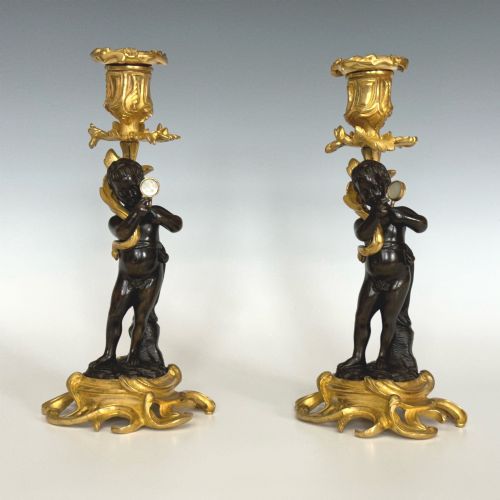
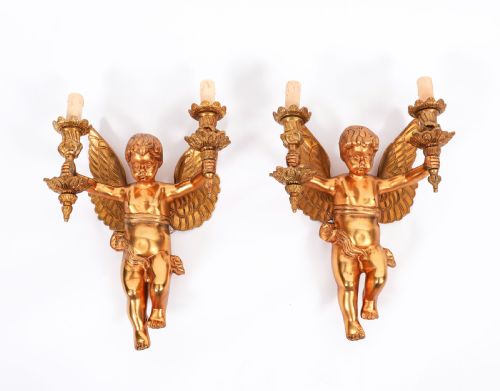
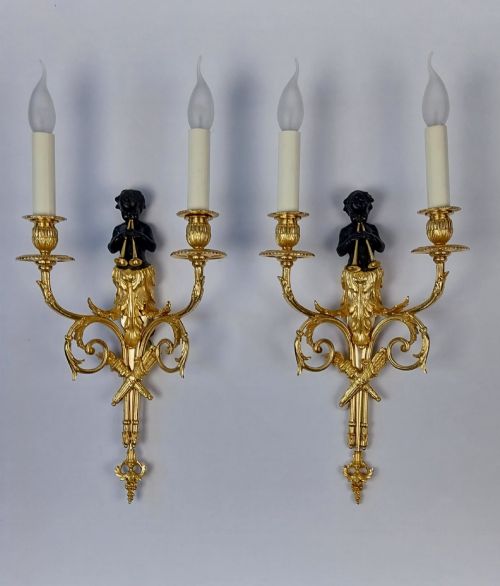


Cherub Candle Sconces
Cherub candle sconces are decorative lighting fixtures cast in bronze, brass, or giltwood, designed to bring classical figural charm directly to a wall.
Cherub Candle Sconces
Cherub candle sconces combine figural sculpture with functional lighting, featuring winged putti or cherubs holding candle arms or branches. When searching for cherub candle sconces, buyers encounter wall lights, twin branch sconces, and candelabra designed for mounting.
The pieces appearing here predominantly span the nineteenth century, alongside items from the Regency period and the early twentieth century. French and Italian workshops produced the majority of these wall lights, utilising revival styles such as Rococo, Louis XVI, and French Empire.
How they were made
Metal versions rely on foundational casting techniques in bronze, brass, and cast metal to shape the intricate figures of putti and the supporting arms. Artisans then applied mercury gilding, creating the rich ormolu and gilt bronze surfaces seen across nineteenth-century examples.
Alternative methods involve carving wood, as demonstrated in giltwood wall-lights finished in the mid-seventeenth-century Louis XIV manner. Combinations of patinated bronze and polished ormolu added visual depth to the figures and their mounts.
Recorded periods range from the Regency era through to the early twentieth century, with nineteenth-century pieces predominating.
What varies in quality
The preservation and depth of the gilt bronze or ormolu surface also separate pieces. Heavier metal gauge and the integration of substantial marble bases contribute to the structural presence of the wall lights.
The Cherub Candle Sconces Glossary
- Ormolu
- Finely ground high-carat gold applied to a bronze base using a mercury amalgamation process. This technique produces a durable, warm golden finish characteristic of French decorative metalwork.
- Putti
- Plump, often winged infant figures derived from classical art and frequently depicted in Renaissance and revival sculpture. In these lighting fixtures, they support the candle branches.
- Rococo Revival
- A nineteenth-century design movement resurrecting the ornate, asymmetrical curves and naturalistic motifs of the eighteenth century. This style heavily influences the movement seen in French wall lights.
- Patinated Bronze
- Bronze treated with chemical solutions to produce a controlled dark or weathered surface tone. It provides contrast against bright gilt bronze or ormolu elements.
- Appliqué
- A French term for a wall-mounted light fixture or sconce designed to reflect light into a room. These fixtures attach directly to wood panelling or masonry.
Cherub Candle Sconces: Frequently Asked Questions
How were cherub candle sconces used historically?
These fixtures were mounted on walls in reception rooms and parlours to hold wax candles. The metal or giltwood surfaces helped reflect and amplify the candlelight across the room.
They served both as practical illumination and as sculptural decoration, reflecting the refined tastes of nineteenth-century interiors.
Where should I mount wall sconces?
Mount them at eye level in hallways, dining rooms, or flanking a mirror or fireplace. Ensure the wall construction can support the weight of bronze and marble pieces.
Professional installation is recommended to secure the fixtures safely to the wall studs or masonry.
How do I clean gilt bronze and ormolu?
Dust the surface gently with a soft, dry cloth to remove everyday particles. Avoid harsh chemical cleaners or abrasive polishes that can strip the gold finish.
Consult a conservator if the metal requires deeper cleaning or stabilization.
Can these sconces be wired for electricity?
Many antique wall lights can be adapted by a qualified electrician to take internal wiring and small SES bulbs. This allows them to function as electric wall lamps while retaining their original appearance.
Discuss reversible conversion options with your electrician to preserve the physical structure of the antique.
How do I distinguish nineteenth-century pieces from later reproductions?
Examine the casting quality, the wear on the gilding, and the methods used to join the component parts together. Nineteenth-century pieces often display hand-chased details and heavy bronze gauges.
Look for period fastening screws and natural ageing patterns across the metal and marble components.