
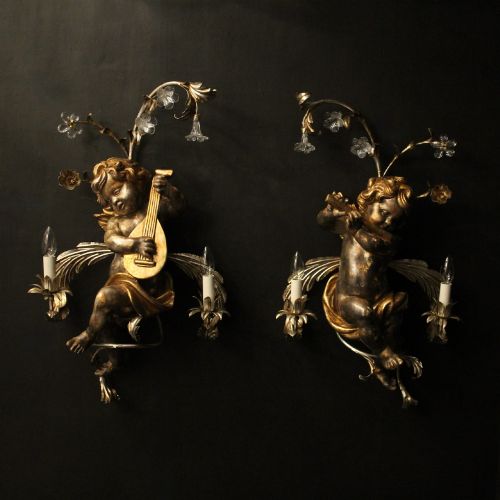

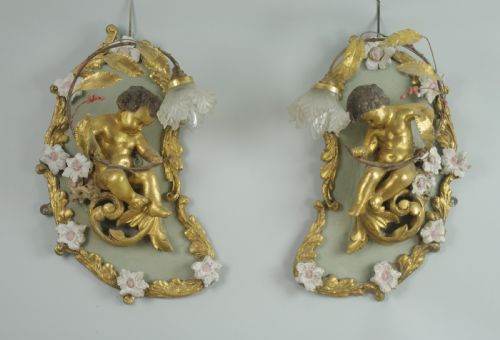
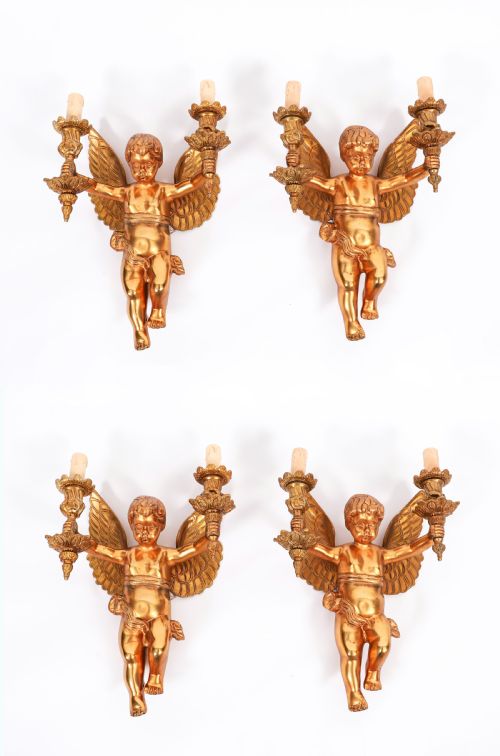
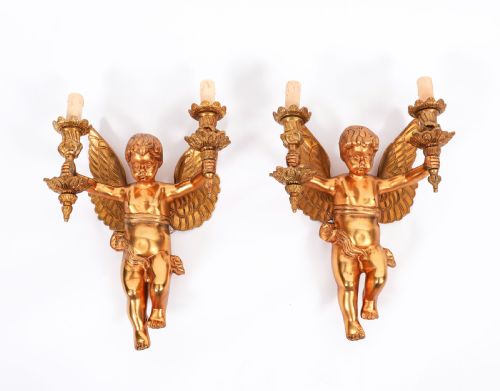


Putti Wall Lights
Putti wall lights bring sculpted cherubic figures and ambient illumination together, offering a decorative theatricality that transforms an interior wall.
Putti Wall Lights
Putti wall lights combine sculptural cherubic figures with functional arm lighting, appearing across forms such as twin arm wall lights, wall sconces, hanging lanterns, and light fittings. These fixtures emerge from periods including the nineteenth century, eighteen-eighty, nineteen hundred, nineteen-twenty, and nineteen-thirty.
The aesthetic draws heavily on historical revival movements and continental workshops, encompassing styles like Rococo Revival, French Rococo Revival, French Chateau, Italian Baroque, French Art Nouveau, French Neoclassical, Louis XVI, and Florentine Baroque. Buyers frequently encounter pairs and sets originating from French and Italian makers working in gilded bronze, ormolu, carved giltwood, and brass.
These pieces function as both primary and accent illumination, utilising glass shades or exposed candle-style branches. The physical presence ranges from modest single fixtures to large multi-branch arrangements featuring flying cherubs and intricate metalwork.
How they were made
Makers utilised cast metals such as bronze, brass, and ormolu to form the structural bodies and detailed cherub figures. Gilding techniques applied gold leaf or surface treatments to giltwood and gilt metal components, creating rich reflective surfaces.
Glass elements, including lustres and shades, combined with metal arms to complete the electrical or candle-bearing fittings. Carving techniques shaped solid timber into elaborate giltwood frames and hanging lanterns.
Flying cherubs occasionally carry candle branches as if perpetually tasked with illuminating a grand nineteenth-century salon.
What varies in quality
The definition and depth of the cherub sculpture separates standard production from finer examples, with hand-chased metal and hand-carved wood showing superior anatomical detail. Superior weight and solidity in the bronze, brass, or ormolu indicate higher grade materials.
The consistency and preservation of the original gilding or surface finish determine the visual integrity of the piece over time. Integration of original glass lustres and matching mounting components preserves the intended aesthetic harmony.
The Putti Wall Lights Glossary
- Putti
- Plumed or winged infant figures frequently depicted in art and decorative metalwork. They add a classical narrative element to lighting fixtures.
- Ormolu
- Finely ground high-carat gold mercury-gilded onto a bronze object. This technique produces a warm, durable metallic lustre.
- Giltwood
- Timber that has been coated with gold leaf or powder. It provides a lightweight yet opulent alternative to solid metal.
- Sconce
- A wall-mounted lighting fixture designed to project illumination outward. These often hold multiple candle branches or electric bulbs.
- Lustre
- A glass pendant or droplet hung from a light fitting to refract light. They enhance the sparkle and visual spread of the illumination.
Putti Wall Lights: Frequently Asked Questions
Where should I mount putti wall lights?
These fixtures suit prominent interior locations such as hallways, flanking a fireplace, or either side of a large mirror. Their decorative weight requires secure fixing to solid wall structures.
Positioning them at eye level or slightly above ensures the sculpted figures and metal arms are viewed to best effect while providing balanced ambient room lighting.
Are these lights wired for modern electricity?
Many surviving fixtures retain period wiring or have undergone rewiring during their history to meet modern standards. Buyers should inspect the internal fittings upon receipt.
Qualified electricians can easily adapt antique wall brackets to accept contemporary bulbs while preserving the original structural components.
How do I clean gilt metal and ormolu?
Maintenance requires gentle dusting with a soft, dry brush to prevent the accumulation of dirt within the intricate crevices of the cherub figures. Liquid cleaners risk damaging historic surface treatments.
Avoiding harsh chemical polishes protects the underlying gold leaf and bronze patination from premature wear.
How do I identify French versus Italian styles?
French pieces often lean towards refined Neoclassical or Rococo Revival symmetry, utilising smooth gilt bronze and precise chasing. Italian examples frequently exhibit exuberant Baroque carving, heavier giltwood, and expressive Florentine details.
Examining the underlying material composition and casting characteristics helps determine the likely continental workshop origin.