


Brass Cherub Sconces
Brass cherub sconces bring character and classical modelling to a wall, combining cast metalwork with figures from French and Italian decorative traditions.
Brass Cherub Sconces
Brass cherub sconces encompass wall lights and light fittings featuring cast figures of putti or cherubs. These fixtures appear across several periods, most notably the nineteenth century and the early twentieth century, drawing on revival styles from French and Italian sources.
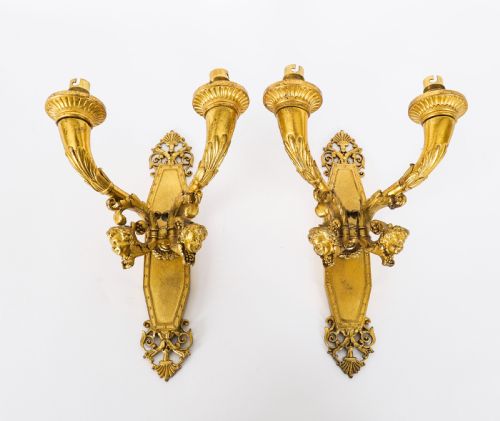
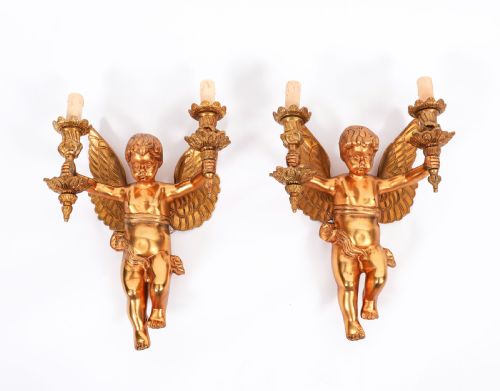
The objects take the form of multi-branch wall lights, single or paired sconces, and adapted candlesticks designed to mount directly onto a wall. Examples range from modest Victorian brass pieces to large French gilt bronze and ormolu sets with multiple branches.
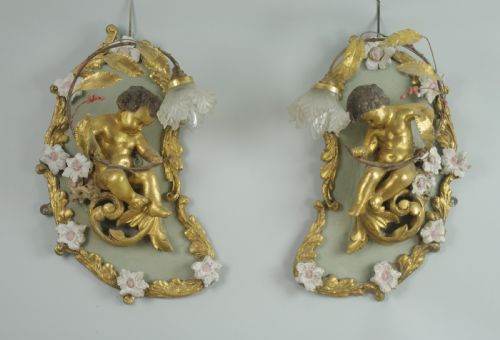
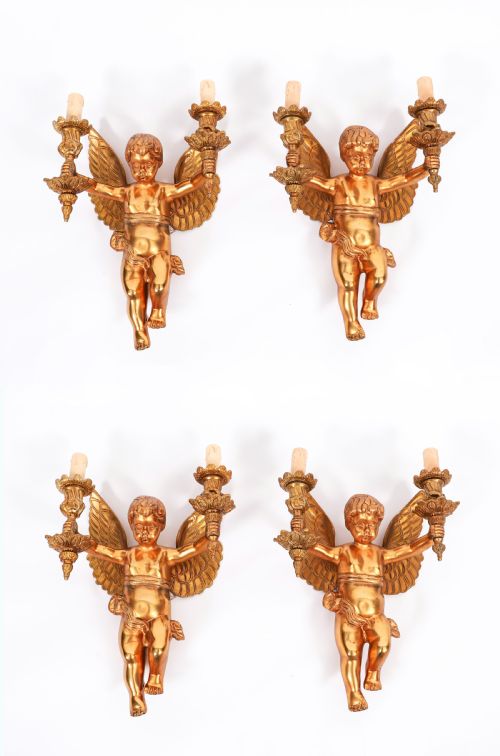
Buyers seeking brass cherub sconces encounter items shaped by historical revivals including Louis XIV, Louis XVI, Rococo, and Arts and Crafts aesthetics. The figures themselves appear as flying putti, standing cherubs holding candle arms, or decorative elements supporting glass lustres.
How they were made
The manufacture of these lighting fixtures relies primarily on metal casting techniques using brass, bronze, gilt metal, and ormolu. Artisans cast the cherub figures and scroll arms separately before assembling them into cohesive wall lights.
Surface finishes vary from polished brass to gilt bronze, ormolu, and parcel gilding over bronze or metal. Some examples incorporate glass elements such as lustres and shades to catch and reflect the candlelight or electric illumination.
Listings span from Regency and nineteenth-century French designs through to early twentieth-century Arts and Crafts and lustre wall lights.
What varies in quality
The choice of base metal and surface treatment alters the character of the piece, with heavy gilt bronze and fire-gilded ormolu sitting apart from standard cast brass or gilt metal. Original matching sets of four demonstrate greater consistency in manufacture than assembled pairs.
The Brass Cherub Sconces Glossary
- Ormolu
- Gilded bronze, produced by applying a mercury and gold amalgam to a bronze base and heating it to drive off the mercury. This technique creates a durable, rich golden surface found on finer French and Italian pieces.
- Putti
- Depictions of plump, winged toddlers or cherubs frequently used in classical and revival art. They form the central figurative motif in these wall lights.
- Lustre
- A glass pendant or drop hung from a light fitting to refract light. These appear on selected twentieth-century and nineteenth-century examples.
- Gilt Bronze
- Bronze metal that has received a layer of gold leaf or gilding. It provides a warm metallic tone that resists tarnishing.
- Rococo Revival
- A nineteenth-century design movement mimicking the asymmetrical, scroll-heavy style of the French eighteenth century. Many wall sconces adopt this vocabulary.
Brass Cherub Sconces: Frequently Asked Questions
How do I wire them?
Most antique wall lights require professional rewiring to meet current electrical standards. Electricians can usually adapt the internal channels or fit modern candle tubes safely.
Buyers should consult a specialist to ensure the mounting brackets support the weight of cast bronze or brass fixtures.
Are they all French?
While many gilt bronze and ormolu examples originate from France, Italian workshops also produced notable cherub sconces. Victorian British makers contributed brass variants during the later nineteenth century.
Examining the casting style and metal composition helps distinguish between French revival pieces and other European origins.
How do I clean the metal?
Dusting with a soft, dry cloth preserves the existing surface patina on gilt and brass work. Aggressive cleaning or metal polishes can strip thin gilt layers from ormolu and gilt bronze.
Gentle care ensures the original finish remains intact without exposing the underlying base metal.
What is the difference between ormolu and brass?
Ormolu consists of gilded bronze finished with a mercury-gilding process that yields a deep, warm golden lustre. Brass is an alloy of copper and zinc that tends to have a brighter, yellower tone when polished.
Finer wall lights utilise bronze for its superior casting qualities before applying gilding.