
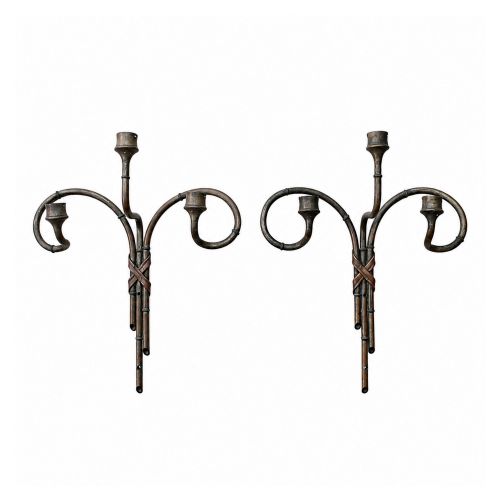
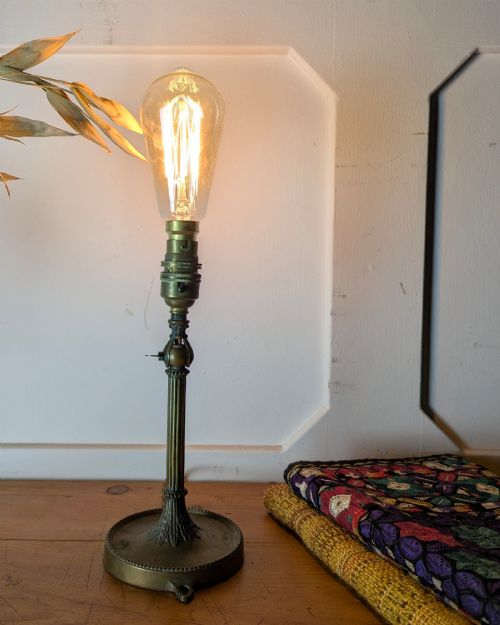

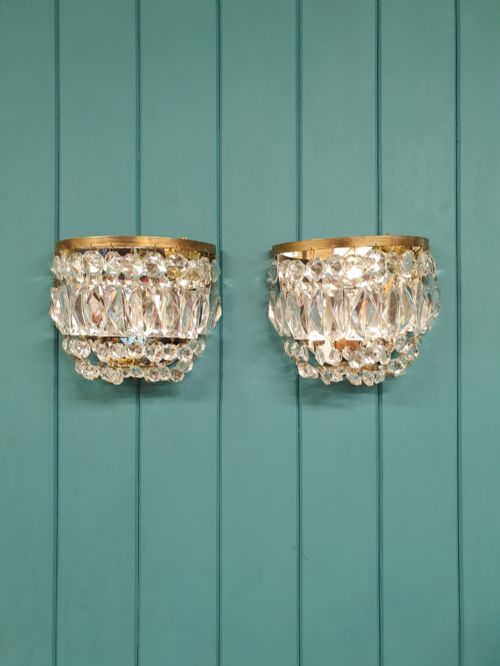


Early 20th Century Sconces
These early 20th century sconces bring authentic period illumination and character to an interior.
Identifying early 20th century sconces
Early 20th century sconces encompass wall lights and wall sconces produced across Edwardian and later decades up to the 1930s. A buyer searching this phrase encounters diverse forms ranging from pairs to sets of seven.
The aesthetic vocabulary draws heavily on historical revivals, including Rococo Style, Neoclassical, and Italian Neoclassical Revival, alongside Japonisme. These fixtures mount directly to walls to provide ambient illumination.
Materials span from cast brass and copper to silver plate, patinated metal, glass, crystal, giltwood, and toleware. Walnut examples also appear alongside bamboo wall lights.
Materials and construction methods
Metalwork forms the backbone of these pieces, utilising cast brass, copper, and patinated metal shaped into neoclassical sconces and rococo curves. Silver plate provides a brighter finish on Edwardian multi-light sets.
Glass and crystal elements appear frequently, including cut crystal components and lustre wall lights featuring decorative cherubs. Organic materials such as turned walnut and bamboo introduce contrasting textures.
Giltwood and toleware combinations demonstrate period decorative techniques, particularly in Italian designs. Structural components are engineered for secure wall mounting while supporting multiple branches.
Retail Price Guide 2026
Typical UK retail prices for early 20th century sconces, calculated from the Sellingantiques database of over a million retail prices indexed since 2003. This retail price guide relies exclusively on Sellingantiques data; no external sources or auction records are used, so the figures do not describe the wider market.
Listings span Edwardian designs and the 1910 to 1930 decades, utilising brass, copper, silver plate, glass, crystal, walnut, and bamboo.
Distinguishing quality in period wall lights
Quality rests upon the crispness of the casting and the refinement of decorative details, such as the sculptural execution of cherubs or botanical motifs like bamboo. Heavier gauge metals and genuine cut crystal elevate a piece above standard production.
The integrity of the surface finish dictates visual appeal, whether through preserved patinated metal, polished silver plate, or rich giltwood and toleware application. Matching sets, particularly pairs or larger groupings, demonstrate superior initial commissioning.
Complexity of form also separates standard single lights from ambitious multi-branch configurations, such as five-branch turned walnut sconces. The cohesion of historical revival styles indicates the skill of the original workshop.
The Early 20th Century Sconces Glossary
- Sconce
- A wall-mounted lighting fixture designed to hold candles or electric lamps. These pieces project illumination outward from vertical surfaces.
- Lustre
- A glass pendant or drop hung from a light fitting to refract illumination. These elements enhance the sparkle of crystal and glass wall lights.
- Toleware
- Painted or lacquered metalware popular in decorative arts. This technique adds colour and finish to period wall sconces.
- Japonisme
- The influence of Japanese art on Western design. This aesthetic appears in bamboo wall lights from the period.
- Neoclassical
- A style drawing on classical antiquity featuring symmetrical lines and restrained ornamentation. It informs many brass wall lights.
Frequently Asked Questions
How do I mount early 20th century sconces safely?
These fixtures require secure attachment to wall studs or appropriate wall anchors to bear the weight of brass, crystal, or wood.
Professional electrical installation ensures that period wiring meets modern safety standards while preserving the original structure.
How should I clean brass and crystal sconces?
Dust metal components gently with a soft cloth to preserve patinated surfaces without stripping the finish. Crystal and glass elements benefit from careful wiping with mild soapy water.
Harsh chemical polishes risk damaging historic platings and patinas.
How do I distinguish Edwardian sconces from later designs?
Edwardian pieces often feature silver plate or refined neoclassical brass work reflecting late 19th-century elegance. Later 1920s and 1930s examples introduce alternative materials like bamboo, giltwood, and toleware.
Stylistic cues bridge traditional revival motifs and emerging modernist trends.