



Carved Teak Table
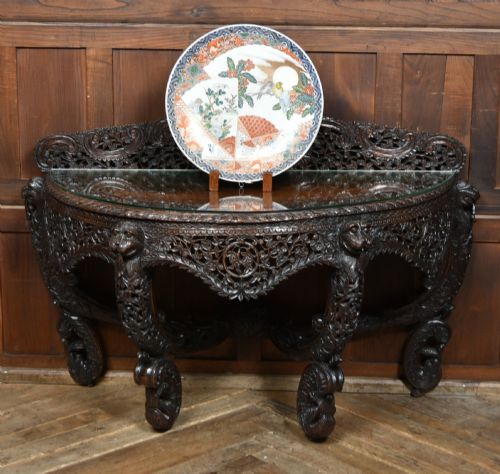
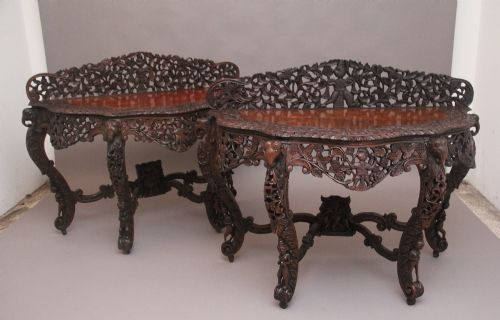
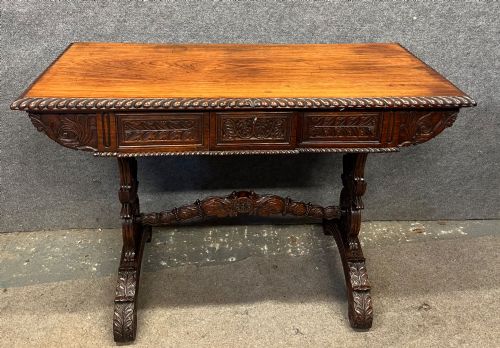
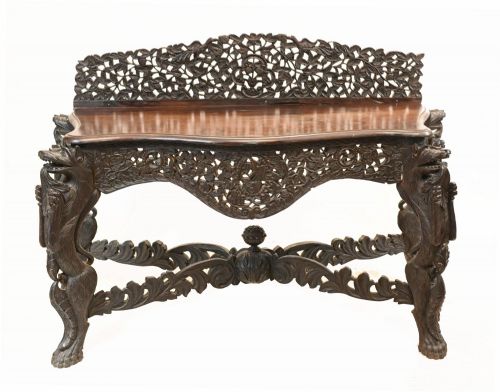
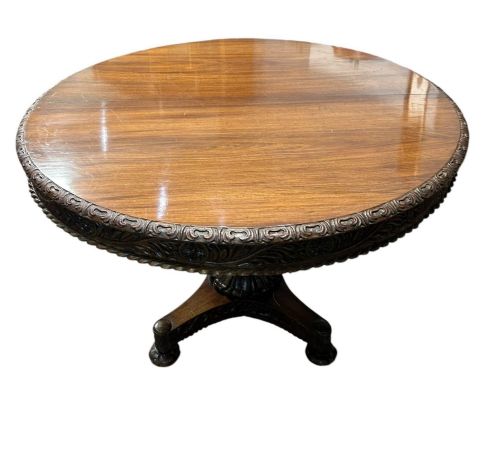
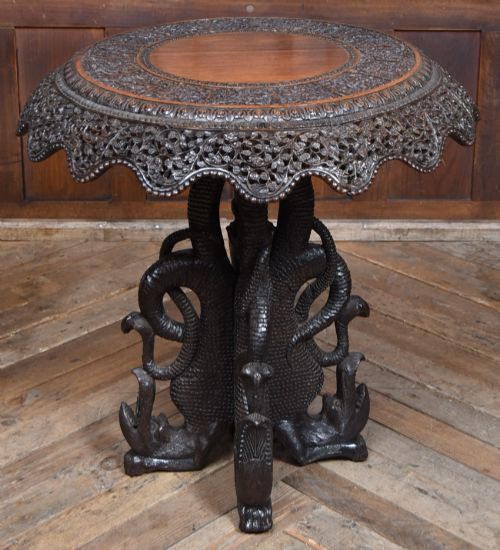
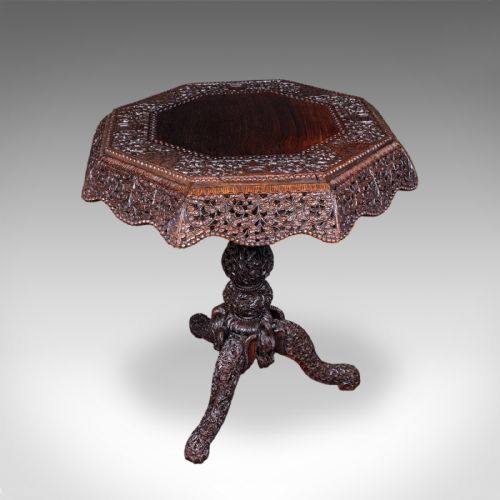
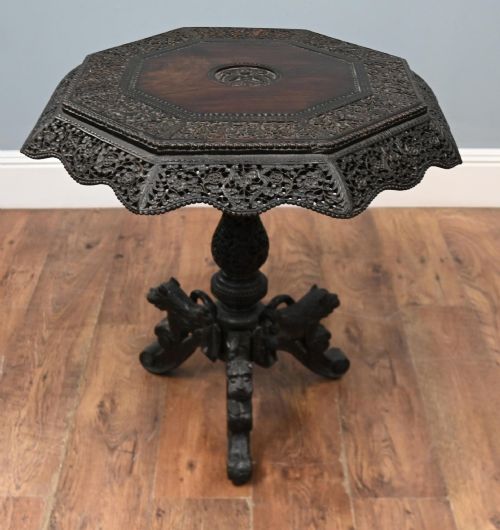
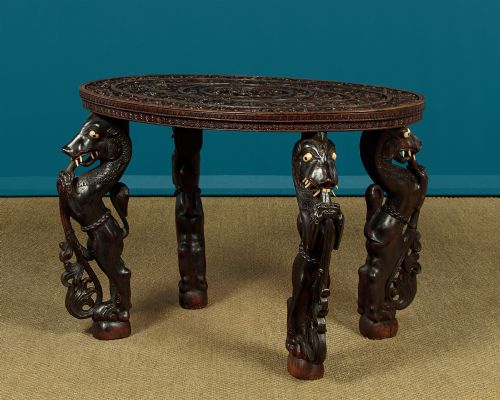
A carved teak table brings dense foliage, lattice and animal motifs from nineteenth and early twentieth century colonial workshops into a room.

Carved Teak Table
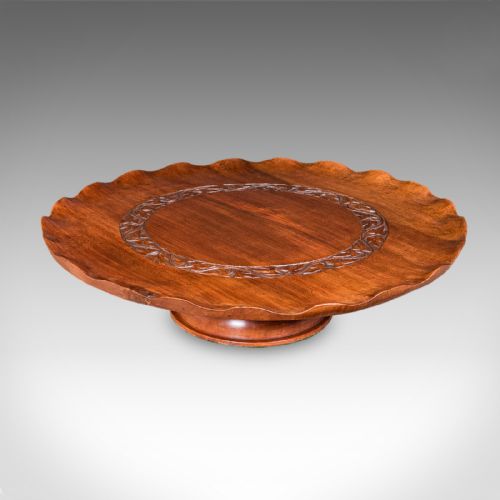
A carved teak table originates primarily from nineteenth and early twentieth century workshops across the Indian subcontinent and Burma, produced for both domestic use and export through British colonial trade networks. The category spans folding occasional tables, low coffee tables, tiered buffets and pedestal wine tables.
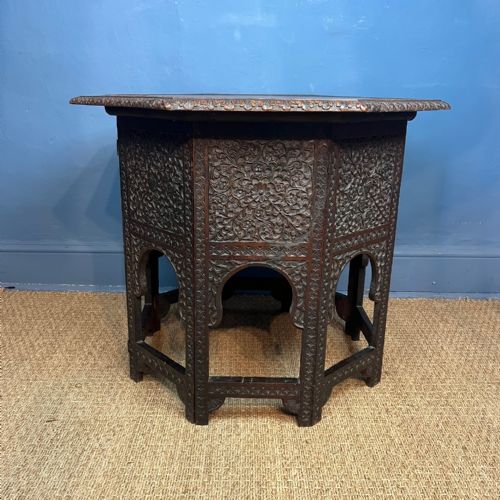
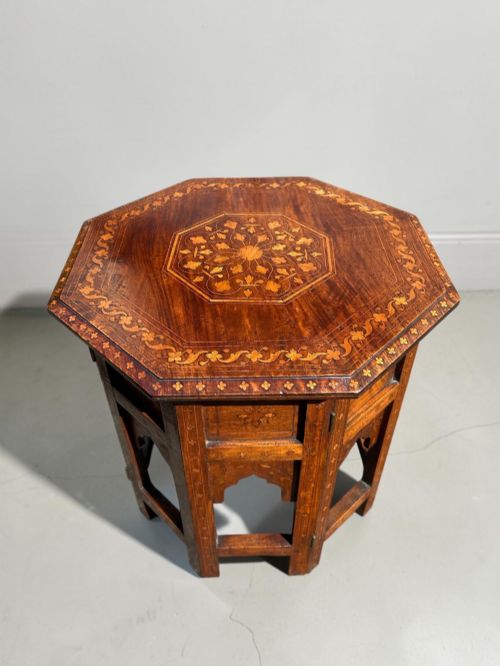
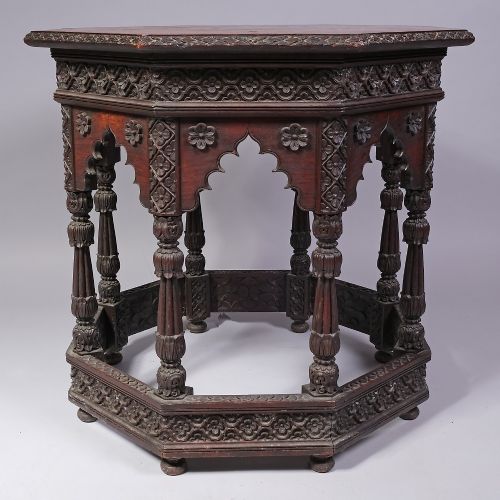
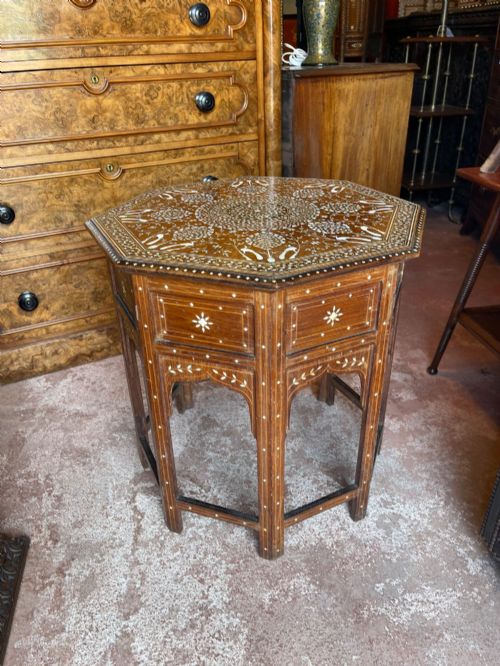
Octagonal and folding tray top variants dominate the selections encountered today, particularly those associated with Hoshiarpur and the Bombay Presidency. These pieces utilise intricate surface carving and geometric folding bases designed for practical transport and display.
Broader regional forms also appear, including Burmese tables featuring deep figural relief and Chinese pieces incorporating fretwork panels. Such works demonstrate the cross-cultural design exchanges prevalent during the Victorian and Edwardian eras.

How they were made
Makers relied on dense, oily hardwoods, principally teak alongside occasional rosewood and padouk, which tolerated intricate hand-carving without splitting. Artisans employed chip carving, pierce carving and low relief to create dense floral scrolls, foliage and animal figures.
Many portable examples incorporated hinged or folding bases constructed to interlock without complex metal hardware. Inlay work combined contrasting materials such as brass wire, copper, bone and occasional mother-of-pearl set directly into the timber surface.
Carved Teak Table Retail Price Guide 2026
Typical asking prices for carved teak table among the pieces listed under this phrase on Sellingantiques today, from the lower quarter to the upper quarter. They describe what is for sale here now, not the wider market.
Several tables rely entirely on interlocking wooden hinges that fold flat like a book, proving that Victorian travellers loved flat-pack furniture just as much as we do.
What varies in quality
Quality rests upon the depth, crispness and ambition of the hand-carving. Superior examples display undercut foliage and sharply defined geometric lattices rather than shallow, mechanical scoring.
The integration of secondary materials dictates distinction. Finely executed metal wire inlay or intact bone sections embedded evenly across the timber elevate a piece above standard export wares.
The Carved Teak Table Glossary
- Hoshiarpur
- A town in Punjab renowned for intricate woodwork. Tables from this region typically feature densely carved floral patterns combined with bone or brass wire inlay on folding octagonal frames.
- Bombay Presidency
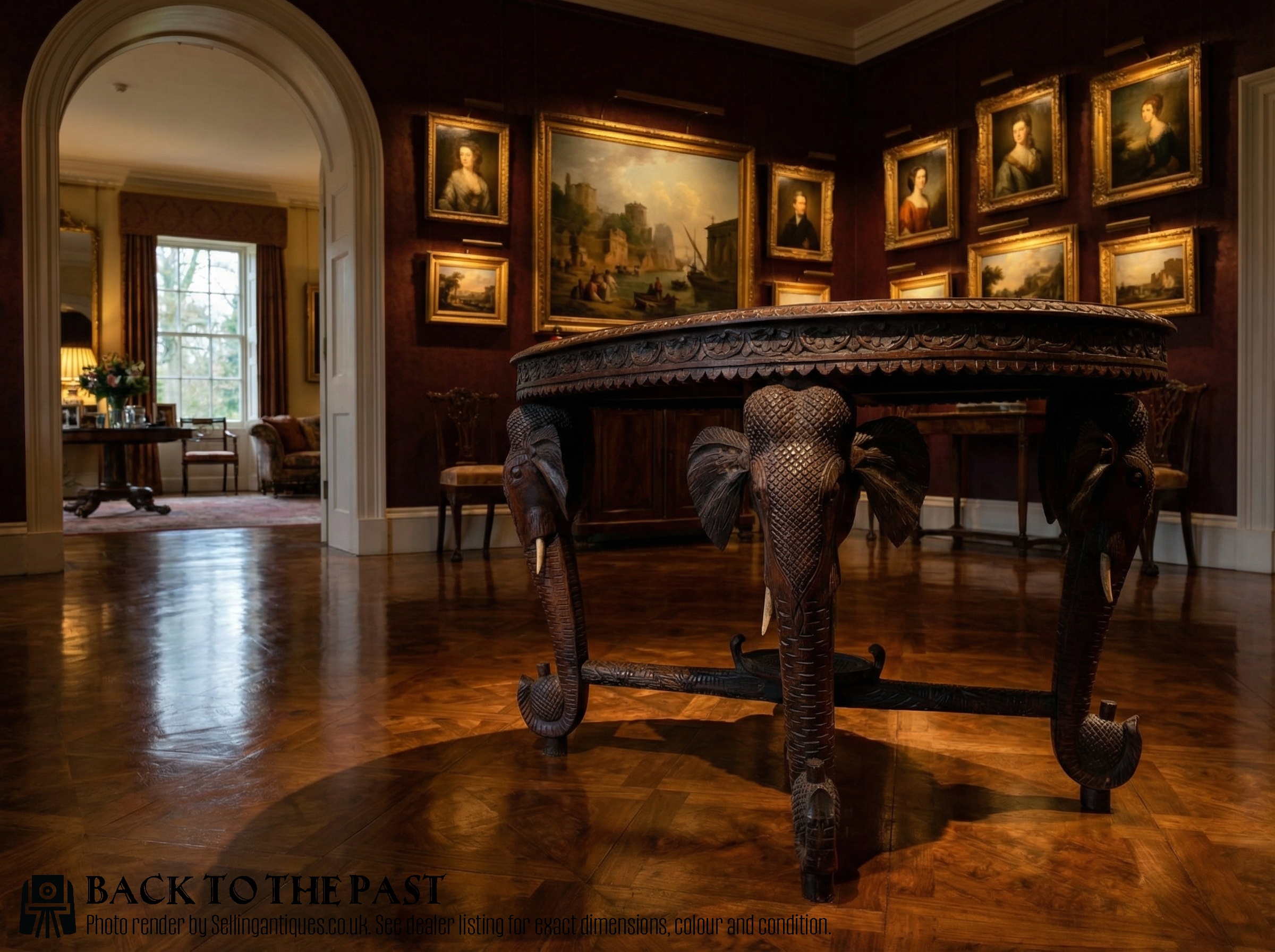
- A vast historical administrative region that produced distinctive occasional tables and elephant supports. The woodwork from this area often displays geometric chip carving and sturdy structural joints.
- Chip carving
- A technique where small chips are removed from a wooden surface at shallow angles to form geometric patterns. This method creates faceted, light-catching textures across table tops and borders.
- Octagonal
- Having eight sides. This geometric plan allows complex folding bases to operate smoothly while providing an expansive surface area for intricate surface ornamentation.
- Campaign furniture
- Portable items engineered for easy transport by military officers or colonial administrators. These tables often incorporate folding stands and removable trays.
Carved Teak Table: Frequently Asked Questions
How do I identify a Hoshiarpur table?
A Hoshiarpur table is identified by its dense, all-over floral carving and the inclusion of inlaid materials such as brass wire or bone. These pieces frequently employ an octagonal top resting on a pierced, folding base.
Workshop production centres in the Punjab region during the late nineteenth and early twentieth centuries specialised in this distinct style of surface decoration.
Were these tables made for export?
Many examples were produced specifically for the British colonial market and international exhibitions during the Victorian and Edwardian periods. Their folding stands and portable formats catered to travellers and British households seeking exotic decorative arts.
Local domestic demand also sustained production, resulting in traditional forms like low takhat tables alongside portable occasional pieces.
How should I care for carved teak?
Teak is a dense, durable timber containing natural oils that resist drying. Maintenance requires minimal intervention, limited to dusting the deep recesses with a soft brush and avoiding direct heat sources.
Applying harsh chemical polishes can damage the intricate carved details and dull the natural finish of the wood and inlaid elements.
What is an elephant table?
An elephant table incorporates carved elephant figures into the base supports or pedestal structure. These regional forms often originate from the Bombay Presidency and feature realistic or stylized animal motifs.
Such decorative elements reflect the local fauna and cultural symbolism integrated into nineteenth-century colonial furniture design.