
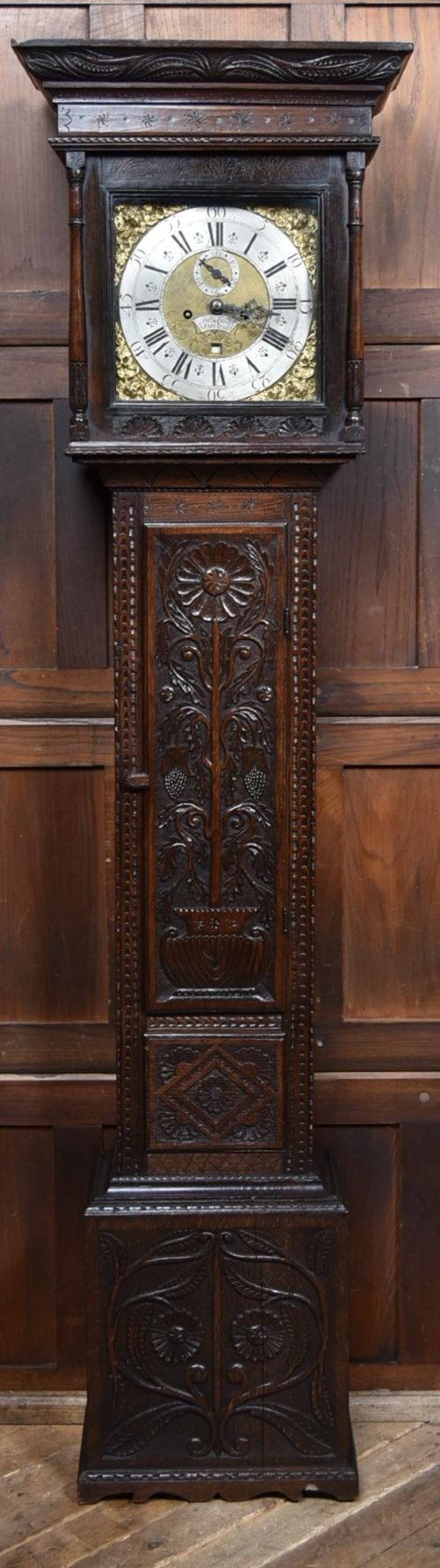
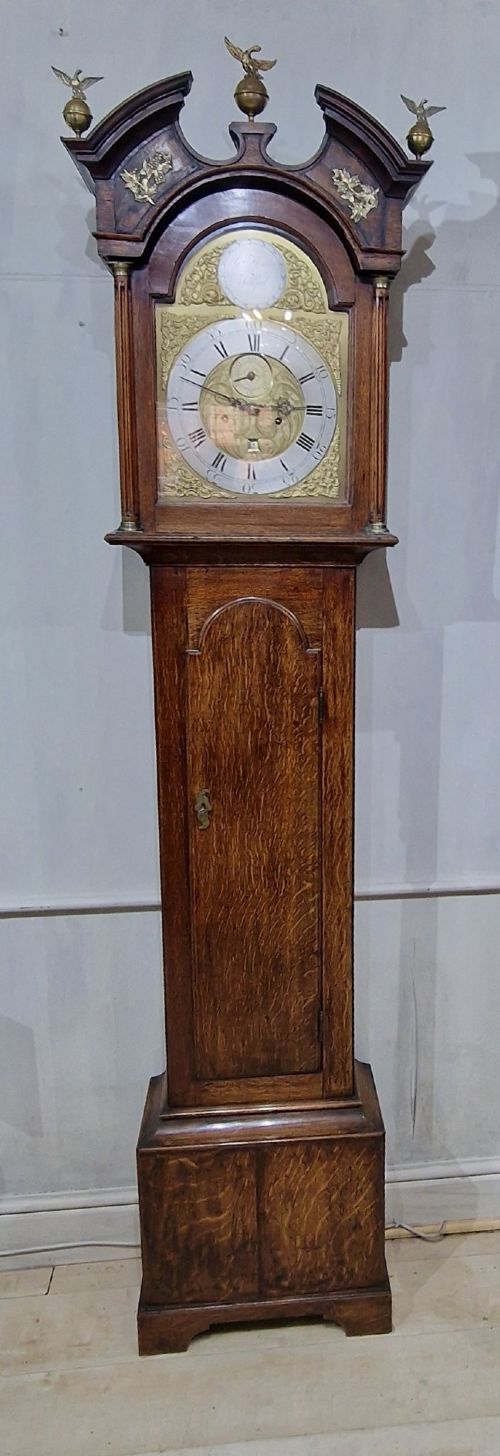
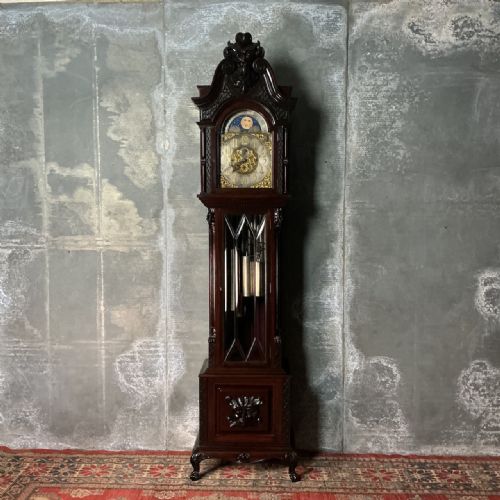

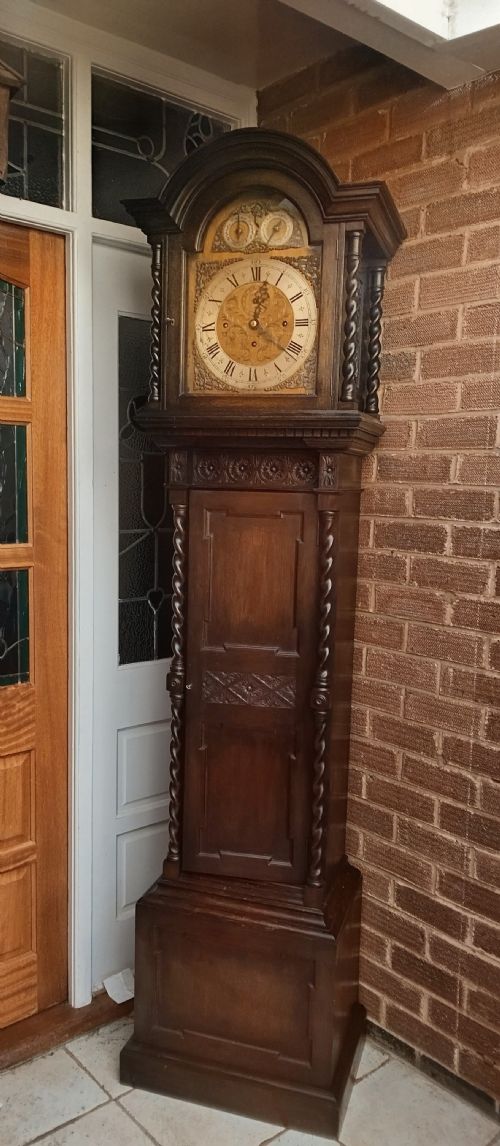
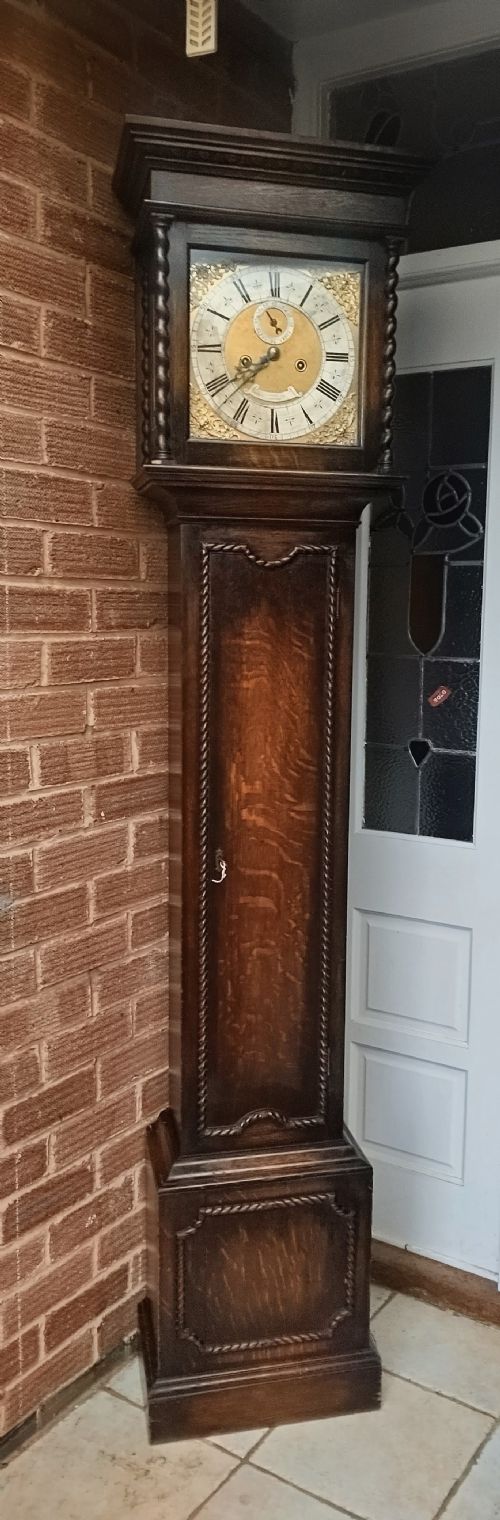
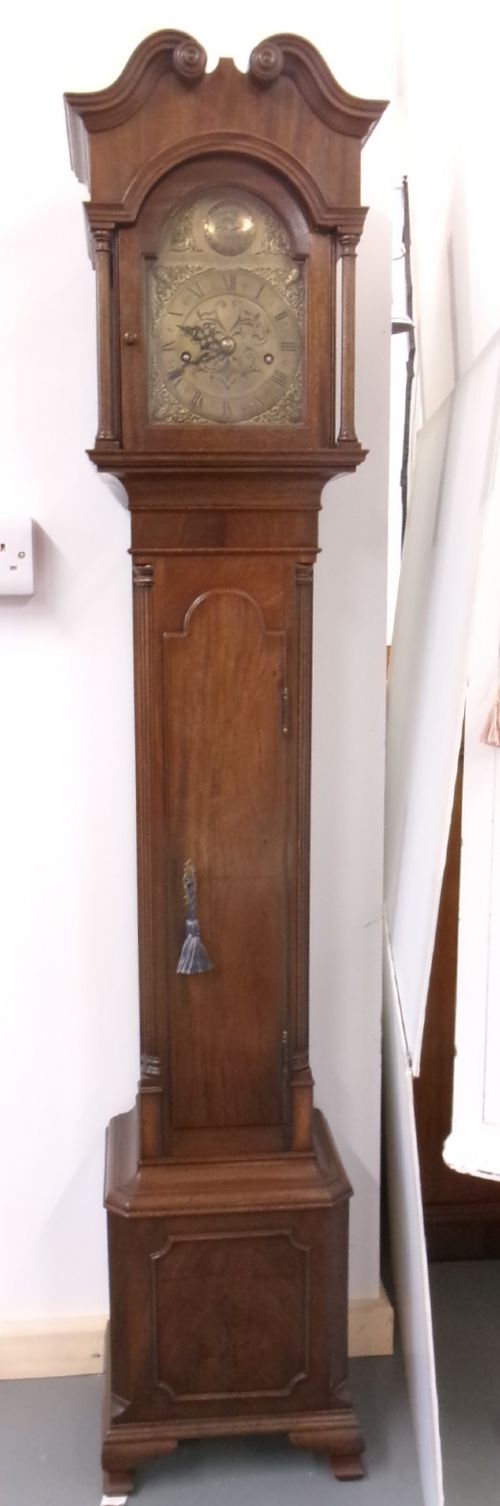
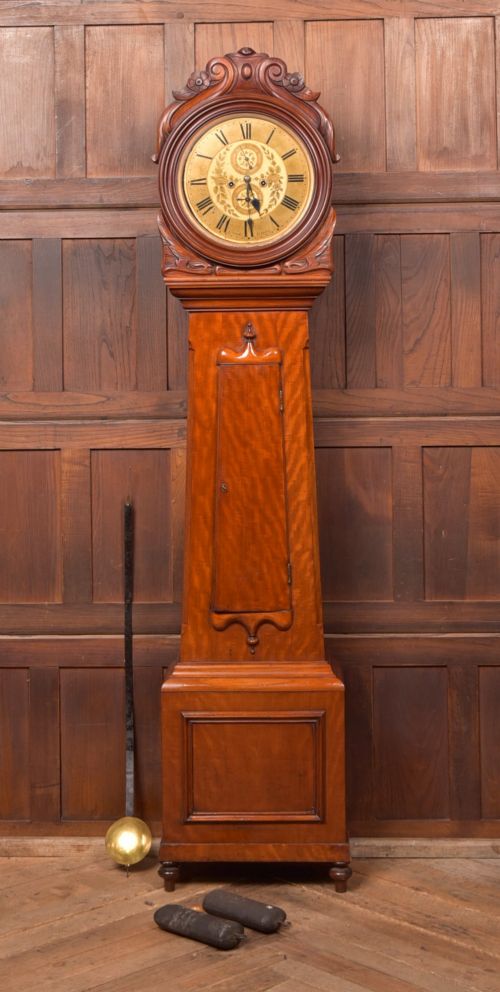


Carved Tallcase Clock
A carved tallcase clock stands as a towering piece of furniture enclosing a precise mechanical movement.
Carved Tallcase Clock
A carved tallcase clock combines architectural woodwork with horological function, housing a weight-driven movement and pendulum within a vertical timber case. These pieces appear in forms ranging from grand eight-day floor clocks to smaller grandmother and grandfather formats originating across the eighteenth, nineteenth, and early twentieth centuries.
Oak and mahogany dominate the structural timber of the examples recorded here, frequently enriched with surface carving, brass dials, and moon phase mechanisms. Regional variations span English provincial workshops to Scottish makers, encompassing revival styles alongside genuine period survivals.
Materials and construction
Cabinetmakers utilised solid timbers such as oak, walnut, and mahogany, constructing the tall trunk to protect the delicate suspension and weights hanging within. Cases often featured applied mouldings, carved panels, and glazed hood doors designed to display the brass or painted dial.
Movements relied on brass wheels, steel pinions, and lead or iron weights, sometimes incorporating elaborate chime barrels or tubular gongs. Skilled hands carved the timber hoods and bases by chisel, matching structural joinery with precise gear cutting.
Listings feature oak, mahogany, walnut, and burr walnut across periods spanning the seventeenth century to the 1930s.
Judging quality
Quality rests in the harmony between the cabinetwork and the complexity of the movement, separating standard thirty-hour timepieces from multi-train chiming regulators. Crispness in the hand-carved ornamentation and the integration of the dial with the movement indicate the level of craftsmanship.
The choice of primary timber and secondary veneers defines the visual depth of the case, while signed brass dials bearing engraved details elevate a piece above unmarked workshop productions.
Jn° Smith·James Hendrie·Andrew Thom·Edin Burgis·Mappin & Webb·Edward East·John Harrington·Henry Smith·William Noke·Robert Darling
The Carved Tallcase Clock Glossary
- Longcase clock
- A tall pendulum clock enclosed in a wooden case standing directly on the floor. These instruments measure time through descending weights hung inside the trunk.
- Grandmother clock
- A smaller version of the traditional tallcase clock, typically produced during the twentieth century. This scaled format fits lower ceiling heights while retaining weight-driven mechanics.
- Moon phase
- A dial mechanism tracking the lunar cycle through a rotating painted disc visible through an arched aperture. This feature required mechanical gearing to advance twice daily.
- Regulator
- A precision timekeeper designed for high accuracy, often featuring a deadbeat escapement and maintaining power. These movements prioritise timekeeping exactitude over chiming complications.
Carved Tallcase Clock: Frequently Asked Questions
How do tallcase clocks work?
Weights suspended by cords or chains provide the driving force as they slowly descend inside the wooden trunk. A pendulum regulates the release of this energy through the escapement, driving the gear train to turn the hands.
Escapements and pendulums must remain level and stable to maintain accurate timekeeping across days or weeks between manual winding.
What is the difference between a grandfather and a grandmother clock?
Grandfather clocks represent the full-scale tallcase tradition developed in the seventeenth and eighteenth centuries. Grandmother clocks provide a reduced proportion typically standing lower to the floor.
Both utilise similar weight-driven mechanisms and pendulum principles, though smaller formats gained popularity during the early twentieth century for domestic spaces.
Where should I place a tallcase clock in my home?
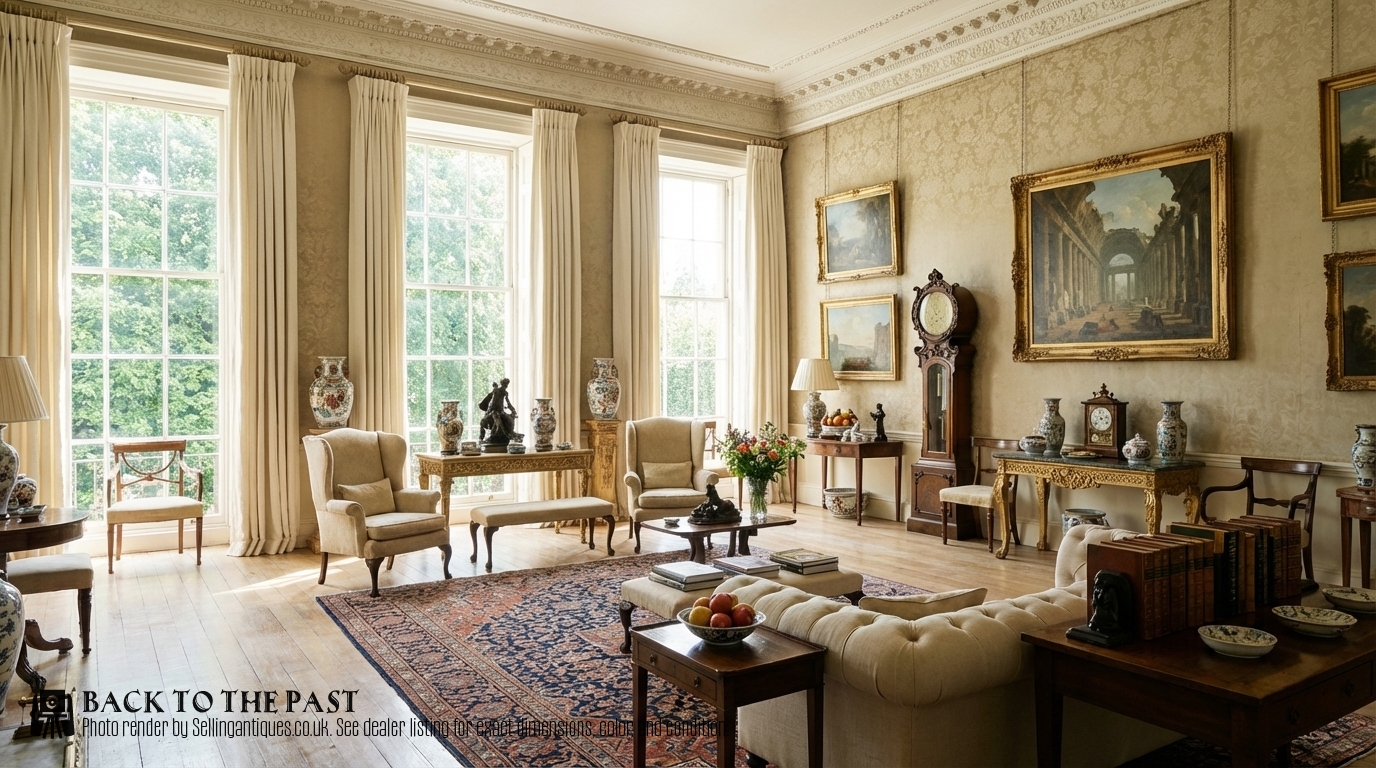
These clocks require a stable, level floor and a secure wall attachment to prevent leaning, which disrupts the pendulum swing. Hallways, living rooms, and stair landings offer adequate vertical clearance and ambient conditions.
Avoid positioning the timber case in areas subject to rapid temperature fluctuations or direct sunlight, which can affect the wood and internal movement.
How do I identify the period of a tallcase clock?
Cabinet style, dial materials, and construction methods offer primary clues to a clock's age. Eighteenth-century examples often feature square brass dials and solid oak or mahogany cases, while later Victorian and Edwardian pieces incorporate revival motifs and larger arched faces.
Signatures on the dial or movement backplate frequently link the piece to recorded makers working within specific regional timeframes.