




Carved Rosewood Nest Tables
These carved rosewood nest tables offer clever multi-tiered surfaces for your home, pairing traditional craftsmanship with practical nesting design.
Carved Rosewood Nest Tables
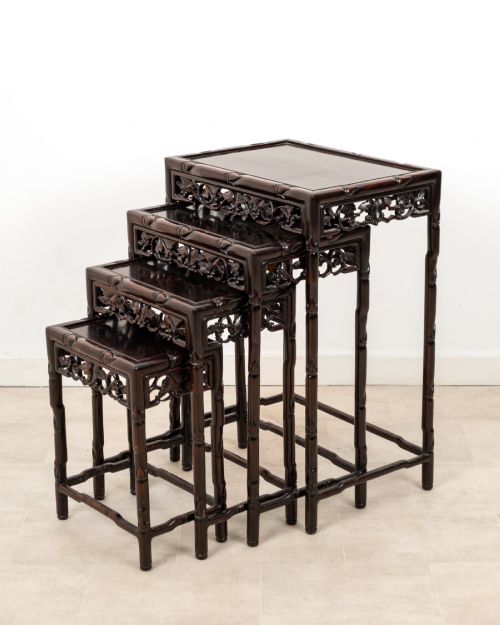
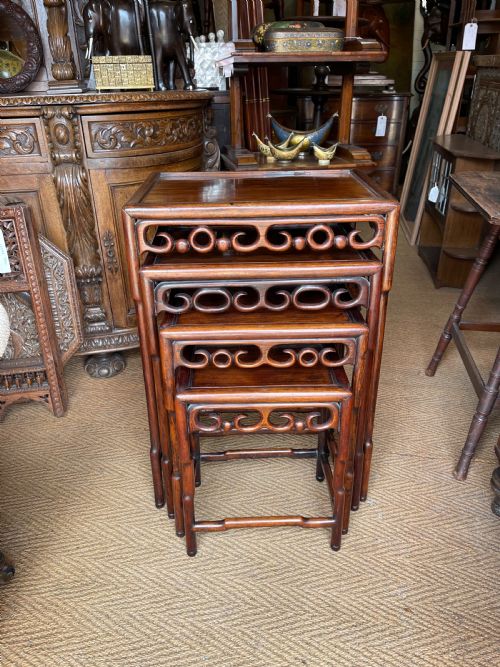
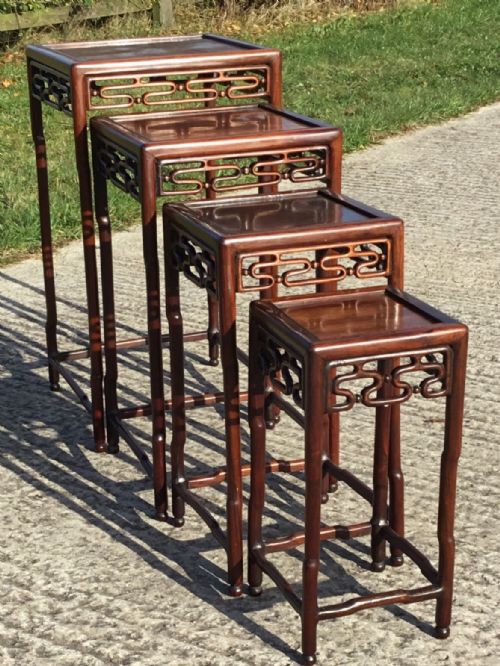
When you search for carved rosewood nest tables, you are looking at sets of graduated tables designed to slide neatly beneath one another when not in use. The examples recorded here predominantly take the form of nests of four, though sets of three also appear in the historical record.
Most pieces date from the nineteenth and early twentieth centuries, spanning the Victorian and Edwardian eras through to the nineteen-thirties. You will frequently encounter Chinese export and Qing dynasty styles, reflecting traditional Asian craftsmanship adapted for Western interiors.
How they were made
The makers utilised dense exotic timbers, specifically rosewood, hongmu and occasional burrwood panels, alongside general oriental hardwoods. These materials provided the necessary structural integrity for slender frames while supporting intricate surface carving.
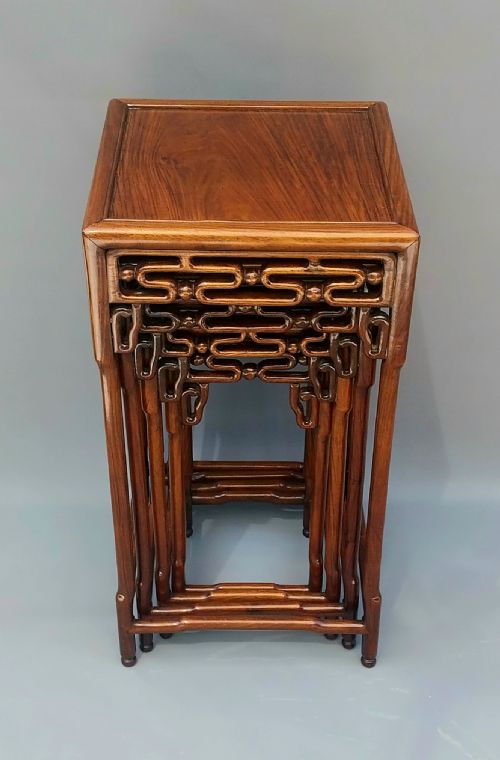
Joinery techniques suited the graduated proportions of the quartetto format, allowing each smaller table to slot precisely into the framework of the next. Artisans applied detailed relief carving to the aprons and edges, often incorporating traditional motifs.
The recorded items include both sets of three and nests of four graduated tables.
What varies in quality
Quality depends upon the depth and crispness of the carved ornamentation on the aprons and framing. Sharply defined details indicate superior handwork compared to softer, shallower incisions.
The selection of the timber also dictates the standard of the piece, with richly figured rosewood and dense hongmu demonstrating greater material substance across the graduated surfaces.
The Carved Rosewood Nest Tables Glossary
- Rosewood
- A heavy, dense timber valued for its rich grain patterns and deep colour. It provides a durable foundation for intricate carving.
- Hongmu
- A traditional Chinese term for dense hardwoods, often translated as red wood. It encompasses several heavy species utilised in classic furniture production.
- Quartetto
- A set of four graduated occasional tables designed to nest together. The term originates from nineteenth-century terminology for nested table sets.
- Graduated
- Describing a set of tables where each piece diminishes in height and width. This allows the smaller tables to slide sequentially beneath the largest.
- Burrwood
- Timber taken from a tree growth where the grain has burl or knot formations. It creates highly figured decorative veneer panels.
Carved Rosewood Nest Tables: Frequently Asked Questions
What is a nest of tables?
A nest of tables consists of several similarly styled tables of descending size that fit together in a single footprint. They provide flexible surface space that can be expanded or stored away as needed.
Historically called quartetto tables in nineteenth-century contexts, these sets were designed for entertaining, serving tea, or holding decorative objects in principal rooms.
How do I date these tables?
Dating relies on stylistic markers, construction methods, and material choices recorded across Victorian, Edwardian, and early twentieth-century periods. Qing dynasty and export pieces often display distinct traditional carving styles tied to specific decades.
Examining the underside and joinery helps determine whether a set originates from the nineteenth century or the nineteen-twenties and thirties.
Where should I place them?
These tables suit sitting rooms or studies where surface space is frequently adjusted for guests or daily use. Arranging them nested together saves floor space while keeping extra tables readily accessible.
Placing them away from direct heat sources helps protect the rosewood and hongmu timbers from drying out and splitting over time.
What woods were used?
Maker selections primarily include rosewood, hongmu, and general oriental hardwoods, occasionally accented with burrwood panels. These dense materials supported the weight required for sturdy frames and delicate relief carving.
Such timbers provide the heavy feel and deep natural grain characteristic of traditional Chinese export and nineteenth-century furniture.