
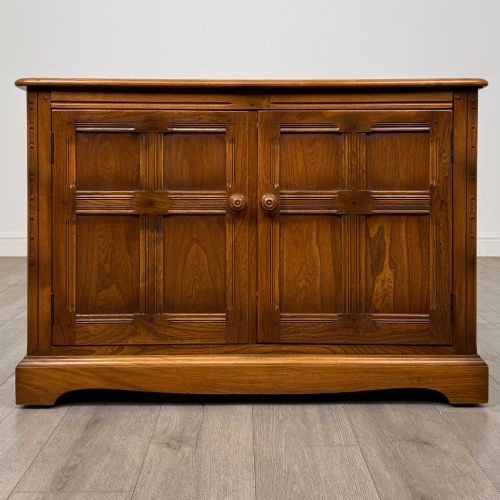
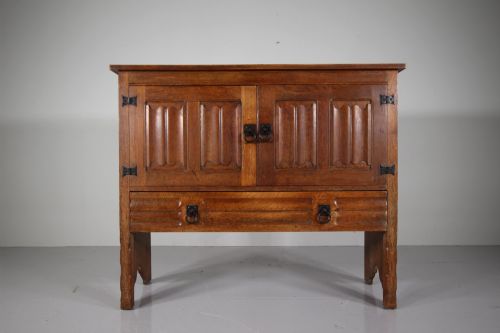
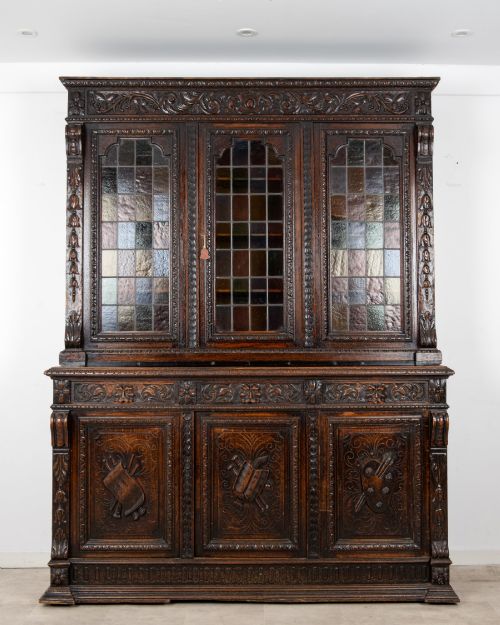
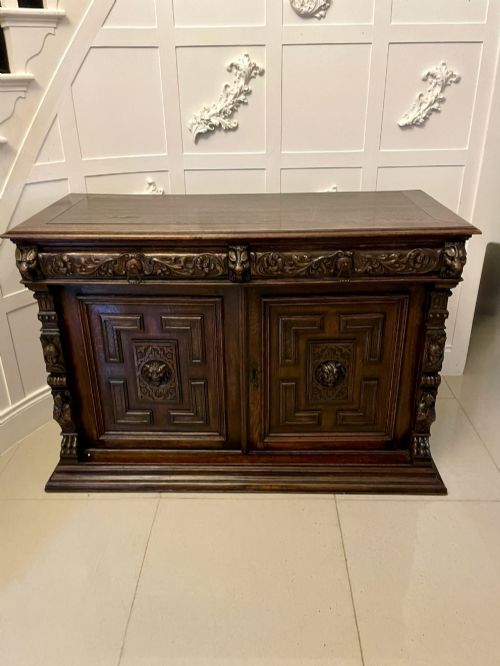
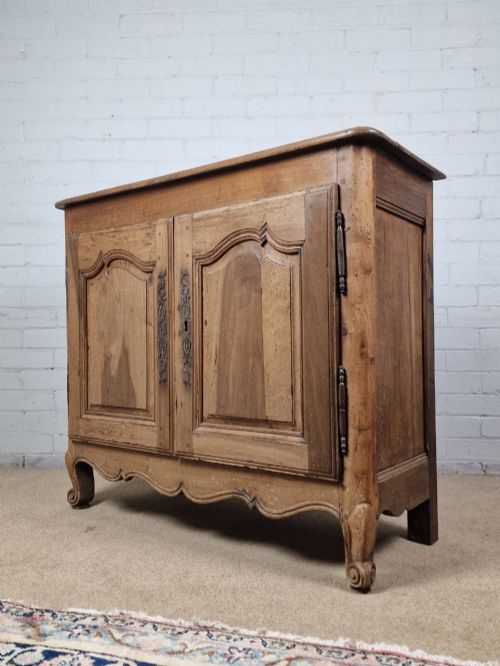
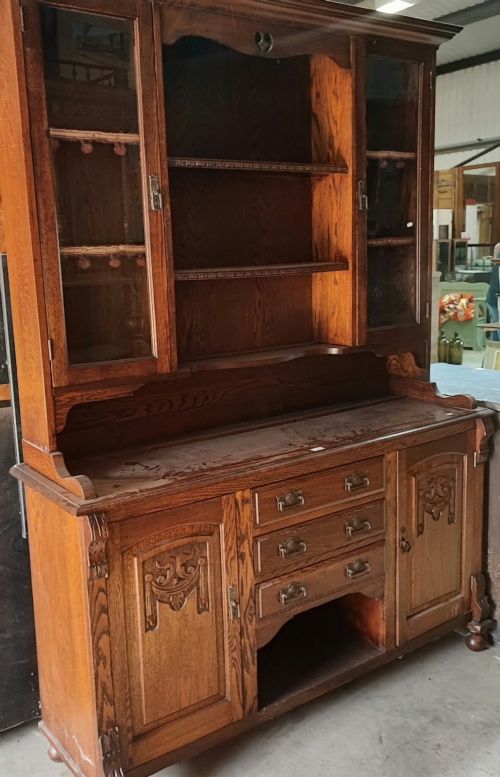
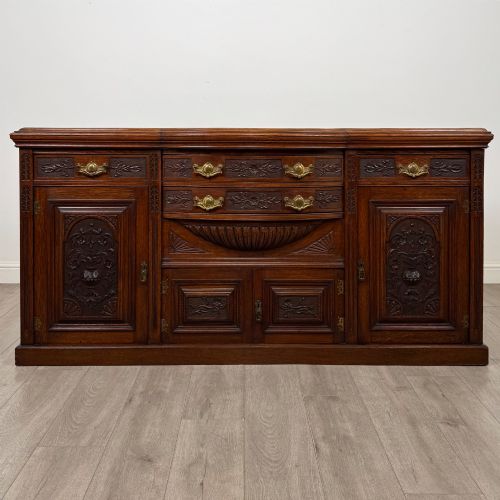
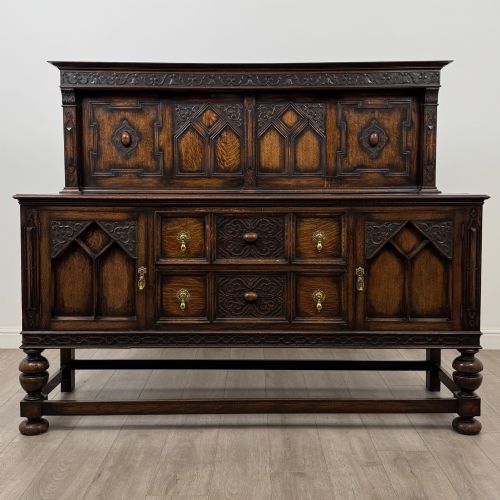
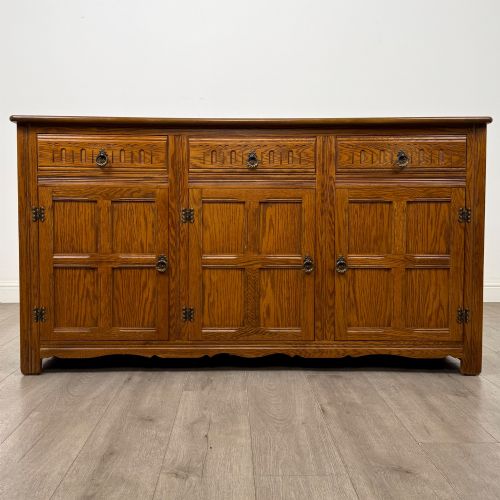
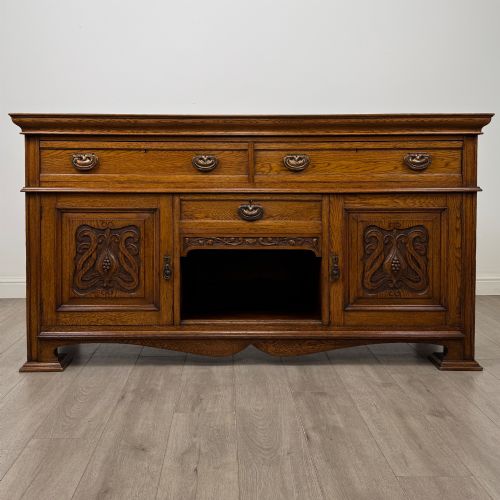
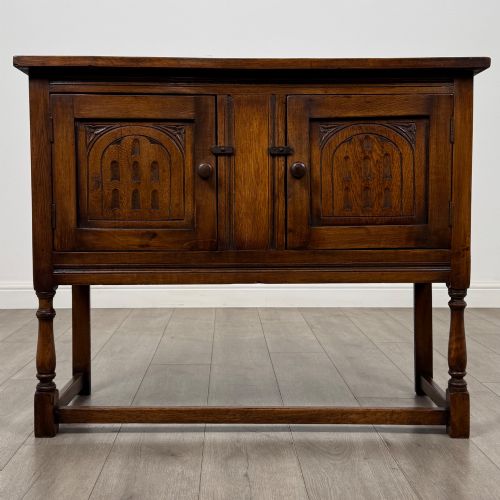
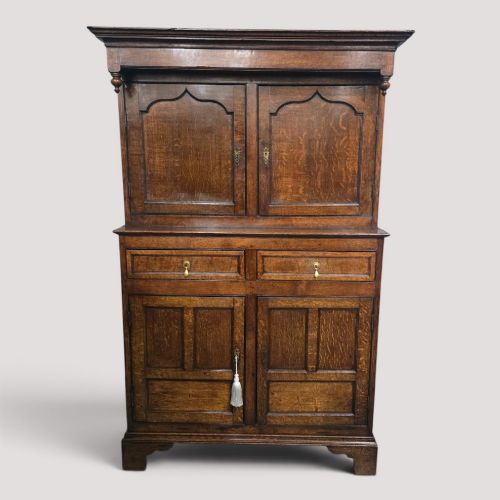
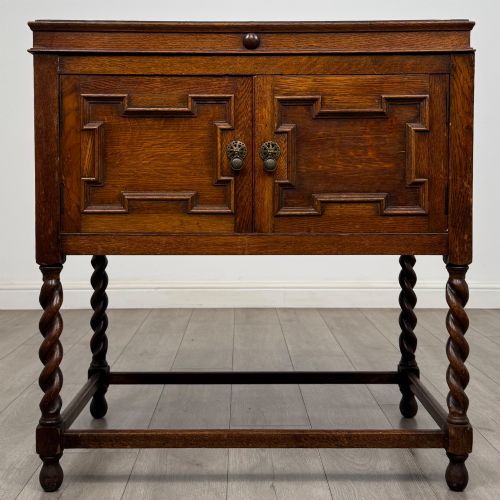
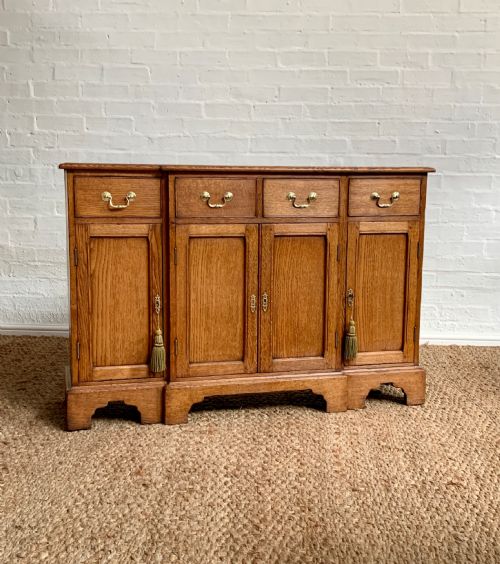
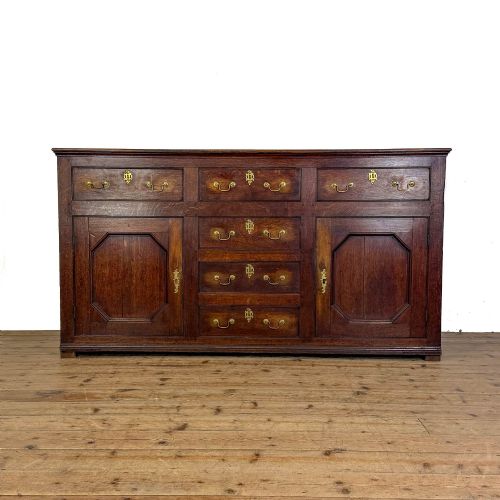
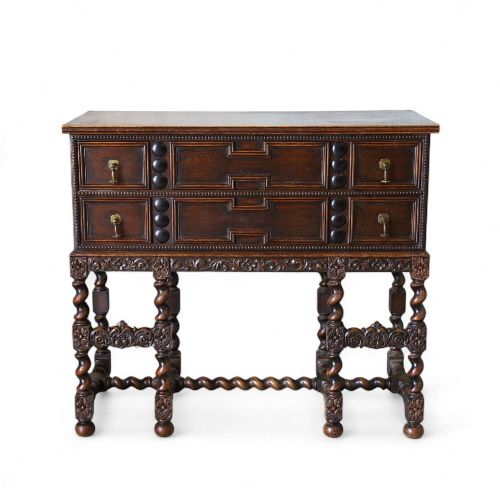
Carved Panel Oak Sideboard
A carved panel oak sideboard brings substantial timber and historic character into a room, offering robust storage built from durable English, French or golden oak.
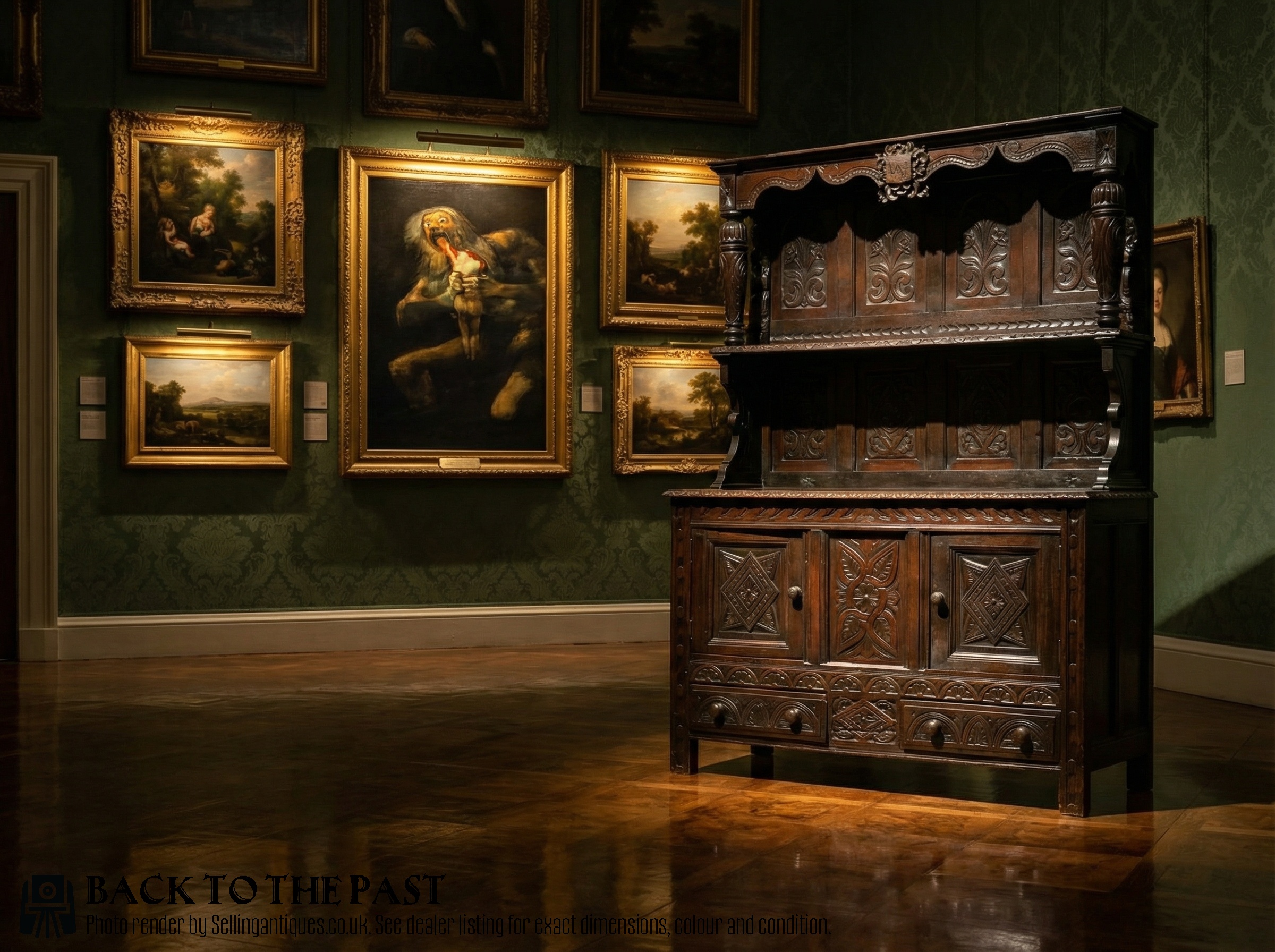
Carved Panel Oak Sideboard
A carved panel oak sideboard spans centuries of woodworking, appearing in forms such as court cupboards, dresser bases, servers, and heavy Victorian and Edwardian sideboards. The pieces meeting this search phrase range from early seventeenth-century Joined cupboards and low dressers to nineteenth-century revival buffets and twentieth-century golden oak cabinets.
Most examples found on this page date from the seventeenth, eighteenth, and nineteenth centuries, alongside Edwardian and 1920s interpretations in Jacobean and Carolean revival styles. Buyers encounter both vernacular cottage furniture and grand architectural pieces featuring heavy doors, drawers, and carved wooden panels.
Forms overlap considerably with Welsh dressers, hutches, and court cupboards, frequently sharing the same deep oak construction and decorative relief carving. Whether searching for a low server, a panelled buffet, or a tall dresser base, the core material remains solid timber with distinct grain patterns.
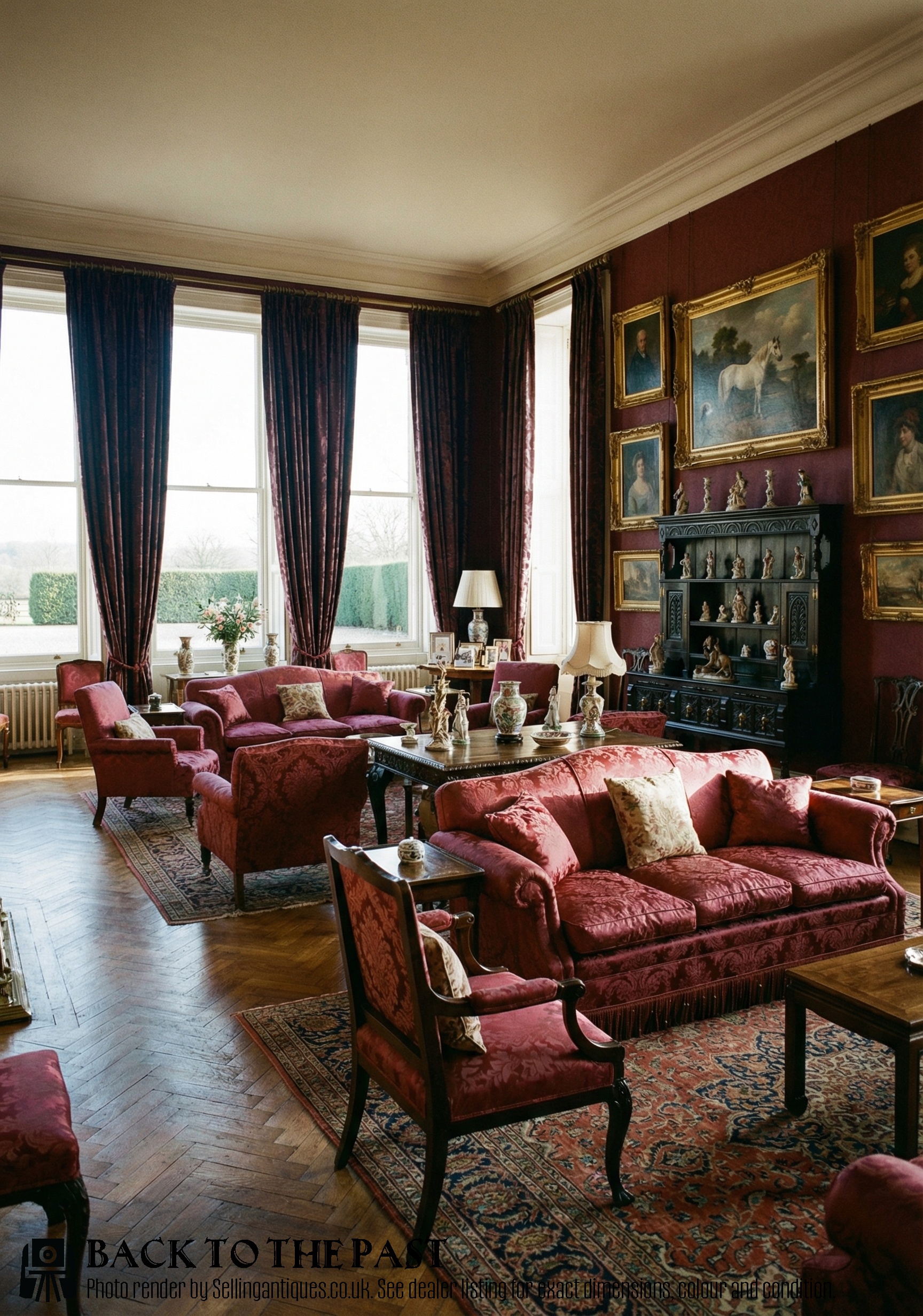
Assessing quality and craftsmanship
Quality rests upon the depth, crispness, and artistic execution of the carved panels, separating workshop pieces with spirited relief work from later, mass-produced machinery copies. The integrity of the timber joints - whether pegged mortise and tenon or heavy dovetailing - determines the structural longevity of the piece.
Proportion and the retention of original brass or iron hardware influence the desirability of a piece, as does the clarity and untouched nature of the timber surface. Pieces that retain their original boards, backings, and structural supports command greater respect among collectors than heavily altered examples.
Carved Panel Oak Sideboard Retail Price Guide 2026
Typical asking prices for carved panel oak sideboard among the pieces listed under this phrase on Sellingantiques today, from the lower quarter to the upper quarter. They describe what is for sale here now, not the wider market.
Some seventeenth-century cupboards were built so solidly they outlived the cottages they were originally carpentered inside.
The Carved Panel Oak Sideboard Glossary
- Court cupboard
- A heavy seventeenth-century storage cabinet featuring an upper enclosed section supported by columns or carved pillars above a lower cupboard or open pot board.
- Dresser base
- A low wooden sideboard or cabinet originally utilised in kitchens for food preparation, typically fitted with multiple drawers above cupboards.
- Jacobean revival
- A nineteenth and twentieth-century architectural style copying the geometric mouldings, heavy turned legs, and dark carved panels of the early seventeenth century.
- Golden oak
- A bright, warm-toned timber finish popular on Edwardian and early twentieth-century sideboards, cupboards, and dining room cabinets.
- Buffet a deux corps
- A tall, two-stage French storage cabinet separated into an upper and lower cupboard section, frequently constructed from panelled oak.
- Barley-twist
- A turned wooden support resembling a spiralling rope column, commonly found on the legs and supports of seventeenth-century and Carolean revival furniture.
Carved Panel Oak Sideboard: Frequently Asked Questions
How do I date an oak sideboard?
Dating relies on observing construction methods, tool marks, and hardware types used in the framing. Seventeenth-century examples display hand-split boards and pegged joinery, whereas later Victorian and Edwardian pieces show more uniform sawing and machine-cut elements.
Style revivals can complicate dating, as nineteenth-century cabinetmakers frequently recreated Jacobean and Gothic designs with high precision. Examining the interior timber, drawer linings, and backboards usually reveals the true age of the piece.
Where should I place a large sideboard?
These substantial timber cabinets suit dining rooms, grand hallways, or spacious living areas where their deep proportions and storage capacity function practically. Ensure the chosen wall has sufficient clearance, as pieces range from compact dresser bases to large multi-tiered buffets.
Keep the cabinet away from direct heat sources and strong sunlight to protect the aged oak timber and prevent the panels from splitting. Allowing adequate breathing room around the piece preserves its historical finish.
Can I use a court cupboard in a modern home?
A court cupboard serves as a striking focal point in contemporary interiors, offering deep enclosed shelving for dinnerware, linens, or glassware. The rich texture of carved oak panels contrasts effectively against plain walls and modern flooring.
Styling the flat top surface with ceramics or books helps integrate the heavy historic aesthetic into everyday living spaces. The robust construction ensures it handles daily domestic use just as it did centuries ago.
What is the difference between a sideboard and a dresser base?
A sideboard functions primarily as a serving table or storage cabinet with cupboards and drawers, traditionally stationed in a dining room. A dresser base stems from a kitchen background, historically paired with plate racks above, though many survive today as standalone low cabinets.
Both forms utilise carved oak panels and heavy timber construction, making them visually similar in modern settings. The distinction often lies in the original intended domestic task rather than the exterior appearance.