
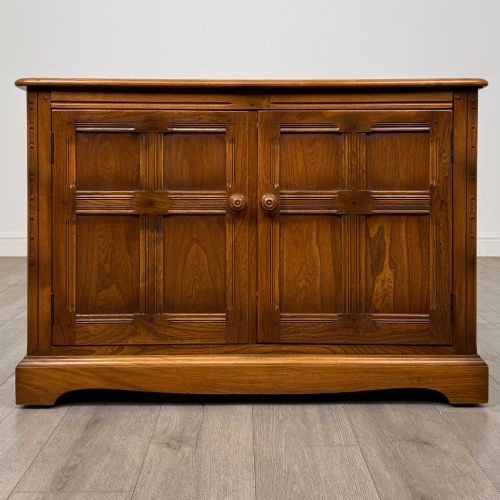
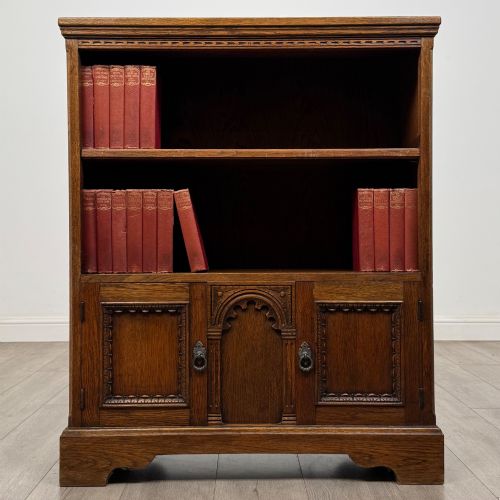
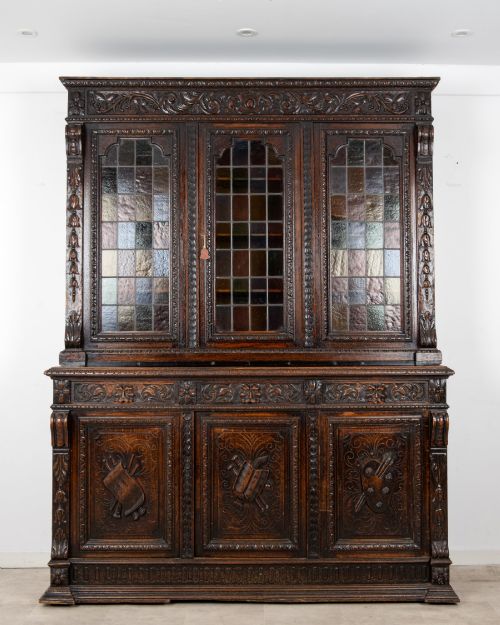
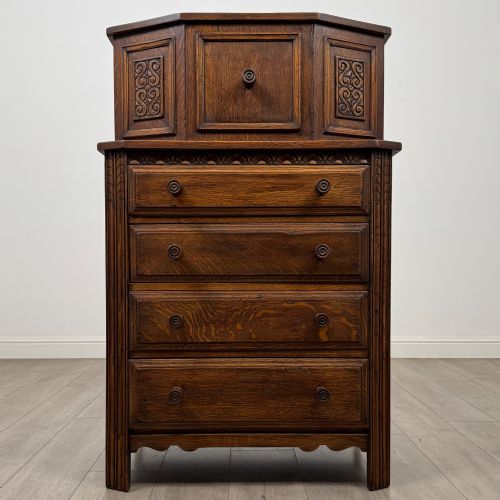
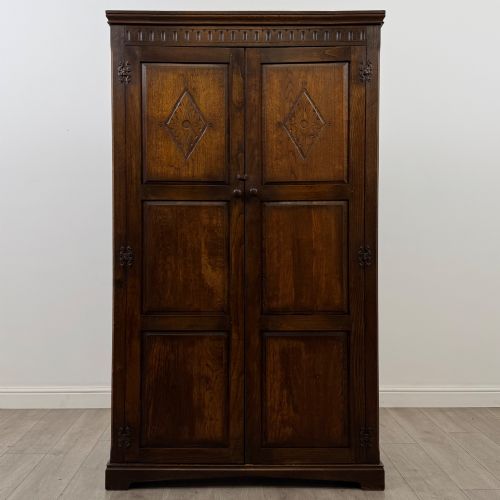
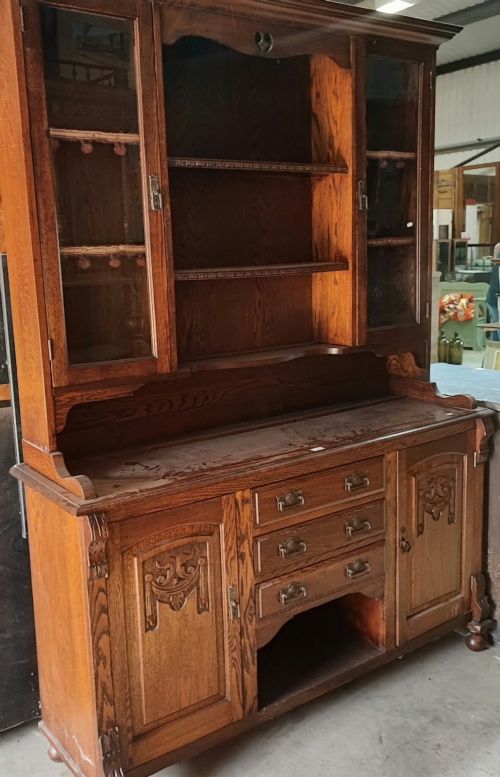
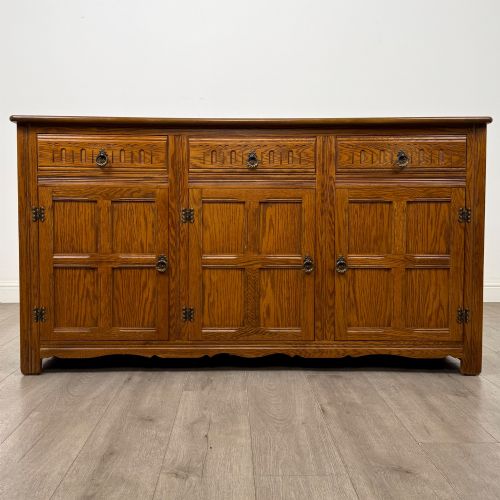
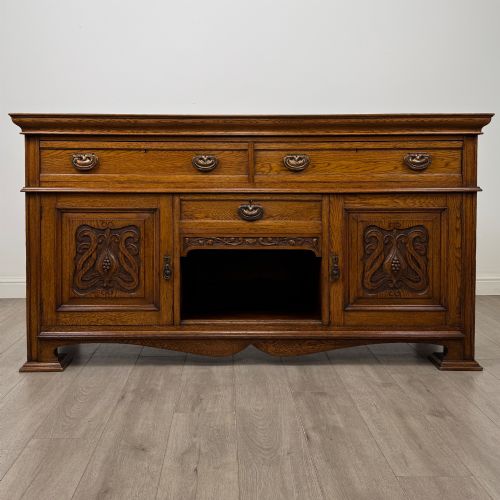
Carved Panel Oak Cabinet
These carved panel oak cabinet examples bring solid timber and centuries of carving straight into your rooms.
What these cabinets are
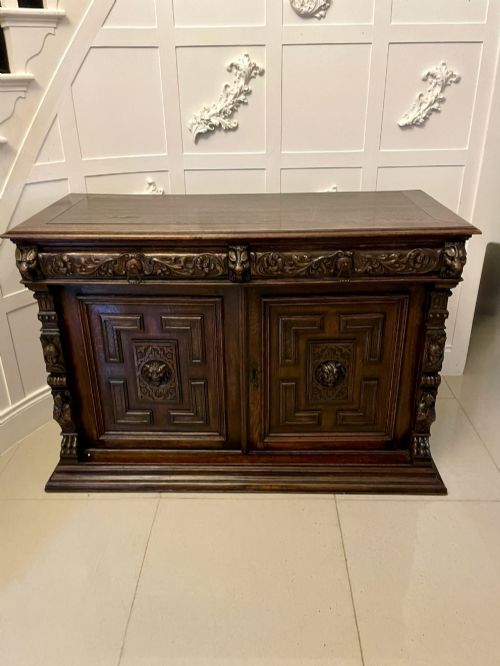
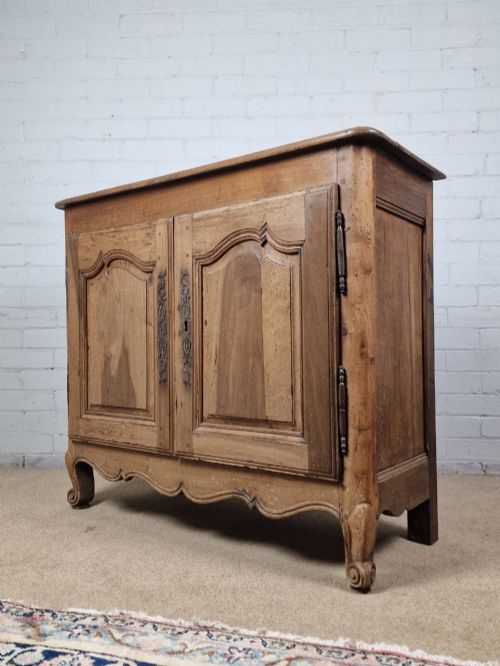
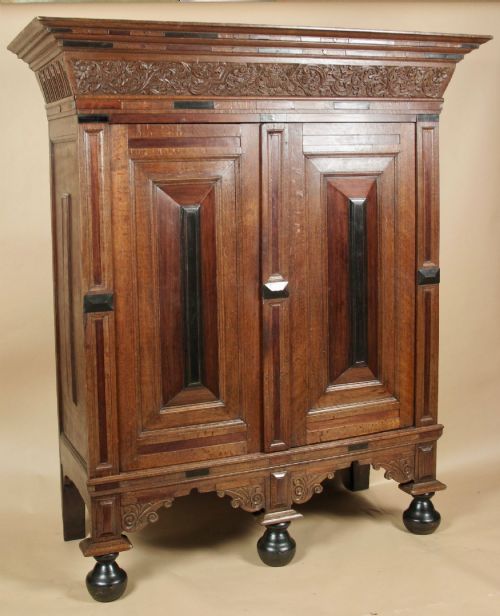
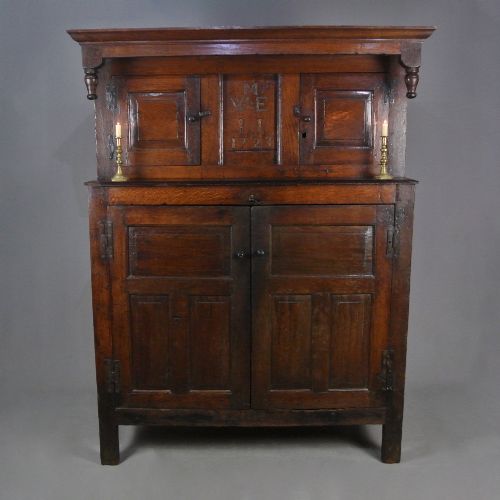
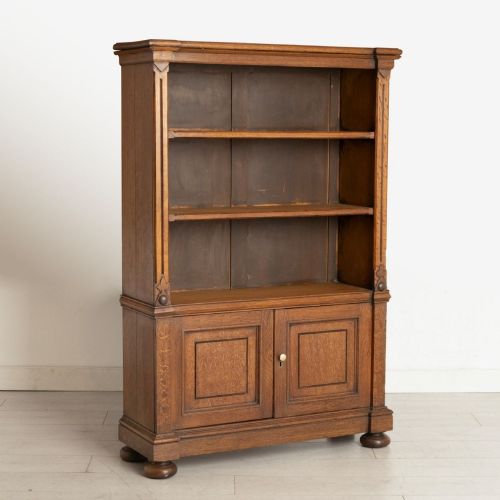
A carved panel oak cabinet gathers pieces spanning the seventeenth century, the eighteenth century, the Victorian era, and the Edwardian period, alongside various revivals. You encounter forms ranging from hanging corner cupboards and court cupboards to bookcases, dressers, hutches, and sideboards.
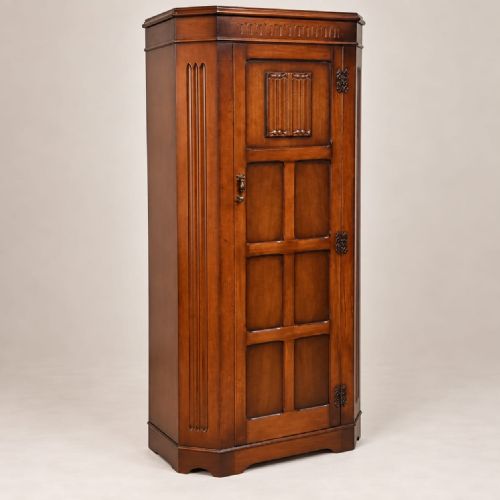
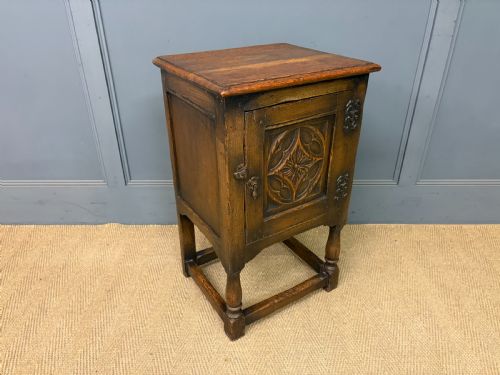
The evidence shows diverse regional interpretations and stylistic influences, encompassing Jacobean, Jacobean Revival, Arts and Crafts, Gothic church tracery, and Flemish designs. These pieces often feature specific decorative elements such as the sun in splendour or Renaissance carved panels.
While older examples show joined construction from the seventeenth century, later nineteenth-century and twentieth-century versions adapt these traditional motifs into domestic furniture. A buyer frequently meets tiger oak finishes, glazed doors, and open shelving alongside closed cupboard storage.
How they were made
Makers built these pieces primarily using solid oak, complemented by secondary materials like brass, copper, wrought iron, iron, and glass. The construction relies on traditional joinery methods suited to heavy timbers.
Carving forms the primary decorative technique, executed by hand directly onto the timber panels to create motifs such as Gothic tracery, Renaissance patterns, and figurative sun designs. Glazing and metalwork elements like iron hinges or brass handles appear on specific styles.
Retail Price Guide 2026
Typical UK retail prices for carved panel oak cabinet, calculated from the Sellingantiques database of over a million retail prices indexed since 2003. This retail price guide relies exclusively on Sellingantiques data; no external sources or auction records are used, so the figures do not describe the wider market.
The listings span five distinct periods: the 17th century, the year 1750, the Victorian era, and the Edwardian period.
What varies in quality
The depth and crispness of the hand carving separate standard commercial work from finer interpretations, particularly in seventeenth-century pieces and later revivals. Sharp detailing in motifs like Gothic tracery indicates superior craftsmanship.
The selection and figure of the timber itself dictate the visual merit, with tiger oak variations and dense grain patterns commanding attention. Original hardware, glass panels, and the integrity of the joined construction further define the standard of a piece.
The Carved Panel Oak Cabinet Glossary
- Joined cupboard
- A piece constructed using traditional mortise and tenon joints rather than nails or screws. This method defines early cabinet making.
- Court cupboard
- A traditional English two-stage storage piece, often featuring an upper recessed section supported by pillars. These serve as prominent display and storage furniture.
- Gothic tracery
- Architectural stonework patterns translated into wood carving. This style appears frequently on ecclesiastical and revival panels.
- Tiger oak
- Quarter-sawn oak displaying prominent medullary rays that create a striped pattern resembling tiger skin. Cabinet makers prized this figure for its visual impact.
Frequently Asked Questions
Where should I place a carved panel oak cabinet?
These pieces suit living rooms, dining spaces, or hallways where their substantial timber presence anchors the room. Wall-mounted corner variants work well in compact areas.
Ensure you position them away from direct heat sources and strong sunlight to protect the aged oak and prevent timber movement.
How do I clean an antique oak cabinet?
Dust the surfaces regularly with a soft, dry cloth to prevent dirt accumulation in the carved recesses. Avoid modern silicone sprays or heavy polishes.
Apply a traditional beeswax sparingly once or twice a year to nourish the timber and maintain the natural lustre of the oak.
How do I tell seventeenth-century oak from later revivals?
Seventeenth-century examples typically employ joined construction with pegged mortise and tenon joints, showing tool marks and heavy patina from age. The timber often feels denser and exhibits distinct hand-planed surfaces.
Revival pieces from the Victorian or Edwardian periods may use machine-sawn elements or standard nineteenth-century hardware alongside older stylistic motifs.
What is the difference between a court cupboard and a sideboard?
A court cupboard is a traditional multi-tiered storage form, often featuring an enclosed upper section and deep historic roots in the seventeenth century. They emphasise joined framing and architectural carvings.
A sideboard functions primarily as a long base unit for serving and storage, developing more fully during the Victorian and Arts and Crafts periods with integrated drawers and cupboards.