
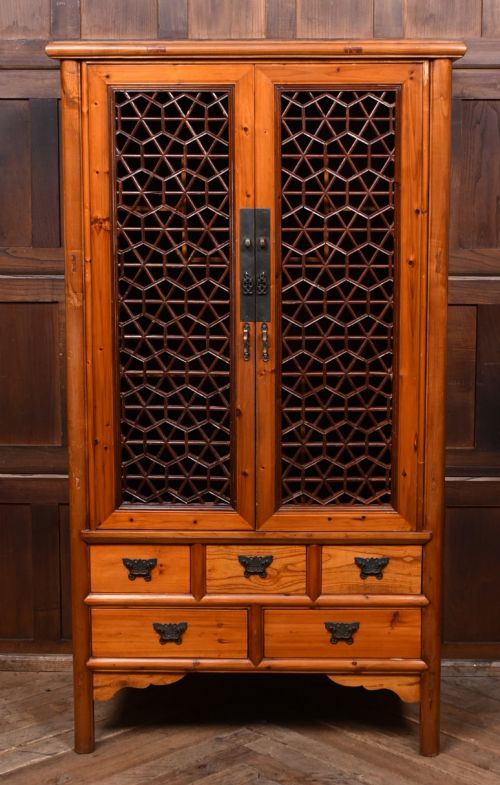
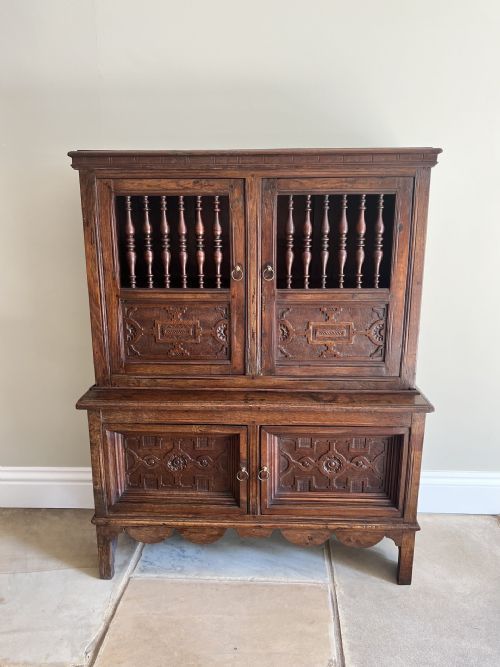


Traditional Oak Food Cupboard
A traditional oak food cupboard is a sturdy storage piece built to hold provisions, and collectors prize these timber cabinets for their vernacular character and age.
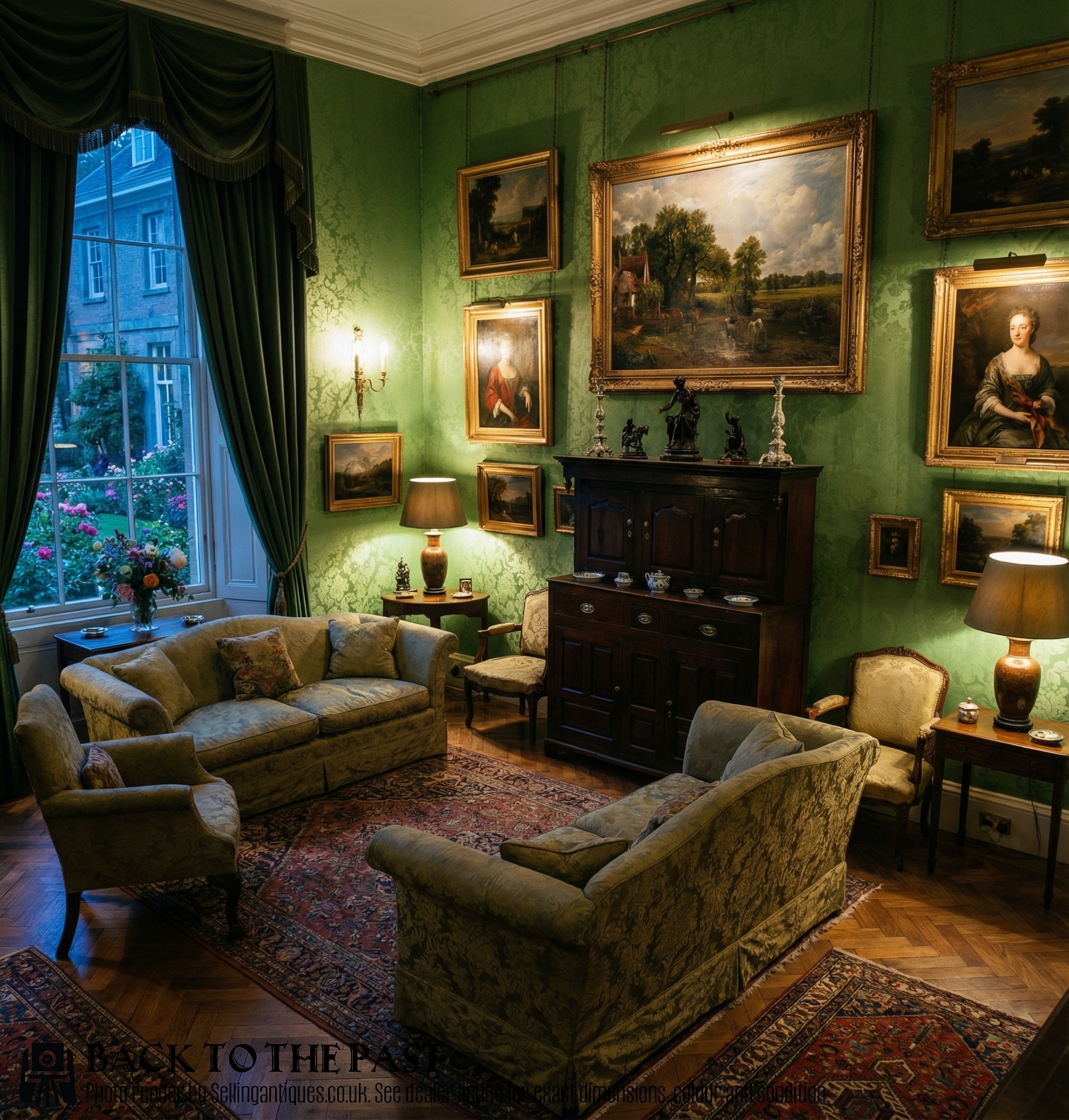
Traditional Oak Food Cupboard
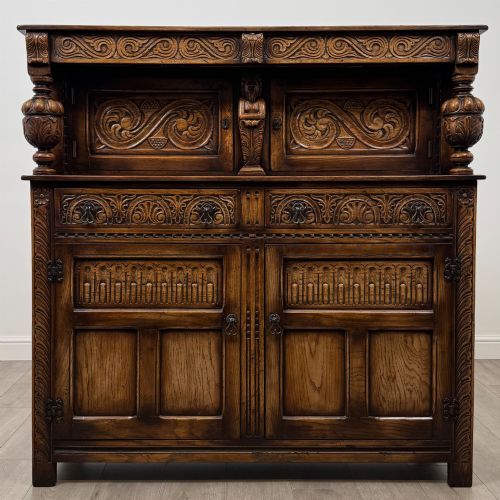
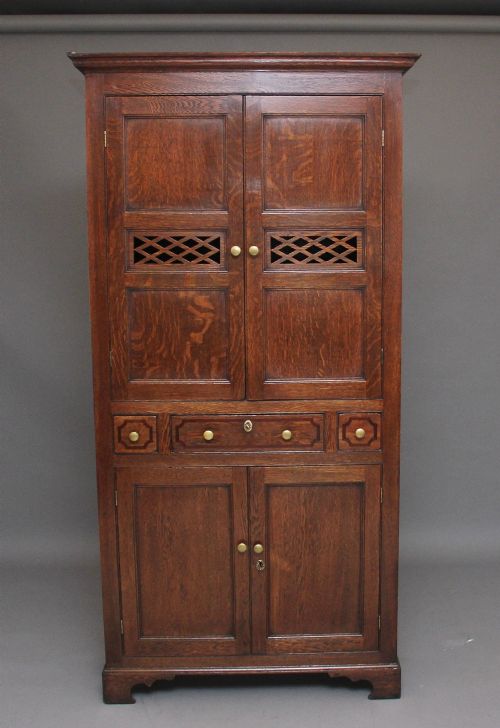
A traditional oak food cupboard encompasses regional storage forms built from solid timber across multiple centuries, including court cupboards, press cupboards, and larder cabinets. Buyers searching this phrase encounter examples ranging from 17th-century joined pieces to 19th-century Welsh vernacular items and Edwardian interpretations.
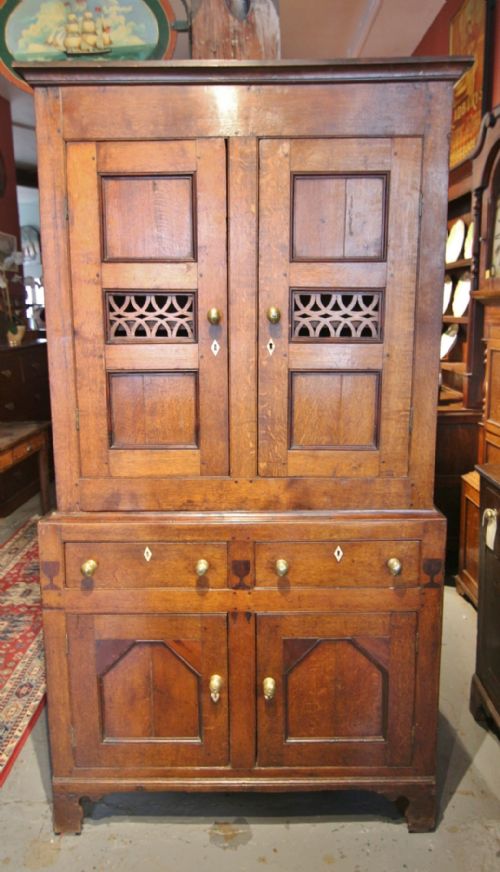
The most frequent form on this page is the traditional oak food cupboard, often appearing alongside regional variants like the Welsh deuddarn, tridarn, and bread and cheese cupboards. These functional storage units reflect the domestic habits of rural households from the 17th century through the Georgian period and into the early 20th century.
Origins stretch across British regional workshops, French provincial cellars, and even Japanese production, yet solid oak remains the unifying material throughout the inventory. Formats vary from simple single-door alcove units to elaborate multi-tiered court cupboards featuring carved panels and heavy framework.
What varies in quality
The integrity of the timber and the retention of original structural elements define the standing of any traditional oak food cupboard. Pieces retaining their original blacksmith locks, hinges, and uncompromised joined frames command greater regard among collectors.
The depth and execution of carved ornamentation set apart standard utility pieces from high-status court cupboards and regional Welsh masterpieces. Regional vernacular distinctiveness, such as specific Welsh or French provincial characteristics, adds depth to the construction quality.
Traditional Oak Food Cupboard Retail Price Guide 2026
Typical asking prices for traditional oak food cupboard among the pieces listed under this phrase on Sellingantiques today, from the lower quarter to the upper quarter. They describe what is for sale here now, not the wider market.
Listings feature oak, pine, and cedar timbers across periods ranging from the 17th century through the Edwardian era.
The Traditional Oak Food Cupboard Glossary
- Court cupboard
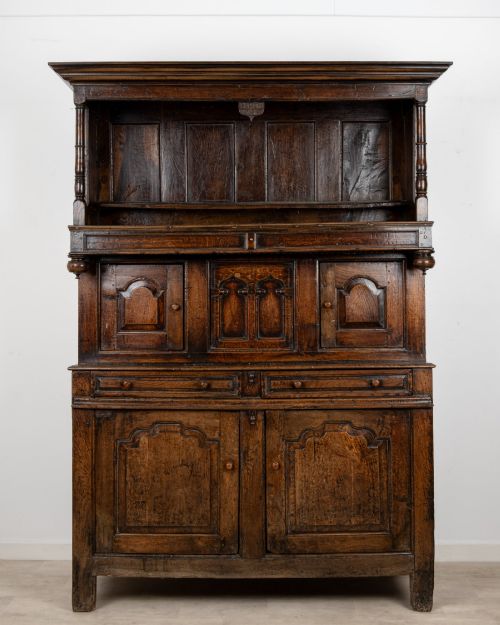
- A traditional open or enclosed two-tier storage piece originating in the medieval and Renaissance periods. These cabinets often feature carved upper sections supported by heavy turned posts.
- Deuddarn
- A traditional Welsh two-part oak cupboard featuring enclosed storage sections stacked vertically. This regional form typically dates from the 17th and 18th centuries.
- Vernacular
- Objects built by regional craftsmen following local traditions rather than strict academic architectural designs. These pieces utilise readily available local materials like oak and pine.
- Joined furniture
- Furniture constructed using interlocking wood joints such as mortise and tenon before the widespread adoption of glued panel framing. This method ensures lasting structural rigidity.
Traditional Oak Food Cupboard: Frequently Asked Questions
How do I date a traditional oak food cupboard?
Dating relies on examining the construction methods, tool marks, and hardware integrated into the cabinet. Early pieces from the 17th century utilise pegged joined framing, whereas later 19th-century examples incorporate machine-sawn timbers and different hinge types.
Stylistic cues such as Jacobean carving, regional Welsh vernacular proportions, or Edwardian revivals provide further chronological markers. Comparing the patination and wear patterns on the oak surfaces helps confirm the age of the piece.
Where were these cupboards originally used?
These storage pieces served in farmhouse kitchens, pantries, and great halls to store bread, cheese, and household provisions. Rural households relied on ventilated or enclosed timber cupboards to protect food from pests before modern refrigeration.
Examples originate from Welsh farmhouses, French provincial cellars, and English country estates. Their robust construction allowed them to withstand heavy daily domestic use in busy rural environments.
How should I care for antique oak furniture?
Maintain stable humidity levels in your home to prevent the solid oak timber from drying out, cracking, or warping over time. Avoid placing the cupboard near direct heat sources or in strong sunlight that can fade the finish.
Apply a traditional beeswax polish occasionally to nourish the wood and preserve the natural patination built up over centuries. Clean surfaces gently with a soft, dry cloth rather than harsh chemical sprays.
What is the difference between a deuddarn and a tridarn?
A deuddarn is a two-part Welsh cupboard featuring an upper and lower enclosed cabinet section built from solid oak. They provide substantial storage capacity within a traditional vernacular framework.
A tridarn adds an extra middle tier, usually featuring an open display stage flanked by small cupboards or spindles. This three-tier construction represents a larger and more complex regional storage form.