

Dark Oak Food Cupboard
A dark oak food cupboard offers robust utility and storied character, grounding a room with deep timber tones and centuries of domestic history.
Dark Oak Food Cupboard
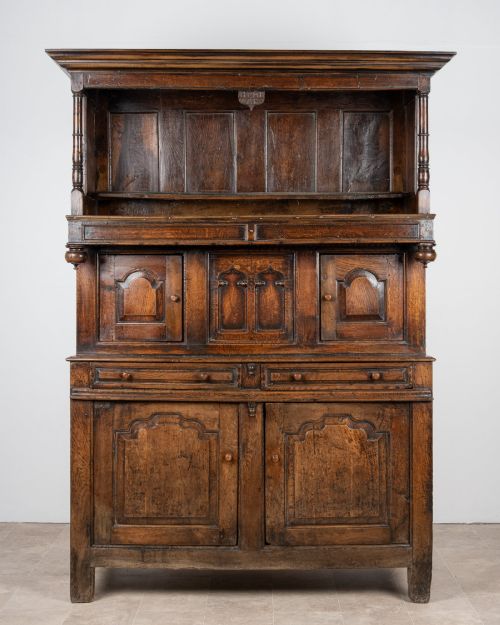
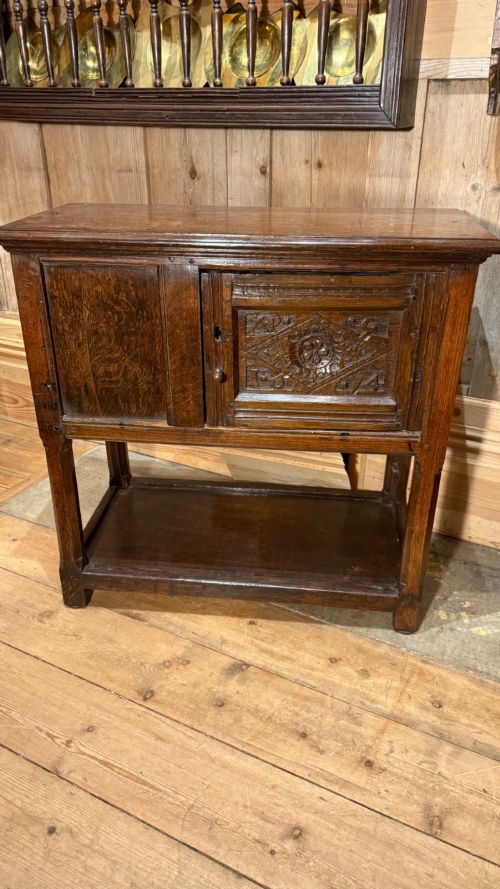
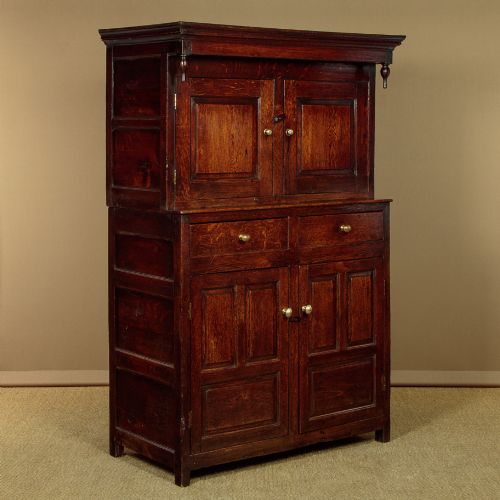
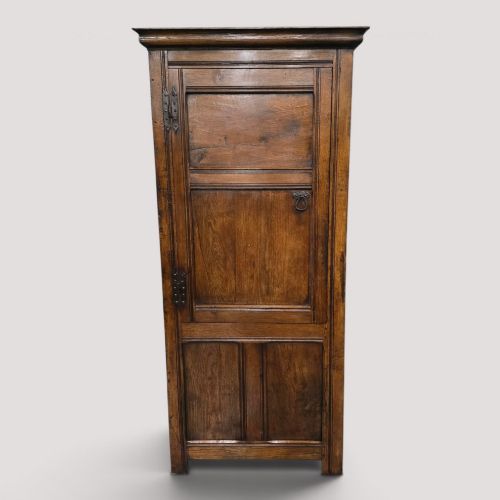
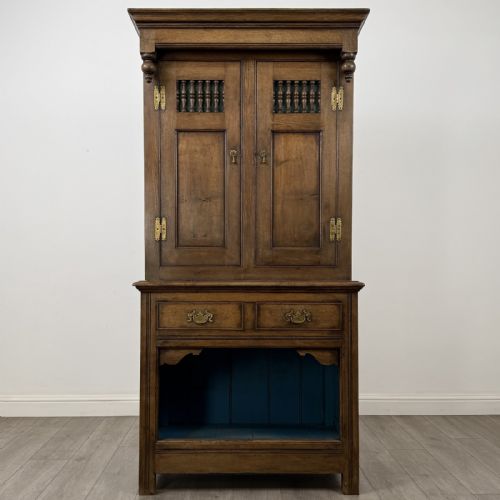
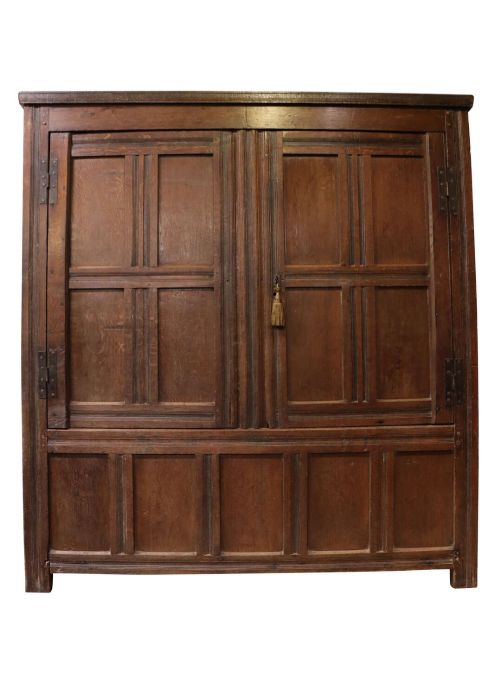
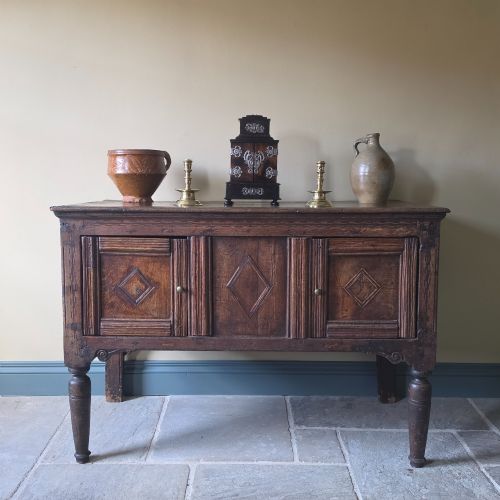
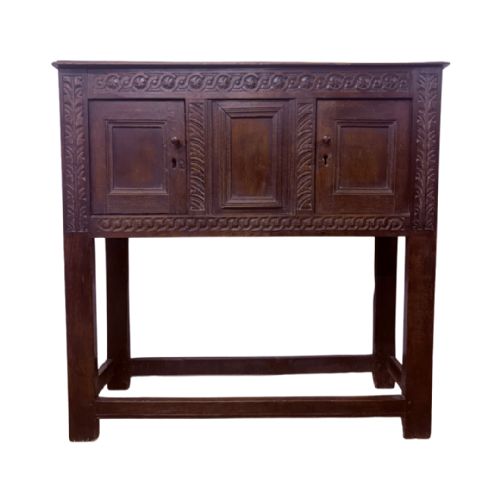
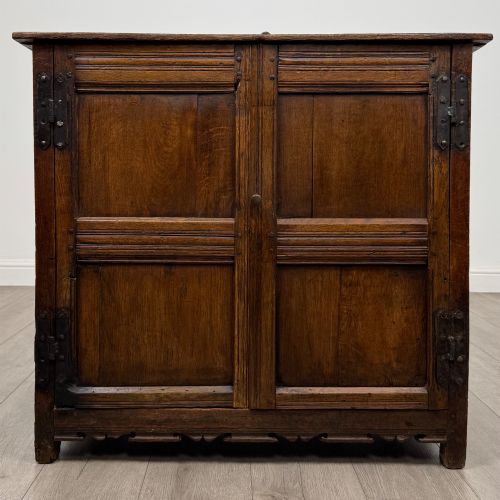
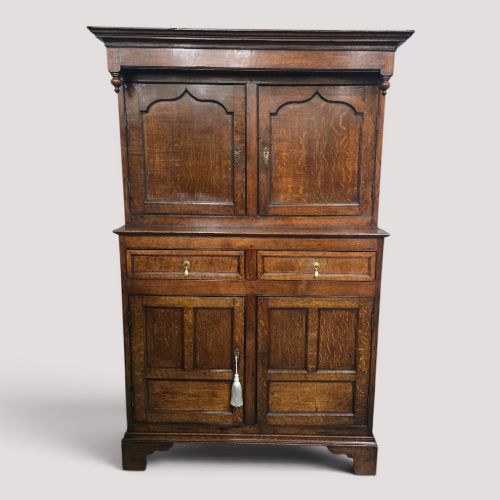
A dark oak food cupboard is a utilitarian storage piece historically designed to protect provisions, shifting in form from early seventeenth-century vernacular styles to later Georgian and nineteenth-century regional variants. These pieces include hanging wall cupboards, court cupboards, press cupboards, and dedicated bread and cheese safes intended for pantry or kitchen storage.
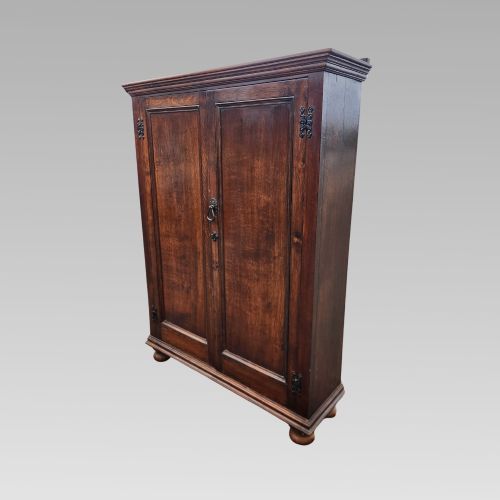
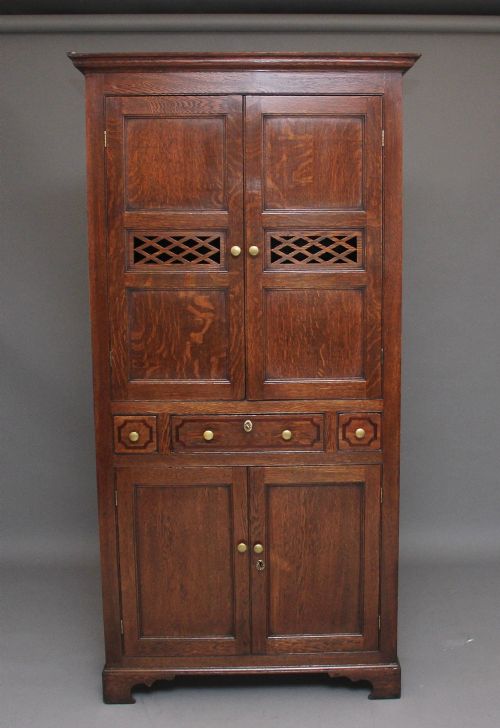
The versions most commonly met in these listings span the seventeenth and eighteenth centuries, often showing English, Welsh, or French provincial origins. Formats range from small wall-mounted cabinets to tall housekeeper cupboards and multi-tiered court cupboards such as the deuddarn and cwpwrdd tridarn.
Makers built these heavy storage items to withstand daily domestic demands, utilising local timber and traditional joinery. Surviving examples demonstrate how vernacular furniture evolved from simple boarded boxes into architectural cupboards with panelled doors and carved ornamentation.
What varies in quality
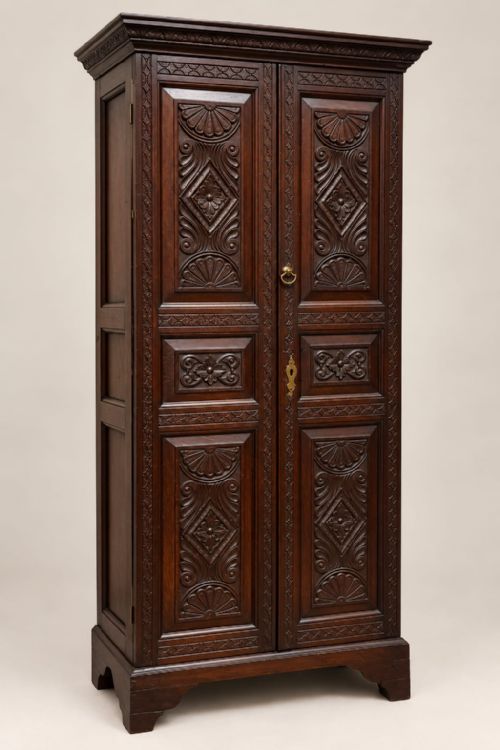
The standard of a dark oak food cupboard depends upon the integrity of its timber, the depth of hand-carved detail, and the retention of original hardware such as blacksmith locks and hinges. Pieces retaining their early surface patination and untouched joined construction stand apart from heavily restored or altered examples.
Proportion and regional vernacular detailing also dictate distinction, with well-balanced Welsh tridarns or seventeenth-century wall cabinets commanding attention through superior craftsmanship and architectural presence.
Dark Oak Food Cupboard Retail Price Guide 2026
Typical asking prices for dark oak food cupboard among the pieces listed under this phrase on Sellingantiques today, from the lower quarter to the upper quarter. They describe what is for sale here now, not the wider market.
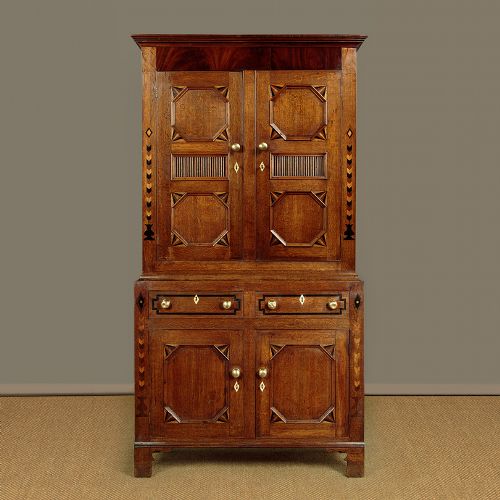
Listings span from the seventeenth century through to the Edwardian era, featuring oak supplemented by brass, wrought iron, ebony, and holly.
The Dark Oak Food Cupboard Glossary
- Court cupboard
- A traditional open or enclosed storage cabinet, often featuring upper and lower tiers used for displaying or storing plate and food.
- Joined oak
- Furniture constructed using mortise and tenon joints secured with wooden pegs rather than modern fasteners.
- Deuddarn
- A traditional Welsh two-part cupboard featuring enclosed cabinetry on both upper and lower sections.
- Cwpwrdd tridarn
- A traditional Welsh three-tier piece of furniture incorporating an enclosed upper section, an open middle stage, and cupboards below.
- Livery cupboard
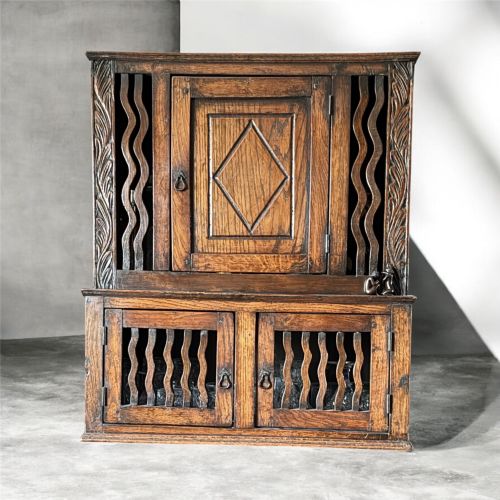
- A small ventilated cupboard traditionally used to store rations or food allowances for household staff.
Dark Oak Food Cupboard: Frequently Asked Questions
What is a dark oak food cupboard?
A dark oak food cupboard is a historic storage piece designed to keep perishables safe from pests while allowing ventilation through pierced panels or slats.
These pieces reflect centuries of regional joinery, utilising sturdy oak construction to serve domestic kitchens and larders.
How were food cupboards used historically?
Households used these cupboards to store bread, cheese, and meats away from household animals and damp conditions before refrigeration existed.
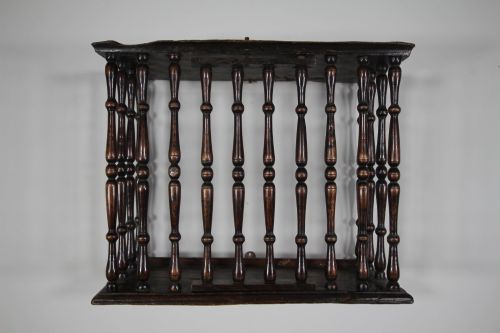
Ventilation was a key functional requirement, which explains the use of turned spindles or carved openings in the doors.
How do I live with a dark oak food cupboard?
These robust cupboards suit modern kitchens, dining rooms, or hallways as statement storage for tableware, linens, or pantry items.
Positioning them away from direct heat sources and sudden humidity shifts protects the historic oak timber and maintains the finish.
How do I tell periods apart?
Seventeenth-century pieces typically display heavier joined construction, geometric mouldings, and deep hand-carving, while eighteenth and nineteenth-century examples often introduce regional vernacular traits like inlaid decoration or taller proportions.
Examining the backboards, interior hardware, and construction methods helps distinguish early joined furniture from later revival styles.