






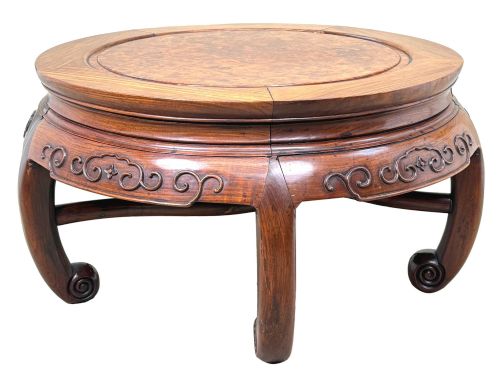

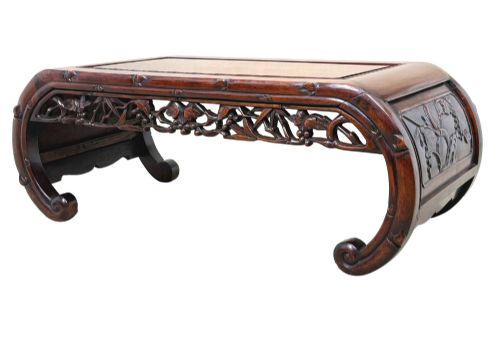
Carved Oriental Table
A carved oriental table brings dense timber, intricate relief work and diverse regional traditions into a room.
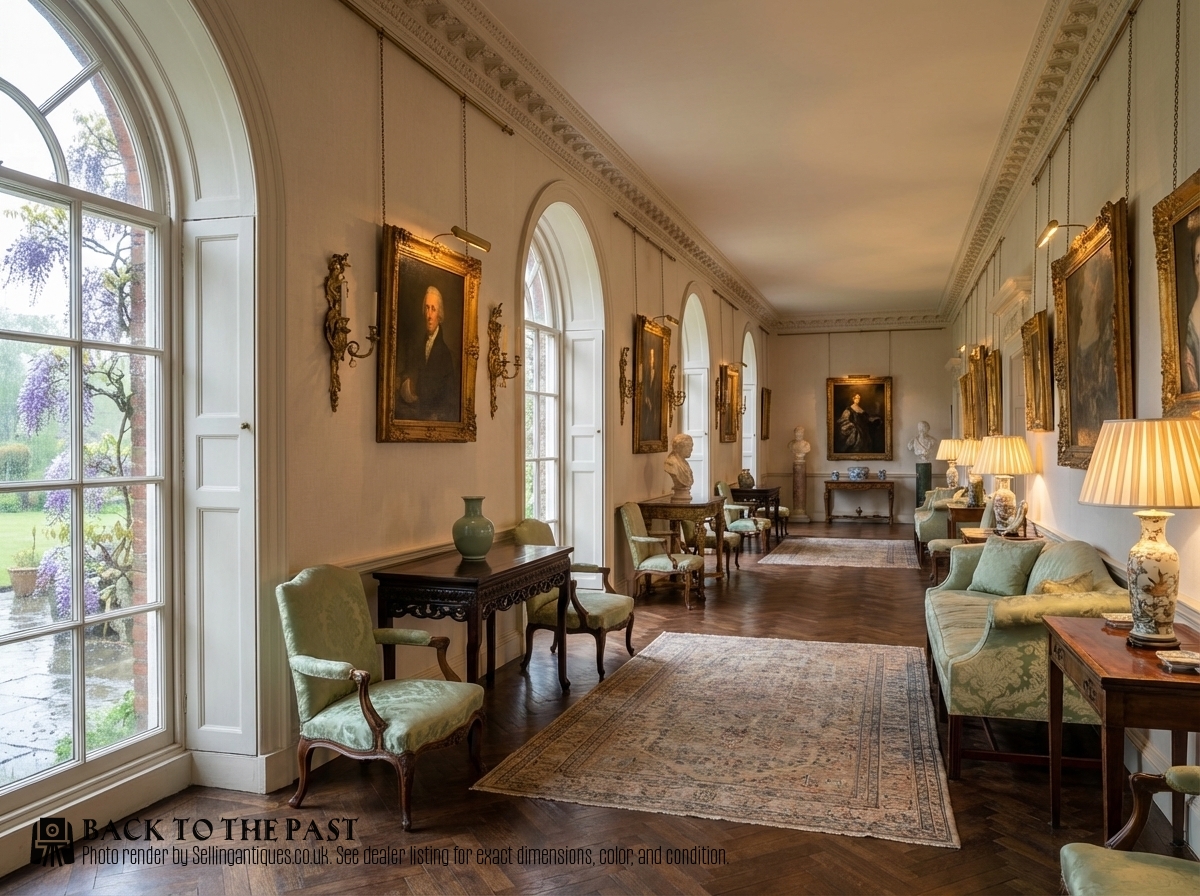
Carved Oriental Table
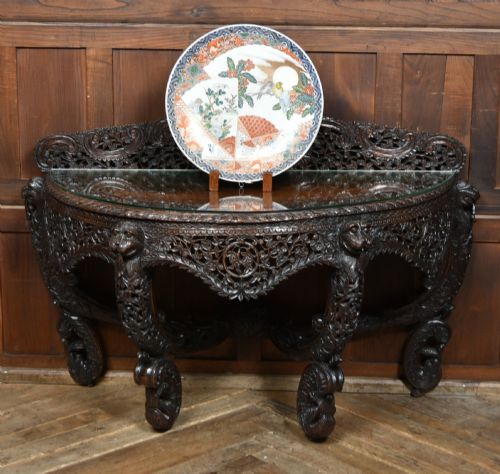
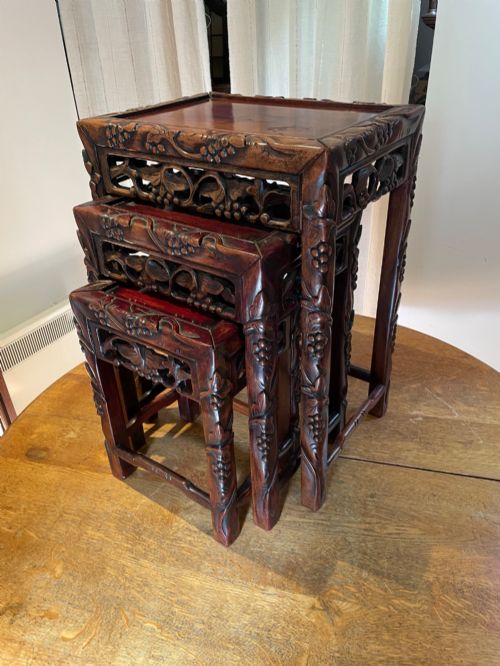
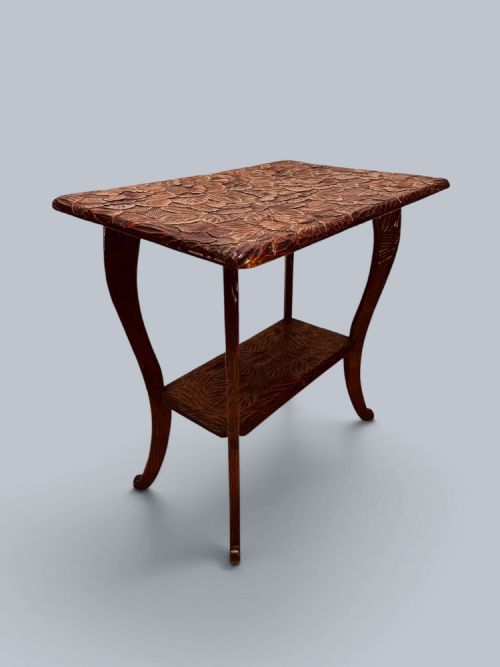
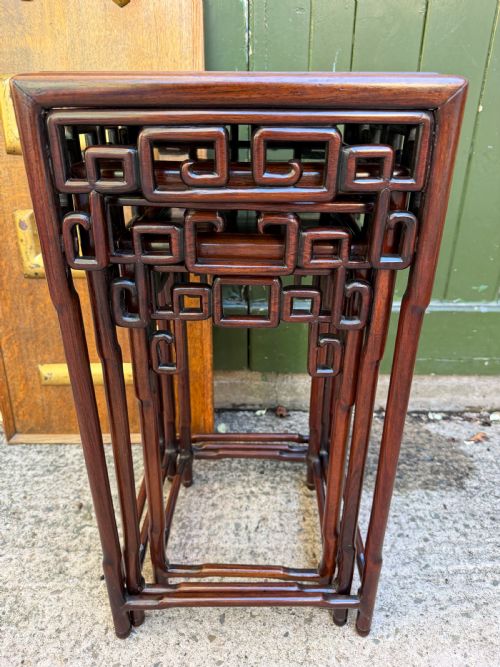
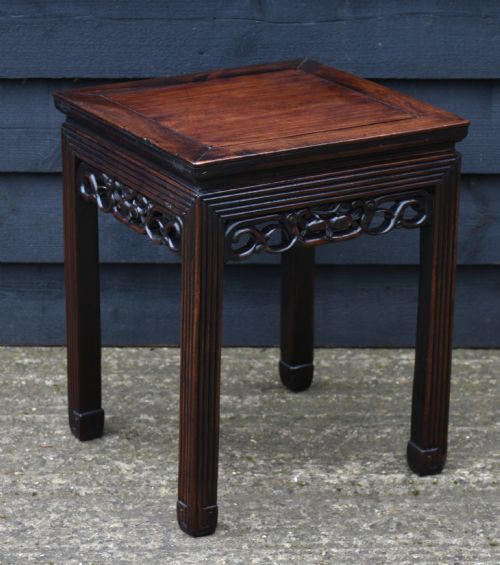
A carved oriental table encompasses low opium tables, nests of graduated side pieces, plant stands and occasional surfaces originating from Chinese workshops, Anglo-Indian makers and Victorian interpretations of Eastern design. The pieces span the nineteenth century through the early decades of the twentieth century, including periods such as the Qing Dynasty and the Meiji era. Buyers encounter low rosewood coffee tables, marble-inset pot stands and brass-topped occasional forms with considerable frequency.
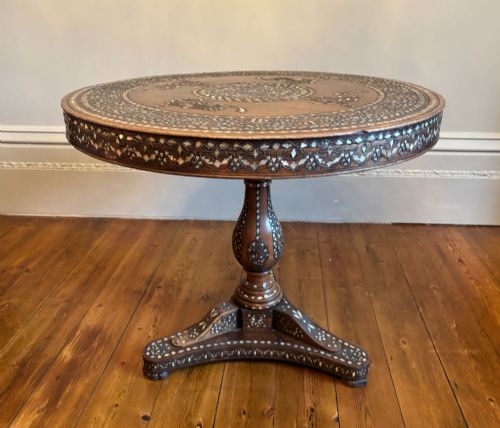
Forms range from compact nests of four tables and tall plant supports to larger altar consoles and games surfaces. Chinese export pieces and regional Indian tables demonstrate distinct regional carving vocabulary, from dragon details to geometric fretwork and inlaid bone or mother of pearl. These objects served domestic functions as varied as tea service, display and scholarly use, resulting in a wide selection of portable and freestanding designs.
Timbers and Construction Methods
Workshops relied heavily on dense hardwoods such as rosewood, padouk, huanghuali and elm, often selected for natural grain pattern and weight. Artisans carved deep relief directly into the timber, integrating motifs like dragons, foliage and scrollwork into the structural frame. Joints frequently utilised traditional interlocking carpentry without metal fasteners.
Surface ornamentation incorporated contrasting materials set flush into the wood, notably mother of pearl, bone, brass and marble inserts. Some tables combined carved wooden frames with metal tops or glass panels placed over antique fretwork panels. Polishing techniques enhanced the deep colour and natural patina of the dense Asian and Indian hardwoods.
Carved Oriental Table Retail Price Guide 2026
Typical asking prices for carved oriental table among the pieces listed under this phrase on Sellingantiques today, from the lower quarter to the upper quarter. They describe what is for sale here now, not the wider market.
Listings feature pieces spanning the nineteenth century to the mid-twentieth century, utilising rosewood, brass, marble and elm.
Distinctions in Execution and Material
Quality rests on the crispness and depth of the hand carving, the selection of timber grain, and the precision of inlaid elements. Superior examples show fluid, deeply undercut foliage and dragon motifs that maintain structural integrity without splitting or loose joinery.
The integration of secondary materials like marble inserts, brass work and mother of pearl defines the upper tier of pieces. Expert alignment of inlaid sections and the preservation of original patination on dense rosewood or elm separate standard production from finer export and domestic workshop pieces.
Liberty & Co
The Carved Oriental Table Glossary
- Qing Dynasty
- The final imperial dynasty of China, lasting from sixteen-forty-four to nineteen-twelve. Many hardwood tables and stands date from the later decades of this period.
- Opium Table
- A low surface traditionally used for resting smoking paraphernalia or serving tea. These pieces sit close to the floor and often feature elaborate carved aprons.
- Mother of Pearl
- The iridescent inner layer of mollusc shells. Craftsmen cut this material into thin sections to inlay floral and geometric designs into dark hardwood surfaces.
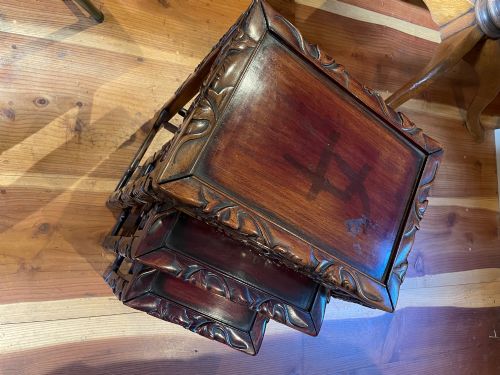
- Nest of Tables
- A set of graduated tables designed to slide one beneath another to save space. They appear frequently in nineteenth-century Chinese export production.
- Anglo-Indian
- Furniture made in India by local artisans for British patrons, or made in Britain using Indian decorative techniques. These pieces often combine brass work or bone inlay with native hardwoods.
Carved Oriental Table: Frequently Asked Questions
What are carved oriental tables used for?
These tables function as low coffee surfaces, plant stands, side tables and display spaces for ceramics or decorative objects. Their varied heights and modular nest formats make them adaptable for holding lamps, books and tea.
Historically, specific forms served specialised domestic routines, such as low opium tables or altar consoles. Today, they integrate easily into modern interiors as accent pieces with distinct regional character.
How do I identify a nineteenth-century piece?
Nineteenth-century examples display dense, heavy hardwoods like rosewood or padouk combined with hand-carved relief work. Construction methods often rely on traditional joinery and visible tool marks rather than modern adhesives or machine fasteners.
Look for the natural ageing of the timber, including deep patination and minor shrinkage cracks that confirm age. Inlaid materials such as bone or mother of pearl should show signs of integration with the surrounding wood grain.
What is an Anglo-Indian table?
An Anglo-Indian table combines traditional Indian carving styles with furniture forms popular in Britain during the Victorian and Edwardian eras. These pieces frequently feature intricate bone or brass inlay on dark hardwood structures.
They were often produced for export or imported by retail houses such as Liberty and Co. The decorative motifs blend British functional requirements with Eastern craftsmanship.
How should I care for hardwood and marble surfaces?
Maintain the timber by keeping surfaces away from direct heat sources and sudden humidity changes that can cause the wood to split. Clean rosewood and elm gently with a dry or slightly damp cloth, avoiding harsh chemical polishes.
For tables with inset marble tops, wipe spills promptly to prevent staining the porous stone. Periodic light waxing preserves the natural sheen of the hardwood without building up residue.