






Carved Oak Settle Bench
When you search for a carved oak settle bench, you enter a tradition of sturdy seating designed to keep out drafts.
Carved Oak Settle Bench
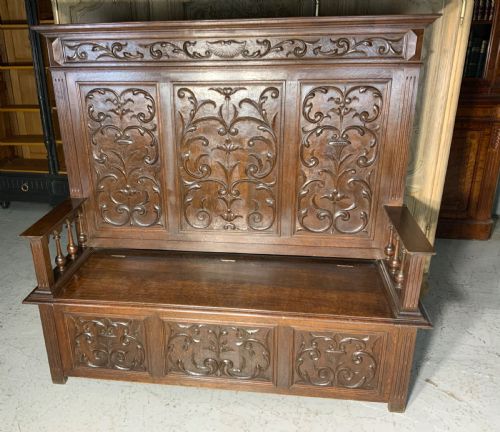
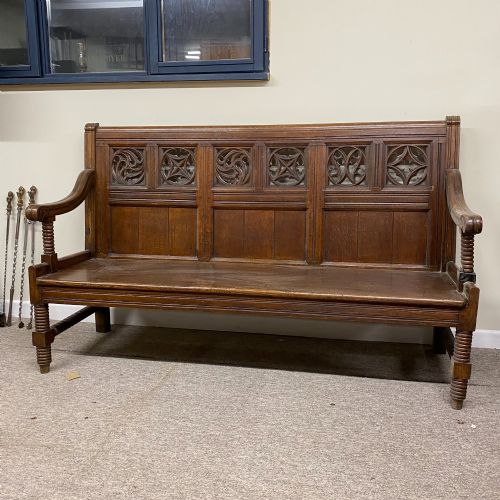
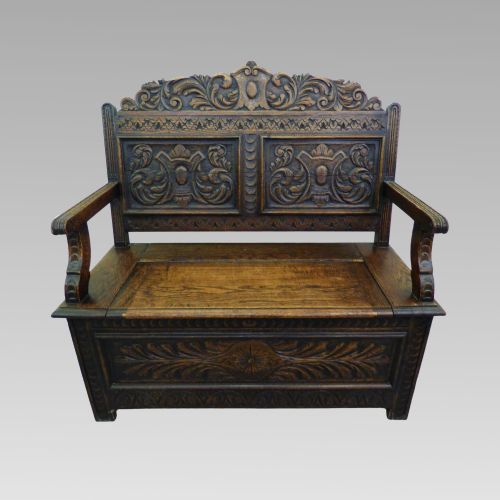
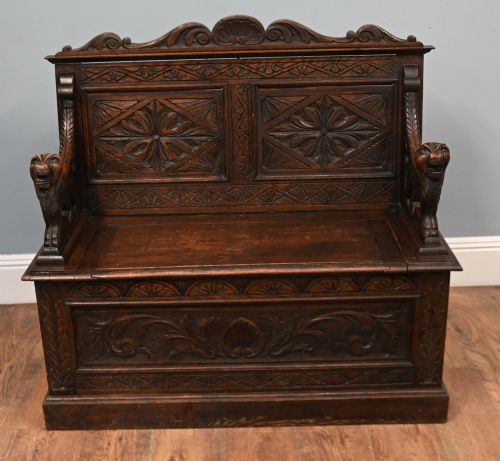
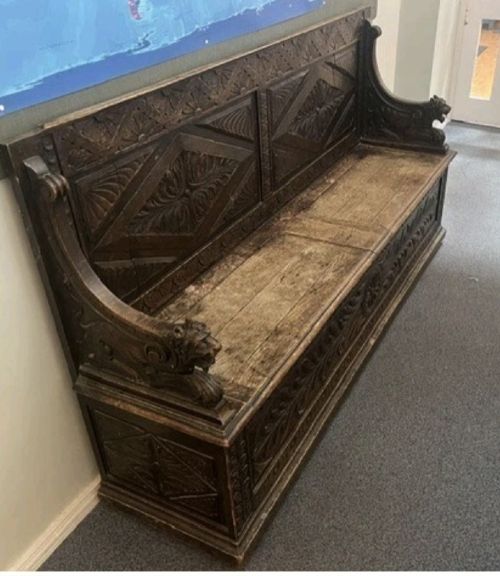
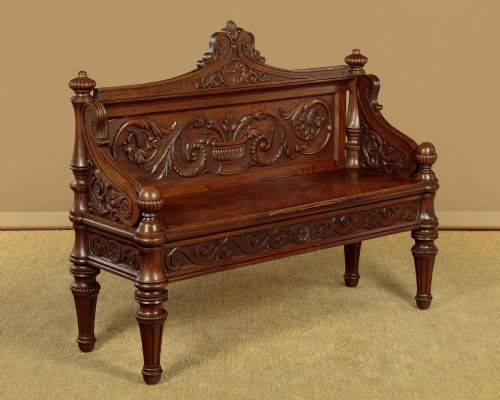
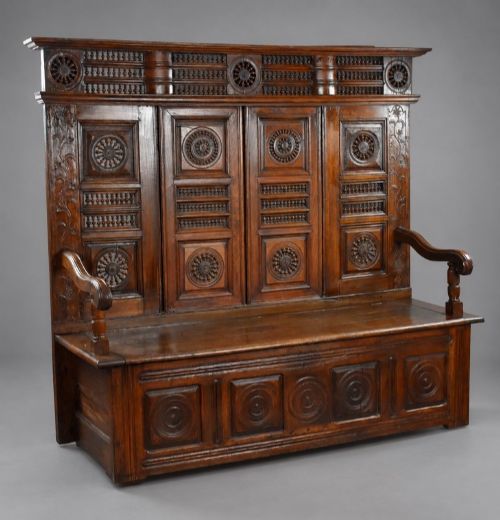
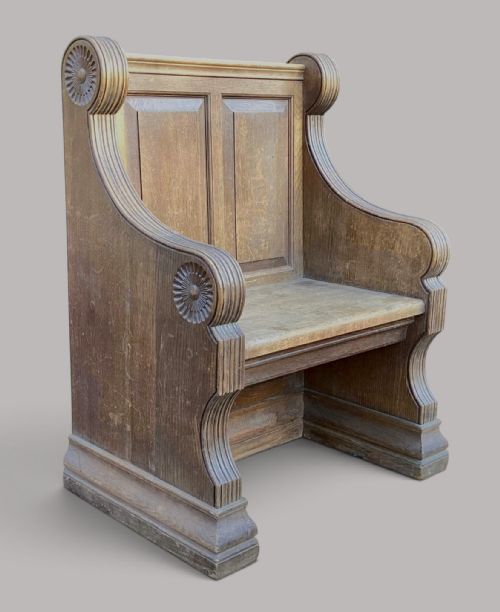
A carved oak settle bench provides high-backed seating with solid armrests and enclosed storage beneath the seat. These heavy pieces originate in domestic halls and farmhouses where solid timber protection against cold stone floors and winter draughts was essential.
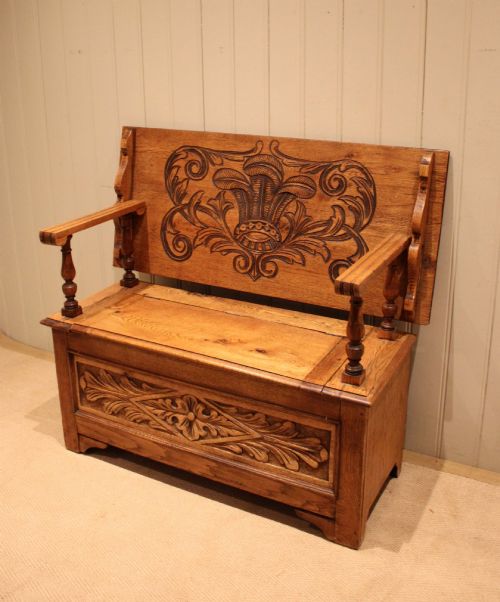
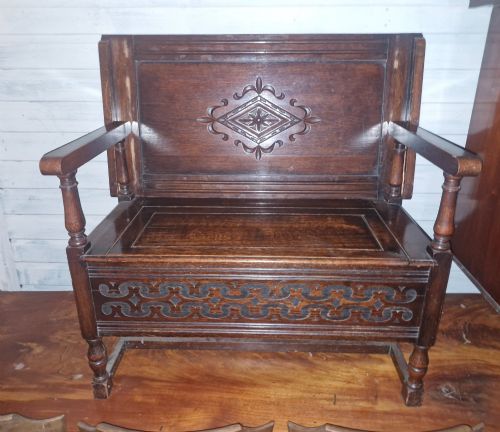
The versions most commonly met on this page span the seventeenth through the nineteenth centuries, alongside revivalist pieces from the early twentieth century. Examples range from high-back box settles to smaller monk benches featuring fold-over table tops.
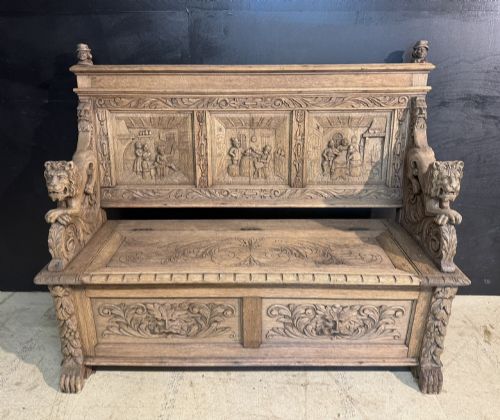
Makers often integrated architectural panelling or deep relief carving into the backboards. Regional variations emerge clearly across English, Welsh, and continental workshops.

Materials and Technique
Solid oak serves as the primary structural material, joined through traditional mortise and tenon framing secured with wooden pegs. Workshops relied on quarter-sawn timber to expose the dense medullary rays, adding structural stability and visual depth to the panels.
Carving techniques combine hand-chiseled strapwork, linenfold motifs, and deep relief figural elements such as Green Man masks. Iron hinges, brass handles, and wrought iron hardware appear selectively on storage compartments and drop-leaf mechanisms.
Surface finishes rely primarily on traditional wax polishing or historical dark coatings. These treatments build a rich patina across the grain over centuries of handling.
Carved Oak Settle Bench Retail Price Guide 2026
Typical asking prices for carved oak settle bench among the pieces listed under this phrase on Sellingantiques today, from the lower quarter to the upper quarter. They describe what is for sale here now, not the wider market.
Listings span multiple centuries, uniting heavy seventeenth-century joined oak with refined Georgian designs and nineteenth-century Gothic Revival interpretations.
Judging Quality
Quality rests upon the integrity of the timber selection and the crispness of the hand-carved detail. Early examples carved from a single dense plank or constructed with tight frame-and-panel engineering show superior longevity compared to later factory iterations.
Proportion and architectural balance dictate the visual success of the piece. Superior examples maintain harmonious vertical lines in the high back while preserving functional proportions in the box seat below.
The depth and execution of the carved panels separate workshop production from mass output. Crisp undercutting and purposeful tool marks indicate master execution rather than mechanical routing.
GIllows·Shapland and Petter·Liberty
The Carved Oak Settle Bench Glossary
- Settle
- A wooden bench with a high back, solid arms, and a closed base often used for storage. This form kept seated occupants warm by blocking cold air currents in large rooms.
- Monks Bench
- A dual-purpose seat featuring a hinged back that folds flat to form a table top. These items maximised floor space in compact historical dwellings.
- Wainscot
- Oak panelling used to line walls and incorporated into the high backs of early furniture. This construction method utilised tongue and groove joints within a structural frame.
- Green Man
- A sculptural architectural motif depicting a human face emerging from or entwined with foliage. It symbolizes rebirth and appears frequently in revivalist woodwork.
- Box Settle
- A variant featuring a hinged seat lid concealing an integrated storage compartment beneath. This cavity held textiles, boots, or household goods.
Carved Oak Settle Bench: Frequently Asked Questions
Where were settles placed?
Historically, these benches stood near hearths or beside entrance doors to intercept cold draughts moving through large communal rooms. Their high panelled backs created a microclimate that retained heat from nearby fires.
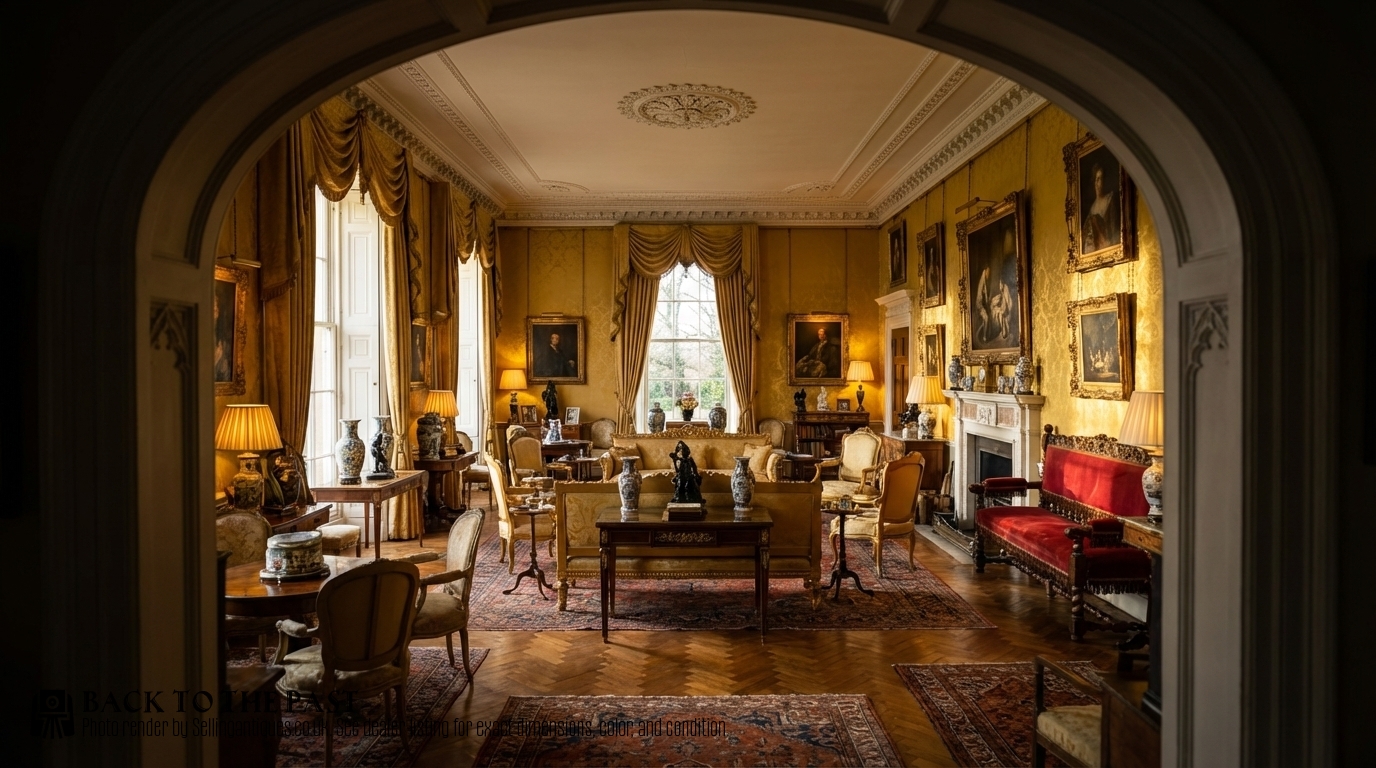
In modern settings, they function effectively in hallways, kitchens, or boot rooms where their enclosed bases provide hidden storage for daily items.
How can I date an oak settle?
Dating relies on observing construction methods, joinery types, and stylistic carving motifs. Seventeenth-century examples display pegged mortise and tenon joints with hand-split panels, while nineteenth-century revival pieces often incorporate machine sawn timber and standardised ironwork.
Wear patterns, tool marks, and the depth of the surface patina further clarify the age of the timber.
How do I care for antique oak?
Maintain antique oak by applying natural beeswax sparingly to nourish the dry wood fibres and preserve the historic finish. Avoid placing furniture near direct heat sources or rapid temperature fluctuations that cause timber to split.
Dust regularly with a soft, dry cloth to prevent particulate accumulation within deep carved recesses and joints.