

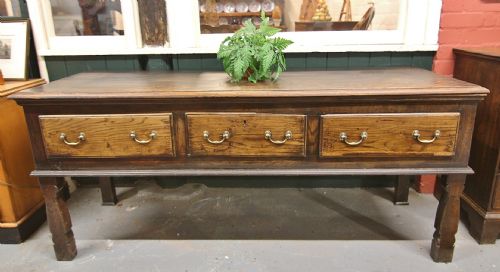
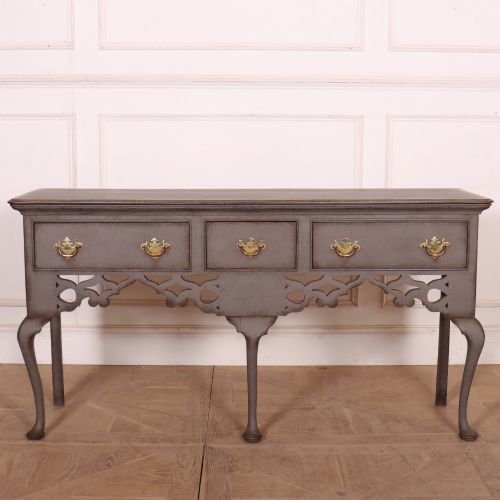
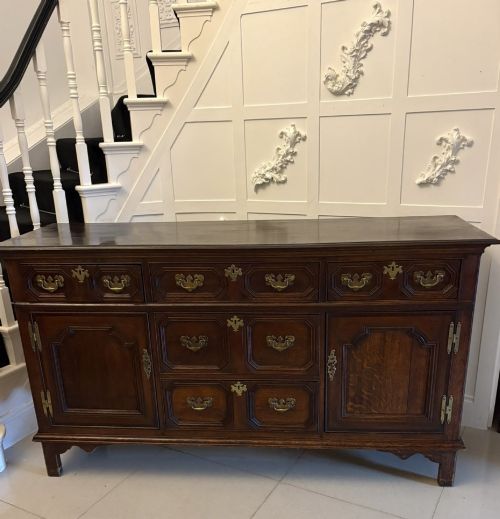

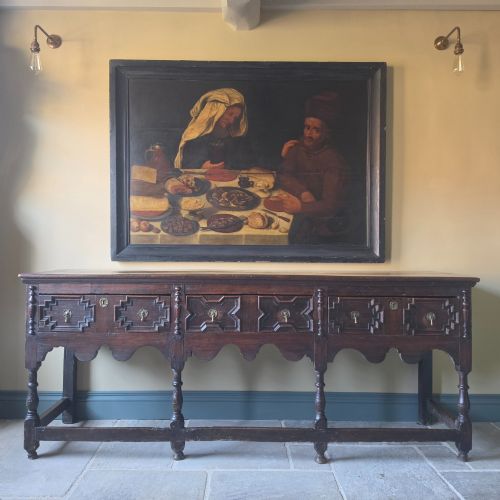



Carved Oak Low Dresser
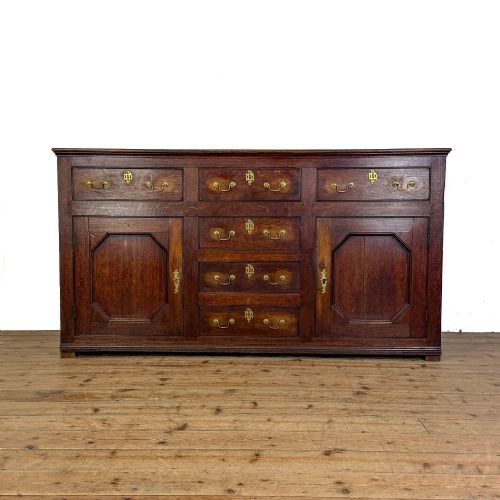
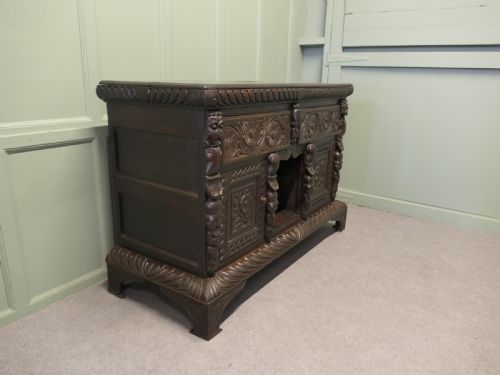
A carved oak low dresser anchors a room with solid timber and centuries of service, offering broad proportions and deep drawers.
Carved Oak Low Dresser
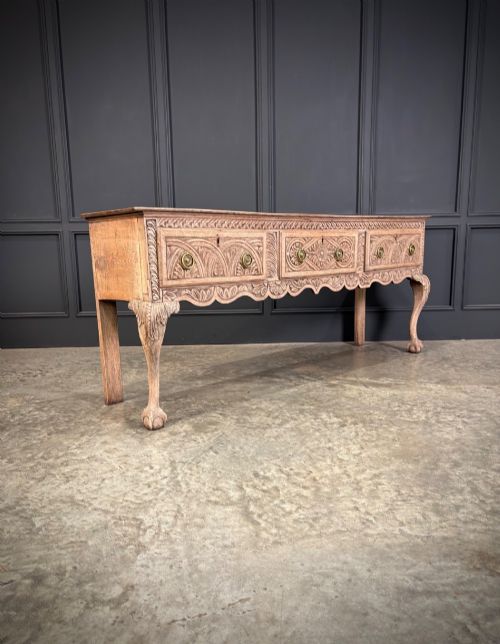
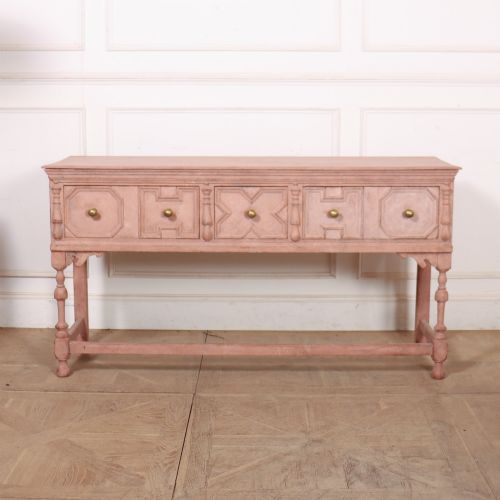
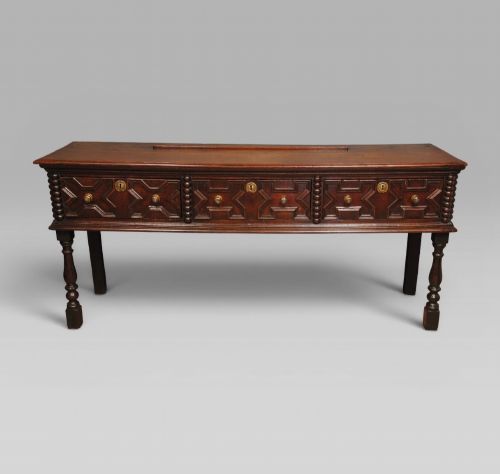
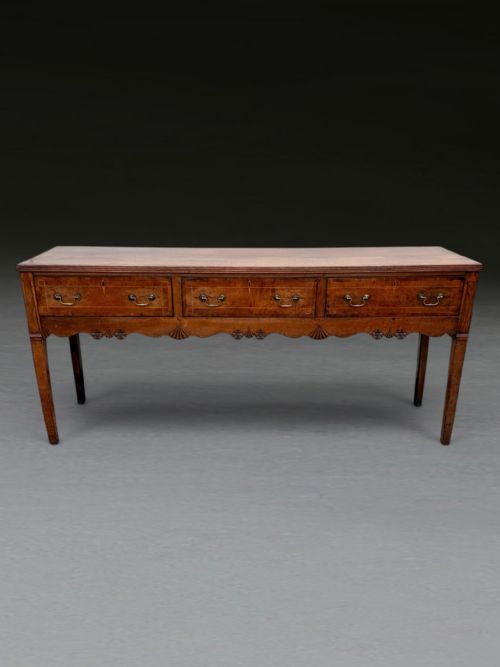
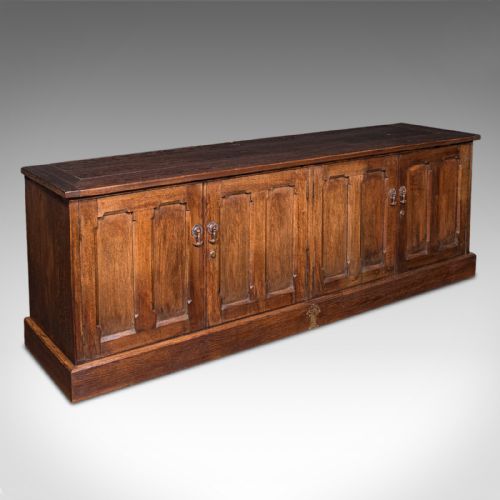
A carved oak low dresser provides ground-level storage through a combination of drawers and cabinets, designed originally for domestic service in dining rooms and kitchens. These pieces appear in forms such as dresser bases, sideboards, and servers, maintaining a reduced height compared to tall stacked plate racks.
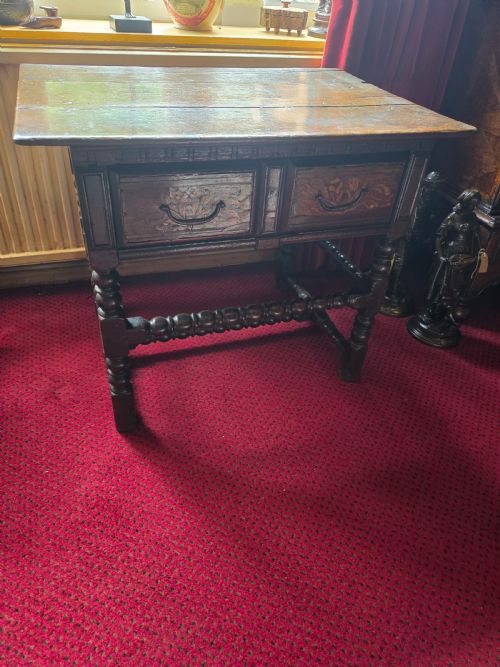
The pieces on this page span the seventeenth, eighteenth, and nineteenth centuries, alongside revival interpretations from later periods. Eighteenth-century and Georgian examples dominate the selection, often presenting linear drawer arrangements alongside seventeenth-century survivals featuring geometric mouldings and heavy carving.
Materials and construction
Construction relies primarily on solid oak, shaped with hand tools and assembled using traditional joinery methods. Brass and iron hardware, including drop handles and escutcheons, secure the operational parts alongside wrought iron elements.
Surface treatments range from waxed natural timber to painted finishes and subtle inlay work. Carving techniques include geometric moulding and relief work, executed directly into the dense grain of the wood.
Carved Oak Low Dresser Retail Price Guide 2026
Typical asking prices for carved oak low dresser among the pieces listed under this phrase on Sellingantiques today, from the lower quarter to the upper quarter. They describe what is for sale here now, not the wider market.
Listings feature periods spanning the seventeenth, eighteenth, and nineteenth centuries, constructed predominantly in oak with brass and iron hardware.
Assessing quality and proportion
Quality rests in the handling of the timber and the depth of the carving. Superior examples display crisp detail in moulded drawer fronts and integrated structural framing that remains stable over centuries.
Proportion and surface patination distinguish the finest pieces. The interaction between the grain of the oak and the placement of brass hardware determines the visual balance of the facade.
The Carved Oak Low Dresser Glossary
- Dresser base
- The lower section of a traditional kitchen or dining room dresser, built with surface workspace and storage drawers below. These units function independently as sideboards.
- Enfilade
- A suite of rooms aligned with each other, or in this context, a long sideboard featuring multiple cabinet doors in a continuous line. French interpretations often utilise this format.
- Block front
- A cabinet front divided vertically into three panels, where the central section recedes and the outer sections project forward. This treatment appears on seventeenth-century pieces.
- Geometric moulding
- Raised wooden profiling applied to drawer fronts in repeating angular patterns. This decorative technique creates texture and shadow across the facade.
- Patina
- The surface sheen and colour developed by timber through age, handling, and regular polishing. This quality marks authentic period pieces.
Carved Oak Low Dresser: Frequently Asked Questions
What is a low dresser?
A low dresser is a heavy timber storage unit designed without the upper shelving superstructure typical of taller kitchen dressers. These pieces provide a wide surface top above rows of working drawers or low cupboards.
Historically utilised for food preparation and serving in large households, they now function as sideboards in modern dining rooms and living spaces.
How do I date an oak dresser?
Dating relies on examining the construction methods, handle hardware, and decorative styles visible across the framework. Seventeenth-century pieces typically feature geometric mouldings and heavy joinery, while Georgian examples display cleaner linear drawer arrangements.
Revival pieces from the nineteenth and twentieth centuries often imitate these earlier styles using mechanical rather than hand-cut joints.
Where should I place a dresser base?
These low cabinets suit dining rooms, hallways, and living spaces where broad surface area and deep drawer storage are required. Their reduced height allows them to sit beneath windows or frame large wall art without overwhelming the room.
Ensure adequate floor space is available for the drawers and cabinet doors to open fully.
Are these pieces made of solid oak?
The listings consist primarily of solid oak construction, sometimes paired with secondary timbers for internal drawer linings. The density of the wood provides the durability that has allowed these items to survive for centuries.
Surface finishes on solid oak range from raw waxed grain to historical painted applications.