





17th Century Server Table
A 17th century server table provides a sturdy surface for serving food and drink, combining historical presence with practical utility in a dining room.
17th Century Server Table
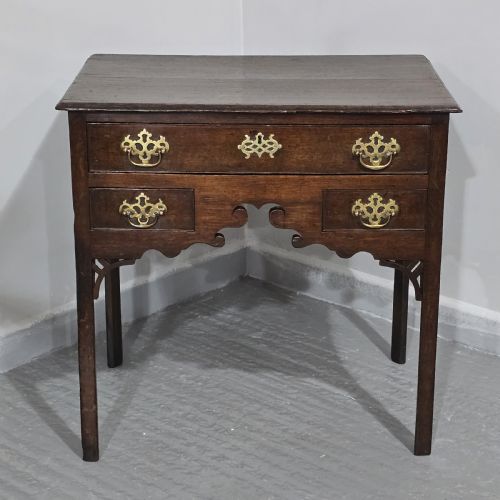
When buyers search for a 17th century server table, they encounter heavy timber furniture designed for serving food and storing household provisions. These pieces appear as lowboys, dresser bases, console tables, and side tables.
The selections on this page span genuine 17th century examples alongside later revivals from the twentieth century. Oak dominates the inventory, accompanied by walnut, iron, and brass fittings.
How they were made
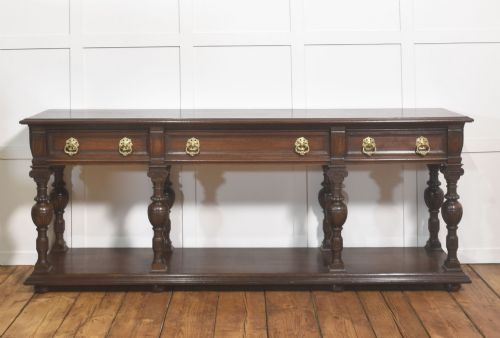
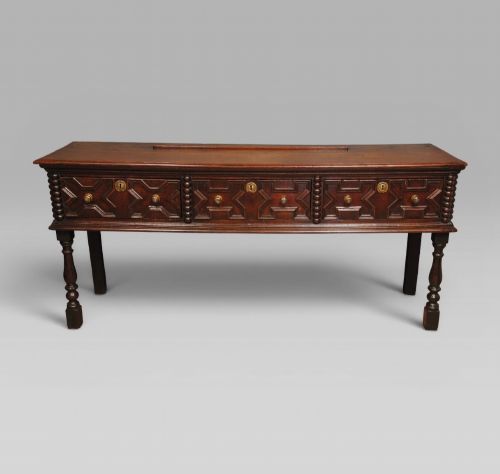
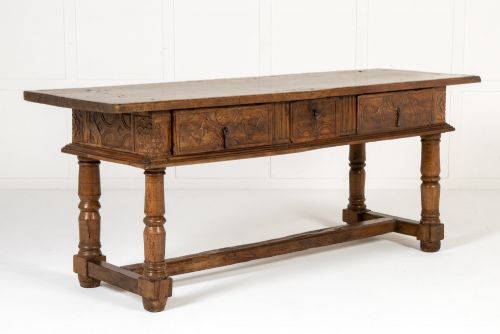
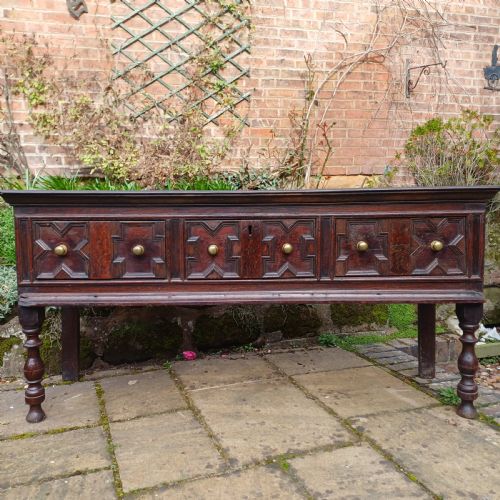
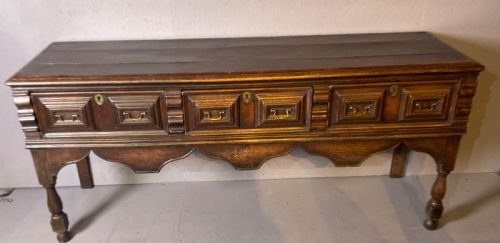
Cabinet makers constructed these serving tables primarily using solid oak and walnut, joined with traditional framing and panel techniques. Drawer fronts frequently display geometric moulding, and some surfaces feature wood inlay.
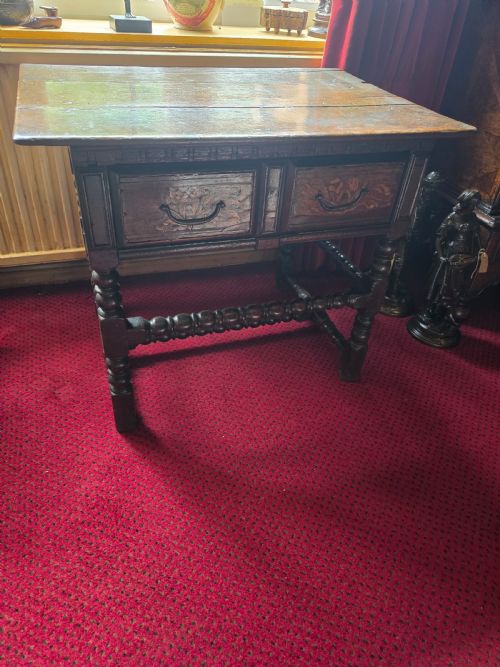
Hardware consists of forged iron and brass drop handles or hinges. Certain pieces retain painted finishes or intricate hand carvings upon the timber framework.
Object forms include dresser bases, lowboys, console tables, and side tables in both period and revival styles.
What varies in quality
The distinction between ordinary and superior pieces rests on timber selection and the crispness of the carving or moulding. Original seventeenth century construction holds greater interest than later revival interpretations.
Proportions and surface patination dictate visual success. Tables retaining their early surface texture and authentic brass or iron hardware command greater appreciation.
The 17th Century Server Table Glossary
- Dresser base
- A low wooden sideboard or serving table fitted with drawers and occasionally cupboards beneath the top surface. These utilitarian forms served kitchens and dining halls for domestic storage.
- Lowboy
- A small low table with one or more rows of drawers, commonly used as a side table or serving piece. They stand on relatively tall legs.
- Jacobean
- The style of English architecture and decorative arts prevalent during the reign of James I, characterised by solid proportions and geometric ornamentation. Later revival pieces emulate these heavy rectilinear forms.
- Barley twist
- A type of turned column or leg resembling a twisted rope. This decorative turning style appears frequently on seventeenth century and revival table legs.
- Geometrical moulding
- Raised mouldings applied to drawer fronts in rectilinear or octagonal patterns. This technique creates depth and shadow on flat wooden surfaces.
17th Century Server Table: Frequently Asked Questions
How do I use a server table today?
These tables function well as serving surfaces in dining rooms or as sideboards in hallways and living spaces. Their drawers offer practical storage for linens and tableware.
Position them against interior walls to display lamps, ceramics, or books while anchoring a room with historical character.
Are these tables made of solid wood?
The pieces listed utilise solid timbers such as oak and walnut, reflecting traditional cabinet making methods. Grain patterns and natural knots appear across the primary surfaces.
Construction relies on heavy wooden framing rather than modern manufactured boards.
What is the difference between a side table and a server?
Servers and dresser bases generally provide greater length and include functional drawers for storing dining accessories. Side tables tend to be smaller in scale and lighter in proportion.
Both types share a flat top surface suitable for holding objects.
How do I distinguish 17th century from revival pieces?
Authentic period pieces show tool marks, timber shrinkage, and wear consistent with extensive age. Revival items from the twentieth century often display more uniform machine finishing and standardised construction joints.
Examining the underside and drawer linings reveals how the timber was worked.