



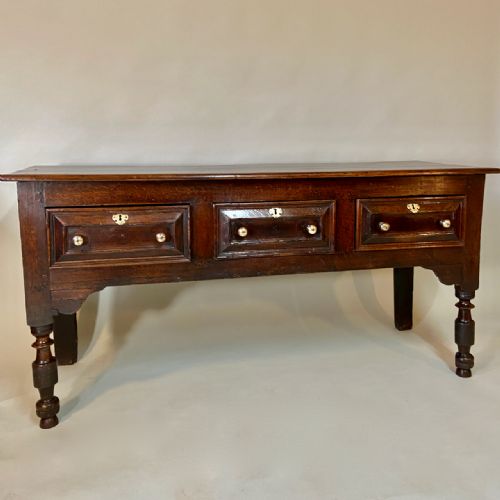
Carolean Oak Console Table
These pieces known as a carolean oak console table are heavy seventeenth century furniture built to anchor a room.
Carolean Oak Console Table
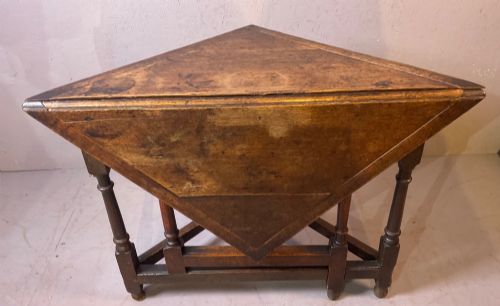
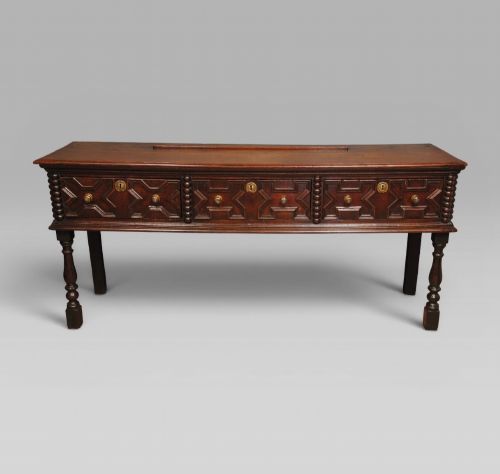
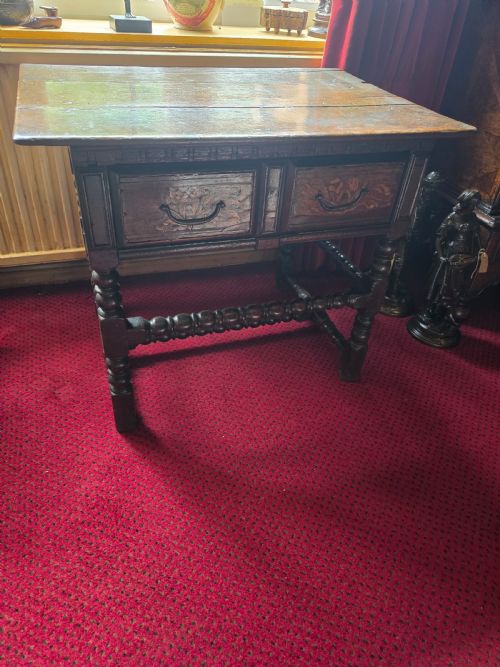
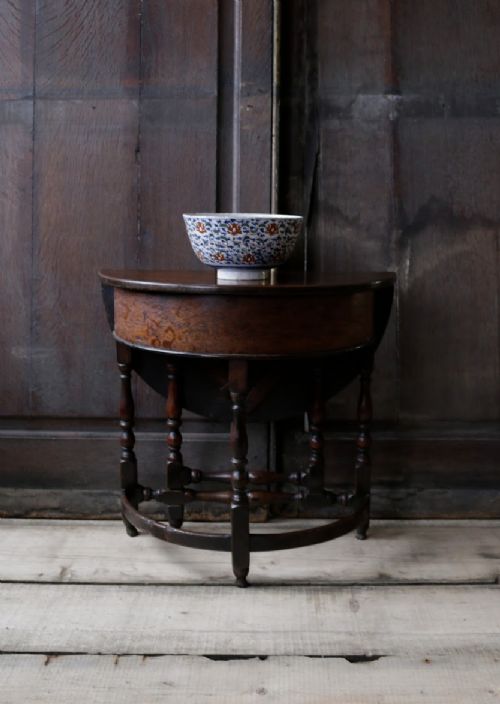
Buyers searching for a carolean oak console table encounter seventeenth century side tables, low dressers, and dresser bases. These forms provide sturdy surfaces built from solid timber with drawer storage.
The pieces on this page span the seventeenth century and eighteenth century, reflecting styles such as Jacobean and Jacobean Revival. Examples range from plain side tables to servers with geometrically moulded drawer fronts.
Originating primarily from English workshops, these items serve as functional servers and side tables in domestic interiors. They bridge the gap between simple box tables and formal credenza forms.
How they were made
Makers constructed these items using solid oak, incorporating wood inlay for decorative contrast on drawer fronts and panels. Brass hardware and iron fixings provide structural support and functional handles.
Surfaces sometimes receive a painted finish to alter the appearance of the oak timber. Turnery techniques produce distinctive bobbin turned legs that define the silhouette of specific tables.
Materials documented across the inventory include oak, brass, wood inlay, iron, and painted oak.
What varies in quality
Quality rests in the complexity of the timber work, such as geometric mouldings on drawer fronts compared to plain boards. Applied wood inlay and intricate bobbin turning require greater joinery skill than simple turned legs.
The integrity of the original oak structure and the survival of period brass fittings determine the overall standard. Pieces with intact period surfaces and refined architectural detailing stand apart from simpler utilitarian forms.
The Carolean Oak Console Table Glossary
- Carolean
- Pertaining to the reign of King Charles II, representing the decorative arts of the late seventeenth century. This style often employs rich turning and geometric panels.
- Dresser base
- A low functional cabinet featuring drawers and sometimes cupboards beneath a flat top. It served as a primary surface for food preparation and storage.
- Bobbin turned
- A form of leg or stretcher shaped on a lathe to resemble a string of beads or bobbins. This decorative turning is typical of seventeenth century joinery.
- Credence table
- A folding or triangular table with a hinged top supported by a swing leg. These tables held sacramental elements or served as side tables in domestic settings.
Carolean Oak Console Table: Frequently Asked Questions
What is a carolean oak console table?
These items are seventeenth century side tables, servers, and dresser bases built from solid timber. They provide functional surfaces and drawer storage with period joinery.
Makers constructed them using oak, sometimes adding wood inlay, painted finishes, and bobbin turned legs. They function well as statement pieces in hallways or living spaces.
How do I date these tables?
Dating relies on observing construction methods, timber patination, and stylistic details like geometric mouldings or bobbin turning. Seventeenth century pieces show specific joinery traits distinct from later revival work.
Hardware such as brass handles and iron fittings also offer clues to the period of manufacture. Comparing the form to documented side tables and dresser bases helps confirm the age.
Where were these tables used?
Original settings included domestic halls, dining rooms, and parlours where they acted as servers or side tables. Their sturdy construction allowed them to hold heavy platters and household goods.
Today they fit comfortably in dining rooms, living areas, or large hallways as display and storage surfaces. Their historic presence anchors modern interior schemes.
How do I care for oak furniture?
Maintain the timber by keeping it away from direct heat sources and dramatic humidity shifts. Natural beeswax applied sparingly helps nourish the old oak surface.
Dust regularly with a soft, dry cloth rather than using harsh liquid cleaners. This preserves the historic patination and protects the wood grain.