



Jacobean Oak Dressing Table
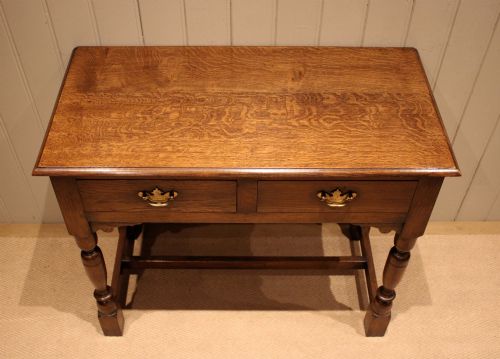
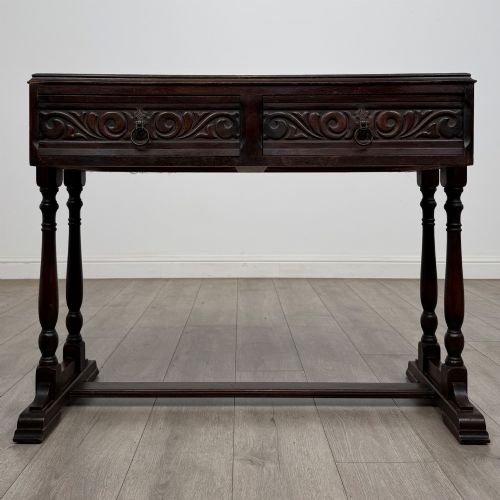
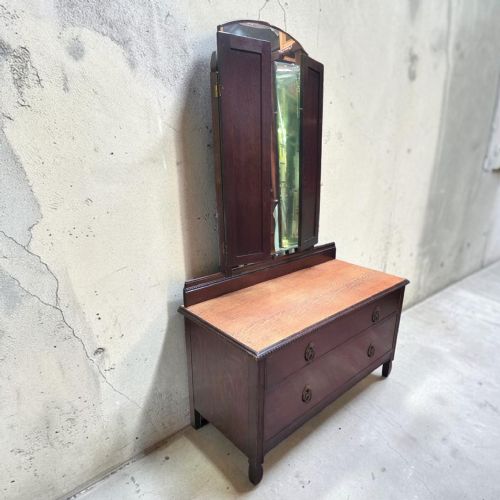
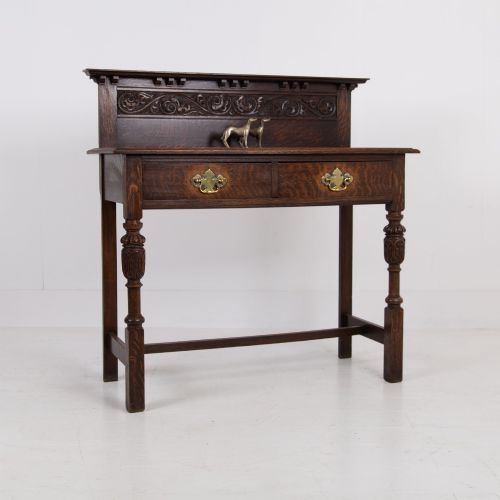
A jacobean oak dressing table brings dark timber and carved detail to a bedroom, offering sturdy surfaces and historic character.
Jacobean Oak Dressing Table
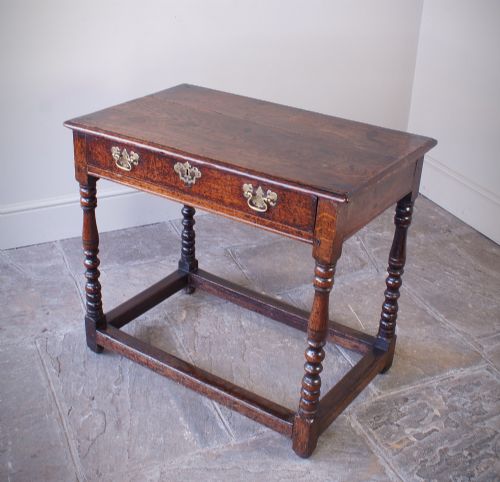
A jacobean oak dressing table combines practical bedroom furniture with the rich character of seventeenth-century British cabinet-making traditions. Buyers examining these pieces will find genuine seventeenth-century examples alongside later revivals from the Victorian, Edwardian, and interwar periods.
The selection ranges from lowboys and side tables adapted for vanity use to fitted dressing chests with triple mirrors and dedicated stools. Pieces span various decades, including interpretations from the eighteen-eighties, nineteen-twenties, and nineteen-thirties created in the Jacobean and Tudor revival styles.
How They Were Made
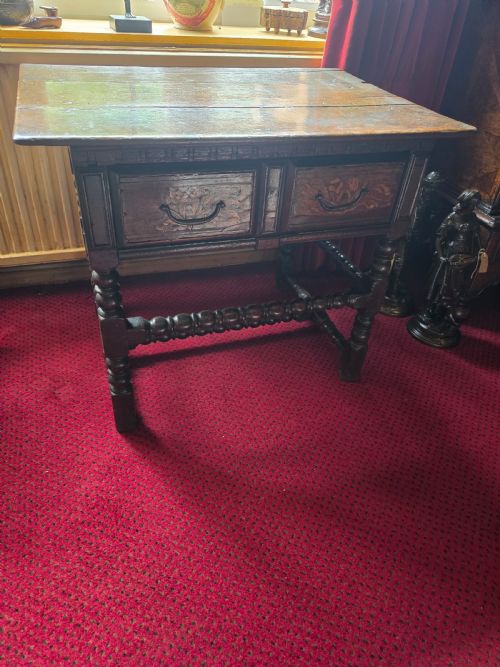
These items are constructed primarily from solid oak, frequently enhanced with wood inlay and supported by iron or brass hardware. Structural elements often feature heavy carving, panelled construction, and turned components such as barley twists.
Makers utilised traditional joinery methods to build robust frames capable of supporting glass mirrors and daily use. Surfaces were finished to highlight the natural grain of the timber alongside decorative carved motifs.
Listings for this phrase include pieces spanning from the seventeenth century through to the nineteen-thirties, predominantly constructed from solid oak.
What Varies in Quality
Quality in these pieces rests upon the depth of the carving, the selection of the timber, and the integrity of the original construction. Finer examples display crisp, hand-carved details and substantial solid oak timbers rather than superficial applied ornamentation.
The proportion of the piece, the integration of mirrors, and the preservation of original brass or iron fittings also distinguish finer specimens. Later revival pieces vary according to how faithfully they replicate seventeenth-century proportions and joinery techniques.
The Jacobean Oak Dressing Table Glossary
- Lowboy
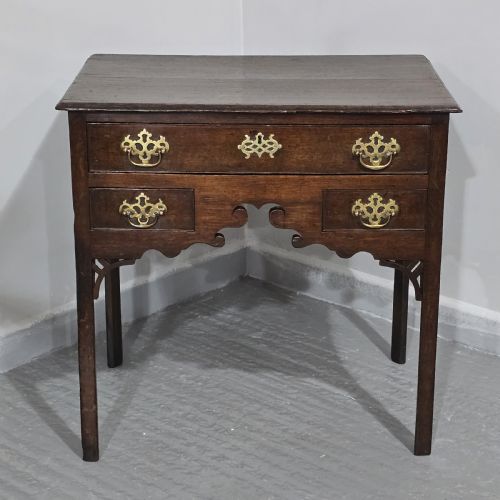
- A small oak table with drawers, typically raised on four legs, which frequently serves as a dressing table or side table. These compact pieces date from the seventeenth century and later revival periods.
- Barley twist
- A decorative turning technique resembling a spiralling rope, commonly found on the legs and supports of tables and dressing chests. This feature gained popularity during the seventeenth century and saw a strong revival in later decades.
- Jacobean revival
- A nineteenth and twentieth-century style that emulates the architectural and furniture designs of the early seventeenth-century reign of James the First. Pieces in this style utilise heavy oak, panel work, and geometric carvings.
- Wood inlay
- The technique of inserting contrasting pieces of wood into depressions within a solid timber surface to create decorative patterns. This method appears on seventeenth-century and revival furniture.
- Dressing chest
- A chest of drawers incorporating a mirror and surface space for grooming items. These multifunctional pieces often date from the Edwardian era and the early twentieth century.
Jacobean Oak Dressing Table: Frequently Asked Questions
Are all these tables from the seventeenth century?
While the selection includes authentic seventeenth-century furniture, many pieces originate from later revival periods during the Victorian, Edwardian, and interwar eras.
Craftsmen across different centuries reinterpreted these traditional designs, meaning modern buyers encounter both period antiques and twentieth-century revival pieces.
How do I use a lowboy as a dressing table?
A lowboy provides a flat surface and practical drawer storage, making it suitable for use as a compact dressing table when paired with a separate mirror.
Their modest proportions allow them to fit comfortably into bedrooms where larger modern furniture might overwhelm the space.
What is the difference between Jacobean and Tudor revival?
Tudor revival draws inspiration from sixteenth-century architecture and heavy timber framing, whereas Jacobean style focuses on the ornate turning and geometric panelling of the early seventeenth century.
In practice, makers often combined these traditional English motifs, leading to overlapping stylistic descriptions in older furniture.
How do I care for solid oak furniture?
Solid oak benefits from regular dusting with a dry cloth and occasional treatment with suitable natural waxes to nourish the timber and maintain its finish.
Keeping these tables away from direct heat sources and strong sunlight prevents the wood from drying out or splitting over time.