





Period Oak Sideboard Table
A period oak sideboard table brings centuries of British domestic history into a room through heavy timber and honest construction.
Period Oak Sideboard Table
When buyers search for a period oak sideboard table, they encounter early serving furniture, low dressers, and dresser bases spanning the seventeenth and eighteenth centuries. These utilitarian pieces originate from English domestic settings where robust timber served daily culinary and storage needs.
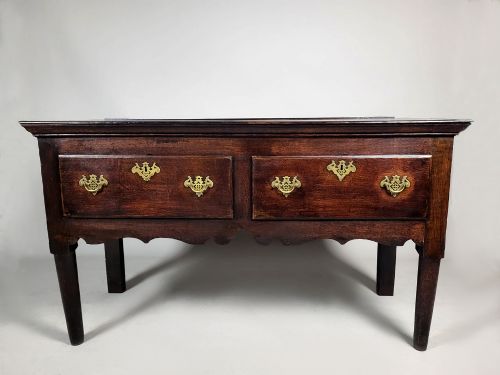
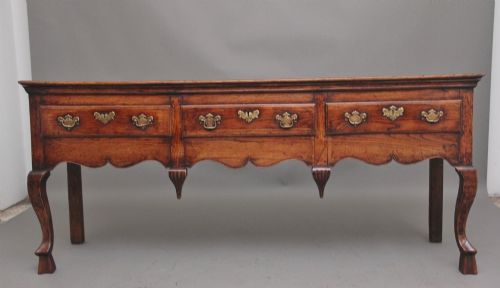
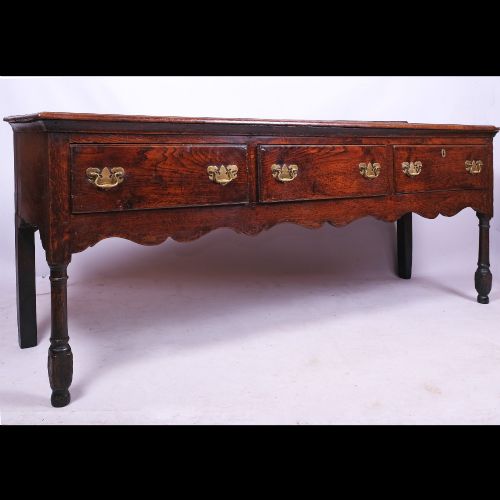
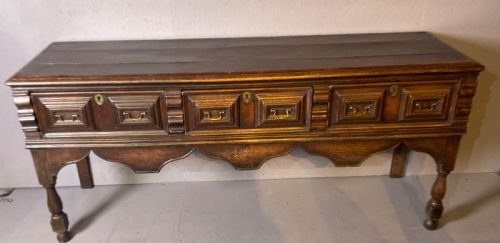
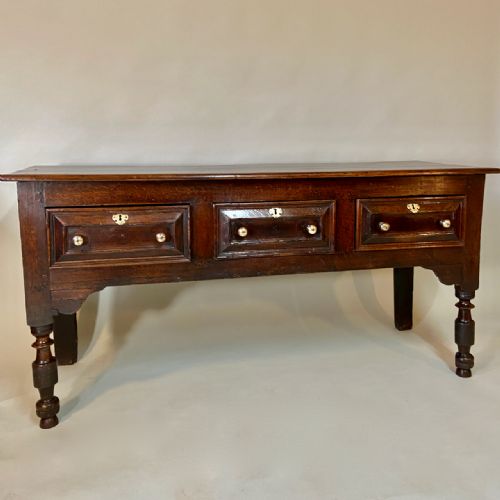
The versions most commonly met on this page date from the 17th Century and 18th Century, reflecting George III, Queen Anne, and George I stylistic influences. They take the form of low dressers, servers, and potboard bases built for hard use in country houses and farmhouses.
Form follows function closely across these examples, featuring long linear tops above banks of drawers or open potboard lower shelves. The substantial scale and grounded proportions make them practical for contemporary dining rooms and halls.
How they were made
Joiners built these pieces primarily using solid oak, selected for its density and durability, and assembled the frames with traditional pegged mortise and tenon joints. Timber boards formed the tops and drawer linings, often showing the natural grain and growth rings of slow-grown British trees.
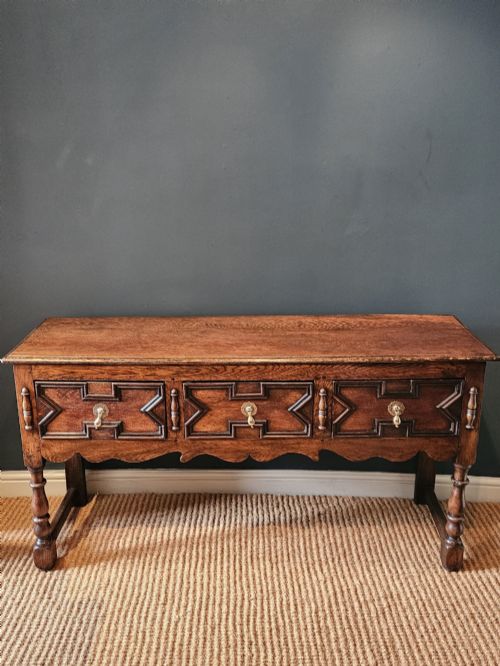
Hardware consisted of cast brass drop handles and escutcheons secured to drawer fronts, alongside iron hinges and latches on doors. Surface decoration relied on geometric mouldings applied to drawer fronts, carved friezes, and panelled construction rather than applied veneers.
What varies in quality
The distinction between standard utility pieces and finer examples rests on the crispness of the geometric mouldings and the survival of original brasses. Early servers with intact potboard lower tiers and undisturbed timber patination command greater interest from collectors.
Proportion and execution define the hierarchy among these pieces, separating plain utilitarian tables from sophisticated George I and Queen Anne iterations with shaped aprons and carefully figured drawer fronts.
The Period Oak Sideboard Table Glossary
- Potboard dresser
- A sideboard or dresser featuring an open lower shelf, known as a potboard, positioned just above the floor for storing heavy kitchen pottery.
- Geometric moulding
- Raised wooden mouldings applied to drawer fronts in repeating rectilinear patterns, characteristic of late seventeenth-century joinery.
- Dresser base
- The lower section of a kitchen or dining room dresser, constructed as a low sideboard with drawers and sometimes a potboard shelf.
- Serving dresser
- A low form of sideboard utilised in dining spaces for plating food and storing serving dishes before the widespread adoption of dedicated dining sideboards.
Period Oak Sideboard Table: Frequently Asked Questions
What is a period oak sideboard table?
It is an early utilitarian serving piece or dresser base constructed from solid oak during the seventeenth or eighteenth centuries.
These heavy timber tables provide long surface areas and multiple drawers, originally designed for domestic food preparation and serving in large English households.
How do I tell seventeenth and eighteenth century pieces apart?
Seventeenth-century examples often feature heavy geometric mouldings on the drawer fronts and simpler, more robust structural framing. Eighteenth-century pieces, such as those from the George III period, frequently show refined proportions and more sophisticated brass hardware.
Examining the construction methods and decorative motifs reveals the transition from strict seventeenth-century joinery to the lighter aesthetic of the Georgian era.
Where were these tables used in a home?
They originated in kitchens, sculleries, and great halls where robust furniture could withstand heavy daily use. The open potboard shelves and deep drawers stored heavy earthenware, pewter, and serving implements.
Today, they adapt easily to modern dining rooms, kitchens, and hallways as statement sideboards with practical surface space.
What does potboard mean on a dresser?
A potboard is a low, flat wooden shelf built near the floor between the legs of a dresser base or server. It provided stable storage for heavy pots and pans off the damp flagstone floors of early kitchens.
The presence of an original potboard adds significant architectural interest to an antique oak base.