
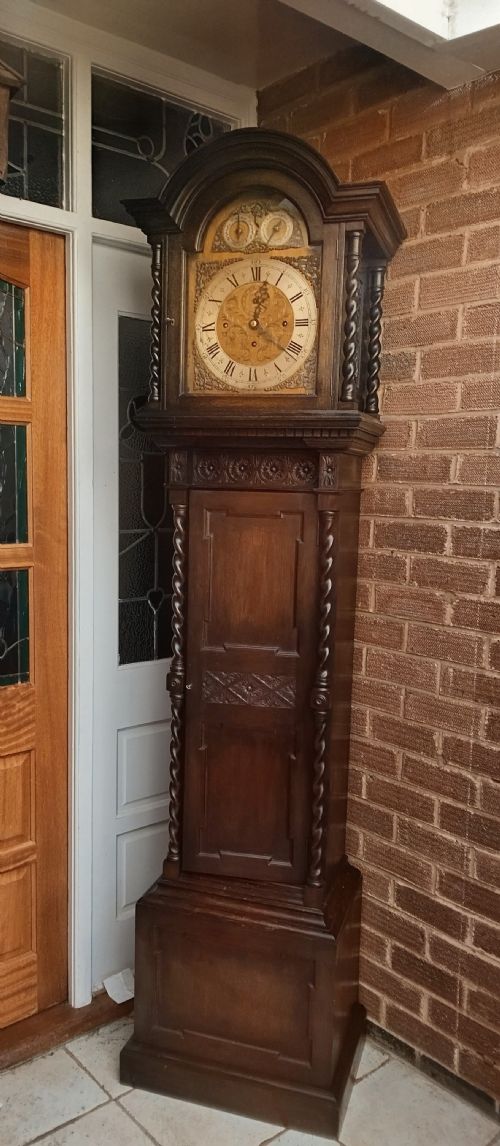
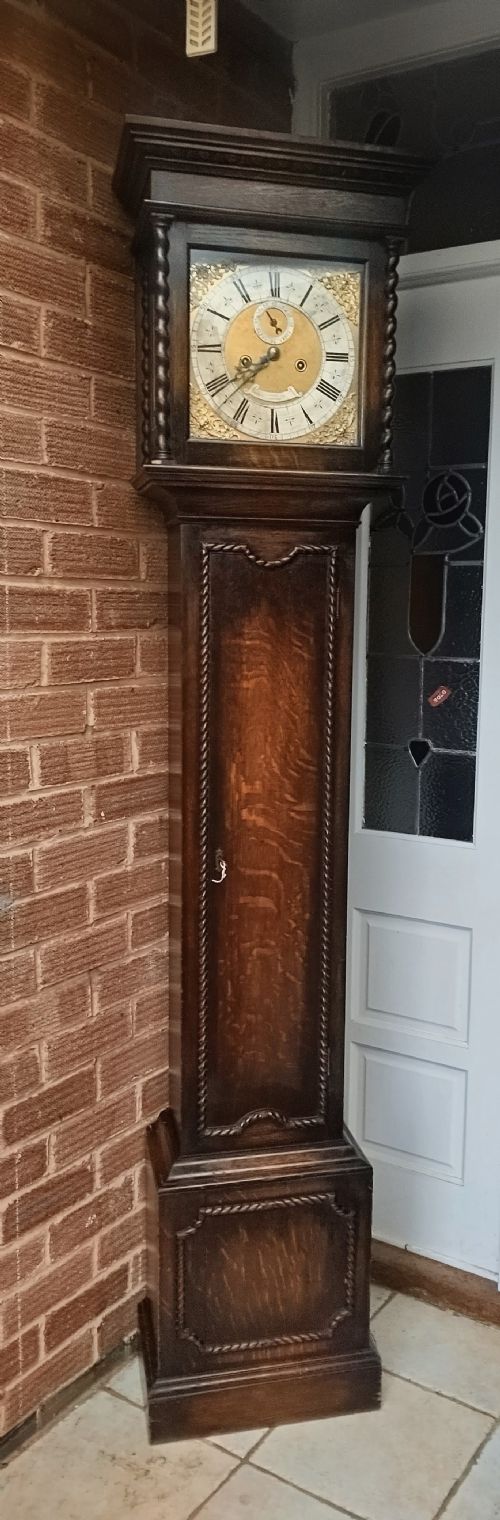


Carved Oak Longcase Clock
A carved oak longcase clock brings the steady pulse of 18th-century craftsmanship into a modern hall, anchoring the room with solid wood and measured time.
Carved Oak Longcase Clock
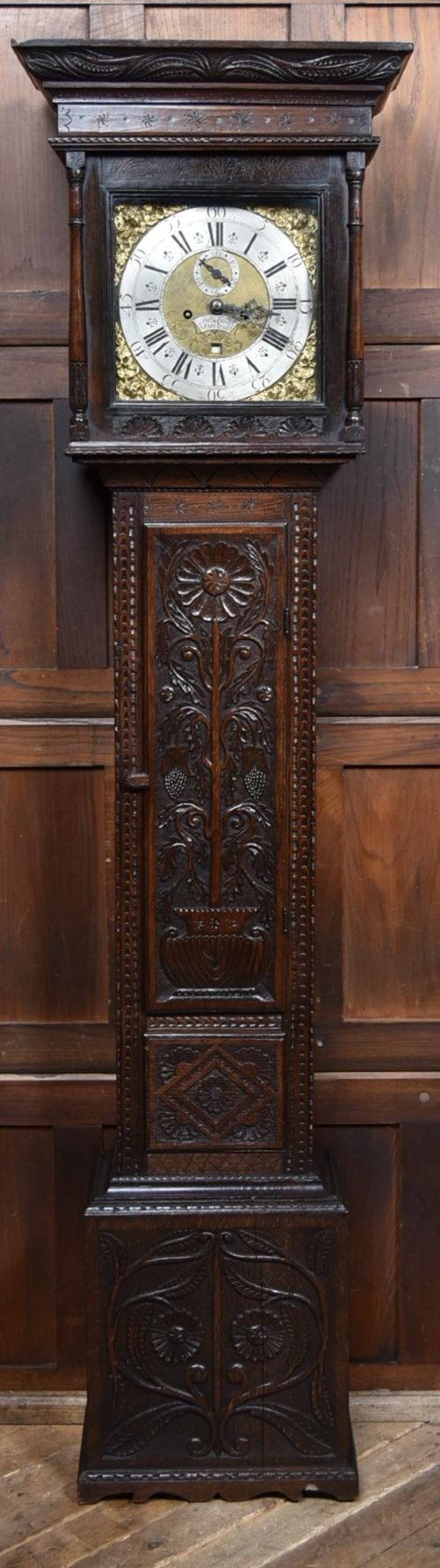
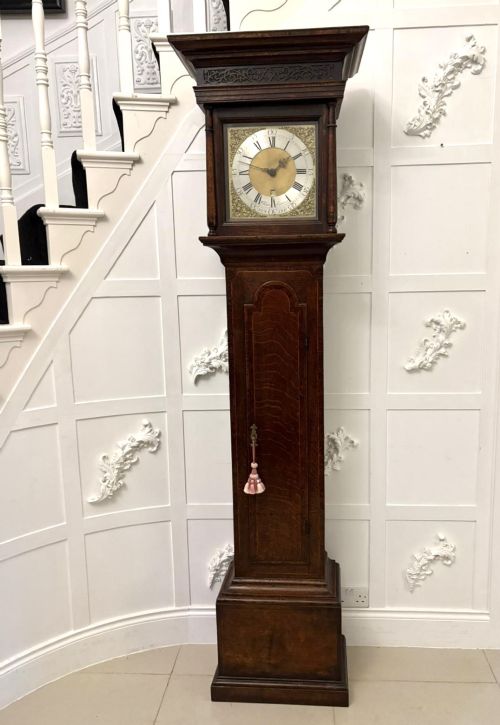
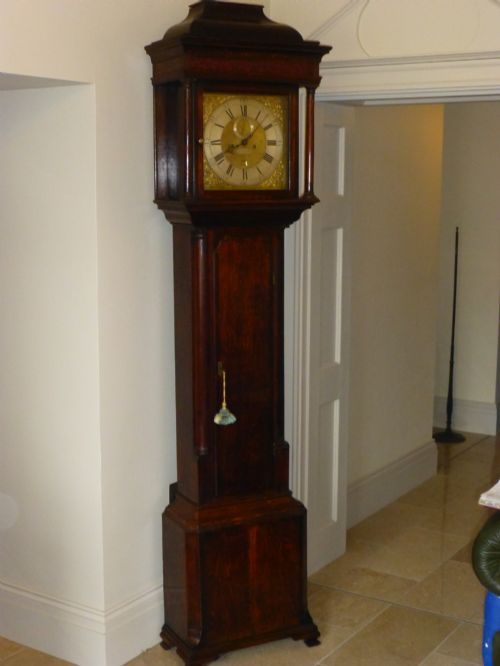
A carved oak longcase clock is a tall floor-standing timepiece housed in timber cabinets that range from plain country utility to elaborate architectural facades. When you search for this phrase, you encounter grandfathers and grandmothers spanning the Georgian period and the 18th century alongside later Victorian and Edwardian revivals.
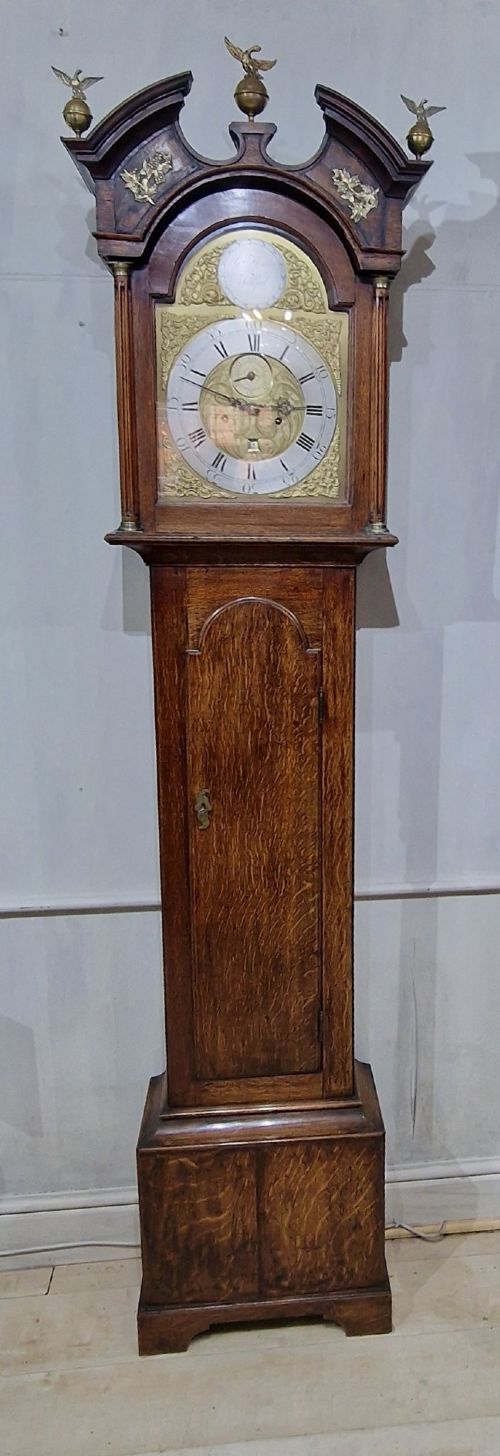
The most common examples on this page date from the Georgian era, featuring brass or painted dials set within robust oak trunks. Alongside full-sized floor clocks, smaller grandmother clocks and specialised musical movements appear, reflecting regional English and Scottish workshop traditions.
Cabinet forms vary from simple architectural hoods to carved panels depicting figures, foliage, and geometric inlay in walnut or mahogany. These timepieces served as domestic anchors, and today they function as both working horology and significant furniture.
How they were made
Cabinetmakers constructed the tall cases primarily from solid oak, occasionally accentuating panels with burr oak, walnut, or mahogany veneers and chequered inlay. The timber was seasoned, joined, and frequently hand-carved with relief ornament, foliage, or figural scenes depending on the period and style.
Dials were forged from brass or painted iron, featuring engraved or inscribed maker details, single or 8-day movements, and sometimes moon phases or chime barrels. Iron and glass completed the mechanical and protective elements of the face, housing weights and pendulums that drove the gear trains.
Carved Oak Longcase Clock Retail Price Guide 2026
Typical asking prices for carved oak longcase clock among the pieces listed under this phrase on Sellingantiques today, from the lower quarter to the upper quarter. They describe what is for sale here now, not the wider market.
One Lake District clock carries the stubborn motto: I tarry for none.
What varies in quality
The distinction between ordinary and exceptional examples lies in the crispness of the hand-carving and the integration of the movement within the case. Superior pieces exhibit deeply articulated relief work on the oak timber and retain their original brass or painted dials bearing legible maker signatures.
Proportion and scale dictate the hierarchy of these clocks, where slender proportions or sophisticated moon phase and musical mechanisms elevate the piece. The harmony between regional provincial movements and their housing separates standard domestic clocks from standout collector items.
Jn° Smith Macclesfd·Richard Corless of Stockport·James Hendrie Falkirk·David Craig Ford Path head·Mappin & Webb London·Samuel Young Nantwich & Bunbury·William Noke of Shropshire·Robert Darling Melrose·Henricus Baker of Appleby·Robotham of Leicester·Hugh Lough Penrith·J Hadruen Kendal·James Pepper Biggleswade
The Carved Oak Longcase Clock Glossary
- Longcase clock
- A tall, weight-driven pendulum clock housed in a protective wooden case standing directly on the floor. These are frequently known colloquially as grandfather clocks.
- Dial
- The face of the clock where time is indicated, typically constructed from brass or painted iron. It often bears the signature of the maker and the town of production.
- Moon phase
- A mechanical complication on the dial that tracks the lunar cycle through a rotating disk depicting the moon. This feature adds visual complexity to 18th-century and Georgian examples.
- Grandmother clock
- A smaller, more compact version of the traditional longcase clock, popular in later periods. They offer the same mechanical presence in a reduced vertical scale.
- Movement
- The internal gear mechanism powered by weights or springs that drives the timekeeping and striking trains. Eighteenth-century models commonly utilised 30-hour or 8-day durations.
Carved Oak Longcase Clock: Frequently Asked Questions
What is a grandmother clock?
A grandmother clock is simply a scaled-down version of the traditional longcase clock, standing shorter in height while retaining the weight-driven mechanical movement.
These pieces emerged in later periods to suit smaller domestic spaces without sacrificing the presence of a tall floor-standing timepiece.
How do 30-hour and 8-day movements differ?
A 30-hour movement requires winding every day and typically operates using a single cord or chain system with one or two weights. These were common in simpler country clocks.
An 8-day movement needs winding only once a week and generally utilises a more complex train with two weights and separate gear setups for time and striking.
Where were these clocks made?
Clockmakers operated in workshops across England and Scotland, signing dials with regional hubs from London and Cheshire to smaller towns like Macclesfield and Melrose.
Local cabinetmakers built the oak cases to house these regional movements, resulting in distinct geographic styles in the woodwork and dial decoration.
How do you date an oak longcase clock?
Dating relies on stylistic clues in the oak case, the shape of the dial arch, the type of wood figure, and the signature of the maker inscribed on the face.
Earlier 17th and 18th-century examples display simpler architectural proportions, whereas later Victorian and Edwardian pieces often incorporate revival carving styles and different dial materials.