
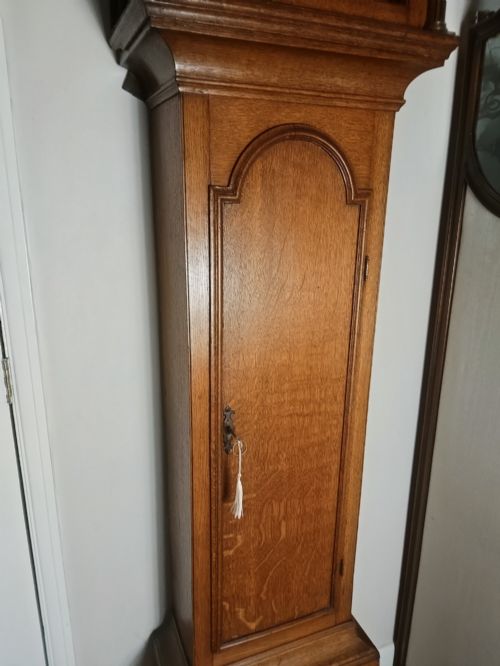
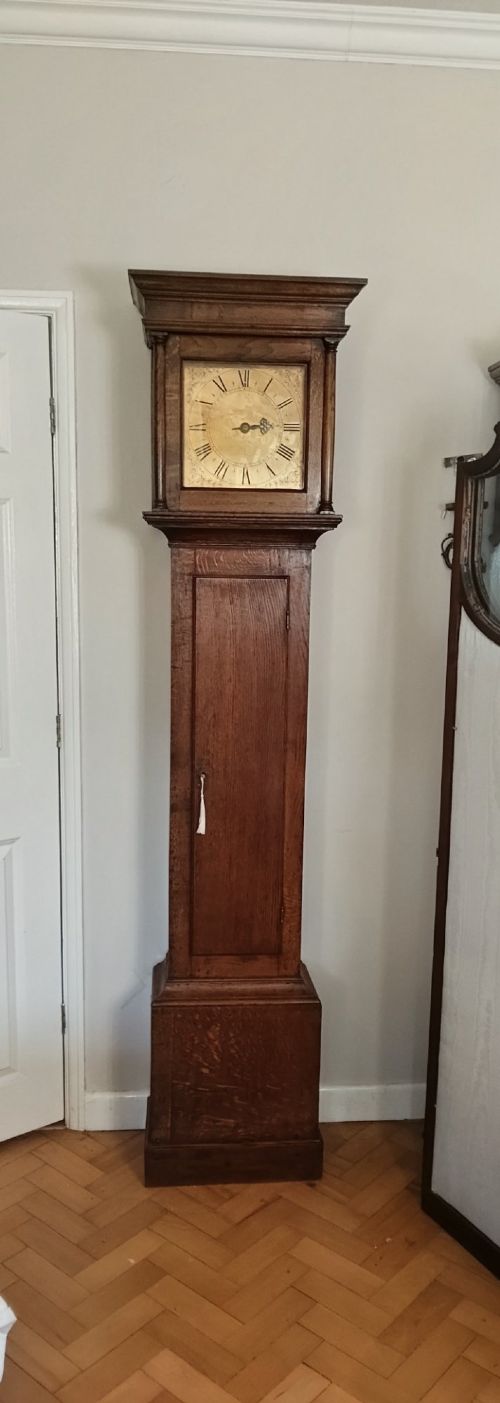
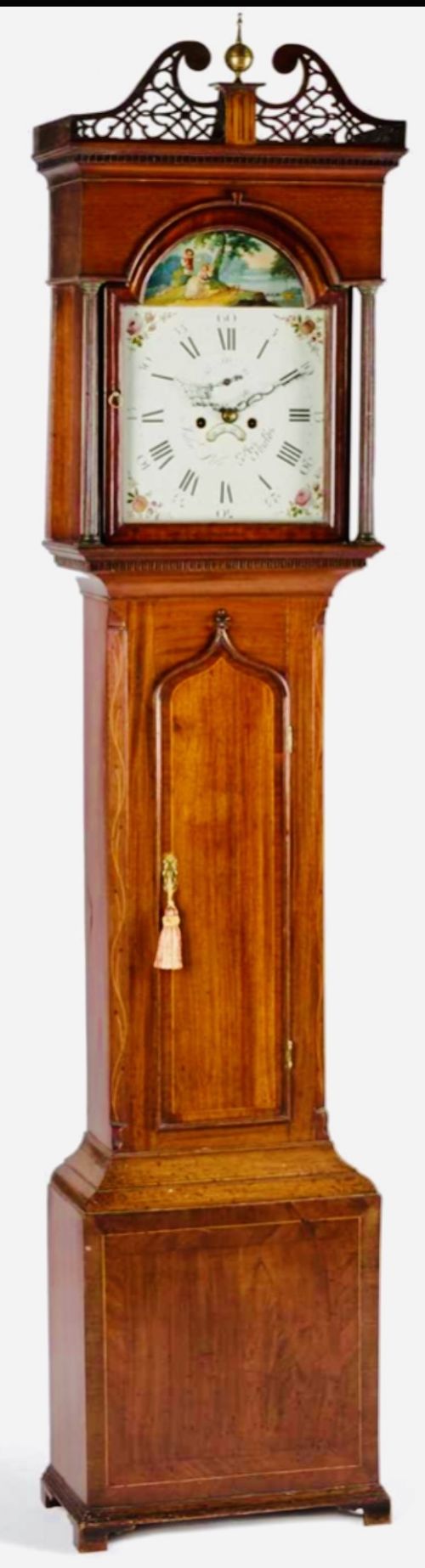
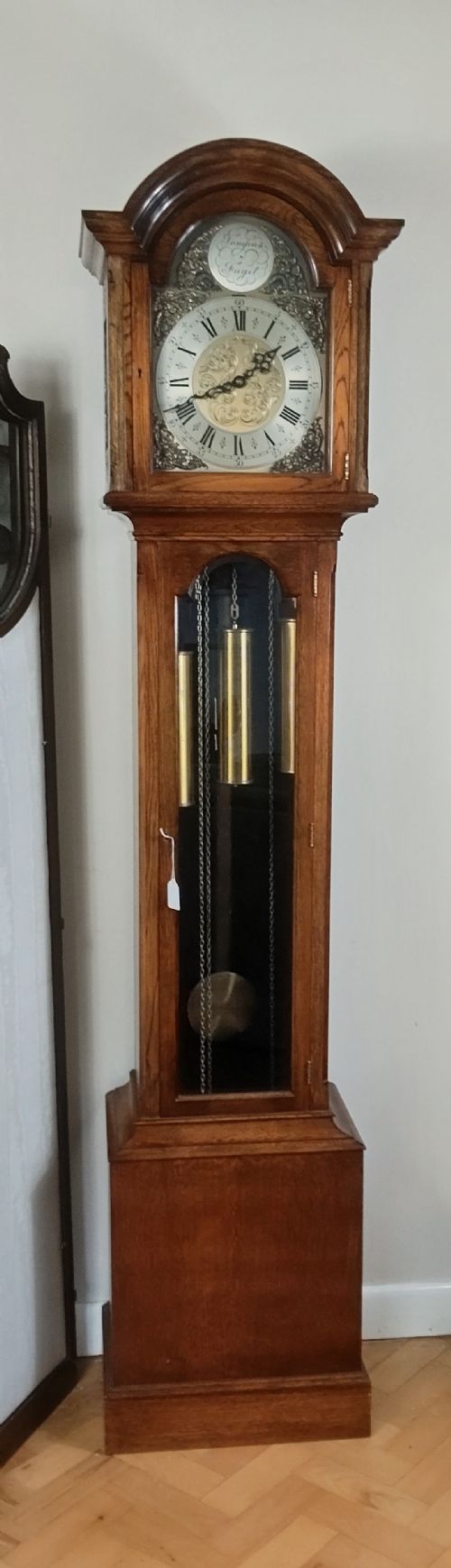


Brown Oak Tallcase Clock
A brown oak tallcase clock brings the architectural presence of Georgian and 18th-century timber into a room with a steady, measured tick.
Brown Oak Tallcase Clock
When you search for a brown oak tallcase clock, you encounter tall floor-standing timepieces spanning the 17th century through the Georgian and Victorian eras, often referred to as grandfather clocks.
The specimens on this page lean heavily into the Georgian and 18th-century periods, constructed predominantly in oak with occasional mahogany crossbanding or brass and enamel dials.
You find regional variations ranging from small ten-inch dials to quarter-chiming or moonphase movements housed in solid oak cases.
How they were made
Cases are built from native oak, sometimes paired with mahogany, utilising traditional joinery to house heavy weight-driven or spring-driven movements safely within the trunk.
Listings feature oak combined with brass, glass, mahogany, iron, enamel, painted iron, and steel across Georgian, Regency, and Victorian periods.
What varies in quality
The distinction between ordinary and exceptional pieces lies in the crispness of the dial engraving, the proportion of the oak trunk, and the integration of the movement to the case.
Early provincial examples with smaller dial diameters and original thirty-hour or eight-day movements command greater attention than later revival pieces.
Thomas Webbe of New Quay·Edward White Birmingham·Richard Prew Of Tewksbury·Richard Alexander Devizes·William Noke Of Shropshire
The Brown Oak Tallcase Clock Glossary
- Tallcase clock
- A weight-driven timekeeper housed in a tall wooden case that rests directly on the floor. It is commonly known as a grandfather clock.
- Moon phase
- A mechanical display on the dial that tracks the lunar cycle through a rotating disc. It adds complexity to the movement.
- Arch dial
- A clock face featuring a rounded upper section above the main chapter ring. This space often houses subsidiary dials or maker signatures.
- Thirty hour
- A clock movement that requires winding once a day rather than once a week. These older mechanisms often feature simpler gear trains.
Brown Oak Tallcase Clock: Frequently Asked Questions
How do I wind a tallcase clock?
Winding involves drawing the weights up using a crank or key inserted into holes on the dial face, taking care not to over-wind the mechanism.
Most eight-day movements require attention weekly, while thirty-hour versions need daily winding.
Where should I place my clock?
Position the piece against a sturdy interior wall away from direct sunlight, central heating vents, and damp exterior stone.
A stable floor ensures the pendulum swings evenly and the anchor escapement maintains an accurate beat.
What is the difference between dial materials?
Early examples use engraved brass chapter rings mounted on brass backing plates, while later 18th and 19th-century pieces utilise painted iron and enamel faces.
Painted iron dials often bear the regional town and maker name in elaborate script.
How do I date an oak case?
Dating relies on stylistic clues in the hood door, trunk proportions, dial size, and construction timber rather than just the maker signature.
Earlier pieces from the 17th and early 18th centuries tend to have narrower proportions and smaller nine or ten-inch dials.